The terms “inositol” and “myo-inositol” are often used interchangeably, but they are not the same. This confusion causes people to purchase the wrong supplements, misunderstand research studies, or assume that all forms of inositol provide the same benefits-which they do not.
Understanding the differences between inositol as a family of compounds and myo-inositol as a specific, biologically dominant form is essential for anyone interested in hormone health, blood sugar balance, PCOS support, or mood regulation.
This article breaks down the distinctions clearly, explains how each form works, and shows why myo-inositol is considered the gold standard in supplementation.
Is myo-inositol the same as inositol?
Myo-inositol is a type of inositol. “Inositol” refers to a family of nine stereoisomers, while myo-inositol is one specific stereoisomer and the most abundant form in human tissues. The distinction matters when you read research or choose a supplement because different forms can have different biological roles.
What Is Inositol?
“Inositol” does not refer to one single nutrient. Instead, it is a group of naturally occurring compounds, all with similar structures but different biological roles.
There are nine stereoisomers of inositol, meaning nine distinct versions of the molecule, each with unique functions.
These stereoisomers help regulate essential pathways in the body, including:
- Cell-to-cell communication
- Insulin signaling
- Neurotransmitter balance
- Ovarian function
- Metabolic regulation
While inositol is often described as a “vitamin-like” compound or part of the B-family, the body can synthesize it naturally. It is also found in foods like fruits, beans, whole grains, and nuts.
However, not all forms of inositol have equal importance in the human body. This is where myo-inositol stands out.
What Is Myo-Inositol?
Myo-inositol is the dominant form of inositol in nature and in the human body-representing 90% or more of total inositol stores. It plays a central role in:
- Insulin signaling
- Ovarian and reproductive function
- Hormonal rhythm regulation
- Glucose metabolism
- Stress and mood pathways
- Cell membrane integrity
Myo-inositol acts as a second messenger in many hormonal pathways, meaning it helps hormones like FSH, TSH, and insulin “deliver” their instructions correctly.
Because it is the main form used by cells, many clinical studies relevant to PCOS and metabolic health specify myo-inositol rather than using “inositol” as a generic term. Research has examined myo-inositol in areas such as:
- PCOS
- Menstrual irregularity
- Mood and anxiety support
- Fertility outcomes
- Metabolic health
Many supplement labels simply say “inositol,” but the evidence depends on which inositol form and dose were actually studied.
Questions about weight and metabolism sit within the broader evidence on myo-inositol benefits, while this article focuses on the difference between the names and forms.
Myo Inositol vs Inositol: Core Differences
.png)
The table below outlines the major differences between inositol as a category and myo-inositol as a specific form.
This helps clarify why the terms should not be used interchangeably and why supplement labels should distinguish between them. These distinctions also explain why the specific inositol form matters when interpreting research on hormone and metabolic health.
Why Myo-Inositol Is Widely Studied Preferred in Women’s Hormonal Health
Myo-inositol is widely studied in women’s hormone and metabolic research. The strength of evidence varies by outcome.
1. Supports Insulin Sensitivity
Myo-inositol acts as a second messenger in insulin signaling. When insulin receptors function better, the body can:
- Regulate blood sugar more smoothly
- Reduce cravings
- Improve energy stability
- Reduce systemic inflammation
Those downstream effects are not guaranteed supplement outcomes. A 2024 systematic review of 30 trials involving 2,230 people with PCOS found possible benefits for some metabolic measures, while evidence for PCOS overall remained limited and inconclusive.
Because insulin resistance is connected to hormonal symptoms, stabilizing it can improve multiple aspects of health.
2. Promotes Healthy Ovarian Function
Myo-inositol plays an essential role in ovarian signaling. Studies have examined whether supplementation can support:
- More consistent ovulation
- Improved menstrual regularity
- Healthy follicular development
This is why myo-inositol is one of the most widely studied supplements for PCOS. The 2023 international PCOS guideline says inositol can be considered based on individual preferences and values, while clinical benefits for ovulation, hirsutism, and weight remain limited.
Myo-inositol is one of several nutrients discussed in the broader evidence on PCOS supplements, where the strength of evidence differs by outcome.
3. Evidence for Stress-Related Hormone Claims Is Limited
Direct human evidence that myo-inositol regulates cortisol rhythms or improves sleep architecture is insufficient. The stronger evidence base centers on inositol signaling and selected metabolic and reproductive outcomes rather than cortisol control.
4. Mood and Anxiety Research Is Still Limited
Myo-inositol has been studied in anxiety-related settings, but the evidence is limited and heterogeneous. A 2026 narrative review found biological plausibility but insufficient evidence for definitive clinical conclusions.
How Myo-Inositol Compares to Other Inositol Isomers

Although there are nine forms of inositol, only a few have relevance in human health.
D-Chiro Inositol
- Helps with glycogen storage
- Works downstream of insulin signaling
- More effective for metabolic pathways than ovarian function
- Used alongside myo-inositol for synergistic results
Scyllo-Inositol
- Investigated for neurological effects but not widely used
- Not recommended as a primary hormone or metabolic supplement
Chiro-Inositol (non–D-chiro)
- Rare
- Limited activity
- Not studied in women’s hormonal health
Among all isomers, myo-inositol and d-chiro inositol are the two most impactful for hormone and metabolic balance.
Myo Inositol and D-Chiro Inositol: A Powerful Combination
Myo-inositol and d-chiro inositol function as complementary partners in the body. Under normal conditions, the body converts a portion of myo-inositol into d-chiro inositol. The two forms participate in related insulin-signaling pathways, which is why both appear in PCOS research.
Myo-inositol primarily supports ovarian function and plays a key role in follicle-stimulating hormone (FSH) signaling. It also participates in insulin signaling.
D-chiro inositol works differently. It supports glucose storage and acts more directly on metabolic pathways that help the body manage energy, blood sugar, and glycogen synthesis.
Myo-inositol and D-chiro inositol are often combined in PCOS research and supplements. Current PCOS guidance does not recommend a specific form, dose, or combination because higher-quality evidence is still lacking.
A small 2019 randomized study of 56 women with PCOS compared seven myo-inositol:D-chiro-inositol ratios and favored 40:1 for ovulation. Each group included eight participants, so the result does not establish 40:1 as a universal optimal ratio.

How “Myo Inositol vs Inositol” Impacts Supplement Shopping
Supplement labels can be confusing. Many brands list “inositol,” even if the formula contains a blend of isomers. Here’s what you should look for:
1. The Supplement Should Clearly State “Myo-Inositol”
If a label simply says “inositol,” there is no way to know which form you’re getting.
2. The Supplement Should Align with Clinical Dosages
Most research involves 2–4 grams of myo-inositol daily, often combined with d-chiro inositol. This does not mean one universal dose or combination has been established for PCOS.
3. The Form Should Match the Evidence Behind Your Goal
For PCOS or fertility questions, check whether research tested myo-inositol, D-chiro inositol, or a combination. Claims about body weight have a separate evidence base, covered in research on myo-inositol and weight.
4. The Formula Should State Exact Amounts
High-quality brands state the exact type and quantity of inositol included.
What should you know before taking inositol?
Inositol was relatively well tolerated in many PCOS trials, although adverse-event reporting was incomplete. A 2024 systematic review found fewer gastrointestinal adverse events with myo-inositol than metformin, and the PCOS guideline notes that supplement dose, quality, and consistency can vary.
If you have PCOS or use inositol as part of fertility care, discuss it with a healthcare professional. For infertility in PCOS, the guideline considers inositol experimental because benefits and risks remain too uncertain to recommend it as fertility therapy.
Where Harmonia Fits
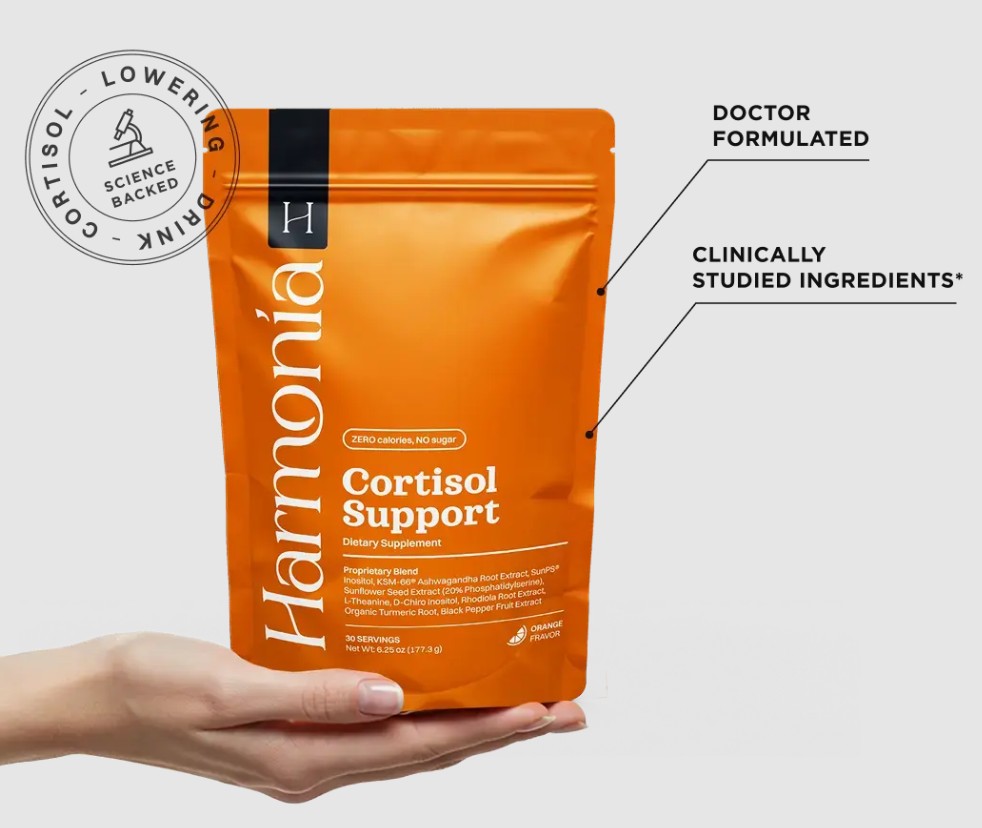
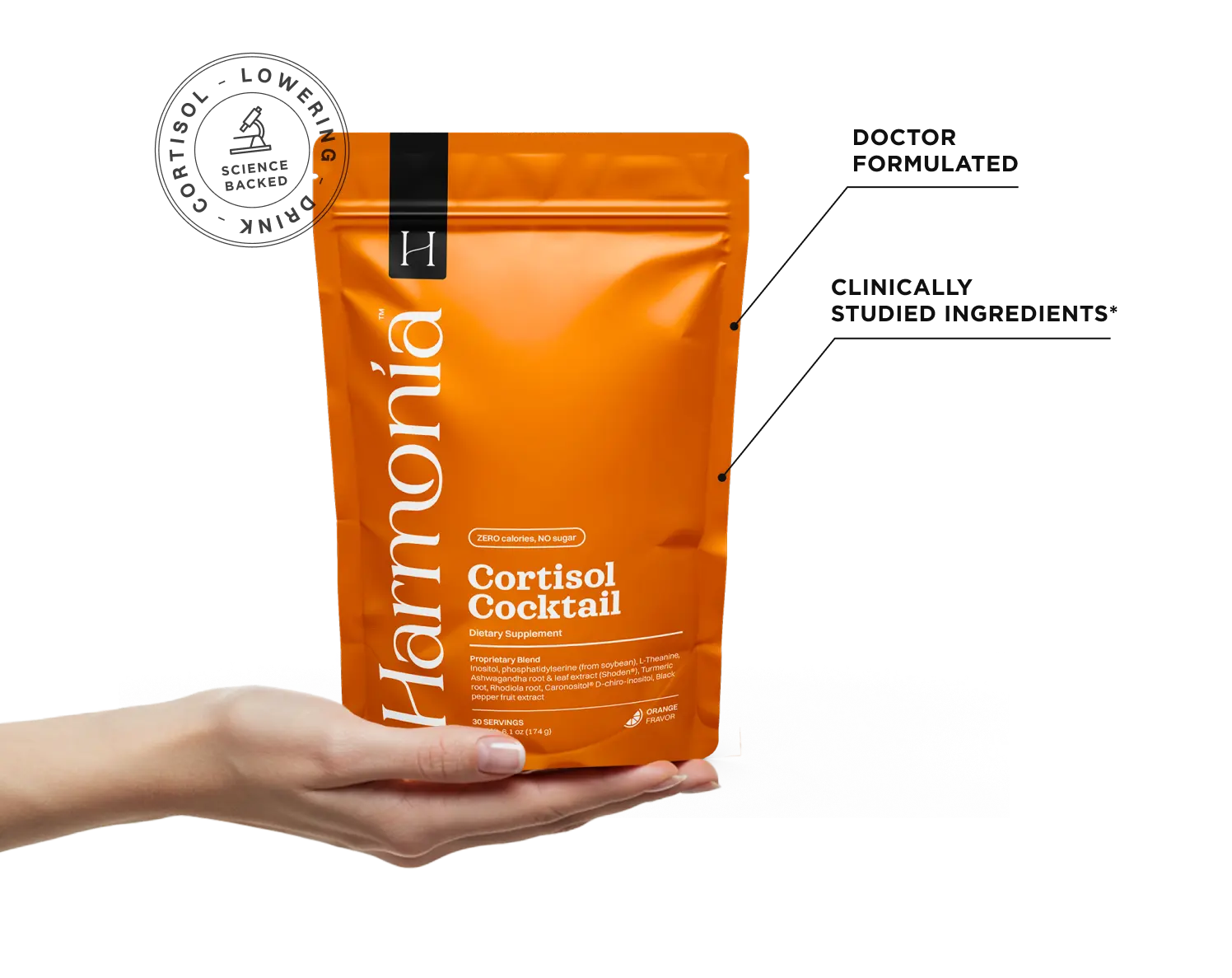
Harmonia Cortisol Cocktail includes myo-inositol alongside D-chiro inositol because both forms are involved in insulin-related signaling and have been studied in PCOS research. Evidence for any specific ratio or finished multi-ingredient formula needs to be evaluated separately from evidence on an individual ingredient.
At the ingredient level, each ingredient has its own evidence base. Harmonia also pairs myo-inositol with:
- D-Chiro Inositol for metabolic support
- L-Theanine for calming neurotransmitter balance
- Ashwagandha for cortisol reduction
- Rhodiola for stress resilience
- Turmeric for inflammation and insulin sensitivity
- Phosphatidylserine for cortisol-response support
These descriptions refer to ingredient-level evidence. They should not be treated as proof that the finished formula produces the same clinical outcomes.
Conclusion
Although the term inositol refers to a broad family of compounds, myo-inositol is the form that delivers the most meaningful results.
It is the biologically dominant isomer, the most thoroughly researched, and the most effective for women seeking support for hormones, cravings, insulin sensitivity, mood, and stress.
Harmonia uses myo-inositol-along with complementary ingredients-in its Cortisol Cocktail. If you’re deciding whether the Harmonia Cortisol Cocktail may fit what you’re looking for, the Harmonia quiz can help you assess what you are experiencing right now.
Selecting the correct form of inositol is one of the most important steps in choosing an effective supplement.
FAQs
Is myo-inositol the same as inositol?
Myo-inositol is one specific form within a nine-isomer family. “Inositol” is the broader term, while myo-inositol identifies the specific stereoisomer.
Is myo-inositol better than generic inositol?
Myo-inositol is the most abundant and one of the most researched inositol forms, but whether it is “better” depends on the condition and outcome being studied.
Can I take myo-inositol and d-chiro inositol together?
Yes. A 40:1 ratio is commonly used and has been studied, but current PCOS guidance does not endorse one specific ratio because comparative evidence remains limited.
Which is better for PCOS, inositol or myo-inositol?
Current evidence does not establish one inositol type as universally best for PCOS. The 2023 international guideline says inositol may be considered based on individual preferences, but specific types, doses, and combinations cannot currently be recommended.
What are the possible side effects of inositol?
Studies generally report relatively few adverse effects, but safety reporting is incomplete. Supplement dose, quality, and consistency can also vary between products.
References
- Chhetri, D. R. (2019). Myo-inositol and its derivatives: their emerging role in the treatment of human diseases. Frontiers in pharmacology, 10, 1172. Link.
- Fitz, V., Graca, S., Mahalingaiah, S., et al. (2024). Inositol for Polycystic Ovary Syndrome: A Systematic Review and Meta-analysis to Inform the 2023 Update of the International Evidence-based PCOS Guidelines. The Journal of Clinical Endocrinology & Metabolism, 109(6), 1630-1655. Link.
- Teede, H. J., Tay, C. T., Laven, J., et al. (2023). Recommendations from the 2023 International Evidence-based Guideline for the Assessment and Management of Polycystic Ovary Syndrome. Fertility and Sterility, 120(4), 767-793. Link.
- Nordio, M., Basciani, S., & Camajani, E. (2019). The 40:1 myo-inositol/D-chiro-inositol plasma ratio is able to restore ovulation in PCOS patients: comparison with other ratios. European Review for Medical and Pharmacological Sciences, 23(12), 5512-5521. Link.
- Derkaczew, M., Zglejc-Waszak, K., Podlasz, P., Jozwik, M., & Wojtkiewicz, J. (2026). Potential Anxiolytic Effects of Selected Inositol Stereoisomers: A Narrative Review. Cells, 15(11), 970. Link.