
Caffeine is a powerful stimulant that sharpens focus and boosts alertness, but it also interacts with one of your body’s most important hormones: cortisol. This hormone influences energy, mood, metabolism, inflammation, appetite, and your stress response.
When caffeine and cortisol overlap in the wrong way, the result can be anxiety, energy crashes, cravings, or disrupted sleep.
Understanding how caffeine affects cortisol can help you enjoy your coffee without disrupting your hormonal balance.
Rather than eliminating caffeine, the goal is to recognize how timing, stress levels, sleep quality, and your unique physiology shape your response to it.
Caffeine and Cortisol: What the Research Shows
The effects of caffeine on cortisol have been extensively studied, and the findings are surprisingly consistent.
Research shows that caffeine triggers cortisol release even in habitual coffee drinkers. While regular users may experience a slightly reduced response over time, the stimulant effect on the adrenal glands still occurs.
The spike is especially strong when caffeine is consumed on an empty stomach or first thing in the morning, overlapping with your natural cortisol awakening response.
People under significant stress often experience more pronounced cortisol elevations from caffeine because the body is already in a heightened state of alertness.
Genetic differences in caffeine metabolism also play a role: slow metabolizers feel overstimulated more easily, while fast metabolizers break caffeine down quickly and typically experience fewer hormonal side effects.
These overlapping factors explain why caffeine makes some people calm and focused while leaving others jittery or anxious.
How Much Caffeine Is Too Much for Cortisol Health?

Most health guidelines place daily caffeine intake between 200–400 mg for the average adult, but those numbers don’t necessarily reflect how caffeine influences cortisol.
Timing, existing stress levels, and individual metabolism often matter more than total intake. Two people can drink the same amount of caffeine and experience completely different hormonal responses based on these variables.
If caffeine leaves you with afternoon crashes, irritability, restlessness, disrupted sleep, cravings, or a “tired but wired” feeling, you may be exceeding your personal tolerance.
Tracking when symptoms show up can help you identify whether you’re reacting to the stimulant itself or to the way it interacts with your cortisol rhythm.
Your ideal caffeine level is the amount that makes you feel awake and productive without leading to instability later in the day.
How Caffeine Interacts With Your Stress System (HPA Axis Breakdown)
Caffeine affects much more than alertness. It interacts with the HPA axis - the body’s central stress-response network.
When caffeine blocks adenosine, the chemical that signals fatigue, it increases excitatory neurotransmitters like norepinephrine and dopamine. This shift prompts the adrenal glands to release cortisol in order to make more stored energy available.
When this stimulation happens occasionally, the body handles it well. But repeated daily stimulation, especially during times of stress or sleep loss, can strain the HPA axis.
Over time, this can lead to cortisol irregularities that affect mood, appetite, blood sugar, sleep, and hormonal balance.
Because cortisol influences estrogen, progesterone, and thyroid activity, caffeine’s impact can ripple through the entire endocrine system.
What a Caffeine-Triggered Cortisol Spike Feels Like
A cortisol spike from caffeine doesn’t always feel like “stress.” It often disguises itself as a combination of physical, emotional, and cognitive symptoms.
Common physical sensations
- Jitters
- Restlessness
- Racing heart
- Shakiness
- Tension in the chest
- Feeling overheated or flushed
Emotional symptoms
- Sudden irritability
- Anxiety
- Sense of urgency
- Feeling easily overwhelmed
- Mood swings
Cognitive symptoms
- Difficulty focusing
- Overstimulation
- Racing thoughts
- Later brain fog when cortisol drops
Appetite symptoms
- Intense afternoon hunger
- Sugar cravings
- Emotional or stress eating
This happens because elevated cortisol increases blood sugar - and the later drop triggers hunger signals.
Caffeine, Cortisol, and Sleep Quality

Caffeine’s influence on sleep involves more than the obvious “wide-awake” feeling. Even when someone with a high tolerance can fall asleep after drinking coffee, the quality of their sleep is often affected.
Research shows that caffeine can reduce deep sleep for up to ten hours after consumption, even when someone doesn’t consciously feel stimulated.
Cortisol plays a key role here. When caffeine shifts your cortisol rhythm later into the evening, melatonin production decreases, making it harder to fall asleep or stay asleep.
Many people unknowingly operate in the fatigue–caffeine–cortisol loop: poor sleep leads to more caffeine the next day, which elevates cortisol and disrupts sleep again.
Over weeks or months, this can create chronic exhaustion that feels “unexplainable” but is largely stimulant-driven.
Best & Worst Times to Drink Caffeine (According to Cortisol Science)
Your cortisol has a natural rhythm - and drinking caffeine at the wrong time can disrupt it.
Worst time: within 30–60 minutes of waking
Your cortisol is naturally highest right after waking (the cortisol awakening response).
Adding caffeine on top of that magnifies the hormonal surge.
Best time: 60–120 minutes after waking
By then, your cortisol peak has passed, and caffeine can increase alertness without pushing you into overstimulation.
Midday caffeine guidelines
- Keep caffeine before 2pm
- Avoid caffeine on days with poor sleep
- Use smaller, strategic doses instead of large drinks
Why caffeine after 2pm harms nighttime cortisol
Late-day caffeine pushes cortisol upward again, interfering with melatonin and contributing to racing thoughts at night.

How to Lower Cortisol Without Giving Up Coffee
You don’t have to quit caffeine entirely. Small shifts can dramatically reduce cortisol disruption.
1. Pair caffeine with food
Eating before or with your coffee:
- Reduces cortisol spikes
- Stabilizes blood sugar
- Eases jitteriness
- Lessens the energy crash
2. Try smaller doses
Instead of a large 16–20 oz drink, try:
- An 8–12 oz coffee
- Half-strength brews
- Split doses throughout the morning
3. Avoid caffeine after a poor night’s sleep
Your cortisol is already elevated after inadequate sleep - caffeine amplifies the imbalance.
4. Hydrate properly
Even mild dehydration increases cortisol and makes caffeine feel harsher.
5. Use supportive nutrients
Certain nutrients buffer caffeine’s stimulatory effects:
- L-theanine (calm alertness)
- Magnesium (nervous-system regulation)
- B vitamins (stress metabolism)
- Adaptogens like ashwagandha or rhodiola (stress resilience)
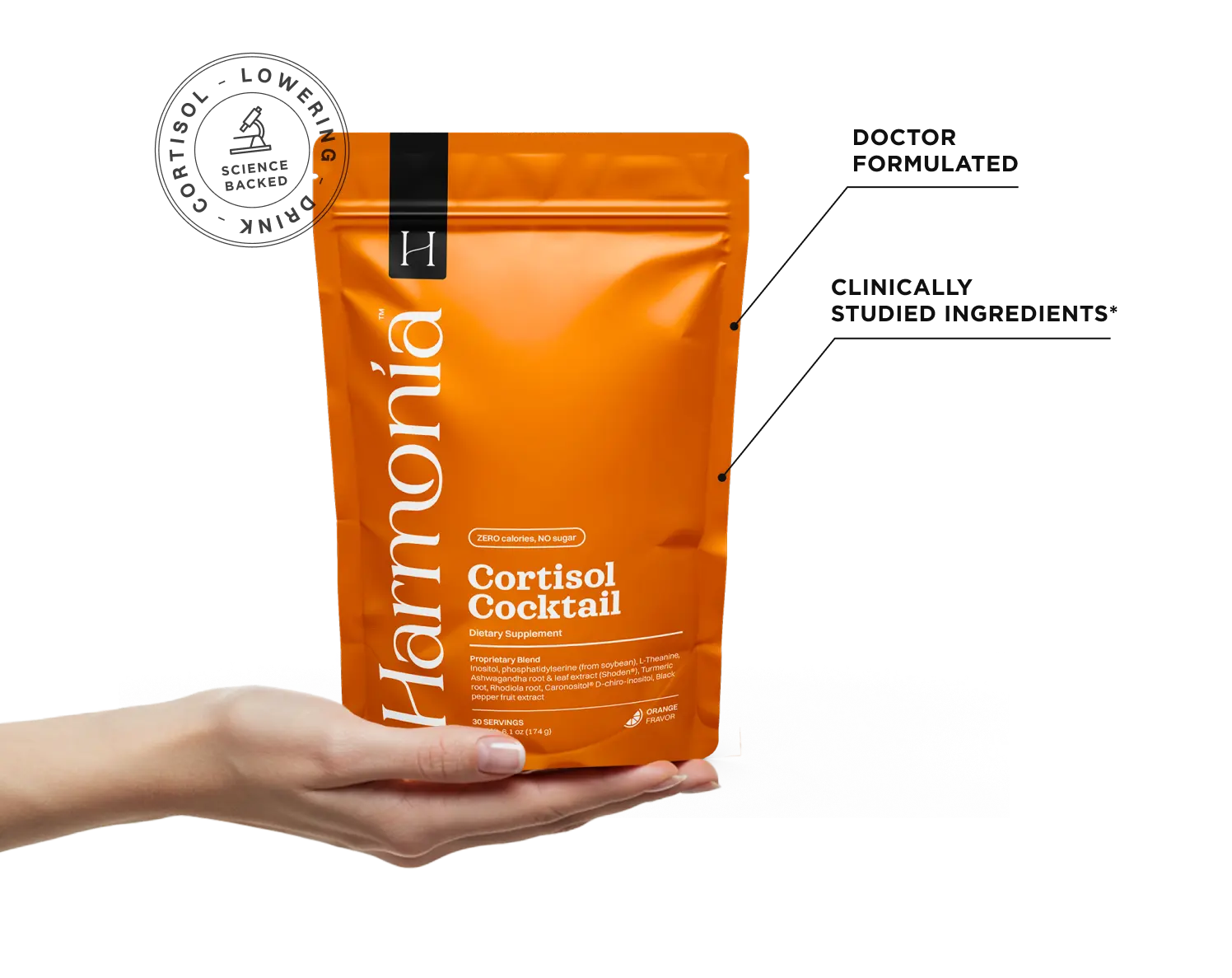
These ingredients are often used together in cortisol-support formulas like Harmonia, which are designed to help maintain a balanced stress response and steadier energy levels - particularly on days when caffeine intake or stress load is higher.
6. Try low-cortisol caffeine alternatives

- Matcha
- Half-caf blends
- Mushroom-coffee blends
- Herbal coffee substitutes
These offer milder stimulation with a lower cortisol impact.
When to Consider Cutting Back (and How to Do It Gradually)
You may benefit from reducing your caffeine intake if you notice:
- Constant anxiety or irritability
- Difficulty sleeping
- Afternoon crashes
- Racing thoughts
- PMS worsening
- Feeling exhausted without caffeine
- Mood instability
Cutting back is easiest when done gradually. Reducing your intake by about 25% every few days helps minimize withdrawal symptoms.
Switching to half-caf blends or caffeine alternatives softens the transition.
Most people notice better sleep within a week and more consistent daytime energy after two to three weeks. Cortisol rhythms often begin stabilizing within the first month.
Conclusion
Caffeine can absolutely be part of a supportive daily routine when it’s aligned with your natural cortisol rhythm. Understanding how caffeine influences cortisol allows you to enjoy its benefits without sacrificing your energy, sleep, or hormonal balance.
The key is to pay attention to timing, observe your personal tolerance, and make small adjustments - such as eating before drinking coffee or delaying your first cup - to prevent unnecessary cortisol spikes.
Supporting your stress system is often the missing link, especially for those whose cortisol can become easily overstimulated by busy schedules, hormonal shifts, or inconsistent sleep.
Tools like Harmonia can help maintain a steadier cortisol pattern by nourishing the nervous system, supporting adrenal balance, and replenishing nutrients affected by chronic stress or caffeine use.
When your stress hormones are better supported, caffeine becomes easier for your body to handle.
References
- Knychalska, K., Sikora, J., Łabuda, M., Królikowska, K., Słojewska, A., Kotkowiak, A., ... & Szema, A. (2025). The Impact of Caffeine on Anxiety Levels and Stress Responses-a literature review. Journal of Education, Health and Sport, 81, 59947-59947. Link.
- O’callaghan, F., Muurlink, O., & Reid, N. (2018). Effects of caffeine on sleep quality and daytime functioning. Risk management and healthcare policy, 263-271. Link.
- Temple, J. L., Bernard, C., Lipshultz, S. E., Czachor, J. D., Westphal, J. A., & Mestre, M. A. (2017). The safety of ingested caffeine: a comprehensive review. Frontiers in psychiatry, 8, 80. Link.