Understanding the stages of weight loss can transform the way you approach your weight loss journey. Many people assume that progress happens in a straight downward line - but real fat loss unfolds in predictable, science-backed phases.
Each stage comes with its own patterns, challenges, and hormonal shifts, especially for women who often deal with cortisol fluctuations, insulin resistance, PCOS, menopause symptoms, or thyroid irregularities.
By learning how the body responds at each step, you can make smarter decisions, adjust expectations, and avoid quitting at the exact moment when your body is preparing for a breakthrough.
The Science Behind Weight Loss Stages
Weight loss isn’t just about eating less and moving more - your body is constantly adjusting behind the scenes.
As you lose weight, your metabolism naturally slows down because a smaller body simply doesn’t need as many calories. It’s completely normal, even though it can feel frustrating at times.
A big part of this process comes down to hormones. Cortisol, your main stress hormone, has a huge influence on your weight loss journey. When cortisol runs high, your body hangs onto fat (especially around the belly), your cravings spike, and your sleep can take a hit - all of which make losing weight feel harder than it should.
Insulin is another major player. When insulin is working well, your body burns fat efficiently. But if you’re dealing with insulin resistance - from PCOS, menopause, thyroid issues, or chronic stress - fat loss becomes more challenging because your body has trouble using energy properly.
Then there are leptin and ghrelin, your hunger and fullness hormones. These two shift constantly throughout weight loss, which is why your appetite can feel all over the place, especially in the beginning.
And of course, thyroid hormones help regulate how fast or slow your metabolism runs. If your thyroid is underactive, weight loss can move at a slower pace no matter how consistent you are.
All of these hormonal changes are why weight loss rarely happens in a straight line. Some stages feel quick, others feel stubborn, and both are completely normal parts of the journey.
Stage 1: The “Whoosh” or Rapid Initial Weight Loss Phase

The first stage is exciting because results appear quickly. This phase usually lasts 3–14 days, depending on your diet, activity level, and starting point.
What’s Happening In The Body?
- Glycogen stores decrease, releasing water stored with them.
- Inflammation and bloating often decrease.
- Appetite may temporarily reduce due to increased motivation.
This early drop can be several pounds, which leads many people to believe fat is melting away rapidly. But most of the initial weight is water - not fat. Still, it’s an important motivational boost.
Hormonal Factors In Stage 1
- Cortisol may initially spike due to routine changes.
- Sleep patterns may shift depending on diet changes.
- Appetite hormones begin adjusting.
Stage 2: The Adjustment Phase
After the first week or two, the body enters the adjustment phase. Water loss slows, fat loss begins, and your metabolism starts recalibrating.
Typical Signs Of Stage 2:
- Hunger and cravings may increase as the body seeks balance.
- You may feel more tired, especially in the afternoon.
- Early plateaus can appear - even though fat loss is starting.
This stage requires consistency. Many people misinterpret these normal signs as a problem and quit too early.
The stress of dietary change may temporarily elevate cortisol. High cortisol increases cravings, especially for sugar and carb-heavy foods, because the body seeks quick energy.
Stage 3: The Fat Loss Phase
This is the longest and most meaningful stage. Actual fat loss becomes consistent, although it may not always show up clearly on the scale.
What Steady Fat Loss Looks Like
- Small but consistent weekly losses
- Improvements in body measurements
- Better energy and workout performance
- More stable appetite patterns
- Better-fitting clothes
As metabolism stabilizes, your body becomes more efficient at using stored fat for fuel.
Sleep often improves, inflammation decreases, and your mood may begin to lift - unless cortisol remains elevated.
Challenges During Stage 3
- Emotional eating tendencies may reappear.
- PMS symptoms may feel stronger if hormones fluctuate.
- Stress might lead to overeating or late-night snacking.
Supporting cortisol helps keep appetite stable and prevents emotional eating patterns that can interrupt fat loss.

Stage 4: The Plateau Phase
Almost everyone experiences a plateau, usually after several weeks or months of consistent progress. A plateau is not failure - it's the body adapting.
Why Plateaus Happen
- Metabolic slowdown due to decreased calorie needs
- Reduced non-exercise movement (NEAT)
- Higher cortisol from lifestyle stress or calorie restriction
- Hormonal changes during menstrual cycles or menopause
- Sleep disruptions affecting hunger hormones
A plateau is typically defined as no progress for 3–4 weeks, not just a few days.
How To Break Through A Plateau
- Slightly increase calorie intake to reset metabolism
- Add more strength training
- Increase daily activity (steps, general movement)
- Improve sleep quality
- Manage stress and cortisol levels
Cortisol is often the biggest barrier during plateaus. High cortisol tells the body to conserve fat and store energy, making progress difficult.
Stage 5: The Recomposition Stage
This is one of the most misunderstood stages. You may feel stuck, but your body is often transforming significantly.
What Recomposition Looks Like
- Clothes fit better even if weight doesn’t change
- Strength improves
- Body fat percentage decreases
- Muscle tone becomes visible
- Waistline shrinks while the scale stays the same
Muscle is denser than fat, so as you gain lean tissue and lose fat, the scale may not move. This is extremely positive progress, yet many people give up here simply because they’re used to relying on the scale.
Muscle gain improves insulin sensitivity and reduces inflammation - making long-term weight maintenance easier. Balanced cortisol supports muscle repair and energy consistency.
Staying committed during this phase is crucial for long-term success.
Stage 6: The Maintenance Phase

Maintenance is not the end of the journey - it is a new phase that requires intention, just like fat loss.
Many people regain weight because they assume maintenance requires no effort, when in reality, it simply requires consistency.
What Happens During Maintenance
- Hunger cues normalize
- Cravings decrease
- Energy levels become more steady
- The metabolism adapts to your new weight
- Hormones stabilize
This stage is easier when stress remains controlled. High cortisol can pull you out of maintenance by increasing appetite, disrupting sleep, and promoting fat storage.
Harmonia can be helpful during maintenance because its ingredients support hormonal balance, stress resilience, and reduced emotional eating - key factors for long-term success.
Psychological & Emotional Stages of a Weight Loss Journey
Weight loss is not only physical - it requires mental and emotional adaptation. Understanding these psychological phases helps prevent burnout.
- Early Motivation: The excitement of initial progress creates momentum.
- Reality Phase: Challenges appear: hunger fluctuations, cravings, schedule disruptions, social pressure, or fatigue.
- Habit Formation: Routines begin to feel natural. Decisions become easier.
- Identity Expansion: You begin to view yourself as someone who prioritizes health, movement, and well-being.
- Emotional Challenges: Cravings may emerge during stress, boredom, loneliness, or hormonal cycles. Cortisol spikes can intensify emotional eating, irregular hunger patterns, and sleep-related overeating.
Common Mistakes People Make at Each Stage of Weight Loss
Many people unintentionally slow their progress by making predictable mistakes at each stage:
- Misinterpreting normal fluctuations: Daily changes in water, hormones, sodium, or digestion create misleading scale results.
- Ignoring stress and cortisol: High cortisol increases cravings and belly fat storage.
- Undereating or overtraining: Too much restriction elevates cortisol and slows metabolism.
- Giving up during plateaus: Plateaus are part of the process, not a sign to quit.
- Relying only on the scale: Body composition changes tell the real story.
- Overlooking hormonal conditions: PCOS, menopause, thyroid issues, and chronic stress all influence weight loss stages. Supporting hormonal balance can dramatically improve results.
Avoiding these mistakes helps you move through each stage more smoothly - and supports long-term success.
Conclusion

Weight loss is not a single event but a sequence of biological and emotional stages. By understanding these phases, you gain the clarity and confidence needed to stay consistent, even when progress slows or shifts in unexpected ways.
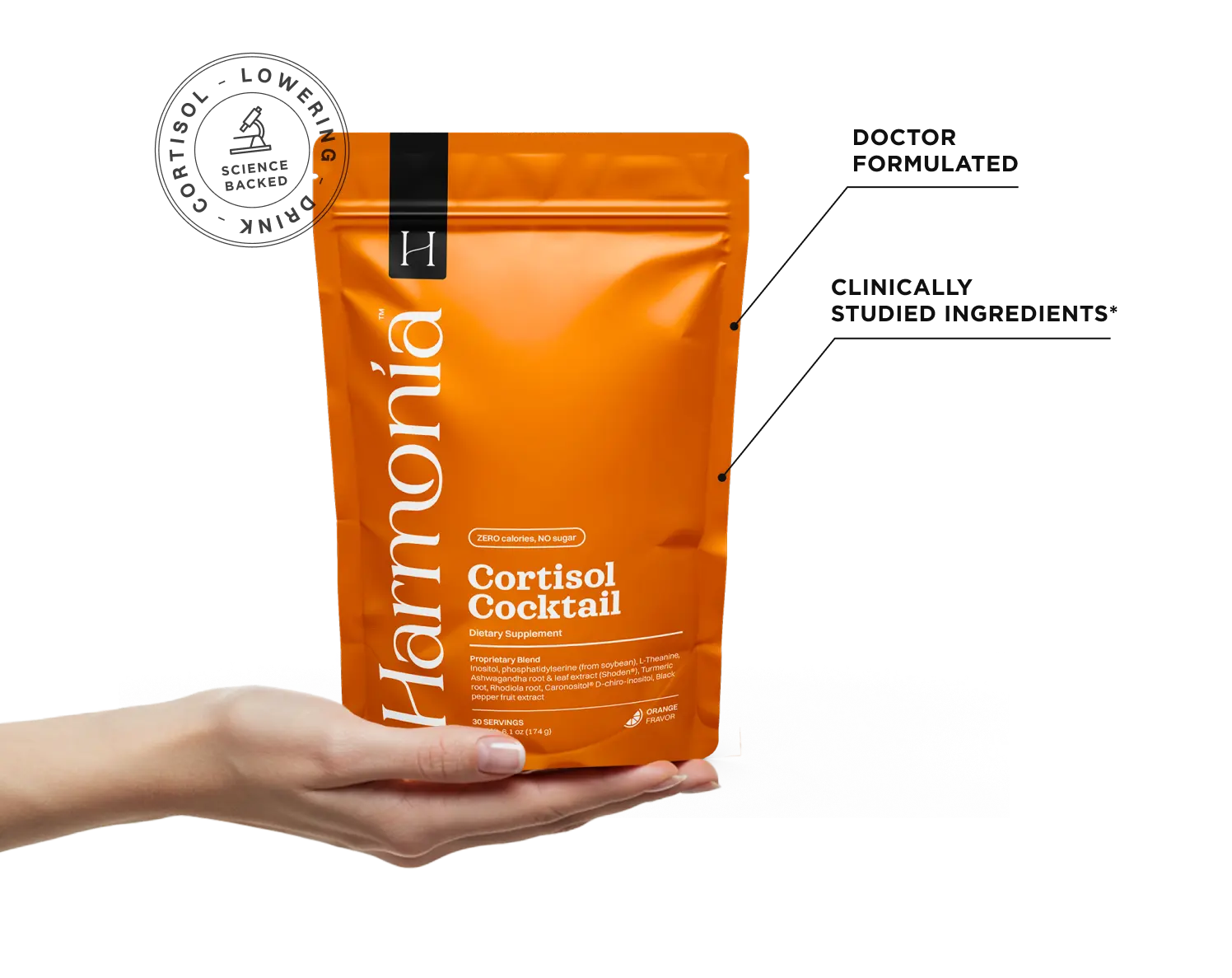
Supporting your metabolism, hormones, sleep, and stress levels is essential at every stage. This is why many individuals incorporate Harmonia, a daily cortisol-support drink formulated with clinically studied ingredients like Ashwagandha, Rhodiola, L-Theanine, inositols, magnesium, and B-vitamins.
These nutrients help reduce cravings, improve sleep, balance mood, and support hormonal health - making each stage of weight loss feel more manageable, sustainable, and aligned with your long-term goals.
Your body is always working with you. When you understand its signals, you can navigate your weight loss journey with patience, resilience, and confidence.
References
- Klok, M. D., Jakobsdottir, S., & Drent, M. L. (2007). The role of leptin and ghrelin in the regulation of food intake and body weight in humans: a review. Obesity reviews, 8(1), 21-34. Link.
- Levine, J. A. (2004). Non-exercise activity thermogenesis (NEAT). Nutrition reviews, 62(suppl_2), S82-S97. Link.