Caffeine fuels millions of people every day. It sharpens focus, boosts performance, and helps push through fatigue. But if you’re struggling with stubborn belly fat, you may be wondering whether your daily coffee habit is working against you.
The connection between caffeine, cortisol and belly fat isn’t simple. Caffeine can temporarily enhance fat burning, yet it also stimulates cortisol - the body’s primary stress hormone. When cortisol remains elevated for long periods, it may influence where fat is stored, particularly around the abdomen.
Understanding this relationship is key. The issue isn’t caffeine alone - it’s how caffeine interacts with your stress levels, sleep quality, and metabolic health.
What Is Cortisol and Why Does It Matter for Weight Loss?
Cortisol is produced by the adrenal glands and released in response to physical or psychological stress.
It follows a natural circadian rhythm: levels are typically highest in the early morning to help you wake up, then gradually decline throughout the day. This rhythm supports energy production, mental clarity, and metabolic flexibility.
From a weight loss perspective, cortisol plays several important roles. It mobilizes stored glucose during times of stress, ensuring that your brain and muscles have fuel. It also interacts closely with insulin, the hormone responsible for moving glucose into cells. In short bursts, this system is adaptive and beneficial.
Problems arise when cortisol remains chronically elevated. Persistent stress, sleep deprivation, overtraining, and frequent blood sugar spikes can keep cortisol levels higher than intended. Over time, this pattern may:
- Increase appetite, especially for high-carbohydrate foods
- Promote insulin resistance
- Encourage fat storage in the abdominal region
- Disrupt sleep, which further worsens hormonal balance
This is where cortisol and weight loss become tightly linked. Many people struggle to lose belly fat despite maintaining a calorie deficit because stress hormones are influencing where and how fat is stored.
How Caffeine Affects Cortisol Levels
Caffeine stimulates the central nervous system by blocking adenosine receptors, reducing perceived fatigue and increasing alertness. This stimulation also activates the hypothalamic-pituitary-adrenal (HPA) axis, which regulates cortisol production.
The Immediate Cortisol Spike
After consuming caffeine, cortisol levels typically rise. For someone who already wakes up with naturally high morning cortisol, adding caffeine immediately upon waking may amplify that peak. In well-rested individuals with balanced stress levels, this increase is often temporary and well tolerated.
However, if someone is already under chronic stress, the additional stimulation may feel like anxiety, jitteriness, or a mid-morning crash. Over time, repeatedly stacking caffeine on top of elevated baseline cortisol can reinforce stress signaling.
Blood Sugar and Secondary Cortisol Release
Caffeine can also impact blood sugar regulation. In some individuals, it temporarily reduces insulin sensitivity. If blood sugar drops later due to inadequate nutrition or excessive caffeine intake, the body may release additional cortisol to stabilize glucose levels.
This sequence can contribute to:
- Afternoon energy crashes
- Strong cravings for sugar or refined carbohydrates
- Irritability or difficulty concentrating
These patterns reinforce the link between caffeine, cortisol and belly fat when stress and metabolic instability are already present.
The Science Behind Caffeine, Cortisol and Belly Fat

Abdominal fat is not metabolically identical to fat stored in other areas. Visceral fat, which surrounds internal organs, is particularly responsive to stress hormones. It contains a higher density of glucocorticoid receptors, meaning it is more sensitive to cortisol.
When cortisol remains elevated, several processes may promote belly fat accumulation:
- Increased lipoprotein lipase activity in abdominal tissue
- Greater fat storage in visceral depots
- Impaired insulin sensitivity
- Increased inflammation
Short-term caffeine use can enhance fat oxidation during exercise. That benefit is real. But if overall stress load is high and recovery is poor, the hormonal environment may favor storage rather than fat loss.
This is why some people experience weight loss with moderate caffeine intake, while others notice stubborn belly fat despite similar habits. The underlying stress context matters more than caffeine alone.
Why Belly Fat Is More Sensitive to Stress Hormones
Evolutionarily, storing energy centrally may have offered survival advantages during times of uncertainty. Cortisol prepares the body for perceived threats. When stress signals persist, the body prioritizes energy storage.
Visceral fat is hormonally active. It produces inflammatory cytokines and interacts with insulin and leptin signaling. Elevated cortisol can further disrupt these pathways, creating a feedback loop that makes belly fat resistant to change.
Chronic stress also interferes with sleep quality. Sleep deprivation independently increases cortisol and alters hunger hormones such as ghrelin and leptin. Poor sleep combined with caffeine overuse can create a cycle of:
- Increased appetite
- Reduced impulse control
- Lower insulin sensitivity
- Higher perceived stress
Breaking this cycle often requires more than simply cutting calories.
Does Caffeine Prevent Weight Loss - Or Support It?
Caffeine has legitimate performance benefits. It can:
- Increase thermogenesis
- Enhance workout intensity
- Temporarily suppress appetite
For individuals with low stress and strong recovery habits, moderate caffeine intake may support weight loss efforts.
The challenge arises when caffeine is used to compensate for fatigue caused by chronic stress and poor sleep. In that scenario, it becomes a short-term bandage rather than a strategic tool.
Caffeine may backfire when:
- Sleep duration is consistently under 7 hours
- Baseline anxiety is high
- Blood sugar control is unstable
- Emotional eating patterns are present
- Recovery from exercise is inadequate
The goal is not elimination for everyone. The goal is regulation. Weight loss outcomes improve when stress physiology is addressed alongside nutrition and training.
Signs Cortisol May Be Contributing to Belly Fat
It can be difficult to measure cortisol without laboratory testing, but certain patterns raise suspicion that stress hormones may be interfering with progress.
Common signs include:
- Persistent abdominal fat despite consistent dieting
- Strong cravings for carbohydrates, especially at night
- Waking up tired even after adequate time in bed
- Afternoon crashes that require caffeine to function
- Feeling “wired but tired” at night
- Increased irritability or anxiety
If several of these patterns are present, addressing cortisol regulation may be more effective than increasing exercise intensity or further restricting calories.
How to Lower Cortisol Without Eliminating Caffeine Completely

Lowering cortisol does not require quitting coffee overnight. For many people, the smarter approach is building stress resilience while keeping caffeine intake strategic and moderate.
When your nervous system is supported and your recovery improves, caffeine becomes a tool - not a crutch. The goal is to reduce overall stress load so your body no longer feels the need to store energy around the midsection.
Here are practical, evidence-based strategies to support healthier cortisol patterns while still enjoying caffeine:
Optimize Caffeine Timing
Delay caffeine intake by 60–90 minutes after waking. Cortisol naturally peaks in the morning to help you feel alert. Drinking coffee immediately upon waking can amplify that spike.
Also avoid caffeine within 6–8 hours of bedtime to protect sleep quality, since disrupted sleep elevates cortisol the following day.
Stabilize Blood Sugar Throughout the Day
Blood sugar crashes trigger cortisol release.
- Build meals around protein, fiber, and healthy fats.
- Avoid consuming caffeine on an empty stomach if you’re prone to jitters or crashes.
Balanced nutrition reduces the stress response that contributes to cravings and belly fat storage.
Improve Sleep Hygiene
Sleep is one of the most powerful regulators of cortisol.
- Maintain consistent bed and wake times.
- Reduce evening screen exposure.
- Keep your bedroom cool and dark.
Even small improvements in sleep depth can significantly reduce next-day stress hormone output.

Manage Psychological Stress Proactively
Regular exercise, breathwork, mindfulness practices, and time outdoors improve nervous system regulation.
High-intensity training has benefits, but excessive training without recovery can raise cortisol further. Balance intensity with adequate rest.
Support Stress Resilience Nutritionally
Certain nutrients and adaptogens have been studied for their role in regulating the stress response. These include:
- L-theanine (supports calm focus)
- Ashwagandha (supports balanced cortisol output)
- Phosphatidylserine (may blunt stress-induced cortisol spikes)
- Rhodiola rosea (enhances stress resilience)
- Myo-inositol and D-chiro inositol (support insulin sensitivity and metabolic stability)
- Magnesium (supports relaxation and sleep quality)
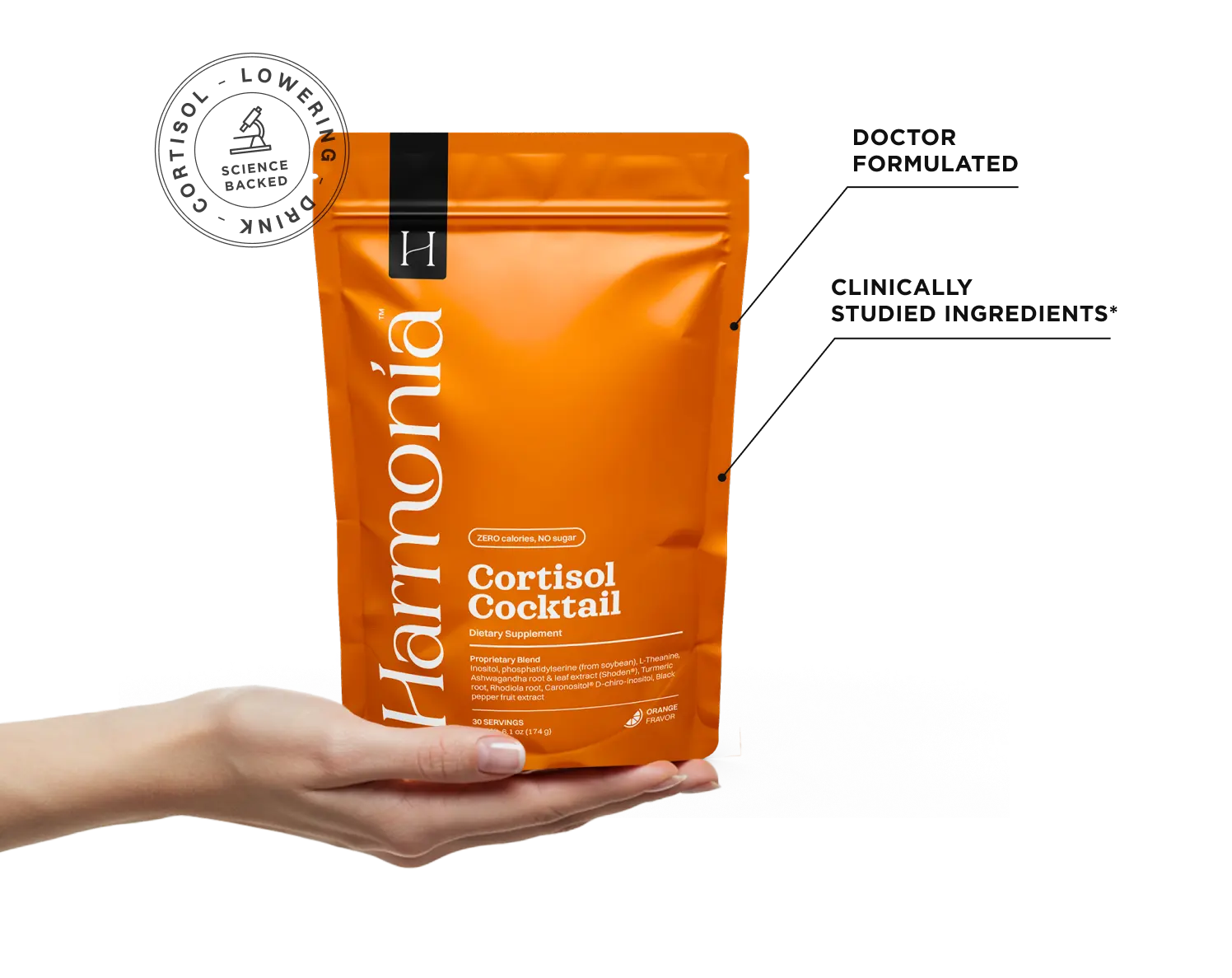
Harmonia brings many of these ingredients together into a single cortisol-support formula. Instead of stimulating the nervous system further, it focuses on calming stress pathways, supporting hormonal balance, and improving sleep quality. For individuals relying heavily on caffeine due to stress-related fatigue, strengthening recovery mechanisms can gradually reduce the need for constant stimulation.
The objective isn’t restriction - it’s regulation. When cortisol rhythms improve, energy stabilizes, cravings decrease, and managing belly fat becomes more achievable.
Can You Drink Coffee and Still Lose Belly Fat?
Yes, many people can. The key is context. Moderate caffeine intake in a well-rested, metabolically stable individual is unlikely to cause significant abdominal fat gain.
However, if caffeine is layered onto chronic stress, inadequate sleep, and poor nutrition, it may amplify cortisol dysregulation. In that case, reducing intake while strengthening recovery mechanisms may improve outcomes.
The relationship between caffeine, cortisol and belly fat is not linear. It depends on stress load, sleep quality, metabolic health, and overall lifestyle patterns.
Final Verdict

Caffeine alone is rarely the sole cause of stubborn belly fat. Chronic stress physiology is a more likely driver. Elevated cortisol, disrupted sleep, insulin resistance, and emotional eating patterns create an environment where abdominal fat becomes difficult to lose.
If you suspect stress hormones are interfering with your weight loss efforts, the solution is not necessarily eliminating coffee overnight. It is building resilience, improving sleep, stabilizing blood sugar, managing psychological stress, supporting your body with targeted nutrients that regulate cortisol and promote recovery.
If high cortisol symptoms sound familiar, consider evaluating your stress patterns more closely. Harmonia’s cortisol-support blend was designed to address multiple pathways involved in stress regulation, mood stability, sleep quality, and metabolic balance. When these systems improve, weight loss becomes more sustainable.
References
- Fiani, B., Zhu, L., Musch, B. L., Briceno, S., Andel, R., Sadeq, N., ... & Briceno, S. A. (2021). The neurophysiology of caffeine as a central nervous system stimulant and the resultant effects on cognitive function. Cureus, 13(5). Link.