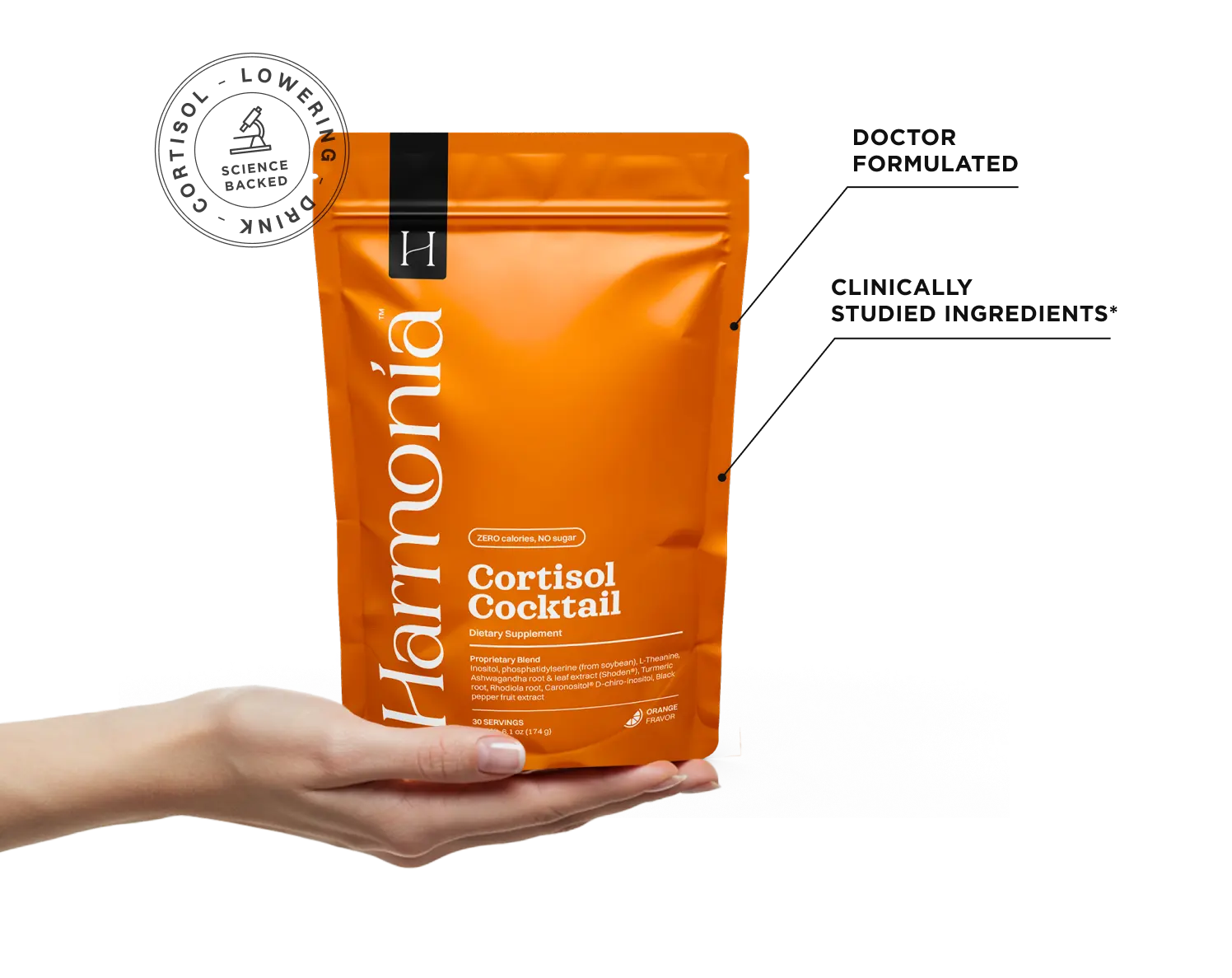

Two adaptogens that work on opposite ends of your cortisol curve.
Most people pick one adaptogen and wonder why results are inconsistent. The reason is that Rhodiola Rosea and Ashwagandha don't do the same thing, and using them interchangeably misses what makes each one worth taking.
Rhodiola rosea works on the front end of your stress response: it buffers the cortisol spike while it's happening. Ashwagandha works on the back end: it helps bring chronically elevated cortisol down after weeks of sustained stress. One is acute, one is cumulative.
If you’ve ever wondered Rhodiola Rosea vs Ashwagandha - which one is better, and can you take both? This guide explains how they differ, how they work, and why combining them can create harmony in your body.
What Is Rhodiola Rosea?
Rhodiola Rosea, often called “golden root,” grows in the cold mountains of Europe and Asia. Traditionally used by soldiers and monks to improve stamina and focus, it’s now one of the most popular natural stress fighters.
Its root contains more than 140 active ingredients, but the two most studied are rosavin and salidroside, which together account for most of its effects on the stress-response system.
Rosavin appears to influence serotonin and norepinephrine signaling in the brain, which partly explains rhodiola's mood-stabilizing and anti-fatigue effects.
Salidroside has been shown in multiple studies to reduce cortisol output during acute stress and to protect neurons from oxidative damage.
Rhodiola works by supporting the adrenal glands - the small organs responsible for releasing cortisol when you’re under pressure. Instead of suppressing stress hormones, Rhodiola helps your body respond more efficiently, reducing fatigue without making you feel drowsy.
Key Rhodiola benefits include:
- Enhances energy, endurance, and motivation
- Improves mental clarity and focus
- Supports healthy cortisol balance during stressful moments
- Improves burnout symptoms: in a 12-week trial of 118 people with stress-related burnout, 400 mg daily produced measurable improvement from week one
Because rhodiola is mildly stimulating, it's best taken in the morning or early afternoon. Taking it too late in the day can affect sleep quality.
What Is Ashwagandha?
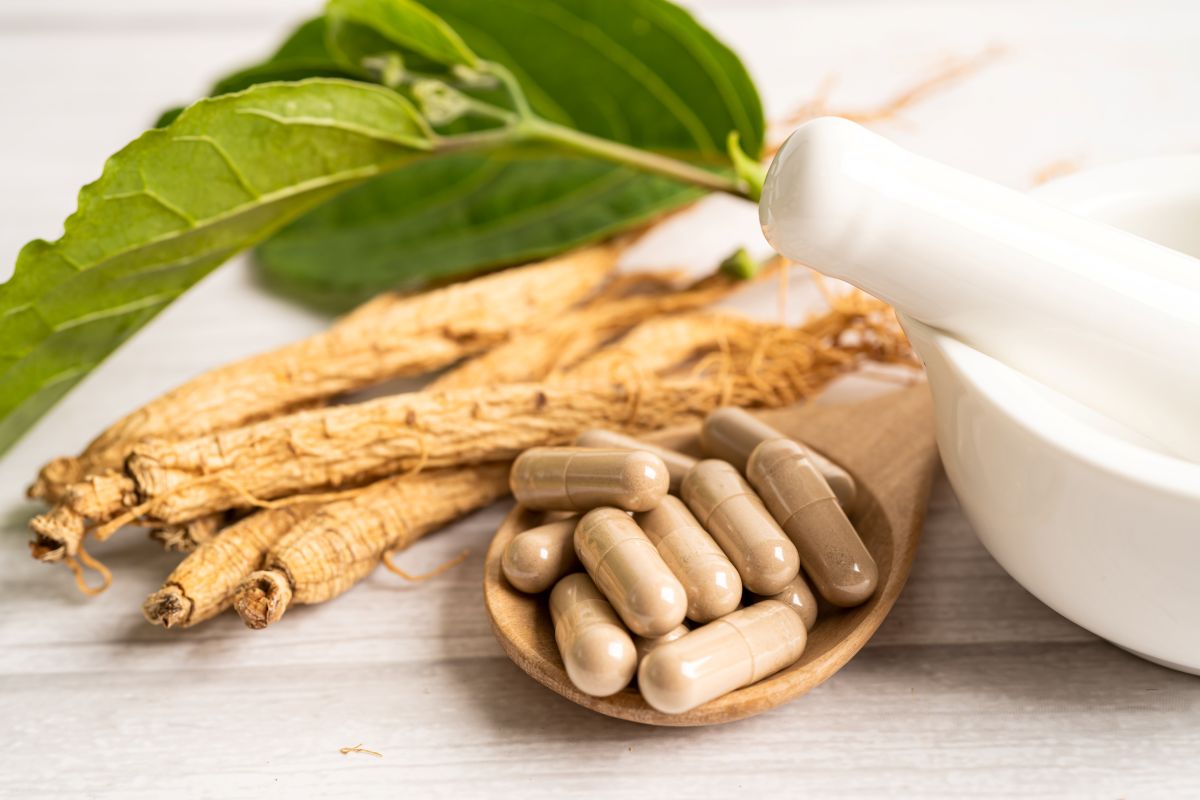
Ashwagandha, known as Withania somnifera, is one of Ayurveda’s most revered adaptogens. Its primary active compounds are withanolides, particularly withaferin A, which appear to directly modulate the HPA (hypothalamic-pituitary-adrenal) axis: the signaling chain that tells your adrenal glands how much cortisol to produce.
For centuries, it’s been used to calm the mind, support fertility, and strengthen the nervous system.
Unlike rhodiola, ashwagandha's effects are cumulative. Most clinical trials run 8-12 weeks, and the strongest cortisol-lowering results appear after consistent use over that period. A 2019 randomized controlled trial found that 240 mg of ashwagandha extract daily for 60 days reduced morning cortisol by 23% compared to placebo in chronically stressed adults.
Core Ashwagandha benefits:
- Promotes relaxation and better sleep
- Supports progesterone and estrogen balance
- Helps regulate thyroid function
- Improves mood, focus, and resilience
- Reduces self-reported anxiety and stress in multiple double-blind trials, with effect sizes that outperform most plant-based compounds
If you're also curious about what broader symptoms come with a disrupted cortisol pattern, cortisol imbalance symptoms covers the overlapping signs that point toward HPA dysregulation rather than ordinary fatigue.
Rhodiola Rosea vs Ashwagandha: Key Differences
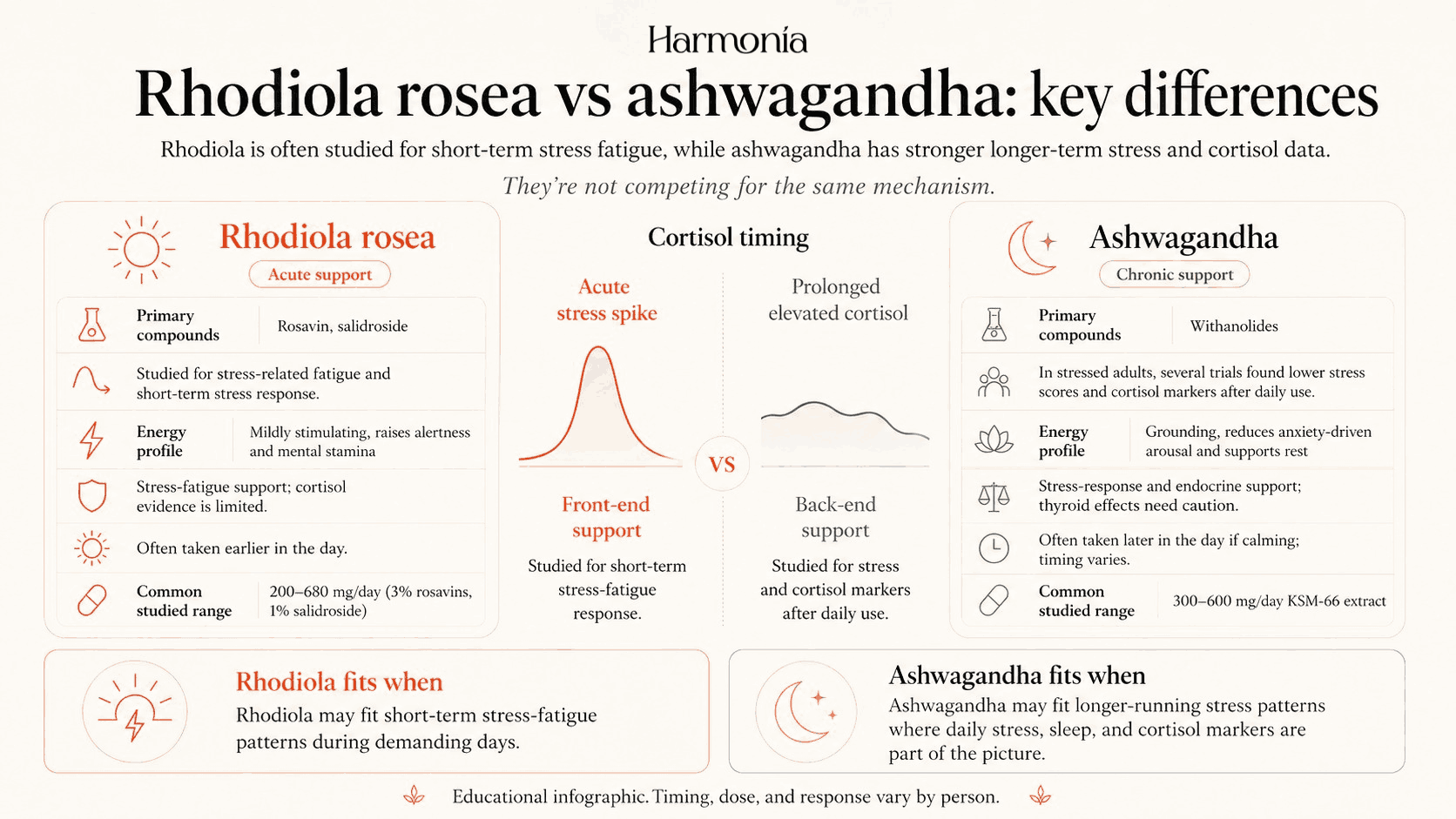
The clearest way to distinguish these two herbs is by timing: rhodiola works acutely, ashwagandha works chronically. They're not competing for the same mechanism.
The compound-level difference matters for choosing which herb to prioritize. If your cortisol spikes hard during stressful days but returns to normal afterward, rhodiola fits that pattern. If cortisol is elevated consistently through the day, ashwagandha's HPA-modulating effect is more relevant.
Can You Take Rhodiola and Ashwagandha Together?

Yes, and the combination is well-supported in clinical practice because the two herbs act on different phases of the cortisol curve. Rhodiola blunts acute spikes; ashwagandha reduces the chronic baseline. Taking both addresses the full arc of a sustained stress response.
This pairing is often referred to as a dual-adaptogen synergy - a combination that energizes without overstimulating and calms without sedating.
Rhodiola enhances energy, motivation, and focus by supporting your adrenal response during times of pressure, while Ashwagandha helps bring cortisol levels back down and encourages deeper rest and hormonal equilibrium.
Together, they create a natural rhythm of alertness by day and restoration by night.
How to take them together
Morning: take rhodiola (200-400 mg, standardized to 3% rosavins and 1% salidroside). Its mild stimulating effect supports focus and stress buffering through the active part of the day.
Evening: take ashwagandha (300-600 mg KSM-66 extract, the form with the most clinical data behind it). Its calming and cortisol-lowering effects support wind-down and sleep quality.
People with thyroid conditions or those on blood pressure medications should consult a clinician before adding either herb, as both can have mild effects on thyroid hormone conversion and blood pressure.
Which one is right for you?
Neither herb is categorically better. The answer depends on which phase of stress dysregulation you're dealing with.
Rhodiola may be a better fit if:
- You feel mentally foggy or depleted mid-day but sleep is relatively intact
- Your stress is episodic: high-demand periods followed by recovery time
- You're dealing with burnout-type fatigue where motivation and stamina have dropped
- You have lab work confirming normal or low-normal cortisol (rhodiola helps optimize the stress response, not suppress it)
Ashwagandha may be a better fit if:
- You have trouble winding down at night, or cortisol feels elevated through the day
- You're in a prolonged high-stress period with no real recovery windows
- You have hormonal symptoms tied to stress: irregular cycles, perimenopausal mood shifts, or thyroid disruption
- You want cortisol-lowering effects that compound over weeks, not just same-day relief
If your symptoms span both columns, the combination is often the most practical path. Both herbs are well-tolerated in most women at the doses used in clinical research.
For a broader look at how cortisol-targeting nutrients compare by mechanism, what supplements lower cortisol covers the full evidence ranking.
The Harmonia Advantage: Science-Backed Synergy
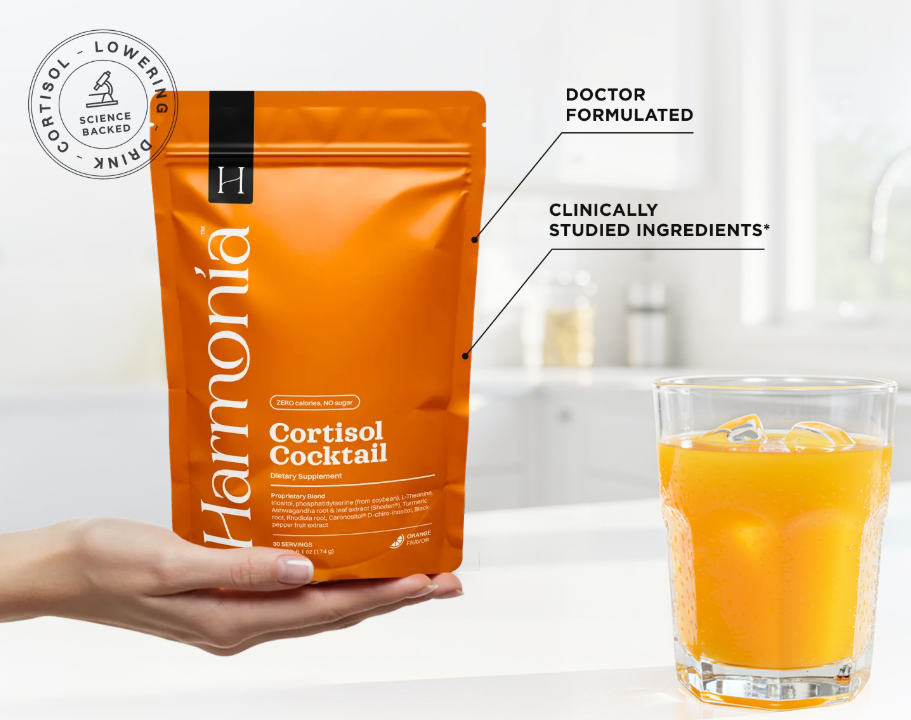
Harmonia's formula includes both KSM-66 ashwagandha and rhodiola rosea, addressing both ends of the cortisol curve in one daily drink. KSM-66 is the ashwagandha extract used in the majority of human clinical trials on cortisol reduction, chosen specifically because it has the most consistent data behind it.
The formula also includes phosphatidylserine, which has its own evidence base for lowering exercise-induced cortisol spikes, and L-theanine, which supports calm alertness through GABA modulation rather than cortisol suppression. These aren't redundant ingredients: they each target different points in the stress-response chain.
If you want to understand the clinical reasoning behind the ingredient choices, Harmonia's science page walks through each ingredient with its supporting research.
Conclusion
Rhodiola rosea and ashwagandha are not interchangeable. Rhodiola buffers acute cortisol spikes; ashwagandha reduces chronic cortisol over weeks. Used together, they support the full cortisol curve from the morning stress response through the evening wind-down.
For most women dealing with sustained stress, the combination outperforms either herb alone, because chronic stress creates both problems at once: an elevated baseline and exaggerated acute spikes.
If your symptoms have been pointing toward a disrupted cortisol pattern, you can take the quiz to see whether the Harmonia Cortisol Cocktail fits where you are right now.
FAQ
Is rhodiola rosea or ashwagandha better for stress?
Neither is categorically better: they address different phases of the stress response. Rhodiola is more effective for acute stress and mental fatigue; ashwagandha is more effective for chronically elevated cortisol. If stress is both daily and sustained, taking both covers a broader range of the cortisol curve than either herb alone.
Can you take rhodiola and ashwagandha at the same time?
Yes. No studies have found safety concerns with combining them, and their mechanisms don't overlap in a way that creates redundancy. The practical approach is morning rhodiola and evening ashwagandha to align each herb with its best-fit phase of the day.
How long does it take for ashwagandha to lower cortisol?
Most clinical trials run 8-12 weeks. A 2019 randomized controlled trial found significant cortisol reduction after 60 days of 240 mg/day. Some people notice calming effects earlier, but meaningful cortisol changes in lab values typically require consistent use over at least 6-8 weeks.
What is the best dose of rhodiola rosea?
Research supports 200-680 mg per day, standardized to 3% rosavins and 1% salidroside. Lower doses (200-300 mg) work well for daily maintenance and stress buffering. Higher doses up to 400 mg have been used in burnout and fatigue studies. Rhodiola follows a bell-curve response, so exceeding 680 mg is not recommended.
Does rhodiola rosea affect hormones in women?
Rhodiola's primary hormonal effect is on cortisol, specifically reducing cortisol spikes during acute stress. It doesn't directly regulate estrogen or progesterone the way ashwagandha does. For women with hormonal disruptions tied to chronic stress, combining rhodiola with ashwagandha addresses both the acute cortisol spikes and the downstream hormonal effects of sustained HPA activation.
Which adaptogen is better for sleep, rhodiola or ashwagandha?
Ashwagandha, by a significant margin. Its calming, HPA-modulating effect supports sleep onset and sleep quality. Rhodiola is mildly stimulating and can disrupt sleep if taken in the afternoon or evening. If sleep is the primary concern, prioritize ashwagandha taken 30-60 minutes before bed.
References
- Adaptogen, A. P. P. (2001). Rhodiola rosea: a possible plant adaptogen. Altern Med Rev, 6(3), 293-302. Link.
- Bharti, V. K., Malik, J. K., & Gupta, R. C. (2016). Ashwagandha: multiple health benefits. In Nutraceuticals (pp. 717-733). Academic Press. Link.
- Chandrasekhar, K., Kapoor, J., & Anishetty, S. (2012). A prospective, randomized double-blind, placebo-controlled study of safety and efficacy of a high-concentration full-spectrum extract of ashwagandha root. Indian journal of psychological medicine, 34(3), 255-262. Link
- Kasper, S., & Dienel, A. (2017). Multicenter, open-label, exploratory clinical trial with Rhodiola rosea extract in patients suffering from burnout symptoms. Neuropsychiatric disease and treatment, 13, 889-898. Link
- Lekomtseva, Y., Zhukova, I., & Wacker, A. (2017). Rhodiola rosea in subjects with prolonged or chronic fatigue symptoms: Results of an open-label clinical trial. Complementary medicine research, 24(1), 46-52. Link
- Salve, J., Pate, S., Debnath, K., & Langade, D. (2019). Adaptogenic and anxiolytic effects of ashwagandha root extract in healthy adults: a double-blind, randomized, placebo-controlled clinical study. Cureus, 11(12). Link