You've probably noticed the pattern. Deadline week arrives, or a hard conversation happens, or you just haven't slept properly in a while, and a few days later your skin breaks out. You swap your cleanser. You drink more water. The breakouts keep coming.
The piece most skincare routines miss is what's actually driving the problem. Cortisol is the direct link between what's happening in your life and what's showing up on your face. And the mechanism is specific enough that understanding it changes what you do about it.
Quick answer
Cortisol acne is acne triggered or worsened by stress. When stress hormones stay high, they can increase oil production, raise inflammation, affect other hormones, and slow the skin’s healing process all at once. Because the root cause is happening inside the body, skincare changes alone usually are not enough to fully address it.
Here's how it works at a hormonal level, why these breakouts take so long to clear, and what actually moves the needle.
What is cortisol acne?
Cortisol acne is acne that's triggered or significantly worsened by elevated cortisol levels during periods of psychological or physical stress.
Cortisol is your body's primary stress hormone. When your brain perceives a threat, the hypothalamus activates the HPA axis (hypothalamic-pituitary-adrenal axis), which signals your adrenal glands to release cortisol.
This is normal and useful for short-term stress. The problem comes when the stress is chronic and cortisol stays elevated for days, weeks, or months at a time.
Chronic elevation sets off a cascade that affects your skin through multiple pathways at once which is why people dealing with ongoing stress often find their skin stops responding to the routine that used to work.
The hormonal environment changed. To understand what's pushing cortisol up in the first place, what causes high cortisol in women covers the 10 most common triggers worth checking against your own situation.
How cortisol causes acne
The CRH and sebum pathway
This is the part most articles on cortisol and acne skip over. It's worth knowing because it explains why stress acne can feel so aggressive.
Before cortisol is released, the hypothalamus secretes CRH (corticotropin-releasing hormone) to activate the stress response. Your sebaceous glands, which produce skin oil, contain CRH receptors directly on them.
When CRH binds to those receptors, it triggers a significant increase in lipid synthesis inside the sebocytes (the cells that produce sebum).
More sebum clogs pores. Clogged pores create an anaerobic environment where Cutibacterium acnes, the primary acne-causing bacteria, thrives. The inflammation that follows is the breakout you see.
Research on CRH and acne pathogenesis has confirmed this pathway, but it rarely makes it into mainstream skincare content.

The androgen connection
Cortisol doesn't work alone. When the adrenal glands are activated under chronic stress, they also produce more androgens, particularly DHEA-S (dehydroepiandrosterone sulfate).
Androgens are the same hormones that drive hormonal acne, and they independently stimulate sebum production and follicular hyperkeratinization (the skin cell buildup that physically clogs pores).
This is why cortisol acne can look clinically identical to hormonal acne and why people with existing hormonal vulnerability (PCOS, perimenopause, post-pill) tend to see stress breakouts hit harder.
The inflammation problem
Acne is fundamentally an inflammatory condition. Chronic cortisol elevation raises circulating inflammatory cytokines, including IL-1 and TNF-alpha, which means your skin is operating at a higher baseline level of inflammation before a single pore clogs.
When bacteria get into a clogged follicle, the inflammatory response is more severe than it would be in someone whose cortisol is well-regulated. Breakouts are larger, redder, and more painful. And because the inflammatory environment is systemic, the skin can't resolve them efficiently.
A study tracking acne severity in students during exam periods found a strong correlation between stress scores and acne severity, independent of changes in diet, sleep, or skincare habits during that period. The stress itself was the variable.
Why stress acne heals slowly
Elevated cortisol suppresses collagen synthesis and slows skin cell regeneration. In practical terms: pimples are wounds, and your skin's ability to close those wounds is measurably impaired when cortisol stays high.
Research on psychological stress and wound healing found that even moderate stress significantly delayed wound closure compared to low-stress controls. This is why stress breakouts seem to linger for weeks while the same type of breakout during a calmer period resolves in a few days. The skin is in a repair deficit.
Skin barrier disruption
Chronic cortisol also interferes with ceramide production. Ceramides are the lipids that hold the skin barrier together. When ceramide levels drop, the barrier becomes permeable: water escapes faster, bacteria penetrate more easily, and the skin reacts to products it normally tolerates without issue.
This is why skin becomes sensitive and reactive during high-stress periods even in the absence of active breakouts. The barrier problem and the acne problem have the same root.
Trying to treat skin sensitivity with new topicals while the hormonal driver is still running tends to make things worse, not better.
_11zon.jpg)
Cortisol acne vs. hormonal acne
The two get conflated because they share mechanisms: androgen elevation, inflammatory breakouts, and a limited response to topical-only treatment. The primary triggers and location patterns are different.
Hormonal acne is typically cyclical. It clusters on the lower face, jaw, and chin, tends to flare in the week before a period, and is linked to estrogen and progesterone fluctuations affecting androgen activity.
Cortisol acne is less predictable in timing, can appear anywhere sebaceous glands are dense (forehead, nose, chest, upper back), and correlates more clearly with identifiable stress events than with a monthly cycle.
In practice, the two often co-exist. Chronic stress disrupts the hypothalamic-pituitary-gonadal axis, which means it can also alter the sex hormone balance driving cyclical hormonal acne.
Someone managing PCOS or perimenopausal hormonal shifts will frequently find that stress makes their existing hormonal acne pattern significantly worse. Managing cortisol is relevant to both.
How to treat cortisol acne
Sleep and the cortisol curve
Cortisol follows a predictable diurnal rhythm. It peaks in the early morning, drops through the day, and reaches its lowest point around midnight to support sleep onset. Disrupted sleep collapses this curve.
Getting fewer than 7 hours, waking repeatedly through the night, or keeping inconsistent bedtimes keeps cortisol elevated through the next day, which feeds directly back into the mechanisms above.
Seven to nine hours with a consistent bedtime and a dark room is the most direct intervention available for cortisol regulation. The data on it is stronger than what most supplements or skincare products can show.

Nutrition and the gut-skin axis
Chronic stress disrupts the gut microbiome. Dysbiosis, a reduction in microbial diversity and loss of beneficial bacteria, is increasingly linked to inflammatory skin conditions including acne through the gut-skin axis.
The mechanism runs both ways: gut inflammation raises systemic inflammation, which worsens the inflammatory environment driving acne, and a compromised gut barrier allows lipopolysaccharides (bacterial toxins) into circulation, which triggers an immune response that shows up in the skin.
An anti-inflammatory diet supports both sides of this: omega-3 fatty acids (fatty fish, walnuts, flaxseed), fermented foods (yogurt, kefir, sauerkraut), high-fibre vegetables and legumes for microbiome diversity, and reducing refined sugar and ultra-processed foods that drive inflammatory cytokine activity.
Think of it as reducing the background inflammation load that's already making the skin's job harder.
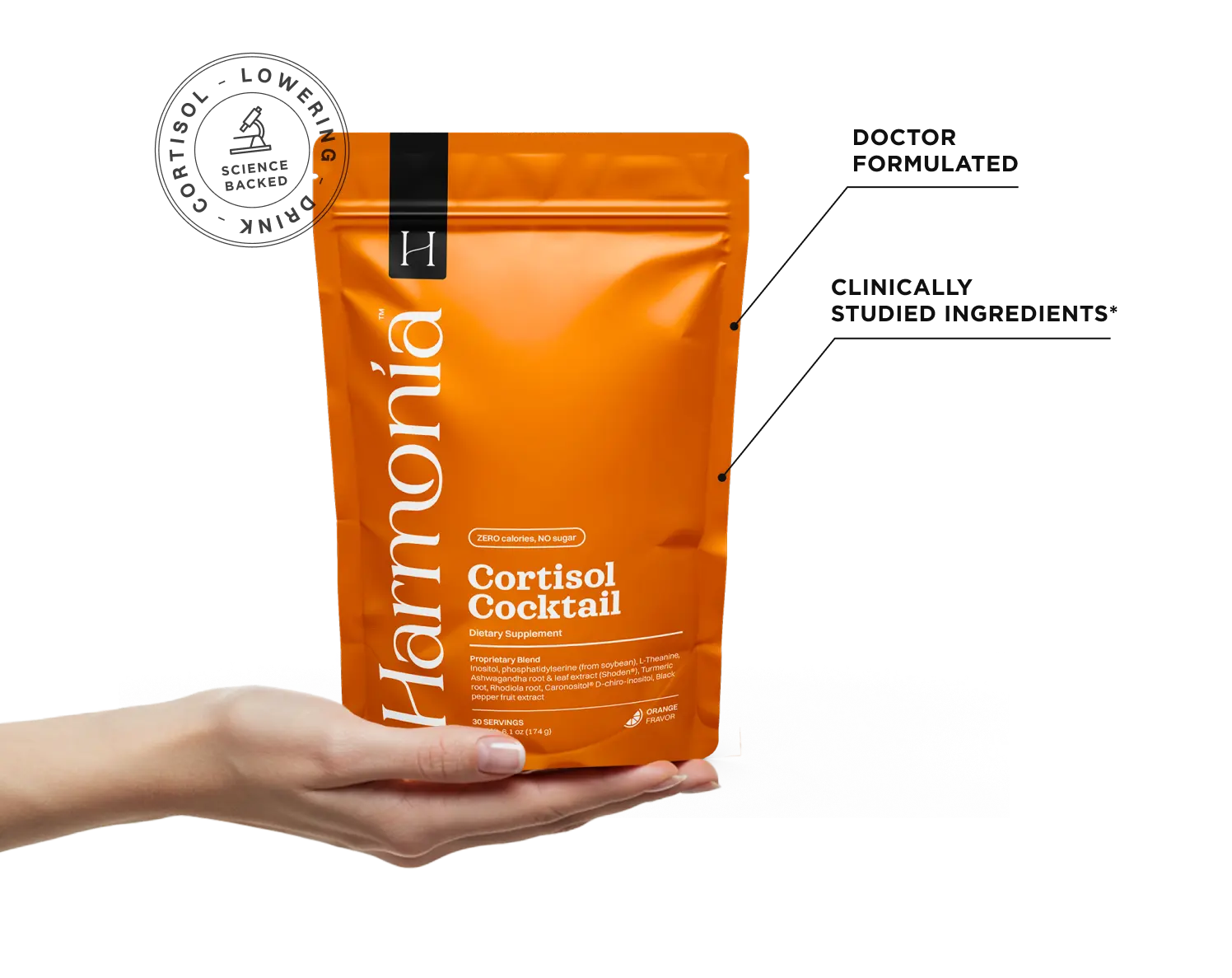
For anyone dealing with persistent cortisol-driven skin issues alongside other stress symptoms, Harmonia is a cortisol cocktail formulated to address the hormonal root directly.
It combines the adaptogens Ashwagandha and Rhodiola Rosea with Myo-Inositol for insulin and androgen balance, targeting the cortisol pathway that drives both the skin and systemic symptoms.
Adaptogens and cortisol regulation
Adaptogens are a category of botanicals that modulate the HPA axis response to stress. They help normalize the cortisol response so it activates when needed and damps down appropriately afterward.
Ashwagandha (Withania somnifera) is the most studied adaptogen for cortisol. A double-blind, placebo-controlled trial on standardized Ashwagandha extract found significant reductions in serum cortisol and self-reported stress scores after 60 days at 300mg twice daily. The cortisol reduction was measured in blood, not just reported by participants.
Rhodiola Rosea has a different mechanism: it appears to reduce cortisol's downstream effects on fatigue and cognitive function, with several trials showing reduced burnout symptoms and reduced cortisol output under repeated stress exposure.
Both work on the hormonal driver. For skin that's responding to cortisol elevation, addressing the source is a more direct approach than cycling through new cleansers. If you need faster relief while working on the underlying issue, how to lower cortisol fast covers same-day strategies you can stack with a longer-term adaptogen protocol.
Topical support during high-stress periods
When cortisol is elevated, the skin barrier is already compromised. This is not the time to introduce aggressive actives.
Retinoids, exfoliating acids, and new product combinations tend to cause more sensitivity during high-stress periods because the barrier that normally handles them is weakened.
Simplify instead: a gentle, low-fragrance cleanser, a barrier-supporting moisturizer containing ceramides and niacinamide, and non-comedogenic SPF.
If inflammatory breakouts are severe, a dermatologist can prescribe targeted topicals (retinoids, azelaic acid) or, when appropriate, systemic options (spironolactone for androgen-driven acne, low-dose antibiotics for inflammatory control). Topical and systemic approaches work together.

The Bottom Line
Cortisol acne is a skin symptom of a systemic stress response. The excess sebum, the slow healing, the sensitivity, the breakouts that arrive at the worst moments: all of these are downstream effects of a hormonal cascade that starts well above the skin level.
Managing it means working at that level: sleep quality, anti-inflammatory nutrition, adaptogenic support, and realistic expectations for topical treatment during high-stress periods.
For targeted cortisol support, Harmonia is a cortisol cocktail that combines Ashwagandha, Rhodiola Rosea, and Myo-Inositol to address the hormonal mechanisms covered in this article.
Take the Harmonia quiz to see how the cortisol cocktail can support your stress and skin goals.
Frequently Asked Questions
Does cortisol directly cause acne?
Yes, through multiple mechanisms. Cortisol and the related hormone CRH directly stimulate sebum production via receptors on sebaceous glands, trigger androgen release from the adrenal glands, elevate systemic inflammation, and slow wound healing.
Where does cortisol acne appear?
Cortisol acne tends to appear wherever sebaceous glands are densest: the forehead, nose, chin, chest, and upper back.
Unlike cyclical hormonal acne, which typically clusters on the jaw and chin, cortisol acne can be more diffuse and tends to flare with identifiable high-stress periods rather than following a monthly cycle.
How long does it take for cortisol acne to clear?
Because cortisol suppresses wound healing, breakouts during high-stress periods can persist longer than usual. Most people see meaningful improvement within 2–4 weeks of consistently managing cortisol through sleep, nutrition, and stress reduction.
Topical treatments help, but addressing the cortisol root cause matters more than any product change.
Can diet help cortisol acne?
Yes, indirectly. Chronic stress disrupts the gut microbiome, and dysbiosis is increasingly linked to inflammatory skin conditions through the gut-skin axis.
A diet high in omega-3s, fibre, and fermented foods while low in refined sugar and ultra-processed foods supports both gut barrier function and skin health. Diet doesn't replace stress management, but it reduces the background inflammatory load your skin is dealing with.
Is cortisol acne the same as stress acne?
They describe the same problem from different angles. Stress acne refers to the observable pattern of breaking out during stressful periods. Cortisol acne refers to the hormonal mechanism behind it. Same problem, same root cause.
References
- Chiu, A., Chon, S. Y., & Kimball, A. B. (2003). The response of skin disease to stress: Changes in the severity of acne vulgaris as affected by examination stress. Archives of Dermatology, 139(7), 897–900. Link
- Ganceviciene, R., Böhm, M., Fimmers, R., & Zouboulis, C. C. (2009). Involvement of the corticotropin-releasing hormone system in the pathogenesis of acne vulgaris. British Journal of Dermatology, 160(2), 345–352. Link
- Kiecolt-Glaser, J. K., Marucha, P. T., Malarkey, W. B., Mercado, A. M., & Glaser, R. (1995). Slowing of wound healing by psychological stress. Lancet, 346(8984), 1194–1196. Link
- Chandrasekhar, K., Kapoor, J., & Anishetty, S. (2012). A prospective, randomized double-blind, placebo-controlled study of safety and efficacy of a high-concentration full-spectrum extract of Ashwagandha root in reducing stress and anxiety in adults. Indian Journal of Psychological Medicine, 34(3), 255–262. Link
- Bowe, W. P., & Logan, A. C. (2011). Acne vulgaris, probiotics and the gut-brain-skin axis. Gut Pathogens, 3(1), 1. Link