_11zon.jpeg)

If you've searched for an adrenal fatigue diet, you've probably found strict food lists, fixed meal schedules, and promises to restore tired adrenal glands. The evidence does not support those claims.
The honest starting point is that adrenal fatigue is not a recognized medical diagnosis. No validated test confirms it, and no clinical diet has been shown to repair adrenal glands worn down by everyday stress.
Your exhaustion still deserves attention. Food can help you eat enough, reduce long gaps that leave you shaky or ravenous, correct a nutrient gap, and protect sleep from late caffeine or alcohol. Persistent fatigue also deserves a proper medical work-up when it keeps returning.
Is there a real adrenal fatigue diet?
No clinically validated adrenal fatigue diet exists. A practical eating pattern includes enough total food, a protein source, fiber-rich carbohydrates, produce, fats, and fluids. Meal frequency should reflect your appetite, activity, medication use, and whether long gaps make symptoms worse. This approach can support daily energy, but it does not treat adrenal insufficiency or prove that cortisol is causing your fatigue.
Adrenal fatigue vs adrenal insufficiency
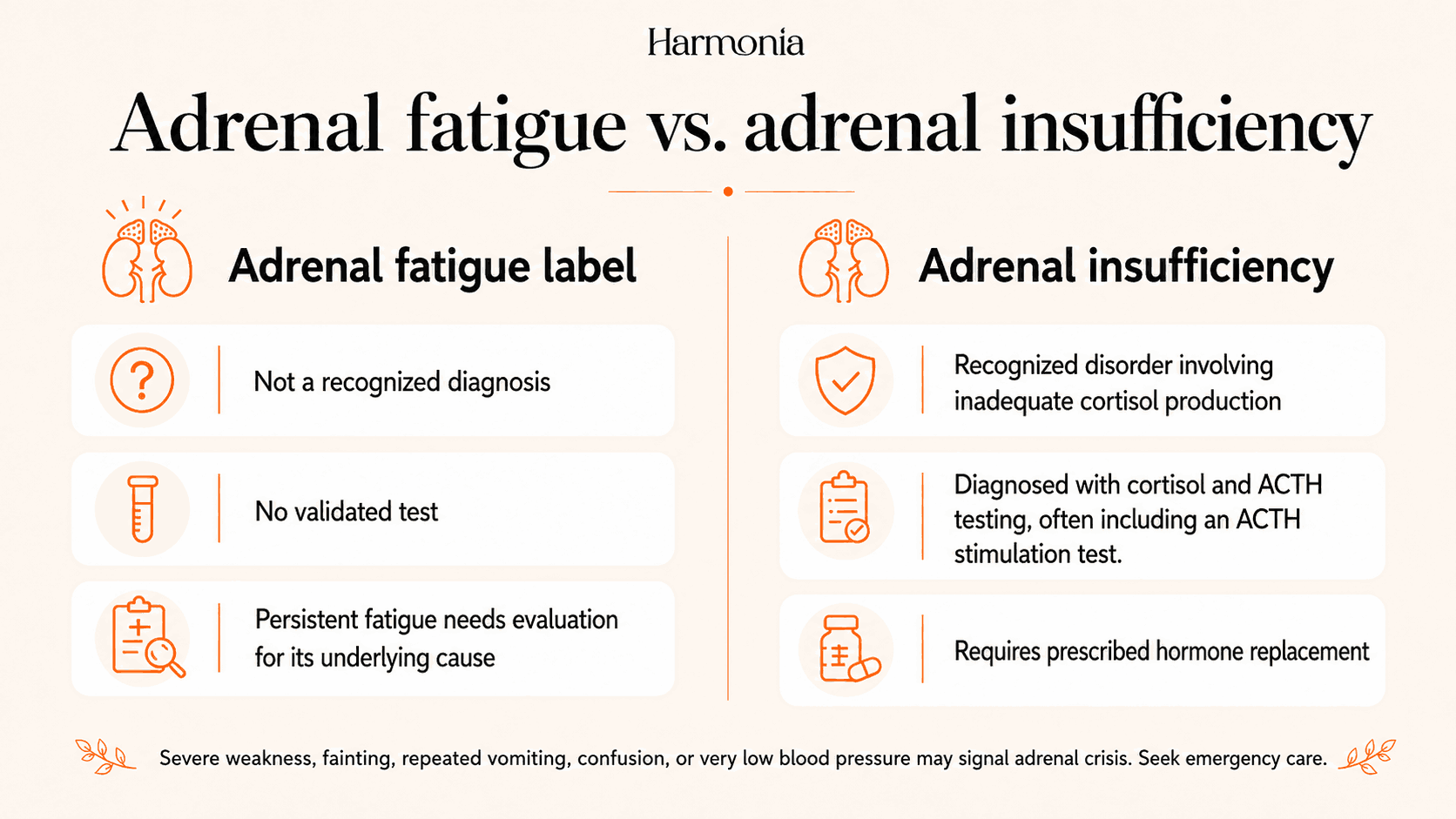
Adrenal fatigue and adrenal insufficiency are different terms. Only adrenal insufficiency is a recognized endocrine disorder, and it can become life-threatening without treatment.
A 2016 systematic review in BMC Endocrine Disorders reviewed 58 studies and found no evidence that chronic stress exhausts the adrenal glands. The Endocrine Society also warns that unvalidated testing and treatment can delay the search for the actual cause of fatigue.
Adrenal insufficiency is different. The National Institute of Diabetes and Digestive and Kidney Diseases explains that clinicians use symptoms and blood testing, often including an ACTH stimulation test, to confirm low cortisol and investigate the cause.
The symptoms people place under the adrenal-fatigue label overlap with sleep disorders, iron or vitamin B12 deficiency, thyroid disease, depression, medication effects, perimenopause, and other conditions. Harmonia's guide to adrenal fatigue symptoms explains which clues warrant medical follow-up.
For a deeper look at individual ingredients and ordinary foods, foods that support a healthy stress response separates useful nutrition habits from claims that a single food can “flush” cortisol.
How often should you eat?
You do not need to eat every 2 to 3 hours unless that pattern solves a real problem for you. A systematic review and network meta-analysis found no clear universal advantage to a higher meal frequency when calorie intake was comparable.
That finding fits the practical approach: choose a schedule you can maintain, rather than treating meal frequency as an adrenal rule. The meal-frequency evidence remains inconclusive across controlled trials.
Tomorrow's move: write down when you eat for 2 ordinary days and note the point where your energy, concentration, or appetite falls apart. Adjust the gap that is actually causing trouble.
Is protein at breakfast helpful?
Protein at breakfast can improve fullness, especially when breakfast is otherwise small or mostly refined carbohydrate. It has not been shown to lower cortisol or treat adrenal fatigue.
Eggs with whole-grain toast, Greek yogurt with fruit and oats, tofu scramble, beans with rice, or a smoothie with yogurt or another protein source all count. Breakfast does not need to happen within a fixed window after waking.
Carbohydrates and the afternoon crash
Carbohydrates are a useful energy source. An afternoon dip can also reflect poor sleep, too little lunch, a long gap since eating, medication effects, or a meal that simply did not contain enough food.
Try pairing bread, rice, oats, potatoes, or fruit with protein or fat. The goal is a meal that carries you to the next planned meal without leaving you distracted by hunger.
Foods and drinks to limit when they worsen symptoms
A useful limit is based on what repeatedly disrupts your sleep, appetite, digestion, or ability to eat enough. Blanket bans usually add work without answering why you feel tired.
Caffeine
Caffeine can temporarily improve alertness, then interfere with the sleep you need to recover. In a randomized sleep study, a substantial caffeine dose taken 6 hours before bedtime reduced total sleep time.
Move your last coffee earlier if falling asleep, waking during the night, or next-day fatigue is a problem. Taper gradually when you drink several servings a day, since abrupt withdrawal can add headaches and tiredness.
Harmonia's guide to caffeine and cortisol explains why timing, sleep, and your usual intake matter more than treating coffee as universally harmful.

Added sugar
You do not need to remove sugar completely. Large sugary drinks or sweets eaten in place of a meal may leave you hungry again quickly, while a moderate amount inside a meal is a different situation.
Alcohol
Alcohol can make you fall asleep faster while producing more fragmented sleep and earlier waking. The National Institute on Alcohol Abuse and Alcoholism links alcohol-related sleep disruption with next-day fatigue.
Notice whether even a small evening amount changes your sleep or morning energy. That observation is more useful than an adrenal-fatigue food rule.
Are fasting and keto a good idea when you are exhausted?
Neither intermittent fasting nor a ketogenic diet has been validated as a treatment for adrenal fatigue. They can also make it harder to eat enough when low appetite, nausea, heavy training, or an already restrictive routine is part of the picture.
Keep the pattern only when you can meet your energy and nutrient needs and your sleep, mood, digestion, and daily function remain stable. Stop treating worsening symptoms as proof that a diet is “working.”
For a focused review of the evidence and practical warning signs, does fasting increase cortisol covers short fasting windows, longer fasts, and the role of under-fueling.
Hydration, salt, and adrenal cocktails
Most people need ordinary hydration and salt to taste, rather than a high-sodium drink marketed as proof of low cortisol. Heat, exercise, vomiting, diarrhea, pregnancy, kidney disease, blood-pressure conditions, and some medicines change fluid and electrolyte needs.
Salt cravings alone do not diagnose low cortisol. NIDDK notes that some people with Addison’s disease and low aldosterone may benefit from more sodium under clinical guidance. Darkened skin is also most closely associated with primary adrenal insufficiency, or Addison's disease, rather than every form of adrenal insufficiency.
A homemade adrenal cocktail of juice, coconut water, and salt is a flavored electrolyte drink. It can provide fluid, carbohydrate, potassium, vitamin C, and sodium. It does not replace cortisol or aldosterone treatment.
The broader adrenal cocktail guide explains when that drink is simply convenient hydration and when extra sodium deserves medical guidance.
When restriction backfires
Removing gluten, dairy, nightshades, sugar, caffeine, and alcohol at the same time makes it difficult to identify which change affected your symptoms. It also narrows the foods available when shopping and cooking already feel hard.
Use an elimination plan when there is a clear reason, such as diagnosed celiac disease, a confirmed allergy, or a supervised test of one suspected trigger. Set a review point and a reintroduction plan before you start.
What to eat when cooking feels impossible
Low-effort meals count. The most useful meal is often the one you can assemble before fatigue turns into another skipped meal.
- Rotisserie chicken or marinated tofu with microwave rice and frozen vegetables
- Greek yogurt or fortified plant yogurt with fruit, oats, and nut butter
- Tinned salmon, tuna, or beans with crackers and prewashed salad
- Eggs on toast with fruit
- A frozen meal with a clear protein source, plus extra vegetables or fruit when available
- A smoothie with milk or a fortified alternative, fruit, oats, and yogurt or protein powder
Convenience is a nutrition tool. It protects intake on the days when a recipe with 14 ingredients is never going to happen.
%20(1).jpeg)
A realistic one-day meal plan
This sample day shows the framework in practice. Portion size and snack frequency should match your appetite, body size, activity, medication use, and medical needs.
A day like this is a template, not a prescription. The first priority is enough food across the day, especially when aggressive calorie cutting has become part of the fatigue cycle.
Supplements: what the evidence actually supports
The evidence below is ranked by study design, sample size, replication, relevance to stressed adults, and whether the studied dose can be compared with ordinary supplement use. Ingredient studies do not prove that a finished multi-ingredient product will produce the same result.
Ashwagandha
A 2024 systematic review and meta-analysis in Explore included 9 randomized trials and 558 participants. The pooled results favored ashwagandha for stress and anxiety measures, although products, doses, study populations, and methods differed.
One often-cited 60-day trial gave 64 adults with chronic stress 300 mg of a specific root extract twice daily. That result applies to the tested extract and dose, rather than every powder or blend that lists ashwagandha.
The National Center for Complementary and Integrative Health advises caution because ashwagandha can affect thyroid function, interact with medicines, and has been linked with rare liver injury. It should be avoided during pregnancy and breastfeeding.
Magnesium
The relevant 8-week trial studied adults with severe stress and low magnesium status. Participants received 300 mg of magnesium alone or 300 mg of magnesium plus 30 mg of vitamin B6. The findings do not support a general claim that magnesium lowers cortisol or fixes sleep in anyone who feels tired.
NIH sets the adult upper limit for magnesium from supplements and medicines at 350 mg daily. That limit does not include magnesium naturally present in food.
Vitamin C
A double-blind 14-day study used 3,000 mg of sustained-release vitamin C daily before an acute laboratory stress test. It measured blood pressure, cortisol, and subjective stress responses in healthy young adults.
The study dose exceeded the NIH adult tolerable upper intake level of 2,000 mg daily. It should not be copied as a routine daily recommendation. Fruits and vegetables can cover ordinary vitamin C needs for most people.
Severe fatigue after prednisone needs medical assessment
Severe fatigue during or after a glucocorticoid taper can reflect suppressed cortisol production. Food, salt, adrenal cocktails, and adaptogens do not correct glucocorticoid-induced adrenal insufficiency.
The 2024 joint guideline from the European Society of Endocrinology and Endocrine Society explains that risk depends on the dose, duration, potency, route, and individual susceptibility. Tapering and testing need clinical supervision.
Contact the prescribing clinician if fatigue, nausea, weakness, dizziness, or low blood pressure appears during a taper. Do not stop a long-term steroid suddenly unless a clinician tells you to.
When to seek medical care
Persistent fatigue deserves medical care when it lasts for several weeks, limits daily function, or continues despite adequate sleep and food. Seek prompt assessment for unexplained weight loss, repeated vomiting, fainting, very low blood pressure, severe weakness, or new symptoms after reducing or stopping a steroid medicine.
NIDDK lists long-lasting fatigue, muscle weakness, loss of appetite, weight loss, abdominal pain, nausea, vomiting, low blood pressure, salt cravings, and low blood glucose among possible signs of adrenal insufficiency. Skin darkening is especially associated with Addison’s disease, the primary form.
Call emergency services for collapse, confusion, severe vomiting or diarrhea, or signs of shock, especially in someone with known adrenal insufficiency or recent steroid withdrawal.
Where Harmonia fits
A balanced diet provides the foundation for steady energy, but nutrition is only one part of supporting your body's response to ongoing stress. When you're already eating well yet still struggling with stress-related fatigue, poor sleep, or feeling constantly overwhelmed, a targeted supplement may provide additional support.
The Harmonia Cortisol Cocktail combines ingredients with human research for stress-related outcomes, including ashwagandha, rhodiola, L-theanine, magnesium, myo-inositol, vitamin C, and B vitamins. Rather than replacing a healthy diet, it complements the habits that help you feel your best.
Several of these ingredients have been studied for perceived stress, sleep quality, resilience, or selected cortisol measures. While no multi-ingredient formula has been proven to repair adrenal glands or treat "adrenal fatigue," the available evidence provides a science-informed basis for supporting your daily stress-response routine.
%20(1).jpeg)
The bottom line
There is no validated adrenal fatigue diet. The useful food framework is simpler: eat enough, build meals around protein and fiber-rich carbohydrates, include produce and fats, adjust meal gaps to your symptoms, and protect sleep from late caffeine or alcohol.
Persistent exhaustion needs a cause, not another restrictive rule. Food works best alongside daily habits that affect cortisol and recovery, plus medical assessment when symptoms are severe, new, or slow to improve.
If you've already built a balanced eating routine and want additional support for managing everyday stress, take the quiz to discover whether Harmonia Cortisol Cocktail is the right fit for your lifestyle and symptoms.
References
- Endocrine Society. (2022). Adrenal fatigue. Endocrine Library. Link
- Cadegiani, F. A., & Kater, C. E. (2016). Adrenal fatigue does not exist: A systematic review. BMC Endocrine Disorders, 16, 48. Link
- National Institute of Diabetes and Digestive and Kidney Diseases. Diagnosis of adrenal insufficiency and Addison’s disease. Link
- Schwingshackl, L., Nitschke, K., Zähringer, J., Bischoff, K., Lohner, S., Torbahn, G., Schlesinger, S., Schmucker, C., & Meerpohl, J. J. (2020). Impact of meal frequency on anthropometric outcomes: A systematic review and network meta-analysis of randomized controlled trials. Advances in Nutrition, 11(5), 1108–1122. Link
- Drake, C., Roehrs, T., Shambroom, J., & Roth, T. (2013). Caffeine effects on sleep taken 0, 3, or 6 hours before going to bed. Journal of Clinical Sleep Medicine, 9(11), 1195–1200. Link
- National Institute of Diabetes and Digestive and Kidney Diseases. Eating, diet, and nutrition for adrenal insufficiency and Addison’s disease. Link
- Arumugam, V., Vijayakumar, V., Balakrishnan, A., Bhandari, R. B., Boopalan, D., Ponnurangam, R., et al. (2024). Effects of ashwagandha (Withania somnifera) on stress and anxiety: A systematic review and meta-analysis. Explore, 20(6), 103062. Link
- National Center for Complementary and Integrative Health. (2023). Ashwagandha: Usefulness and safety. Link
- NIH Office of Dietary Supplements. Magnesium: Fact sheet for health professionals. Link
- Beuschlein, F., Else, T., Bancos, I., Hahner, S., Hamidi, O., van Hulsteijn, L., et al. (2024). European Society of Endocrinology and Endocrine Society joint clinical guideline: Diagnosis and therapy of glucocorticoid-induced adrenal insufficiency. The Journal of Clinical Endocrinology & Metabolism, 109(7), 1657–1683. Link