
The HPA axis is the hormone signaling system connecting your brain and adrenal glands. It helps set your daily cortisol rhythm, increases cortisol when your body faces a demand, and uses feedback to reduce the signal as conditions change.
Cortisol output is one part of that regulation. Timing, pulsatility, response size, receptor sensitivity, and recovery all shape how the system behaves.
Wellness content often compresses this physiology into a label called “HPA-axis dysregulation.” The research uses that term for several measured patterns, while recognized endocrine conditions require specific tests and clinical interpretation.
What is the HPA axis?
The HPA axis, short for hypothalamic-pituitary-adrenal axis, is a hormone signaling system connecting the hypothalamus, pituitary gland, and adrenal glands. The hypothalamus releases CRH, the pituitary releases ACTH, and the adrenal cortex releases cortisol. Cortisol then feeds back to help regulate further CRH and ACTH release.
What does HPA stand for?
Hypothalamus
The hypothalamus is a small brain region that integrates information about sleep, light, blood glucose, illness, pain, and psychological demand. A group of neurons within it can begin the cortisol cascade by releasing corticotropin-releasing hormone, or CRH.
Pituitary gland
The pituitary gland sits beneath the hypothalamus. CRH signals its anterior portion to release adrenocorticotropic hormone, or ACTH, into the bloodstream.
Adrenal glands and adrenal cortex
The adrenal glands sit above the kidneys. Their outer layer, the adrenal cortex, responds to ACTH by producing cortisol. The inner adrenal medulla releases adrenaline and noradrenaline through a faster stress-response pathway.
How does the HPA axis work?
CRH, ACTH, and cortisol
- The brain registers a physical or psychological demand, such as illness, pain, exercise, low blood glucose, or threat.
- The hypothalamus releases CRH into blood vessels that connect it to the anterior pituitary.
- CRH prompts the pituitary to release ACTH into the circulation.
- ACTH reaches the adrenal cortex and stimulates cortisol production.
- Cortisol acts throughout the body and feeds back to the brain and pituitary as the response develops.
How negative feedback turns the signal down
Cortisol binds to glucocorticoid receptors in the hypothalamus, pituitary, and other brain regions. This feedback helps reduce further CRH and ACTH release as the body adapts to the demand, a core feature described in foundational HPA-axis physiology research.
A well-regulated axis can raise cortisol when demand increases, maintain an appropriate response, and reduce signaling as conditions change. Output, timing, feedback sensitivity, and recovery all matter.
What does cortisol do during the stress response?
Cortisol helps make fuel available, supports blood pressure and vascular tone, changes immune and inflammatory signaling, and shifts attention and metabolism toward the demand in front of you.
These jobs explain why cortisol is present throughout the day, even when you feel calm. The broader guide to what cortisol does in the body covers its roles outside an acute stress response.
HPA axis vs. fight or flight
The HPA axis and the sympathetic-adrenal-medullary response are related stress systems with different routes and timing. They often activate together, and the balance between them depends on the type of stressor.
A meta-analysis of human stressor studies found that adrenal-medullary and HPA responses are closely associated, while the size of each response varies by the stressor being studied. Different stressors do not produce one universal hormone pattern.
How the HPA axis follows a daily rhythm
_11zon.png)
Circadian rhythm
HPA-axis activity follows a 24-hour rhythm influenced by the brain’s central clock and the light-dark cycle. In most people who sleep at night, cortisol is higher around the morning active period and declines toward the biological night.
Ultradian pulses
Cortisol is also released in shorter pulses across the day. Reviews of circadian and ultradian HPA-axis activity describe these oscillations as part of normal signaling across metabolism, inflammation, cognition, mood, and stress responsiveness.
The cortisol awakening response
Many healthy people show a rapid cortisol rise during the first 30 to 45 minutes after waking. A 2024 Endocrine Reviews paper describes the cortisol awakening response as a regulated morning burst shaped by circadian, environmental, and neurocognitive signals.
One blood or saliva sample cannot summarize the daily slope, awakening response, shorter pulses, and response to a stressor at the same time. Timing and the clinical question determine what a result means.
Sleep and cortisol influence each other. The guide to how cortisol affects sleep explains that two-way relationship in more detail.
What does HPA-axis dysregulation mean?
HPA-axis dysregulation is a research description for altered cortisol timing, output, stress reactivity, recovery, or feedback. It does not identify one cause or one disease.
The meaning of each pattern depends on the population, sampling schedule, assay, time of day, medication use, and condition under study. A 2024 meta-analysis found that common measures of the daily cortisol rhythm did not consistently predict laboratory stress reactivity, showing why one cortisol dimension cannot stand in for the whole HPA axis.
Fatigue, poor sleep, anxiety, brain fog, and weight changes can occur with many medical and non-medical causes. Symptoms can justify evaluation, but they cannot identify which HPA pattern is present.
HPA-axis dysfunction vs. adrenal fatigue
“Adrenal fatigue” is the claim that chronic stress exhausts the adrenal glands until they can no longer produce enough cortisol. A 2016 systematic review in BMC Endocrine Disorders evaluated 58 studies and found no scientific evidence supporting adrenal fatigue as a medical diagnosis.
HPA-axis dysregulation is a research concept used to describe measured differences in signaling or rhythm. Adrenal insufficiency is a recognized endocrine disorder confirmed through clinical testing. The guide to adrenal fatigue symptoms and medical look-alikes explains why the symptom overlap can be misleading.
Medical conditions involving the HPA axis
Primary adrenal insufficiency
Primary adrenal insufficiency begins in the adrenal cortex. The glands produce too little cortisol and may also produce too little aldosterone, which helps regulate sodium, potassium, fluid balance, and blood pressure.
Symptoms can include fatigue, muscle weakness, loss of appetite, weight loss, abdominal symptoms, and low blood pressure. Salt cravings are more closely tied to primary adrenal insufficiency when aldosterone is also low, according to Endocrine Society guidance on primary adrenal insufficiency.
Secondary and tertiary adrenal insufficiency
Secondary adrenal insufficiency begins with inadequate ACTH production from the pituitary. Tertiary adrenal insufficiency begins with reduced CRH signaling from the hypothalamus, often in the setting of glucocorticoid exposure or withdrawal. Aldosterone is usually preserved because its main control system sits outside the HPA axis.

Cushing syndrome
Cushing syndrome results from prolonged exposure to excess cortisol. Possible signs include progressive central weight gain, wide purple stretch marks, easy bruising, muscle weakness, high blood pressure, and changes in glucose regulation. The NIDDK overview of Cushing syndrome explains that prescribed glucocorticoid medicines are the most common cause.
Glucocorticoid-induced adrenal insufficiency
Prescription glucocorticoids such as prednisone, dexamethasone, and hydrocortisone can suppress natural HPA-axis activity. The 2024 joint guideline from the European Society of Endocrinology and Endocrine Society states that risk depends on dose, duration, potency, route, and individual susceptibility, and that recovery varies considerably after treatment stops.
Hydrocortisone is also a prescription replacement treatment for people who cannot make enough cortisol. It is a medication with clinical dosing and monitoring, separate from dietary supplements marketed for everyday stress support. Never stop or taper a prescribed glucocorticoid without the prescriber’s guidance.
How do doctors test the HPA axis?
Doctors choose tests according to the condition they are investigating. A consumer “HPA-axis panel” cannot answer every question because low cortisol, excess cortisol, pituitary signaling, adrenal responsiveness, and medication-related suppression require different approaches.
Tests used when cortisol may be too low
The NIDDK diagnostic guide identifies the ACTH stimulation test as the test used most often for adrenal insufficiency. It can miss recent secondary adrenal insufficiency because the adrenal glands may still respond to ACTH early in the course.
Tests used when cortisol may be too high
No single screening test is perfect. NIDDK notes that clinicians usually use two tests to confirm Cushing syndrome before moving on to tests that locate the cause.
At-home saliva testing can produce a cortisol value at the times sampled. It cannot diagnose HPA-axis dysregulation, adrenal insufficiency, or Cushing syndrome on its own. Collection timing, sleep schedule, medications, illness, and adherence can all change interpretation.
Sleep, exercise, and the HPA axis

Sleep and cortisol timing
Sleep quality can change HPA stress responsiveness, and cortisol timing can influence sleep and wakefulness. A systematic review of human studies found that poorer objective and subjective sleep quality was associated with stronger cortisol reactivity to laboratory stress, while normal variation in sleep duration showed less consistent effects.
Exercise and cortisol
Exercise is a normal physical demand, so an acute cortisol rise during a hard or prolonged session can be expected. The response varies with intensity, duration, training status, food intake, sleep, and time of day.
A 2023 meta-analysis found a small association between higher physical activity and a steeper daily cortisol slope, while the cortisol awakening response did not consistently differ by activity level. The authors also found substantial methodological variation across studies. Exercise and cortisol results depend heavily on how both are measured.
Persistent exercise intolerance, faintness, severe fatigue, or a major change in recovery deserves a broader medical assessment. Cortisol is one possible part of that evaluation.
Can supplements affect the HPA axis?
Some ingredients have human evidence for selected cortisol or stress outcomes. The studies measure different endpoints, and no supplement “resets” the HPA axis or treats an endocrine disorder.
A 2024 systematic review and meta-analysis of 9 randomized trials found that ashwagandha formulations improved stress measures and produced a modest pooled reduction in serum cortisol, while long-term safety and product differences remain open questions. The evidence applies to the extracts and doses tested.
For ingredient-by-ingredient study details, the guide to best cortisol supplements and what the trials measured separates direct cortisol outcomes from stress, sleep, fatigue, and nutrient-status findings.
When symptoms need medical evaluation
Persistent fatigue, poor sleep, anxiety, brain fog, or weight changes deserve attention, especially when they are new, worsening, or affecting daily function. Those symptoms have many possible causes, so a cortisol explanation should be tested rather than assumed.
Seek timely medical care for progressive central weight gain with wide purple stretch marks, easy bruising, marked muscle weakness, unexplained low blood pressure, fainting, unintentional weight loss, skin darkening, severe salt cravings, or symptoms that began after starting, changing, or stopping a glucocorticoid medicine.
Vomiting, diarrhea, confusion, loss of consciousness, or severe weakness in someone with known or possible adrenal insufficiency can signal an adrenal crisis and requires emergency treatment.
Where Harmonia fits
Understanding how the HPA axis works is useful because it helps separate normal stress physiology from marketing claims. While no supplement has been shown to "reset" the HPA axis, several ingredients have been studied for supporting the body's response to everyday stress.
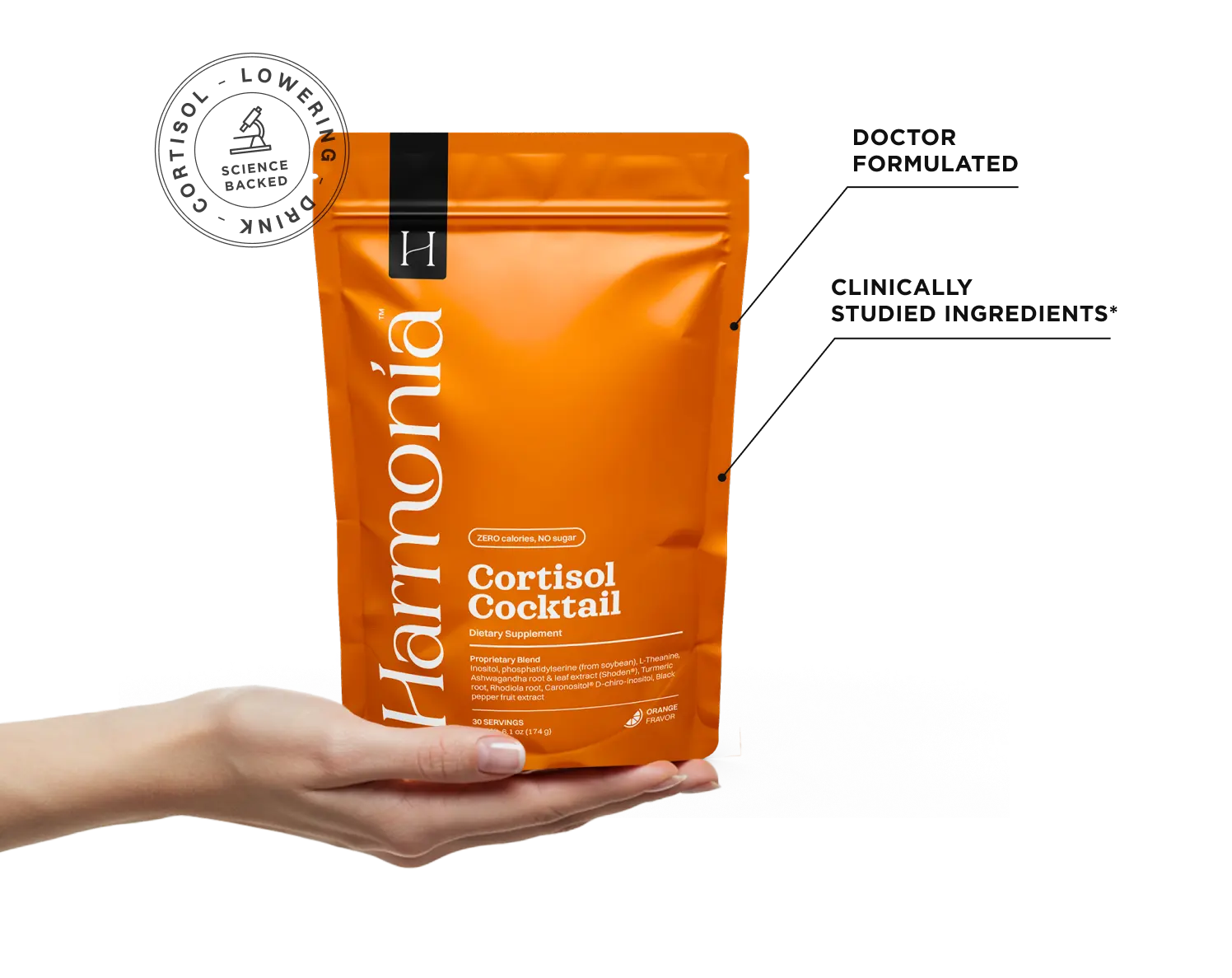
The Harmonia Cortisol Cocktail combines evidence-backed ingredients including ashwagandha, rhodiola, L-theanine, myo-inositol, magnesium, vitamin C, and B vitamins in one convenient daily formula. Rather than targeting a single pathway, the formula was designed to support multiple aspects of stress resilience, including perceived stress, calm, sleep quality, metabolic health, and nutritional support.
Ashwagandha has the strongest human evidence within the formula for perceived stress and selected cortisol outcomes, while the remaining ingredients contribute complementary support based on their individual areas of research. Although no finished formula has been clinically shown to restore or "rebalance" the HPA axis, the available evidence supports using these ingredients as part of a broader stress-management routine.
%20(1).jpeg)
The bottom line
The HPA axis coordinates cortisol through a timed, pulsatile feedback system. Its function includes daily rhythm, stress reactivity, feedback sensitivity, and recovery, so one symptom list or one random cortisol value cannot describe the whole system.
HPA-axis dysregulation describes a measured pattern in research or clinical testing. Persistent or severe symptoms deserve tests chosen for a specific medical question.
If your symptoms fit an everyday stress pattern and you want to see whether the formula matches what you are experiencing, you can take quiz to see whether the Harmonia Cortisol Cocktail is a fit for where you are right now.
FAQs
What does the HPA axis do?
The HPA axis coordinates cortisol production and feedback. It helps set the daily cortisol rhythm, raises output during selected physical and psychological demands, and adjusts CRH and ACTH signaling as conditions change.
What hormones are part of the HPA axis?
The central hormone sequence is CRH from the hypothalamus, ACTH from the anterior pituitary, and cortisol from the adrenal cortex. Cortisol then feeds back through glucocorticoid receptors to influence further signaling.
What activates the HPA axis?
Illness, pain, low blood glucose, exercise, waking, inflammation, and psychological stress can activate the HPA axis. The size and timing of the response vary with the demand, time of day, sleep, medication use, and individual physiology.
Is the HPA axis the same as fight or flight?
The HPA axis and fight-or-flight response are connected systems with different routes. Sympathetic nerve signaling and adrenal-medullary hormones act within seconds, while the CRH-ACTH-cortisol cascade develops over minutes and can support a longer response.
What is HPA-axis dysregulation?
HPA-axis dysregulation is a research description for altered cortisol timing, output, reactivity, recovery, or feedback. It does not identify one diagnosis, and symptoms alone cannot show which pattern is present.
Can chronic stress damage the HPA axis?
Chronic stress is associated with different cortisol patterns across studies and populations, including higher, lower, flatter, blunted, or prolonged responses. “HPA-axis damage” is not a standard clinical diagnosis, and the persistence or meaning of a pattern depends on how it was measured.
Can the HPA axis recover after steroid medication?
Recovery after glucocorticoid treatment varies widely. Dose, duration, potency, route, and individual susceptibility all matter, and recovery may take weeks or months. A prescriber should guide tapering and any testing for recovery.
How do doctors test the HPA axis?
Doctors test a specific suspected disorder. Morning cortisol, ACTH, and ACTH stimulation are used for possible cortisol deficiency, while late-night salivary cortisol, 24-hour urinary free cortisol, and dexamethasone suppression are used for possible cortisol excess.
Can supplements reset the HPA axis?
No supplement has been shown to reset the HPA axis as a whole. Some ingredients affect perceived stress, selected cortisol measures, or nutrient status in short-term trials, and those findings do not establish treatment for an endocrine disorder.
References
- Smith, S. M., & Vale, W. W. (2006). The role of the hypothalamic-pituitary-adrenal axis in neuroendocrine responses to stress. Dialogues in Clinical Neuroscience, 8(4), 383–395. Link
- Focke, C. M. B., & Iremonger, K. J. (2020). Rhythmicity matters: Circadian and ultradian patterns of HPA axis activity. Molecular and Cellular Endocrinology, 501, 110652. Link
- Stalder, T., Oster, H., Abelson, J. L., Huthsteiner, K., Klucken, T., & Clow, A. (2025). The cortisol awakening response: Regulation and functional significance. Endocrine Reviews, 46(1), 43–59. Link
- Goldstein, D. S., & Kopin, I. J. (2008). Adrenomedullary, adrenocortical, and sympathoneural responses to stressors: A meta-analysis. Endocrine Regulations, 42(4), 111–119. Link
- Wesarg-Menzel, C., Marheinecke, R., Staaks, J., & Engert, V. (2024). Associations of diurnal cortisol parameters with cortisol stress reactivity and recovery: A systematic review and meta-analysis. Psychoneuroendocrinology, 163, 106976. Link
- Cadegiani, F. A., & Kater, C. E. (2016). Adrenal fatigue does not exist: A systematic review. BMC Endocrine Disorders, 16, 48. Link
- National Institute of Diabetes and Digestive and Kidney Diseases. Diagnosis of adrenal insufficiency and Addison’s disease. Link
- National Institute of Diabetes and Digestive and Kidney Diseases. Cushing’s syndrome. Link
- Bornstein, S. R., Allolio, B., Arlt, W., et al. (2016). Diagnosis and treatment of primary adrenal insufficiency: An Endocrine Society clinical practice guideline. The Journal of Clinical Endocrinology & Metabolism, 101(2), 364–389. Link
- Beuschlein, F., Else, T., Bancos, I., et al. (2024). European Society of Endocrinology and Endocrine Society joint clinical guideline: Diagnosis and therapy of glucocorticoid-induced adrenal insufficiency. The Journal of Clinical Endocrinology & Metabolism, 109(7), 1657–1683. Link
- van Dalfsen, J. H., & Markus, C. R. (2018). The influence of sleep on human hypothalamic-pituitary-adrenal axis reactivity: A systematic review. Sleep Medicine Reviews, 39, 187–194. Link
- O’Connor, D. B., et al. (2023). Physical activity and cortisol regulation: A meta-analysis. Biological Psychology, 179, 108548. Link
- Arumugam, V., et al. (2024). Effects of ashwagandha (Withania somnifera) on stress and anxiety: A systematic review and meta-analysis. Explore, 20(6), 103062. Link
- White, D. J., de Klerk, S., Woods, W., Gondalia, S., Noonan, C., & Scholey, A. B. (2016). Anti-stress, behavioural and magnetoencephalography effects of an L-theanine-based nutrient drink: A randomised, double-blind, placebo-controlled, crossover trial. Nutrients, 8(1), 53. Link
- Hellhammer, J., Vogt, D., Franz, N., Freitas, U., & Rutenberg, D. (2014). A soy-based phosphatidylserine/phosphatidic acid complex normalizes HPA-axis stress reactivity in chronically stressed male subjects: A randomized, placebo-controlled study. Lipids in Health and Disease, 13, 121. Link
- Pouteau, E., Kabir-Ahmadi, M., Noah, L., et al. (2018). Superiority of magnesium and vitamin B6 over magnesium alone on severe stress in healthy adults with low magnesemia: A randomized, single-blind clinical trial. PLOS ONE, 13(12), e0208454. Link