A cortisol detox diet is an eating pattern that helps reduce the food-related triggers that can keep cortisol elevated: blood sugar swings, chronic inflammation, gut disruption, and nutrient gaps.
The word “detox” is where this topic gets messy.
Your body doesn’t need a cleanse to remove cortisol. Cortisol is a hormone you need every day. It helps you wake up, keep blood sugar steady, respond to stress, and manage inflammation.
What you can do is eat in a way that makes your stress system less reactive.
That means steady blood sugar, enough food, anti-inflammatory meals, gut-supportive foods, and nutrients your adrenal glands use when stress is high.
So if you came here looking for a strict cortisol detox diet, I’d rather give you something more useful: a cortisol-supporting diet you can actually live with.
Quick answer
A cortisol detox diet is a way of eating that supports a steadier cortisol pattern by stabilizing blood sugar, lowering inflammatory load, supporting gut health, and helping you get enough key nutrients like magnesium, vitamin C, protein, fiber, and omega-3 fats.
It’s usually marketed as a way to “flush” cortisol, which is misleading.
Food doesn’t flush cortisol out of your body. Food changes the signals that influence how often your body releases cortisol.
A healthy cortisol pattern usually follows a daily rhythm, with levels higher in the morning and lower at night. Food timing can support this natural rhythm, and a diet to lower cortisol often focuses on steady meals, balanced blood sugar, and habits that help the body wind down by evening.
A healthy normal cortisol level usually follows a daily rhythm: higher in the morning, lower at night. Your food timing should support that pattern instead of fighting it.
The goal is regulated cortisol, not suppressed cortisol.
Why “detox” is the wrong word
“Detox” makes cortisol sound like toxic waste. It isn’t.
Cortisol helps you wake up, think clearly, mobilize energy, and respond to stress. You run into trouble when cortisol stays too high for too long, rises at the wrong time, or becomes poorly timed across the day.
That’s why a juice cleanse or a three-day reset misses the point.
A real cortisol diet plan works through repeated signals: steady meals, enough protein, enough fiber, less afternoon caffeine, and meals that don’t leave your body scrambling for fuel.
The evidence points to something more practical than detox language: your body needs fewer daily stress signals.
How food affects cortisol levels
Food affects cortisol through four main pathways: blood sugar, inflammation, gut health, and nutrient availability.
That sounds more complicated than it is.
When you skip meals, eat mostly refined carbs, drink caffeine on an empty stomach, or under-eat for too long, your body has to work harder to keep you steady.
Food can either add to that stress load or reduce it.
Blood sugar and cortisol
Cortisol helps raise blood sugar when your body needs fuel.
That’s useful when you’re in a real emergency. It feels less useful when it happens because you skipped lunch.
When blood sugar drops too low, your body tries to protect your brain and muscles. Cortisol helps your liver release more sugar into the bloodstream so you can keep functioning.
You may feel that as shakiness, irritability, anxiety, cravings, or an afternoon crash.
Blood sugar swings through the day can show up as cravings, stress snacking, poor sleep, and that wired-but-tired feeling that's hard to explain to anyone who hasn't lived it.
Tomorrow’s move: eat breakfast within 1 to 2 hours of waking, and include protein, fiber, and fat.
A plain coffee breakfast is usually not enough for a stressed body.

Inflammation and cortisol
Chronic low-grade inflammation can keep your stress system switched on.
Think of inflammation as your body’s internal “something needs attention” signal. When that signal stays active, your brain and adrenal glands can keep sending out more stress chemistry.
That’s where an anti-inflammatory eating pattern matters.
One 18-month randomized controlled trial, called the DIRECT-PLUS trial, studied 294 adults with abdominal obesity or abnormal blood fats. Researchers found that a green-Mediterranean diet reduced morning cortisol more than standard healthy dietary guidance.
That finding matters because it looked at a whole eating pattern, not one “superfood.”
The green-Mediterranean pattern included more plant foods, green tea, walnuts, and fewer red and processed meats.
The takeaway: anti-inflammatory patterns beat isolated foods.
Tomorrow’s move: add one anti-inflammatory anchor to lunch, such as olive oil, leafy greens, beans, salmon, sardines, walnuts, berries, or herbs.
Gut health and cortisol
Your gut and stress system talk to each other all day.
When your gut bacteria are out of balance, your body can send more stress and inflammation signals. That can make your cortisol response more reactive.
This is one reason stress and digestion often show up together.
You might notice bloating, irregular bowel habits, stomach discomfort, cravings, or appetite changes when stress is high.
Early research suggests probiotics may help in some stress-related situations.
A 2021 randomized, double-blind, placebo-controlled trial in 111 stressed students found that a multi-strain probiotic improved stress scores and reduced serum cortisol from baseline compared with placebo.
That doesn’t mean probiotics are a cortisol cure.It means gut support can be one part of the bigger picture.
Tomorrow’s move: add one serving of yogurt, kefir, kimchi, sauerkraut, miso, oats, onions, garlic, lentils, or asparagus.
Nutrients your adrenal glands use
Your adrenal glands are the small glands above your kidneys that help make cortisol and other stress-related hormones.
They need nutrients to do that work well.
Vitamin C supports adrenal function. Magnesium helps calm an overactive stress response. B vitamins help your body turn food into energy. Omega-3 fats support inflammatory balance.
Food sources are the best starting point.
Think bell peppers, citrus, kiwi, broccoli, pumpkin seeds, spinach, almonds, beans, eggs, mushrooms, salmon, sardines, chia, flax, and walnuts.
Tomorrow’s move: choose one nutrient gap you can fix with food first.
If you never eat seafood, start there. If you rarely eat magnesium-rich foods, add seeds or leafy greens daily.
What to eat to lower cortisol
The best foods to lower cortisol are the ones that stabilize blood sugar, lower inflammatory load, support the gut, and give your body enough nutrients to handle stress.
That sounds less exciting than a detox drink.
It works better.
The best cortisol reducing foods
Use this as a food framework, not a rulebook.
A cortisol diet doesn’t need to be perfect.
It needs to be consistent enough that your body stops getting hit with the same avoidable stress signals every day.
Foods and habits to reduce
You don’t need to fear food to lower cortisol with food.
You do need to notice patterns.
High-sugar meals without protein can create a blood sugar spike and crash. Ultra-processed foods can make it harder to get enough fiber, omega-3s, magnesium, and plant compounds. Alcohol disrupts sleep, which can raise cortisol the next day.
Caffeine deserves its own note.
A randomized trial in 96 healthy adults found that caffeine increased cortisol secretion across the day, although regular caffeine users showed some tolerance.
A morning cup with breakfast is different from coffee at 3 p.m. when you’re already wired.
Skipping meals is another common driver.
If you’re trying to “be good” by eating as little as possible during the day, then craving sugar at night, your body isn’t failing you. It’s trying to recover from under-fueling.
Restriction is a stressor.
Tomorrow’s move: keep caffeine before noon for one week, and stop letting lunch become optional.
If you want to go deeper on which specific foods make cortisol harder to manage, adrenal fatigue foods to avoid covers the patterns worth cutting back on first.

Where food support ends
Food is one lever for cortisol support.
Targeted ingredients can work through a different part of the system.
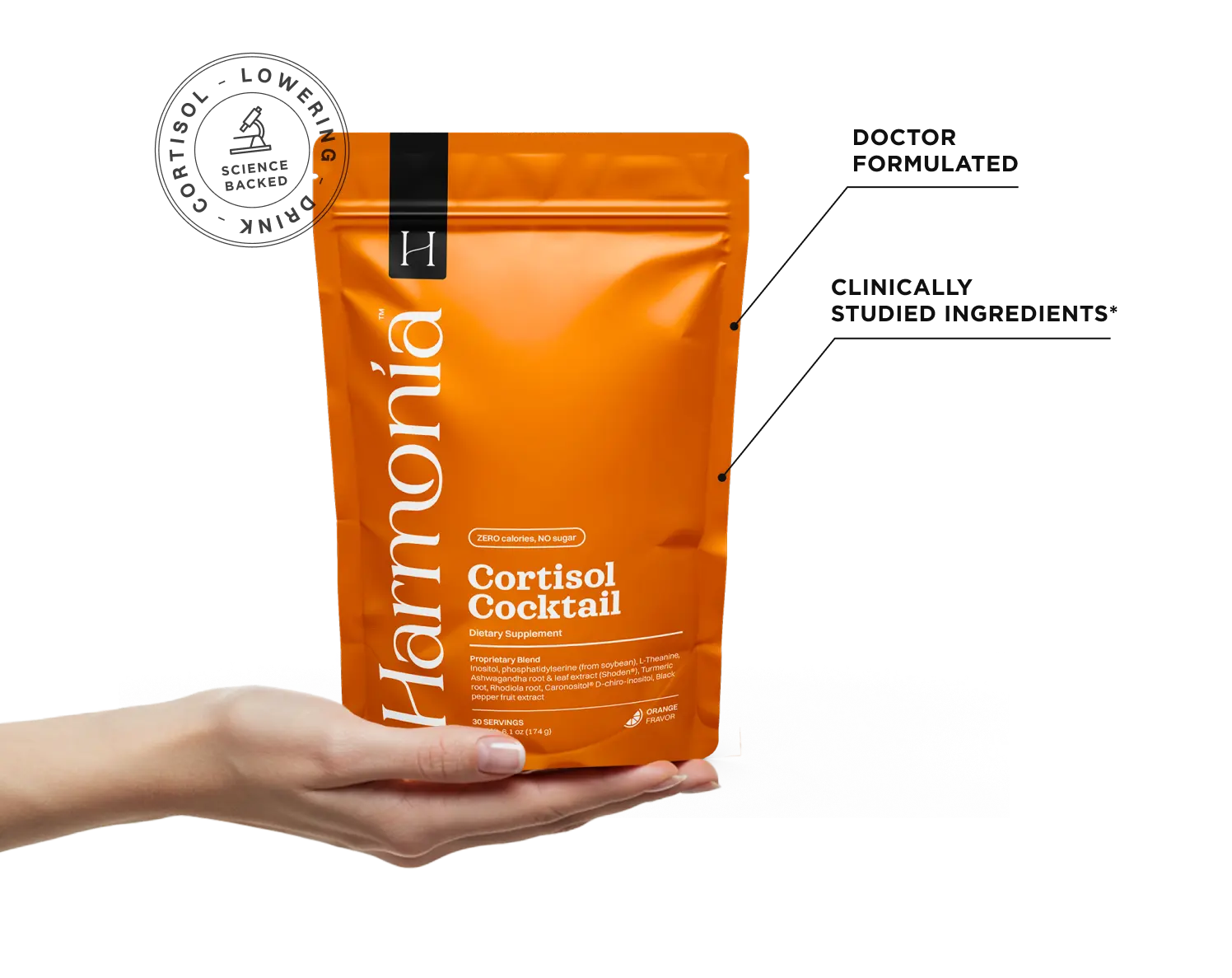
The Harmonia cortisol cocktail combines ashwagandha and Rhodiola rosea because those ingredients are used to support the stress-response system that controls cortisol output.
Myo-inositol is included because chronic stress can also affect insulin signaling and androgen patterns, which is why cortisol symptoms can show up as cravings, skin changes, cycle shifts, or stubborn weight patterns.
That’s why the food side and the ingredient side can complement each other.
A cortisol diet helps reduce the food-related signals that push cortisol higher. Targeted ingredients can support the stress-response pattern that food alone may not fully reach.
A simple cortisol diet plan
A cortisol diet plan should feel boring in the best way.
Regular meals. Enough protein. Slow carbohydrates. Healthy fats. Fiber. Fermented foods. Less caffeine chaos.
The goal is rhythm.
Morning
Start with breakfast within 1 to 2 hours of waking.
Cortisol is naturally higher in the morning, so your first meal should help stabilize blood sugar instead of adding more stress.
Good options:
Coffee is fine for many people.Have it with food.
Midday
Lunch should prevent the 2 to 5 p.m. crash.
This is where a lot of cortisol diet plans fail because lunch becomes too light.
A better lunch has protein, complex carbs, colorful plants, and fat.
Try salmon with brown rice and greens, lentils with roasted vegetables, turkey with sweet potato and olive oil, or tofu with quinoa and kimchi.
Afternoon
Use snacks when they solve a real problem.
If you go from lunch to dinner without hunger, you may not need one. If you get shaky, irritable, anxious, or ravenous by 4 p.m., a snack is useful.
Good options are yogurt with berries, apple with peanut butter, nuts and fruit, hummus with vegetables, or a boiled egg with whole grain toast.
The snack should stabilize you, not spike you.
Evening
Dinner can include carbohydrates. Actually, for many stressed people, it should.
Complex carbs at dinner can help you feel satisfied and avoid waking up hungry. This matters because cortisol should be falling at night, not climbing while your body looks for fuel.
Try baked salmon with sweet potato and broccoli, chicken with brown rice and roasted vegetables, lentil soup with olive oil, or tofu stir-fry with quinoa.
Keep dinner 2 to 3 hours before bed when possible.
If your nighttime routine already includes tea, choosing the best tea to reduce cortisol usually means staying caffeine-free and picking herbs that support calm rather than stimulation.

What a 1-day cortisol balancing diet can look like
Use this as a template, not a prescription.
This is what “what to eat to lower cortisol” looks like in real life.
No cleanse. No punishment. No pretending stress disappears because you ate broccoli.
Just fewer daily inputs that keep your body on alert.
Mistakes that make a cortisol diet harder
The biggest mistake is turning cortisol balance into another stressful project.
If your plan requires perfect groceries, exact timing, no social meals, no sugar, no caffeine, and no flexibility, your nervous system is going to hate it.
Start smaller.
Pick breakfast. Fix that first.
Then add protein to lunch. Then move caffeine earlier. Then add one fermented food. Then cook fish once a week.
That’s how a cortisol balancing diet becomes sustainable.
Some people also cut carbs too aggressively.
That can backfire if you’re already stressed, sleeping poorly, or training hard.
Carbs are not the enemy in a cortisol diet plan. The type, timing, and pairing matter more.
Protein plus fiber plus carbs is usually more helpful than avoiding carbs altogether.
Supporting Image: Cortisol DIet Plan.png
How long does a cortisol diet take to work?
Blood sugar changes can feel different within a few days.
You may notice fewer crashes, less shakiness, or better afternoon energy once meals become more consistent.
Sleep and inflammation take longer.
The DIRECT-PLUS cortisol findings came from an 18-month diet trial, which is a reminder that cortisol patterns change through repetition.
That doesn’t mean you need 18 months to feel anything.
It means the deeper benefit comes from a pattern you can keep.
Give yourself 4 weeks before judging the plan. Track sleep onset, energy crashes, cravings, digestion, and your morning mood.
Those tell you more than one random “good” or “bad” day.
When food is not enough
Food can reduce cortisol triggers.
It can’t fix every reason cortisol is high.
If you’re sleeping five hours, in a constant state of emotional stress, overtraining, drinking nightly, or dealing with an untreated medical issue, food can only carry part of the load.
Cortisol rarely shows up alone. Sleep changes, cravings, mood shifts, cycle symptoms, and fatigue can all point to the same underlying pattern.
If you want to support your adrenal glands more directly alongside your food changes, how to detox your adrenal glands naturally covers the lifestyle and supplement approaches that work alongside diet.
If you’ve been doing everything right with food but still feel like your hormones are working against you, the Harmonia cortisol cocktail can help you understand whether ashwagandha, Rhodiola rosea, and myo-inositol fit where you are right now.
Ashwagandha and Rhodiola support the stress-response system, while myo-inositol supports the insulin and androgen side that can show up as cravings, cycle changes, or stubborn weight patterns.
%20(1).jpeg)
Safety and medical notes
A cortisol detox diet is food-based, so it’s generally low risk.
Still, a few situations need more care.
If you have diabetes, reactive low blood sugar, kidney disease, an eating disorder history, pregnancy, breastfeeding, adrenal disease, thyroid disease, or you take medication that affects blood sugar or hormones, personalize this with a clinician.
Low cortisol can also cause fatigue, dizziness, low blood pressure, salt cravings, nausea, and low blood sugar.
Don’t assume every stress symptom means high cortisol.
The bottom line
A cortisol detox diet is better understood as a cortisol-supporting diet.
The evidence supports steady meals, enough protein, high-fiber carbohydrates, omega-3-rich foods, fermented foods, magnesium-rich foods, olive oil, colorful plants, and less afternoon caffeine.
The green-Mediterranean diet has the strongest direct dietary evidence for lowering fasting morning cortisol in a large clinical trial. Blood sugar stability, gut support, and nutrient sufficiency give the plan its practical foundation.
If your food is already steady but your stress symptoms still feel bigger than your habits, take the Harmonia quiz to see whether the Harmonia cortisol cocktail fits where you are right now. Ashwagandha and Rhodiola rosea support the stress-response system that helps regulate cortisol, while myo-inositol supports the insulin and androgen side of stress-related hormone patterns.
FAQs
What is a cortisol detox diet?
A cortisol detox diet is an eating pattern that helps reduce food-related cortisol triggers, including blood sugar swings, inflammation, gut disruption, and nutrient gaps. The word “detox” is misleading because food doesn’t remove cortisol from your body. A better name is a cortisol-supporting diet.
What foods lower cortisol naturally?
Foods that support cortisol balance include fatty fish, leafy greens, beans, lentils, oats, berries, citrus, fermented foods, nuts, seeds, olive oil, and dark chocolate with at least 70% cacao. These foods work through blood sugar stability, inflammation support, gut health, and nutrient sufficiency. The full dietary pattern matters more than any single food.
How do you lower cortisol with food?
To lower cortisol with food, eat regular meals with protein, fiber, healthy fats, and slow carbohydrates. Avoid long gaps without food, high-sugar meals without protein, and late-day caffeine if your sleep is affected. Start with breakfast and lunch because those meals shape your blood sugar and energy for the rest of the day.
Is a cortisol diet the same as a cleanse?
A cortisol diet is a sustained eating pattern. A cleanse is usually short-term and restrictive. Restrictive dieting can raise stress signals in some people, especially if it leads to under-eating or blood sugar crashes.
What should I eat for breakfast to lower cortisol?
A cortisol-supporting breakfast should include protein, fiber, fat, and a slow carbohydrate. Good options include eggs with avocado and toast, Greek yogurt with berries and chia, oats with protein and nut butter, or tofu scramble with vegetables. Coffee is usually better with breakfast than on an empty stomach.
How long does a cortisol balancing diet take to work?
Some people notice steadier energy and fewer cravings within the first week. Sleep, inflammation, digestion, and cortisol rhythm changes usually take several weeks of consistency. Give the plan at least 4 weeks before deciding whether it’s helping.
Can a cortisol detox diet help with belly fat?
A cortisol-supporting diet may help if stress, cravings, poor sleep, and blood sugar instability are part of your belly-fat pattern. It won’t replace strength training, adequate protein, sleep, or medical evaluation when needed. The most useful approach is to address cortisol and blood sugar together rather than focusing on restriction.
How do I know if my cortisol is affecting my eating habits?
Signs that cortisol may be influencing your eating include strong cravings for sugar or salty foods under stress, persistent hunger even after meals, difficulty stopping eating at night, and energy crashes in the afternoon. These patterns often reflect blood sugar instability driven by elevated cortisol rather than a lack of willpower.
References
- Alufer, L., Tsaban, G., Rinott, E., Kaplan, A., Yaskolka Meir, A., Zelicha, H., Ceglarek, U., Isermann, B., Blüher, M., Stumvoll, M., Stampfer, M. J., & Shai, I. (2023). Long-term green-Mediterranean diet may favor fasting morning cortisol stress hormone: The DIRECT-PLUS clinical trial. Frontiers in Endocrinology, 14, 1243910. Link
- Lovallo, W. R., Whitsett, T. L., al’Absi, M., Sung, B. H., Vincent, A. S., & Wilson, M. F. (2005). Caffeine stimulation of cortisol secretion across the waking hours in relation to caffeine intake levels. Psychosomatic Medicine, 67(5), 734-739. Link
- Thau, L., Gandhi, J., & Sharma, S. (2023). Physiology, cortisol. StatPearls. National Center for Biotechnology Information. Link
- Venkataraman, R., Madempudi, R. S., Neelamraju, J., Ahire, J. J., Vinay, H. R., Lal, A., & Thomas, G. (2021). Effect of multi-strain probiotic formulation on students facing examination stress. Beneficial Microbes, 12(2), 119-127. Link