A normal cortisol level isn't a single number. It depends on the time of day, the test method used, and where you are in your menstrual cycle. What matters as much as the absolute value is the rhythm: whether cortisol rises appropriately in the morning, falls through the afternoon, and stays low enough at night for genuine rest.
For women, that rhythm is under more pressure than most lab reference ranges reflect. Estrogen, progesterone, sleep quality, and chronic stress all shift how the HPA axis produces and clears cortisol. So a reading that looks technically normal can still point to a disrupted pattern, and a disrupted pattern is usually what drives the symptoms.
Here's what the research shows about what a healthy cortisol level actually looks like, how to test it properly, and what moves it in the wrong direction.
What Is Cortisol?
Cortisol is a steroid hormone produced by the adrenal cortex in response to ACTH signals from the pituitary gland, which in turn responds to CRH from the hypothalamus. That signaling chain is the HPA axis, and it's what determines how much cortisol your body makes and when.
Cortisol affects nearly every system in the body. Its primary functions include:
- Regulating blood sugar by increasing glucose availability
- Supporting metabolism and energy production
- Helping control inflammation and immune responses
- Maintaining blood pressure and cardiovascular function
- Supporting alertness, focus, and the sleep–wake rhythm
Cortisol is not inherently harmful. In fact, it is vital for waking up in the morning, responding to stress, and maintaining stability during physical or emotional challenges.
Issues occur when cortisol secretion becomes dysregulated - either remaining elevated for too long or failing to rise appropriately when needed.
How Cortisol Is Tested
There are several ways to assess cortisol levels, each offering different insights.
Blood Cortisol Testing
Blood tests are commonly used and typically performed in the morning. They provide a snapshot of cortisol at a single moment but do not show daily rhythm.
Salivary Cortisol Testing
Saliva testing measures free cortisol and is often collected multiple times throughout the day. This method is useful for evaluating diurnal patterns and identifying elevated evening cortisol.
Elevated evening cortisol is one of the more common findings in chronically stressed women and explains a lot of the difficulty falling asleep that gets written off as insomnia. For a closer look at the sleep connection, does cortisol affect sleep walks through how the rhythm disruption plays out overnight.
Urine Cortisol Testing
A 24-hour urine test measures total cortisol output over a full day. It does not capture timing but can reveal over- or under-production.
Testing should always be interpreted alongside symptoms, lifestyle factors, and overall hormonal health.
What Is a Normal Cortisol Level?
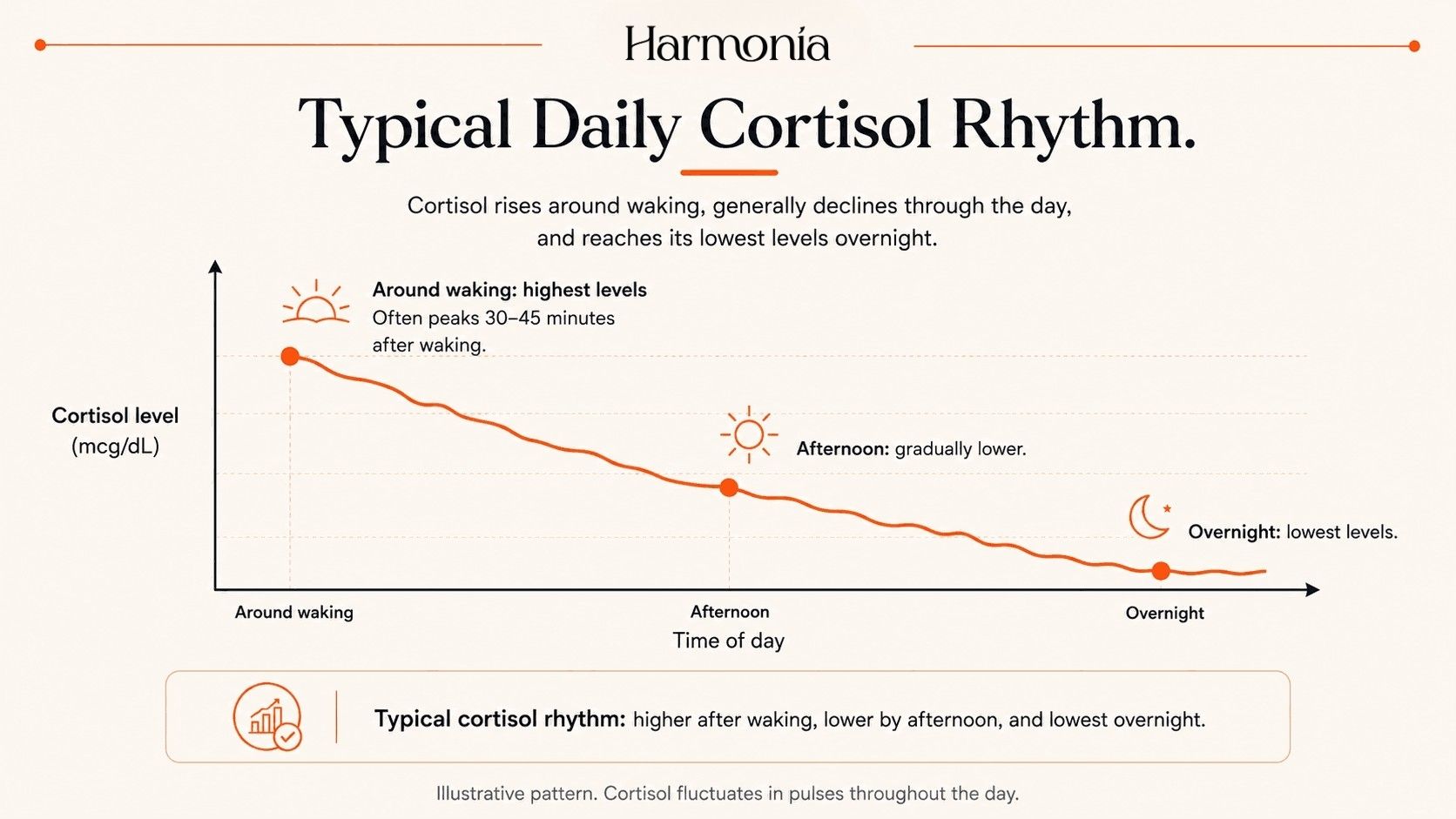
A normal cortisol level follows a predictable daily arc: high in the morning, declining through the day, and lowest at night. The specific numbers vary by test type and lab, but the rhythm matters more than any individual value.
Normal Cortisol Levels by Time of Day
Under healthy conditions, cortisol levels follow this pattern:
- Morning (6–8 a.m.): Highest levels of the day
- Midday: Gradual decline
- Afternoon: Continued decrease
- Evening and night: Lowest levels, supporting rest and sleep
When this rhythm breaks down, the symptom picture shifts. Low morning cortisol means struggling to get going. Elevated evening cortisol means lying awake with a racing mind despite exhaustion. For a detailed look at what happens when cortisol surges after dark, cortisol spikes at night covers the mechanisms and what disrupts the normal pattern.
Normal Cortisol Level Ranges
Reference ranges vary slightly by laboratory, but typical values include:
It is important to interpret cortisol levels in context. A single reading may fall within the “normal” range while symptoms persist due to rhythm disruption or sensitivity to cortisol fluctuations.

What Is a Normal Cortisol Level for a Woman?
The reference ranges are similar for men and women, but female physiology adds layers of complexity that lab values don't fully capture.
Estrogen and progesterone directly influence how cortisol is produced, transported, and metabolized. In a 2020 meta-analysis of 19 studies, circulating cortisol was measurably higher in the follicular phase than the luteal phase, suggesting the menstrual cycle itself shifts baseline cortisol levels.
Key female-specific factors that affect cortisol levels include:
- Menstrual cycle phases: Cortisol responses can vary between the follicular and luteal phases
- Pregnancy and postpartum: Cortisol production increases significantly during pregnancy
- Perimenopause and menopause: Declining estrogen and progesterone alter stress tolerance and cortisol regulation
For women, a normal cortisol level is not just about the number on a lab test - it’s about whether cortisol is rising and falling at appropriate times and supporting overall hormonal balance.
Women may experience cortisol-related symptoms even when test results appear technically normal. The lab value is a snapshot; the pattern across the day is the story.
This is why many women focus not only on testing, but also on daily habits and supportive routines, sometimes including gentle stress-support drinks like Harmonia, designed to complement lifestyle approaches aimed at maintaining healthy cortisol rhythm.
Signs Your Cortisol Levels Are Too High
Chronically elevated cortisol is one of the most common hormonal imbalances in women, and it often develops gradually enough that symptoms get written off as normal stress or aging. The full pattern of symptoms of high cortisol in females is broader than most women realize.
Common signs of high cortisol levels include:
- Persistent anxiety or irritability
- Difficulty falling or staying asleep
- Feeling “wired but tired”
- Afternoon energy crashes
- Sugar and refined carbohydrate cravings
- Weight gain, particularly around the abdomen
- Increased inflammation or frequent illness
- Irregular menstrual cycles or worsened PMS
High cortisol also affects insulin regulation, which can contribute to blood sugar instability and increased fat storage over time.
Signs Your Cortisol Levels Are Too Low
Low cortisol is less common but equally disruptive. It typically develops after prolonged HPA axis overactivation, or as a side effect of long-term corticosteroid use followed by withdrawal.
Symptoms of low cortisol include:
- Chronic fatigue that does not improve with rest
- Low motivation or emotional flatness
- Poor stress tolerance
- Brain fog and difficulty concentrating
- Dizziness or lightheadedness
- Low blood pressure
- Blood sugar fluctuations
Both high and low cortisol states can coexist with similar symptoms, which is why proper testing and pattern analysis are important.
What Causes Abnormal Cortisol Levels?

Cortisol dysregulation rarely has a single cause. Chronic psychological stress, poor sleep, circadian disruption, over-exercising without recovery, restrictive dieting, blood sugar instability, and hormonal conditions like PCOS or thyroid dysfunction all push the system in the same direction.
Common contributors include:
- Chronic psychological stress
- Poor or inconsistent sleep
- Circadian rhythm disruption
- Over-exercising without adequate recovery
- Under-eating or restrictive dieting
- Blood sugar imbalances
- Hormonal conditions such as PCOS or thyroid dysfunction
- Long-term stimulant use, including excessive caffeine
Over time, repeated cortisol spikes without sufficient recovery can disrupt the HPA axis and alter normal cortisol rhythms.
How to support healthy cortisol levels
Supporting healthy cortisol means restoring rhythm and resilience, not suppressing cortisol output entirely. The goal is a pattern that rises and falls predictably, not one that's flatlined.
Consistent sleep and wake timing is the highest-impact starting point.
The cortisol awakening response is anchored to your circadian rhythm; irregular sleep breaks it. Stress management, adequate protein at every meal, and blood sugar stability all reduce the cortisol spikes that erode the pattern over time.
Exercise intensity matters more than most people expect. Moderate movement consistently lowers cortisol over time. High-intensity training without adequate recovery raises it, particularly in women who are already depleted.
Nutrition is a meaningful lever. A diet to lower cortisol focuses on stabilizing blood sugar, reducing inflammatory load, and ensuring the adrenal glands have the micronutrients they use most during the stress response: vitamin C, B vitamins, and magnesium.
Adaptogenic support has a growing evidence base for blunting cortisol output without suppressing it entirely. KSM-66 ashwagandha reduced serum cortisol significantly in a 60-day double-blind trial of 64 adults with chronic stress.
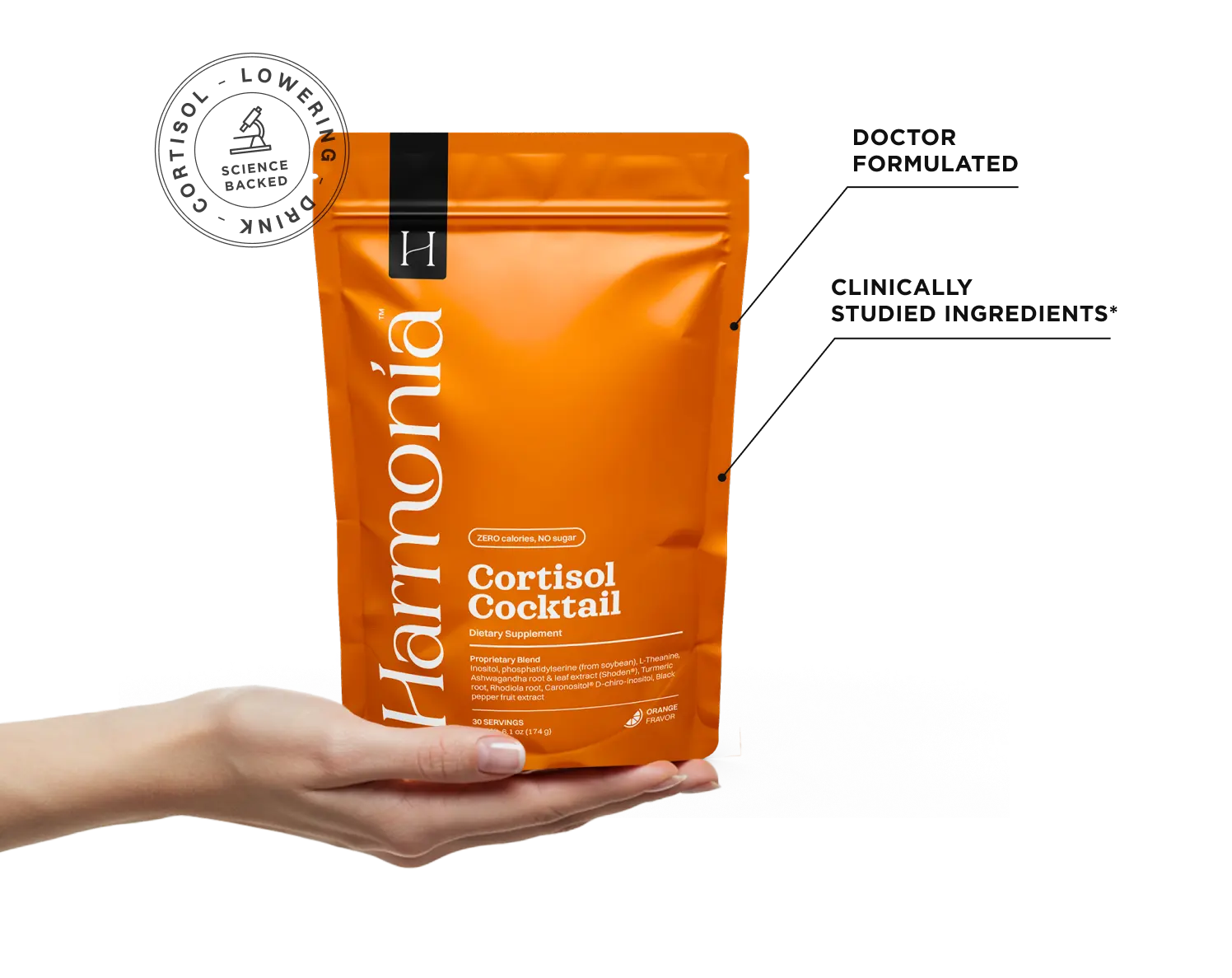
Phosphatidylserine modulates the HPA axis response to exercise stress. L-theanine reduces physiological stress responses without sedation. These are the mechanisms behind why the Harmonia Cortisol Cocktail includes each of those ingredients.
Cortisol in the Context of Overall Hormonal Health
Cortisol does not operate in isolation. It interacts closely with insulin, thyroid hormones, estrogen, and progesterone.
When cortisol stays elevated, it redirects pregnenolone away from reproductive hormone synthesis, contributing to irregular cycles, mood changes, and metabolic shifts. For women, cortisol balance isn't a separate concern from hormonal health. It's foundational to it.
Addressing cortisol rhythm consistently tends to improve energy, sleep quality, emotional resilience, and cycle regularity over time, not because cortisol is the only variable, but because it's the one that most directly suppresses everything else when it's off.
Conclusion
A normal cortisol level reflects a well-functioning daily rhythm, not just a number that falls within a lab reference range. For women, that rhythm is shaped by cycle phase, sleep consistency, stress load, and hormonal status in ways that standard testing rarely captures.
If your symptoms persist despite normal test results, the pattern is worth investigating. And if your symptoms have been pointing toward dysregulated cortisol, you can take the quiz to see whether the Harmonia Cortisol Cocktail fits where you are right now.
References
- Hamidovic, A., Karapetyan, K., Serdarevic, F., Choi, S. H., Eisenlohr-Moul, T., & Pinna, G. (2020). Higher circulating cortisol in the follicular vs. luteal phase of the menstrual cycle: a meta-analysis. Frontiers in endocrinology, 11, 532846. Link.
- Levine, A., Zagoory-Sharon, O., Feldman, R., Lewis, J. G., & Weller, A. (2007). Measuring cortisol in human psychobiological studies. Physiology & behavior, 90(1), 43-53. Link.
- Chandrasekhar, K., Kapoor, J., & Anishetty, S. (2012). A prospective, randomized double-blind, placebo-controlled study of safety and efficacy of a high-concentration full-spectrum extract of ashwagandha root. Indian Journal of Psychological Medicine, 34(3), 255-262. Link.