When most people think of probiotics, they think of yogurt, bloating relief, and digestive support. But in recent years, researchers have started asking a bigger question: does probiotics help with weight loss, or is that benefit limited to gut health alone?
The answer is more nuanced than a simple yes or no. Growing evidence suggests that the trillions of bacteria living in your gut influence far more than digestion, including metabolism, fat storage, appetite hormones, and inflammation.
Understanding this connection can help you make smarter choices about probiotics for weight loss and overall metabolic health.
This article breaks down what the research actually says, which strains show the most promise, and how gut health and body weight are more connected than most people realize.
What Are Probiotics and What Do They Actually Do?
Probiotics are live microorganisms, mainly bacteria and some yeasts, that provide health benefits when consumed in adequate amounts. They are found naturally in fermented foods like yogurt, kefir, sauerkraut, kimchi, and miso, and are also widely available as dietary supplements.
These beneficial bacteria colonize the gut and help maintain a healthy microbial balance. They support digestion, strengthen the gut lining, regulate immune responses, and produce short-chain fatty acids that nourish colon cells.
The diversity and composition of your gut microbiome are closely tied to your overall health.
Research shows that the gut microbiome influences health far beyond digestion. It communicates with the brain through the gut-brain connection, regulates inflammation, and influences how the body processes and stores energy, all of which directly affect body weight.

The Gut Microbiome and Weight: What the Research Shows
One of the most compelling areas of probiotic research involves the relationship between gut bacteria and body weight regulation. Studies comparing the microbiomes of lean and obese individuals consistently find distinct differences in bacterial composition.
People with obesity tend to have a gut microbiome that is more efficient at harvesting energy from food, which can contribute to weight gain over time.
A systematic review and meta-analysis found that probiotics produce significant reductions in BMI and fat mass in people with overweight or obesity.
The same review highlighted that gut bacteria ferment indigestible carbohydrates and produce compounds that influence both energy supply and appetite regulation. Gut bacteria shape how you gain weight.
This bidirectional role is why the microbiome is increasingly viewed as a modifiable target for weight management.
Does Probiotics Help With Weight Loss?
The direct question, whether taking a probiotic for weight loss leads to measurable fat reduction, has now been addressed in multiple clinical trials and large-scale reviews.
A 2025 meta-analysis found that probiotics significantly reduced visceral fat and body weight compared to placebo groups.
These findings are clinically meaningful because deep belly fat, the fat that accumulates in the abdominal cavity, is more metabolically harmful than surface fat. Reductions there are associated with improvements in insulin sensitivity, inflammation, and cardiovascular risk, making probiotics relevant not just for aesthetics but for overall metabolic health.
Lactobacillus gasseri
Among all probiotic strains studied for weight management, Lactobacillus gasseri has some of the strongest clinical evidence. Multiple trials have found that it leads to meaningful reductions in abdominal fat area, body weight, BMI, and waist circumference.
Importantly, when participants stopped taking the probiotic, fat reductions reversed within several weeks. The effect requires ongoing supplementation. This suggests the benefit is directly tied to keeping the bacterial population active in the gut.
Lactobacillus rhamnosus
Clinical data indicate that people taking Lactobacillus rhamnosus alongside a calorie-restricted diet lost significantly more weight than those on diet alone, and continued losing weight during a maintenance phase.
Notably, results were stronger in women than men, pointing to sex-specific differences in how probiotic strains interact with hormonal and metabolic systems.
Bifidobacterium Strains
Several Bifidobacterium strains, including B. breve, B. longum, and B. lactis, have been associated with reductions in body fat and improvements in metabolic markers. These strains appear to reduce fat accumulation partly by influencing the production of compounds that affect appetite-regulating hormones like leptin and peptide YY.

How Probiotics May Influence Body Weight: The Mechanisms
Understanding how probiotics for weight loss work helps explain why results vary between individuals. Research points to several interlocking mechanisms.
Regulating Appetite Hormones
Probiotic bacteria interact with gut cells that produce hormones signalling fullness to the brain, including GLP-1 and peptide YY. When these hormones are produced in appropriate amounts, appetite is better regulated and calorie intake naturally decreases.
An imbalanced gut microbiome may impair this signalling and contribute to overeating, even when calorie targets are technically being met.
Reducing Calorie Extraction
Certain bacterial strains affect how efficiently the gut harvests energy from food. Compounds produced by fiber-fermenting bacteria can influence fat storage and reduce the number of calories the body absorbs from a given meal.
A systematic review of probiotics and synbiotics for weight loss confirmed reductions in body weight, fat mass, and waist circumference in people with overweight or obesity, with effects being more pronounced when probiotics were combined with prebiotic fiber.
Lowering Gut Inflammation
Chronic low-grade gut inflammation is a well-recognized contributor to metabolic dysfunction and abdominal weight gain.
Probiotics help strengthen the gut lining, reducing the leakage of inflammatory molecules into the bloodstream. Lower inflammation improves insulin sensitivity. This creates a more favorable environment for fat metabolism.
This gut inflammation connection also links to cortisol and stress. When the gut barrier is compromised, cortisol can rise in response to the resulting systemic inflammation, compounding weight gain and hormonal disruption.
Supporting the gut microbiome therefore plays into how cortisol drives belly fat as well.
Influencing Fat Storage Genes
Emerging research suggests that gut bacteria can influence genes involved in fat storage and lipid metabolism.
Specific strains appear to reduce the expression of genes that promote fat accumulation while supporting those related to fat burning. Gene-level effects are still emerging but represent one of the more exciting frontiers in microbiome research.
Probiotics for Weight Loss vs. Gut Health: Are They Separate Benefits?
A common question is whether probiotics should be taken specifically for weight loss or whether gut health benefits alone will naturally support a healthier weight. The honest answer is that the two are deeply intertwined.
A healthy gut microbiome supports better digestion, less bloating, more efficient nutrient absorption, and reduced inflammation. All of these effects create a healthier metabolic environment where weight management becomes easier.
You do not have to choose. A probiotic that improves gut health will often support weight outcomes at the same time.
That said, if your primary goal is fat reduction, choosing strains with direct evidence for weight and fat outcomes, such as L. gasseri or L. rhamnosus, makes more strategic sense than a generic probiotic blend.
Strain specificity matters more than most supplement labels suggest.
What About Probiotic Weight Loss Supplements? Do They Work?
The weight loss supplements market is crowded with products containing probiotics, sometimes alongside prebiotics, digestive enzymes, or other metabolic support ingredients. The quality and strain specificity of these products vary enormously.
When evaluating a probiotic supplement for weight management, look for products that list specific strain names (not just genus and species), guarantee a viable colony count through the expiration date, and are backed by third-party testing.
It also helps to pair probiotic supplementation with prebiotic fiber, which feeds the beneficial bacteria and helps them colonize and thrive. Foods like garlic, onions, leeks, asparagus, and bananas are excellent natural prebiotic sources.
Some supplements combine both in one formula, known as a synbiotic, and the research suggests these combinations may deliver stronger outcomes.
For those navigating weight challenges linked to stress alongside gut issues, understanding how to lower cortisol naturally may be a valuable complement to probiotic use, since cortisol directly disrupts the gut environment that probiotics depend on.
Who Benefits Most From Probiotics for Weight Loss?
Probiotic supplementation for weight loss is not equally effective for everyone. Certain groups tend to respond more meaningfully based on their starting microbiome health, hormonal status, and metabolic profile.
Those who tend to see the strongest results include people with hormonal imbalances, those with irritable bowel syndrome or other gut dysbiosis, individuals with high levels of abdominal fat, those with elevated fasting blood sugar or insulin resistance, and anyone whose microbiome may have been disrupted by multiple rounds of antibiotics.
For people with an already diverse and balanced gut microbiome, the weight loss effect of adding a probiotic supplement may be more modest, though benefits like improved regularity and reduced bloating remain likely.

Probiotics and Hormonal Weight Gain
Hormonal fluctuations are one of the most common drivers of weight gain that does not respond well to diet and exercise alone.
Estrogen decline during perimenopause and menopause, elevated cortisol from chronic stress, and androgen imbalances in conditions like PCOS all affect how fat is distributed and how readily it is lost.
Emerging research has identified a collection of gut microbes that produce enzymes helping to metabolize and recirculate estrogen throughout the body. An imbalanced gut in this area may contribute to estrogen imbalance, which affects weight, mood, and metabolic health.
Those dealing with hormonal belly fat or stress-related weight gain may find that combining probiotic support with targeted hormone-balancing strategies gives them the best results.
Understanding hormonal imbalance symptoms and gut health can help explain why weight loss feels harder for some people than others.
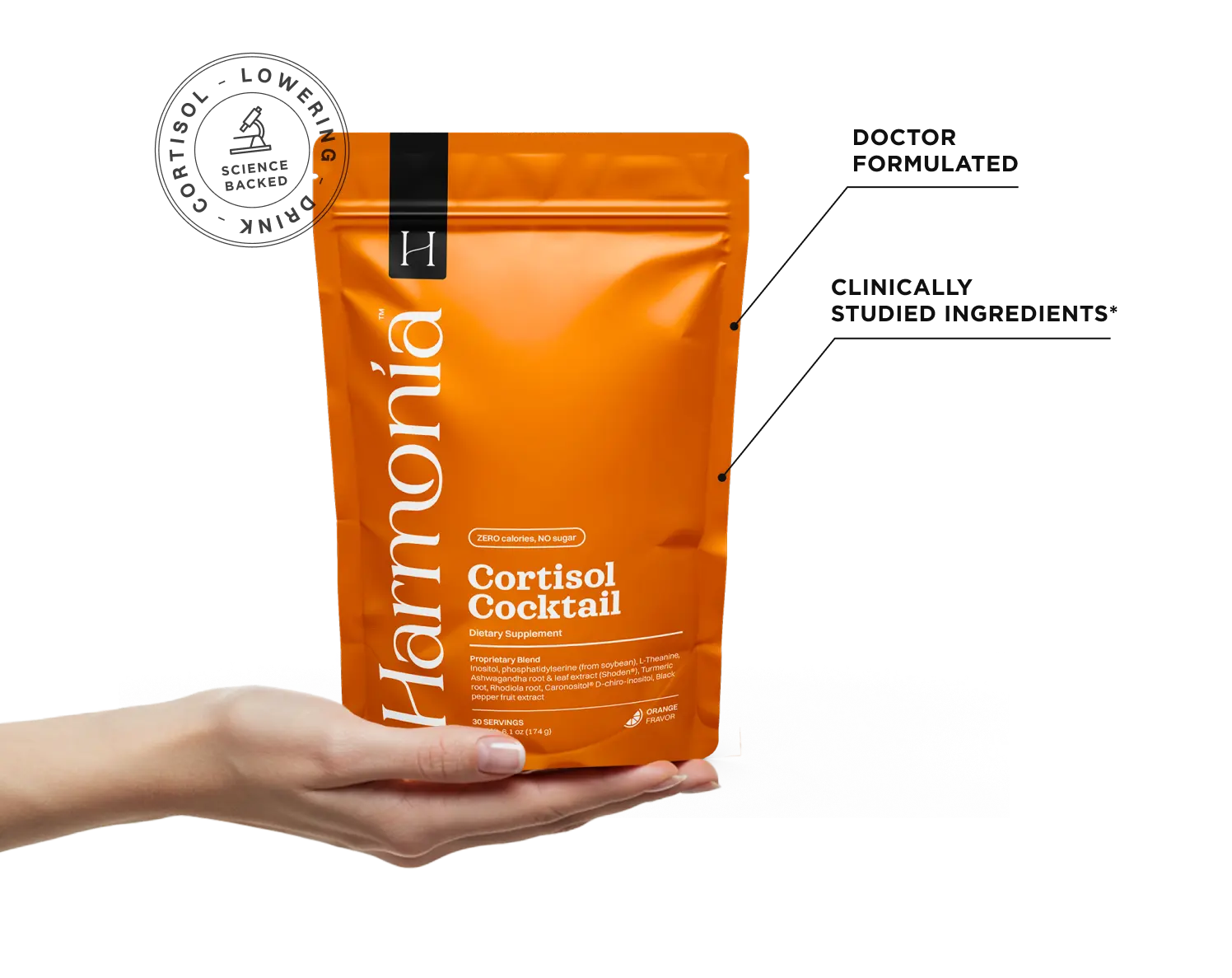
For those seeking a more complete approach to hormonal and metabolic support, the Harmonia Cortisol Cocktail is a daily cortisol support drink that combines adaptogenic and cortisol-regulating ingredients to help address the stress layer that often compounds gut-related weight challenges.
Diet, Lifestyle, and Probiotics: Why They Work Best Together
Probiotics are not a replacement for a healthy diet and regular movement. They work best as part of a broader lifestyle strategy that includes adequate dietary fiber, limited ultra-processed food, quality sleep, and manageable stress levels.
Chronic stress and elevated cortisol can negatively affect the gut microbiome by disrupting the gut lining and altering bacterial composition.
This creates a feedback loop where gut dysbiosis raises inflammation, inflammation elevates cortisol, and cortisol further compromises the gut. Managing stress protects your microbiome. It is not just good for mental health.
Aim for a diverse, plant-rich diet to naturally support microbiome health and amplify the benefits of any probiotic supplement. Diets containing 30 or more different plant foods per week are associated with significantly greater microbial diversity, which underpins better metabolic outcomes.
Conclusion

So does probiotics help with weight loss, or are the benefits limited to gut health alone? The evidence is clear that gut health and body weight are deeply connected, and that specific probiotic strains, particularly Lactobacillus gasseri and Lactobacillus rhamnosus, can contribute to measurable fat reduction when used consistently as part of a healthy lifestyle.
The effects are modest compared to major dietary changes, but they are real and well-documented across multiple systematic reviews.
Probiotics are especially valuable for those dealing with hormonal or stress-related weight challenges where conventional approaches often produce limited results.
If you are also navigating elevated cortisol, hormonal disruptions, or chronic fatigue that is making weight management harder, addressing the full picture matters.
The Harmonia Cortisol Cocktail is a daily drink formulated to support cortisol balance, gut health, and metabolic resilience together, rather than treating each in isolation.
Take the Harmonia quiz to see how the Harmonia Cortisol Cocktail can support your weight management goals and whether it is a good fit for where you are right now.
Frequently Asked Questions
Does probiotics help with weight loss directly?
Yes, clinical evidence and multiple systematic reviews confirm that certain probiotic strains contribute to reductions in body weight, visceral fat, BMI, and waist circumference.
The effects are real but modest, and work best when combined with a healthy diet and consistent lifestyle habits.
How long does it take for probiotics to work for weight loss?
Most studies showing measurable fat loss with probiotics ran for 12 weeks or more. Gut health improvements like reduced bloating and better digestion may appear within two to four weeks.
Consistency is key, and effects tend to reverse when supplementation stops.
Which probiotic is best for weight loss?
Lactobacillus gasseri has strong clinical evidence for reducing abdominal and visceral fat. Lactobacillus rhamnosus has shown particularly strong results in women.
Synbiotic formulas combining a probiotic with prebiotic fiber appear to outperform probiotic-only products in several trials.
Can probiotics reduce belly fat?
Yes. Multiple clinical trials and a 2025 meta-analysis specifically measuring visceral fat found statistically significant reductions in abdominal fat among participants taking targeted probiotic supplementation compared to placebo.
Should I take probiotics if I am trying to lose weight?
Probiotics can be a helpful addition to a weight loss plan, especially for those with gut dysbiosis, hormonal imbalances, or stress-related metabolic challenges. They work best alongside a balanced, fiber-rich diet and are not a substitute for overall lifestyle changes.
References
- Depommier, C., et al. (2019). Impact of the gut microbiota on inflammation, obesity, and metabolic disease. Biomedicine & Pharmacotherapy. Link
- Borgeraas, H., et al. (2018). Effects of probiotics on body weight, body mass index, fat mass and fat percentage in subjects with overweight or obesity: a systematic review and meta-analysis. Obesity Reviews. Link
- Ferrarese, R., et al. (2021). Effects of probiotics and synbiotics on weight loss in subjects with overweight or obesity: a systematic review. Nutrients. Link
- Zhang, Y., et al. (2025). Effects of oral supplementation of probiotics on body weight and visceral fat in obese patients: a meta-analysis and systematic review. Scientific Reports. Link