_11zon.jpeg)

Cortisol has become the hormone everyone wants to lower.
TikTok turned that idea into detox teas, fasting routines, cold plunges, morning drinks, and supplements with very confident labels. The science is more useful: your body needs cortisol.
Cortisol helps you wake up, keep blood sugar available, maintain blood pressure, respond to inflammation, and get through a real threat. The problem begins when your cortisol rhythm gets flattened, delayed, or pushed into the wrong part of the day.
Your body needs a rhythm: rise, respond, recover, come down at night.
Quick answer
Cortisol is a hormone your body needs for energy, blood sugar, blood pressure, immune response, and stress survival. The issue is usually not cortisol itself. The issue is a disrupted rhythm, especially when cortisol rises at the wrong time, stays high too long, feels flat in the morning, or does not come down at night.
What cortisol actually does
Cortisol is a survival hormone.
When your brain senses stress, your adrenal glands release cortisol so glucose becomes available and your body can respond. Cortisol also affects immune activity and slows functions your body does not need during an immediate threat, which is why the stress response is supposed to be temporary.
That sounds dramatic, but the everyday version is simple. Cortisol helps you get out of bed, think clearly, keep blood pressure stable, and make fuel available between meals.
You would not want zero cortisol.
Addison’s disease shows why. When the body cannot make enough cortisol, people can develop severe fatigue, low blood pressure, weight loss, nausea, dizziness, and, in some cases, adrenal crisis.
Cortisol also runs on a clock. Levels usually rise before waking, peak in the morning, then gradually drop toward night. Many clinical labs list a typical 6 a.m. to 8 a.m. blood cortisol range around 10 to 20 mcg/dL, depending on the lab and timing.
This morning rise is called the cortisol awakening response. It is your body’s ignition signal, and it is one reason many people feel more alert after light hits the eyes and the day begins.
Vitamin C belongs in this conversation because the adrenal glands use it heavily. The physiology behind vitamin C and cortisol explains why stress can raise nutrient demand without turning every symptom into a supplement problem.
Healthy cortisol rises and falls.
A disrupted rhythm can feel different from one person to the next. Some women feel tired in the morning and wired at night. Some crash after lunch. Some recover slowly from stress that used to feel manageable.
Acute stress versus chronic dysregulation
Acute stress is useful.
If you nearly get into a car accident, cortisol should rise. If you have an infection, a deadline, or a hard workout, your body should mobilize energy and attention.
Then it should come back down.
Chronic stress keeps asking the HPA axis, the hypothalamic-pituitary-adrenal system, to respond again and again. This is the brain-adrenal communication loop that decides when cortisol should rise, how strongly it should rise, and how quickly it should quiet down.
Repeated activation can keep that loop switched on. One study of chronically stressed adults found that 90.1% had elevated cortisol compared with controls, which supports the pattern many women describe as living in a constant state of alert.
Burnout can move in the other direction. Some people show a flatter morning pattern, which means the body may produce a weaker rise when it needs one.
The goal is rhythm, not a lower number at all costs.
A single blood draw can also mislead you. Cortisol changes with sleep, time of day, medication, caffeine, exercise, illness, and even the stress of the test itself. When Cushing’s syndrome is actually suspected, clinicians use specific screening methods such as urine, late-night saliva, or dexamethasone suppression testing rather than treating one random cortisol number as the whole story.
A normal number can be reassuring, but timing still matters.
The stress system changes when pressure keeps coming without recovery, and that same pattern can sit behind symptoms grouped under cortisol and anxiety: tension, restless sleep, irritability, and feeling on edge even when nothing obvious is happening.
The pattern matters more than one number.

Why women feel the stress load differently
Women are not imagining the stress load.
The data does not support a universal claim that every woman has high cortisol. It supports something more precise: female physiology, hormonal transition, sleep disruption, caregiving load, and chronic stress can make the stress system feel louder during midlife.
A PubMed-indexed review on female reproductive biology describes oxidative stress across the reproductive lifespan, including menopause. That does not prove cortisol is high in every woman, but it does show why women’s hormone systems should not be treated like smaller versions of men’s.
Perimenopause makes this more obvious.
Estrogen helps modulate the HPA axis. When estrogen fluctuates and then declines, sleep can get lighter, temperature regulation can change, and stress recovery may take longer.
The Swiss Perimenopause Study followed 127 perimenopausal women ages 40 to 56 and examined salivary hormones across the transition. The useful takeaway is quiet but important: cortisol, estradiol, mood, sleep, and stress move together.
That matches what many women describe.
A stressful week in your 30s may have felt like something you could sleep off. In your late 40s, the same stress can come with night waking, heavier cravings, hot flashes, brain fog, or a shorter fuse.
The stress gap also appears in self-reported data. A 2024 global stress report found that 66% of women felt stressed to the point that it affected daily life, compared with 58% of men.
Some of this is biology. Some of it is caregiving, emotional labor, workplace pressure, and the mental load of keeping everything moving.
So when the message becomes “do not worry about cortisol,” many women hear a different message: stop trusting what your body is telling you.
That misses the reader who is exhausted, skeptical, and still trying to be reasonable.
The problem with cortisol hacks
Wellness culture overcorrected first. Medicine often overcorrects back.
The cortisol hack economy turns a real hormone into a villain. Detox teas, aggressive fasting, daily ice baths, and intense exercise plans get framed as control tools, but your body may read them as more stress when sleep and food are already inconsistent.
Daily HIIT is a good example. Hard training raises cortisol because hard training is a demand, and a rested, well-fed body can usually adapt to that demand.
A depleted body may need less intensity.
If you are sleeping poorly, under-eating, drinking coffee before breakfast, and doing high-intensity workouts most days, the issue is not a lack of discipline. The signal you keep sending is: mobilize, mobilize, mobilize.
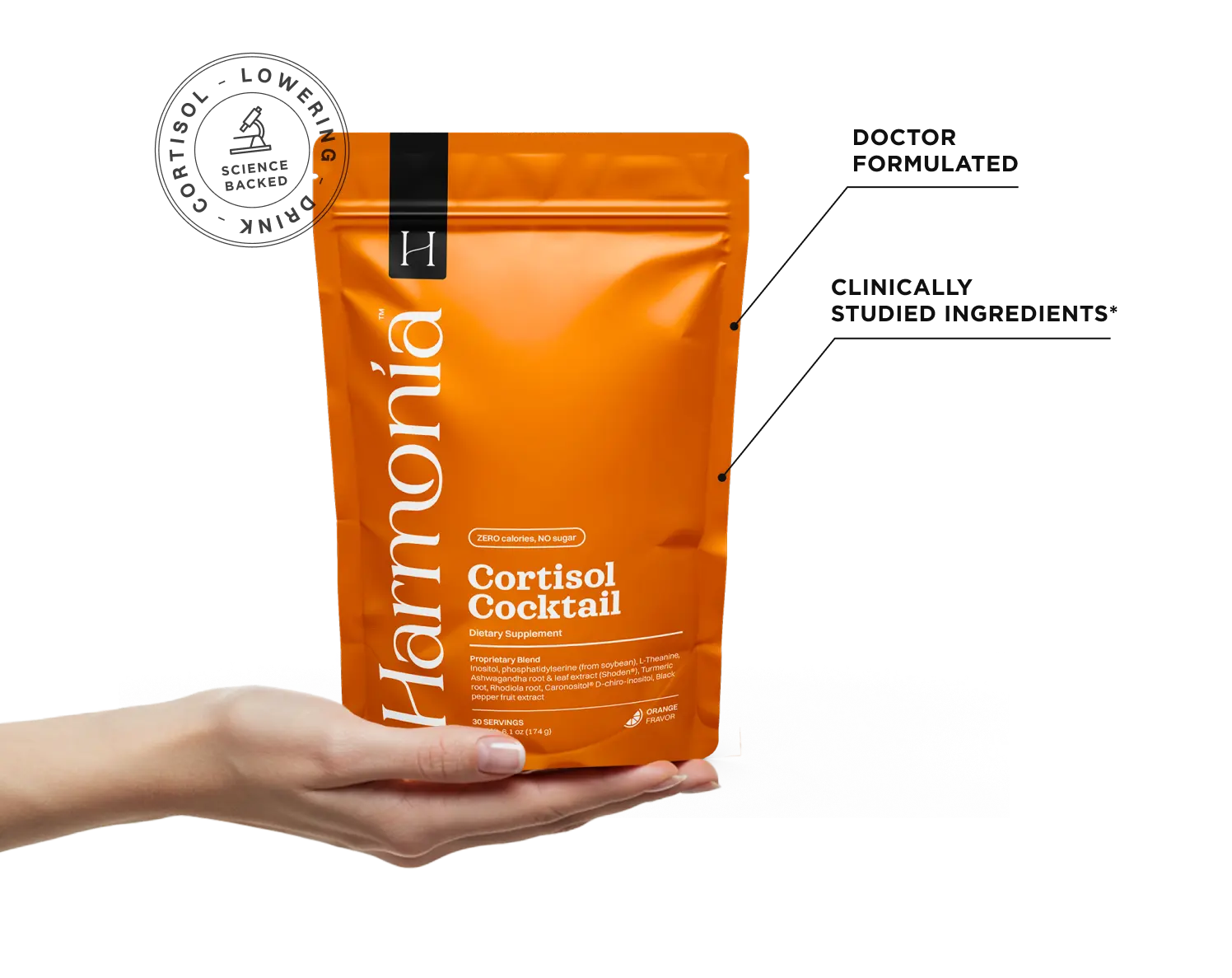
This is where ingredient choice matters. Harmonia’s Cortisol Cocktail fits this conversation because it’s built around stress-system support rather than cortisol suppression: HPA-axis signaling, sleep quality, nervous system recovery, and steadier daily stress response.
The goal isn’t to shut cortisol down. It’s to give your body better inputs so the stress response has a chance to complete and recover.
Aggressive fasting can create the same problem. When your body senses low energy availability, cortisol helps keep glucose accessible, which can feel like shakiness, cravings, irritability, and waking at 3 a.m. hungry but too wired to sleep.
Skipped meals and stress can create the same afternoon crash, which is why cortisol and blood sugar belongs in this discussion.
Daily ice baths follow the same logic. Cold exposure is an acute stressor, and some people recover well from it. A body already living in high-alert mode may hear another alarm.
Cortisol testing can use blood, urine, or saliva, but doctors use it mainly to help diagnose adrenal gland disorders, not to score everyday stress.
Dismissing every cortisol concern is too easy, though.
Stress recovery comes from repeated signals over months: consistent sleep timing, enough food, movement matched to capacity, and targeted support when the mechanism makes sense.

What to know about adrenal fatigue
Adrenal fatigue is not a recognized medical diagnosis.
A systematic review found no evidence that adrenal fatigue is a valid medical condition as commonly described. The idea that ordinary stress simply wears out the adrenal glands is not supported by the research.
Your symptoms can still be real.
Exhaustion, brain fog, afternoon crashes, salt cravings, poor sleep, and feeling flattened by ordinary demands deserve attention. The more accurate frame is usually HPA axis dysregulation, which means the communication loop between the brain, pituitary gland, adrenal glands, and body has adapted to repeated stress.
That pattern can become too high, too flat, delayed, or poorly timed.
This distinction matters because many “adrenal support” supplements aim at a problem the research does not recognize. Some are harmless but overpromised. Some contain glandular extracts or hormone-like ingredients, which deserves caution.
If symptoms are severe, new, or interfering with normal life, testing belongs with a clinician. Thyroid disease, anemia, sleep apnea, depression, medication effects, and true adrenal insufficiency need different plans.
Better explanations get better help.
The cortisol rhythm reset
The useful plan is not glamorous. It is also the plan that makes physiological sense.
Start with sleep timing. A 2024 American Academy of Sleep Medicine survey found that 74% of people with stress, anxiety, or depression reported disrupted sleep. Cortisol follows a circadian rhythm, so irregular sleep and wake times can keep pushing the signal out of sync.
Keep your wake time consistent, including weekends when you can. This gives the stress system a reliable morning anchor.
Eat before stress stacks up. When blood sugar drops, cortisol helps bring glucose back up, which is useful in a true emergency and miserable when it keeps happening between coffee, skipped breakfast, and a late lunch.
A protein-forward breakfast, enough calories, and steadier meals can reduce low-fuel stress signals. The practical version of this lives inside stress hormone habits because daily rhythm is built from repeated cues, not one perfect routine.
Match exercise to recovery. Hard training is useful when your body has the sleep and fuel to adapt. When your nervous system already feels overloaded, walking, mobility, yoga, and strength training at a manageable intensity may give you more return than another maximal-effort workout.
Use calming inputs at night. Dimmer light, less late caffeine, a predictable wind-down, and fewer late-night work signals all tell the stress system that the day is ending.
Then consider ingredients only when they match the mechanism.
What the ingredient evidence supports
The ingredient evidence is strongest when the study population matches the problem.
One 60-day double-blind RCT studied adults under chronic stress and found that KSM-66 ashwagandha was linked with a 27.9% cortisol reduction compared with baseline. The point is not that ashwagandha is a magic switch. A specific extract, studied over a specific time window, appeared to help the stress system settle in people who were already stressed.
For someone stuck in “always on,” the population matters. Support is more useful when the system is actually burdened, not when cortisol is normal and the goal is simply to chase a lower lab number.
Phosphatidylserine has a different angle.
A placebo-controlled trial found that 400 mg daily helped normalize HPA response in chronically stressed men, especially during an acute stress challenge. In plain English, the ingredient was studied for how the body responds to stress and returns toward baseline, which is closer to rhythm support than blunt suppression.
This helps because the goal is not to feel sedated. You want your body to respond when needed and stop sending the alarm when the moment has passed.
The reader-facing version of phosphatidylserine benefits explains this without needing a physiology textbook.
L-theanine has acute stress data. A randomized, triple-blind, placebo-controlled crossover study found that 200 mg L-theanine produced greater salivary cortisol decreases within one hour after a stress task in moderately stressed adults.
That finding is small but practical. L-theanine is often discussed as a calm-focus ingredient because it may help the stress response soften without the heavy, drugged feeling people fear from relaxation products.
Harmonia’s Cortisol Cocktail includes KSM-66 ashwagandha, phosphatidylserine, and L-theanine alongside magnesium and rhodiola rosea because those ingredients map to HPA axis response, stress recovery, and nervous system steadiness.
If your symptoms cluster around sleep, blood sugar, anxiety, cravings, or slow recovery, the Harmonia quiz can help you see which pattern fits your current picture.
Movement works best when it matches your stress load. A 2025 meta-analysis of 44 studies found that yoga showed the greatest cortisol reduction among exercise types, with an SMD of -0.59. Lower-threat movement with breathing and consistency may be better matched to a stressed nervous system than another maximal-effort workout.
Mindfulness has evidence too. A 2025 meta-analysis of 24 studies found that mindfulness-based interventions reduced food craving intensity, which matters because stress, appetite, and reward pathways often travel together.

The reframe
Your body needs cortisol rhythm.
A healthy pattern gives you a morning surge, a steady daytime descent, and a nighttime floor low enough for sleep. Chronic stress disrupts that pattern, so the work is to rebuild the conditions for response and recovery.
This is the physiology Harmonia’s Cortisol Cocktail is built around: HPA axis signaling, nervous system recovery, cortisol rhythm, and nutrient needs under stress. The goal is to support the conditions that help your body rise, respond, and come down again.
The formula makes the most sense when the daily routine is also telling the body, “you can come down now.”
The better question is simple: can your body rise when needed and come down when safe?
FAQ
Is high cortisol always bad?
High cortisol is useful during acute stress. It helps mobilize energy, increase alertness, and keep blood pressure stable when your body needs to respond.
The concern is chronic elevation, poor timing, or a flattened rhythm. The pattern and clinical context matter more than one high reading.
Can you have too little cortisol?
Yes. True cortisol deficiency can happen in adrenal insufficiency, including Addison’s disease, and it needs medical care.
Symptoms can include severe fatigue, low blood pressure, weight loss, nausea, dizziness, and salt craving. If symptoms are intense, new, or worsening, a clinician should evaluate them instead of assuming a wellness trend explains them.
Do cortisol-lowering supplements work?
Some ingredients have clinical evidence in specific populations. KSM-66 ashwagandha, phosphatidylserine, and L-theanine each have human trial data connected to cortisol or HPA response.
The wording matters. The best-supported goal is rhythm and stress resilience, not forcing cortisol lower in every person.
Does cortisol cause belly fat?
Chronically high cortisol can influence appetite, blood sugar, fat storage, sleep, and cravings, all of which can affect body composition. Belly fat rarely comes from one hormone alone.
Perimenopause, insulin resistance, sleep disruption, protein intake, alcohol, activity, medications, and genetics can all contribute. The relationship between caffeine and cortisol can also matter if coffee is standing in for food or sleep.
How do I know if my cortisol rhythm is off?
Common clues include morning exhaustion, nighttime alertness, waking around 2 to 4 a.m., afternoon crashes, cravings, and slow stress recovery. These signs are useful, but they are not a diagnosis.
Track sleep timing, caffeine, meals, exercise intensity, cycle stage, and symptoms for two weeks. Patterns tell you more than one bad day, and daily cortisol patterns can help you compare your symptoms with the normal rise-and-fall rhythm.
References
- American Academy of Sleep Medicine. (2024). Sleep prioritization survey: Disrupted sleep and stress. Link
- Cadegiani, F. A., & Kater, C. E. (2016). Adrenal fatigue does not exist: A systematic review. BMC Endocrine Disorders, 16, 48. Link
- Cleveland Clinic. (n.d.). Cortisol test. Link
- Endocrine Society. (2008). The diagnosis of Cushing’s syndrome: An Endocrine Society clinical practice guideline. Link
- Ipsos. (2024). World Mental Health Day 2024 global report. Link
- Mayo Clinic. (n.d.). Chronic stress puts your health at risk. Link
- MedlinePlus. (n.d.). Cortisol test. Link
- PubMed. (2005). Female reproductive biology and oxidative stress: Review record. Link
- Swiss Perimenopause Study. (2021). Cortisol, estradiol, mood, sleep, and stress across the menopausal transition. Link
- National Center for Biotechnology Information. (n.d.). KSM-66 ashwagandha and cortisol reduction trial record. Link
- National Center for Biotechnology Information. (n.d.). Phosphatidylserine and HPA-axis response trial record. Link
- Springer. (2021). L-theanine and salivary cortisol response after acute stress. Link
- National Center for Biotechnology Information. (2025). Exercise modalities and cortisol reduction: Systematic review and network meta-analysis. Link
- Springer. (2025). Mindfulness-based interventions and food craving intensity: Meta-analysis. Link