Cortisol gets framed as the villain. The reason you can't sleep, can't lose weight, can't stop reaching for carbs at 10pm. But what is cortisol, actually, before the wellness industry got to it?
It's a steroid hormone your adrenal glands make and release. It touches nearly every organ in your body. And far from being something you want to eliminate, you need it to function. What causes problems is what happens to its rhythm when stress becomes the baseline.
This guide covers what cortisol is, how your body makes it, what breaks its rhythm, and what the research actually shows about managing it.
Quick answer
Cortisol is a glucocorticoid hormone produced by the adrenal glands, two small glands that sit on top of your kidneys. It's the primary output of your body's stress response system, but it also regulates blood sugar, blood pressure, immune activity, and your sleep-wake cycle.
It's not optional. People with almost no cortisol (Addison's disease) can go into a life-threatening crisis under mild physical stress. The hormone's job is to keep you operational when conditions change.
How cortisol is made: the HPA axis
Your body doesn't produce cortisol on demand. It follows a chain of command.
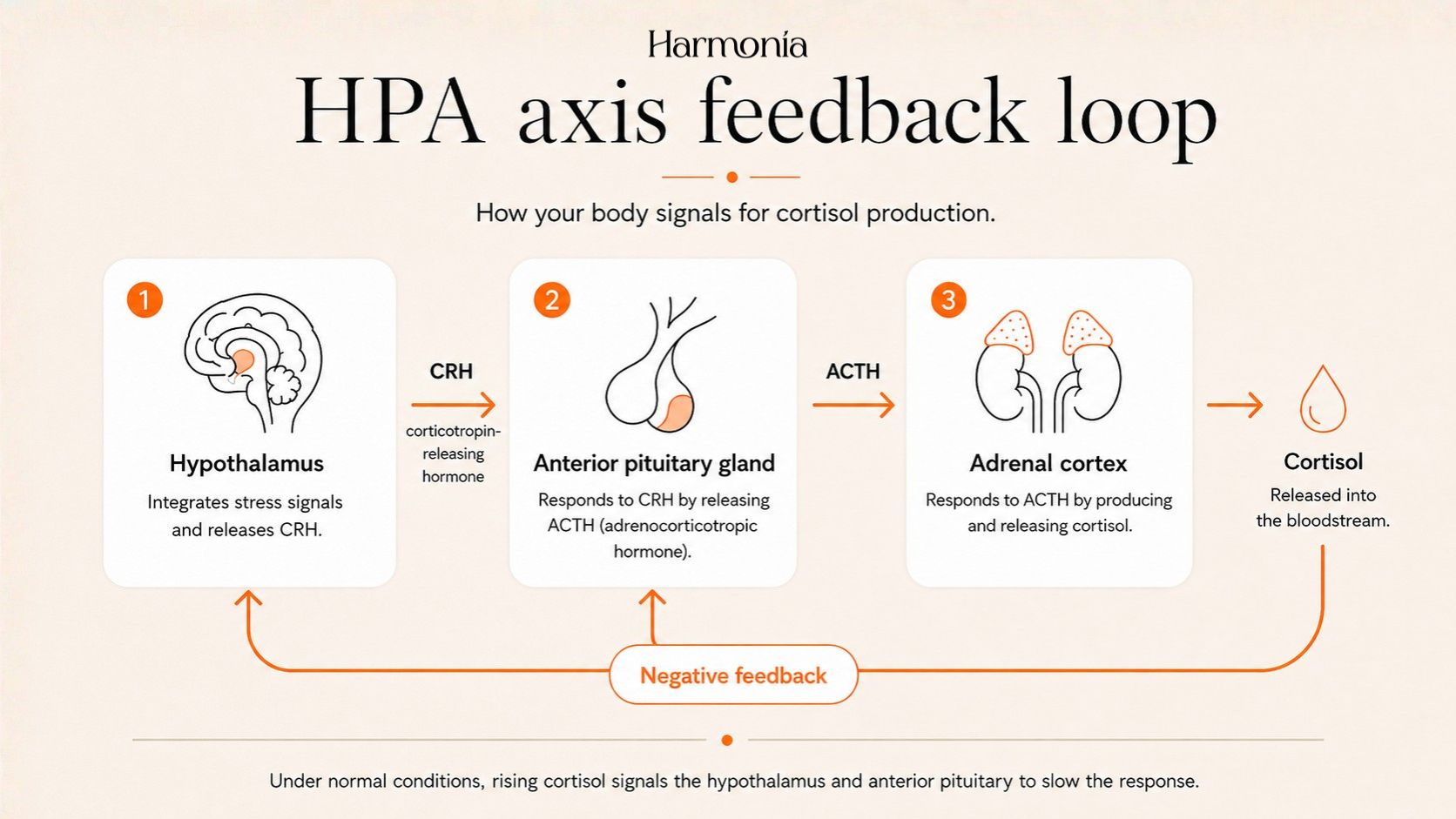
The hypothalamic-pituitary-adrenal axis, or HPA axis, starts in a region of the brain called the hypothalamus. When it detects stress, low blood sugar, illness, or a threat, it releases corticotropin-releasing hormone (CRH). CRH signals the pituitary gland to release adrenocorticotropic hormone (ACTH). ACTH then reaches the adrenal glands via the bloodstream and triggers cortisol production.
Once cortisol levels in the blood reach a threshold, they feed back to block both the hypothalamus and pituitary: a self-regulating loop. The system corrects itself. Under normal conditions.
Chronic stress is what breaks that loop. When the signal for more cortisol never stops arriving, the feedback system loses calibration.
The cortisol rhythm your body runs on
Cortisol doesn't stay flat across the day. It follows a circadian pattern tightly tied to your sleep-wake cycle.
Levels are at their lowest during the first few hours of sleep. They start rising around 2-3am, peak in the 30-45 minutes after you wake up (called the cortisol awakening response), then gradually decline across the day, reaching their lowest point again around midnight. This is normal. It's how your body primes you for alertness in the morning and prepares you for sleep at night.
When stress disrupts this rhythm, two things tend to go wrong. Morning cortisol can be blunted, so you wake up exhausted even after 8 hours. Or evening cortisol stays elevated when it should be falling, keeping the nervous system activated when it should be winding down. For a closer look at how each phase of the daily curve affects energy and sleep quality, when cortisol is highest walks through what drives the morning peak, the afternoon decline, and the overnight low.
What cortisol actually does in your body
Blood sugar and energy
Cortisol is one of the body's primary glucose-raising hormones. When it rises, it signals your liver to release stored glucose and tells your pancreas to reduce insulin output. That makes sense during a sprint or a genuine emergency. But when cortisol is chronically elevated, blood sugar stays persistently higher and persistently higher insulin follows. Insulin is a fat-storage hormone. This is part of the mechanism behind cortisol-driven weight gain, particularly around the abdomen.
Immune function
In small, short bursts, cortisol is anti-inflammatory. That's useful: it prevents your immune response from overshooting. But sustained elevation does the opposite.
Chronic high cortisol eventually suppresses immune function, increases systemic inflammation, and makes your body less capable of regulating its own responses. The thing that was supposed to damp inflammation becomes a source of it.
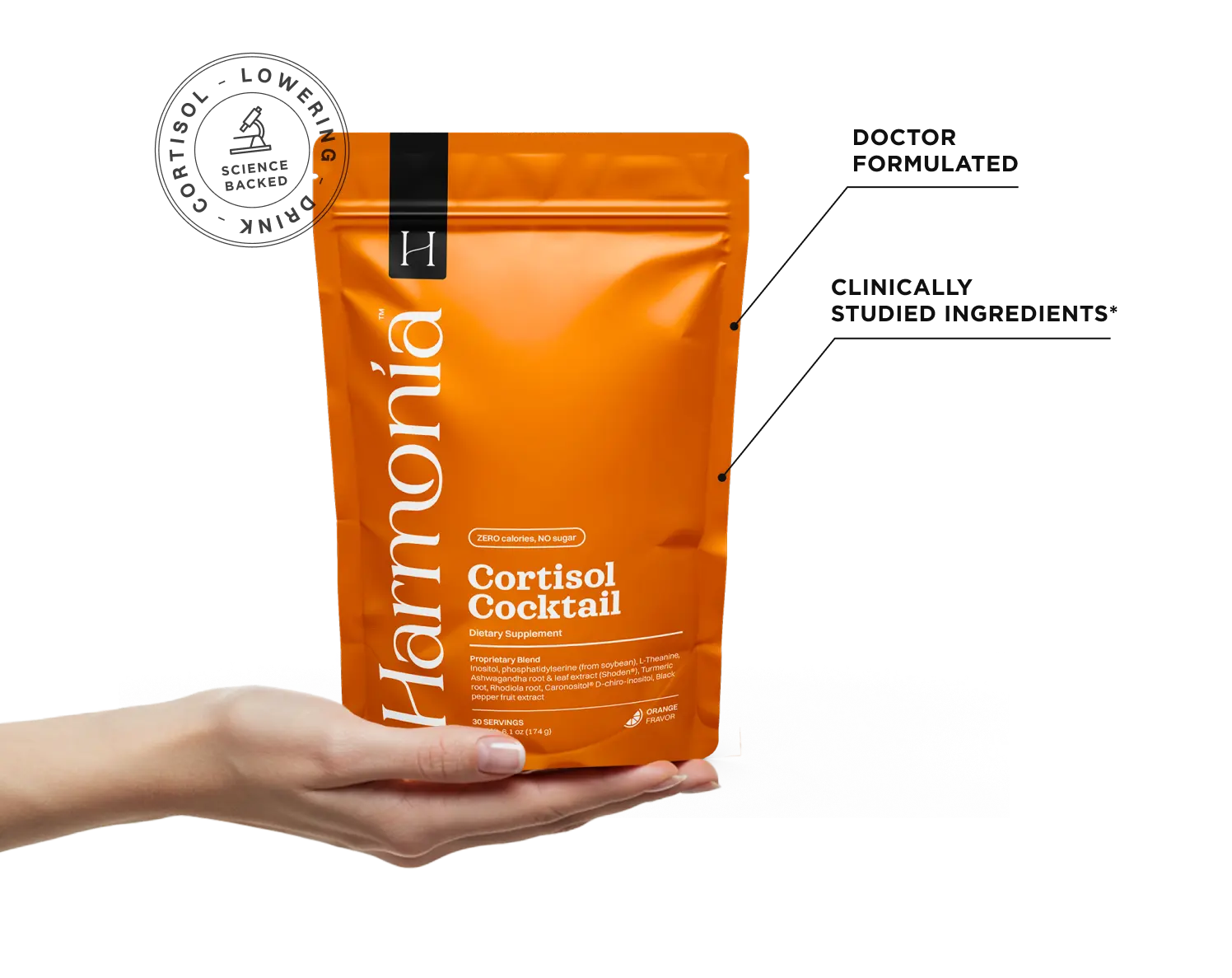
Ashwagandha and rhodiola both have published trial data showing effects on HPA axis activity and stress-response output. That specificity of mechanism is what the Harmonia Cortisol Cocktail is built around

Sleep
Cortisol and melatonin are on opposite schedules by design. As cortisol falls in the evening, melatonin rises. When evening cortisol stays high due to late-day stress, blue light, or disrupted sleep schedules, it delays and suppresses melatonin. You lie down but can't settle. You sleep but don't feel rested. A 15-day longitudinal study published in SLEEP tracking 95 women with simultaneous EEG recording found that higher presleep cortisol predicted shorter total sleep time and lower sleep efficiency, and that shorter, poorer sleep was associated with a flatter diurnal cortisol slope the following day.
Skin
Chronically high cortisol increases sebum production and drives inflammation in the skin. For a closer look at how that plays out in practice, cortisol acne and stress-related skin changes covers the specific mechanisms and what the research shows about stress-driven breakouts.
High cortisol: what it looks like
The clinical condition caused by sustained very high cortisol is Cushing's syndrome, affecting roughly 10-15 people per million each year. Causes include pituitary tumors, adrenal tumors, and long-term corticosteroid medication use.
Symptoms include weight gain around the face and abdomen, fatty deposits between the shoulder blades, wide purple stretch marks, muscle weakness in the upper arms and thighs, high blood sugar, and high blood pressure.
But Cushing's syndrome isn't what most women reading this are dealing with. The more common pattern is subclinical chronic stress: cortisol that's persistently elevated but not diagnostically high, running interference on metabolism, sleep, immunity, and mood without triggering a clinical flag on a standard lab panel.
That's where the conversation about managing cortisol actually lives. For practical strategies on what moves the needle, how to lower cortisol through daily habits covers what the evidence supports and what's mostly noise.

Low cortisol: what that means
Low cortisol (hypocortisolism) is usually a sign of adrenal insufficiency. Primary adrenal insufficiency, known as Addison's disease, happens when the immune system attacks the adrenal glands. Secondary adrenal insufficiency occurs when the pituitary doesn't produce enough ACTH.
Symptoms include persistent fatigue, unintentional weight loss, low blood pressure, appetite loss, and muscle weakness.
Adrenal insufficiency is a medical diagnosis that requires testing and treatment by an endocrinologist. The phrase "adrenal fatigue" is used loosely in wellness contexts to describe a state that falls short of clinical insufficiency, though a 2016 systematic review in BMC Endocrine Disorders reviewed 58 studies and found no scientific consensus supporting adrenal fatigue as a distinct medical diagnosis.
How cortisol is tested
Three testing methods exist, each capturing different information.
Blood test takes a sample at a fixed time, typically 8am when cortisol naturally peaks. A single blood draw gives a snapshot, not a full picture of how your rhythm is functioning across the day.
Urine test collects output over 24 hours, measuring total free cortisol. Useful for detecting Cushing's syndrome.
Saliva test (late-night salivary cortisol) measures levels at the point when they should be lowest. Elevated late-night salivary cortisol is a reliable indicator of cortisol dysregulation and is used in Cushing's screening. Multi-point salivary panels taken at four to six time points throughout the day give the most complete picture of your circadian rhythm.
If you're concerned about your cortisol levels, a conversation with your primary care doctor or endocrinologist is the right starting point. If you want to understand what the ranges actually mean in context, normal cortisol levels for women covers the reference values by test type and time of day, and why a result inside the "normal" range can still reflect a disrupted rhythm.
Cortisol in women: what changes across the lifespan
Women generally show stronger cortisol responses to psychosocial stress than men, partly because estrogen modulates HPA axis activity. Progesterone also plays a role: it has a calming effect on the HPA axis, so the luteal phase drop in progesterone before a period can temporarily lower stress tolerance and amplify cortisol reactivity. Some women notice this as heightened anxiety or poor sleep in the week before menstruation. The mechanism is hormonal.
As estrogen declines through perimenopause, that buffering effect decreases further.
Perimenopausal women show altered diurnal cortisol patterns, including higher evening cortisol and a less distinct morning peak. This contributes directly to the sleep disruption and abdominal fat accumulation many women in their 40s and 50s experience, even at caloric intakes that wouldn't have caused weight gain earlier in life.
Abdominal fat cells have more cortisol receptors than fat cells elsewhere in the body. Chronically elevated cortisol sends a preferential signal to store fat in the visceral (abdominal) tissue. Combine that with the insulin dysregulation cortisol causes, and you have a mechanism that works against calorie restriction if the underlying hormonal pattern isn't addressed.
Where nutritional support fits
Managing cortisol means addressing its rhythm. The level is a symptom of the pattern. Sleep consistency, moderate exercise (intensive daily HIIT can raise cortisol), and stress-reduction practices like deep breathing have evidence behind them.
Several adaptogens have published trial data on cortisol outcomes. In a 60-day double-blind, placebo-controlled trial of 64 adults with chronic stress, KSM-66 ashwagandha root extract reduced serum cortisol by 27.9% compared to placebo, alongside significant reductions in stress and anxiety scores. Phosphatidylserine has been studied for blunting the cortisol response to physical stress. For a full evidence-tier breakdown of which supplements have the strongest human trial data, what supplements lower cortisol covers dosing, study populations, and what each ingredient is and isn't supported for.
Vitamin C is one of the less-discussed inputs. The adrenal glands hold some of the highest concentrations of vitamin C in the body, making it physiologically involved in cortisol synthesis itself, not as a general antioxidant but as a direct cofactor in the stress response. That specificity of mechanism is why Harmonia's Cortisol Cocktail formula includes it alongside the other 15 ingredients chosen for the same reason.

The bottom line
Cortisol is your body's primary stress hormone, but it's also a metabolic regulator, immune modulator, and circadian timekeeping signal. When it's functioning normally, you don't notice it. When the rhythm gets disrupted by chronic stress, sleep problems, or hormonal shifts, the downstream effects show up across nearly every system: weight, energy, skin, immunity, and sleep quality.
Clinical extremes like Cushing's syndrome and Addison's disease need medical treatment. What most women experience is the middle ground: a system that's been running too hot for too long, without the inputs it needs to reset.
If your symptoms have been pointing toward a disrupted cortisol pattern, you can take the quiz to see whether the Harmonia Cortisol Cocktail fits where you are right now.
FAQs
What is cortisol and why is it called the stress hormone?
Cortisol is a steroid hormone produced by the adrenal glands. It's called the stress hormone because your body releases it as part of the fight-or-flight response, but it does far more than manage stress. It regulates blood sugar, blood pressure, immune activity, and your daily sleep-wake rhythm.
What are the symptoms of high cortisol?
In clinical Cushing's syndrome, high cortisol causes weight gain around the face and abdomen, muscle weakness, stretch marks, high blood sugar, and high blood pressure. In subclinical chronic stress patterns, the signs are subtler: fatigue that sleep doesn't fix, abdominal weight gain, carb cravings, and poor sleep quality.
What causes cortisol to be high?
Clinically high cortisol is caused by Cushing's syndrome, usually from a pituitary or adrenal tumor, or long-term corticosteroid medication. Chronically elevated cortisol in everyday life is typically driven by sustained psychological stress, poor sleep, irregular sleep schedules, and dietary patterns that spike blood sugar.
How do you lower cortisol naturally?
The evidence-backed approaches include consistent sleep timing, moderate (not excessive) exercise, deep breathing or meditation, reducing caffeine, and adequate magnesium and vitamin C intake. Adaptogens like ashwagandha have clinical trial data supporting cortisol reduction at doses of 300-600mg daily over 8-12 weeks.
What is the difference between cortisol and adrenaline?
Adrenaline (epinephrine) is the immediate stress hormone. It fires in seconds and drives the initial fight-or-flight surge. Cortisol follows about 15-20 minutes later and sustains the stress response over a longer period. Adrenaline fades quickly; cortisol lingers, which is why chronic stress has prolonged physiological effects.
Can cortisol cause weight gain?
Yes, through two main mechanisms. Cortisol tells your liver to release glucose and tells your pancreas to reduce insulin, which over time disrupts normal blood sugar regulation. It also preferentially signals fat storage in visceral (abdominal) tissue, which has a higher density of cortisol receptors than subcutaneous fat. This is why chronic stress and belly fat are linked at the hormonal level.
What is a normal cortisol level?
Normal morning cortisol (measured by blood test at 8am) is typically 6-23 mcg/dL, though lab reference ranges vary. A single measurement is less informative than understanding the pattern across the day. If you have symptoms, work with a doctor to interpret your specific results in clinical context.
References
- Thau L, Gandhi J, Sharma S. Physiology, Cortisol. StatPearls . Link
- Cleveland Clinic. Cortisol: What It Is, Function, Symptoms & Levels. Link
- Medical News Today. Cortisol: Function, effect on the body, and more.. Link
- Chandrasekhar K et al. A prospective, randomized double-blind, placebo-controlled study of ashwagandha root in reducing stress and anxiety. Indian J Psychol Med. 2012;34(3):255-262. Link
- Endocrine Society. Cushing's Syndrome and Cushing Disease. Link
- Cadegiani FA, Kater CE. Adrenal fatigue does not exist: a systematic review. BMC Endocr Disord. 2016;16:48. Link
- Tatomir A et al. The Role of Cortisol in Chronic Stress, Neurodegenerative Diseases, and Psychological Disorders. Front Neuroendocrinol. 2023. Link
- Zhu B, et al. Daily associations between salivary cortisol and electroencephalographic-assessed sleep: a 15-day intensive longitudinal study. SLEEP. 2024;47(9):zsae087.Link