You already know that chronic stress takes a real toll. The fatigue that does not lift after a full night of sleep. The anxious edge that follows you into the evening. The mood swings and cravings that seem to appear out of nowhere.
If you have been researching cortisol, you may have come across claims that vitamin C can help. But does vitamin C lower cortisol, or is that just another wellness trend that sounds better than the evidence supports?
The answer is more nuanced and more interesting than a simple yes or no. There is real science behind the vitamin C cortisol relationship, and understanding how it works helps set realistic expectations for what this nutrient can and cannot do for your stress response.
What Is Cortisol and Why Does It Matter?
Cortisol is a steroid hormone produced by the adrenal glands, small glands that sit just above your kidneys. It plays a central role in your body's stress response, but it does far more than just react to a bad day. Cortisol helps regulate blood sugar, metabolism, blood pressure, sleep-wake cycles, and immune function.
In a healthy rhythm, cortisol peaks in the early morning to help you wake up and gradually declines through the day, reaching its lowest point at night. The problem is not cortisol itself. It is when cortisol stays elevated for too long, or appears at the wrong times, that symptoms start to stack up.
Signs of disrupted cortisol balance can include:
- Feeling tired but unable to wind down at night
- Afternoon energy crashes and difficulty concentrating
- Strong cravings for sugar or salty foods
- Irritability and feeling emotionally reactive
- Restless sleep or waking in the early hours
- Stubborn weight around the midsection
If several of those sound familiar, you are not alone. And it is why so many people are looking for natural, evidence-backed ways to support a healthier cortisol pattern.
Why Vitamin C and the Adrenal Glands Are Deeply Connected
To understand the vitamin C cortisol relationship, you first need to know something most people overlook: the adrenal glands have one of the highest concentrations of vitamin C of any tissue in the human body.
Research identifies vitamin C as an adrenal cofactor, requiring ascorbic acid for both the production of stress-related steroid hormones and the synthesis of catecholamines like adrenaline. That is not a coincidence. It tells you that vitamin C is physiologically essential to how the adrenal glands function under stress.
A landmark study from the National Institutes of Health found that adrenal glands release vitamin C alongside ACTH, the very hormone that triggers cortisol release. In fact, adrenal vitamin C was released before cortisol peaked, suggesting it plays a preparatory or regulatory role in the stress response.
What this means in practice: when you are under chronic stress, your adrenal glands are working harder. And when they work harder, they draw heavily on vitamin C stores. If those stores are not consistently replenished through diet or supplementation, the system that regulates your stress response can begin to feel the strain.
Does Vitamin C Actually Lower Cortisol? What the Studies Show
This is the core question, and the research gives a genuinely interesting answer. Vitamin C does not simply suppress cortisol across the board. Rather, it appears to modulate the cortisol response, particularly under conditions of physical or psychological stress and in people with elevated levels.
Psychological Stress: A Randomized Controlled Trial
One of the most cited human trials on this topic involved 120 healthy adults given either high-dose sustained-release ascorbic acid (3,000 mg/day) or a placebo for 14 days. Participants were then exposed to an acute psychological stress test involving public speaking and mental arithmetic.
A vitamin C cortisol recovery trial found that compared to placebo, the vitamin C group showed lower blood pressure responses to stress, less subjective feelings of stress, and faster salivary cortisol recovery. The cortisol spike was not dramatically smaller, but participants bounced back from it more quickly.
A faster return to baseline means less prolonged exposure to elevated cortisol.
Chronic Stress and Hypercortisolemia: A Clinical Study
A more recent study examined vitamin C supplementation in 69 women with functional hypercortisolemia, meaning elevated cortisol due to unspecified chronic stress rather than a medical condition like Cushing's syndrome.
The researchers observed ascorbic acid reducing cortisol levels toward a more normal range, while untreated subgroups showed no meaningful change. This suggests vitamin C may be particularly relevant for people already in a state of prolonged elevated cortisol.
Physical Stress: The Ultramarathon Study
Athletes under extreme physical stress provide a useful model for studying cortisol. Research showed that supplementing with 1,500 mg daily led to lower post-race cortisol in runners compared to those taking lower doses or a placebo.
The cortisol attenuation was transient but real, pointing to vitamin C’s role in buffering the adrenal response to intense physiological demands.

How Vitamin C Modulates the Stress Response
Understanding the mechanism helps clarify what vitamin C can realistically do. It is not a direct cortisol blocker, nor does it shut down the HPA axis. Instead, its role appears to be more supportive and regulatory.
Vitamin C contributes antioxidant protection to the adrenal glands, which are exposed to significant oxidative activity during cortisol production, helping to protect these cells during periods of sustained stress.
It is also involved in the stress response itself, released alongside cortisol and working in parallel to support immune function while limiting oxidative damage.
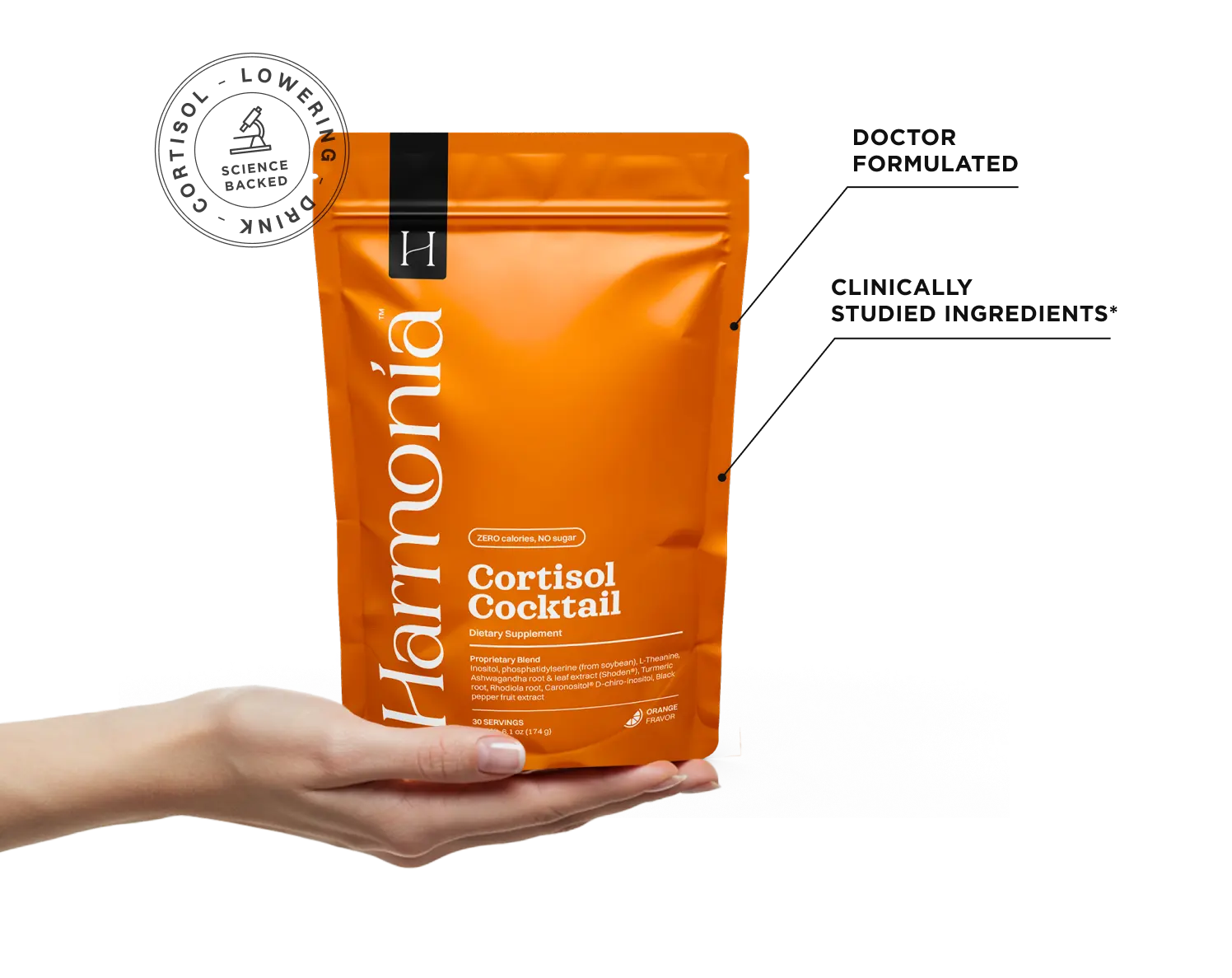
This is also why Vitamin C is one of the key supporting vitamins included in Harmonia's Cortisol Cocktail. Alongside adaptogens like Ashwagandha, Rhodiola, and Phosphatidylserine, the vitamin C works to support adrenal function and help your body manage the physiological demands of chronic stress more effectively.
It is not the star of the formula, but it plays a genuinely important supporting role.
What Vitamin C Cannot Do for Cortisol
This is where a lot of wellness content oversells the research, and it is worth being straightforward about the limits.
Vitamin C is not a direct cortisol suppressant. Taking it in isolation will not dramatically reduce cortisol if your sleep is poor, your diet is erratic, your stress load is unmanaged, or you are dealing with an underlying condition.
The strongest evidence exists in two situations:
- People with already elevated cortisol due to chronic stress, where supplementation helped bring levels closer to normal.
- People under acute physical or psychological stress, where vitamin C helped speed recovery back to baseline.
For people with normal cortisol patterns and moderate stress levels, the effects are likely to be more subtle. That does not make vitamin C irrelevant. It just means it works best as part of a broader approach rather than a standalone solution.
How to Lower Cortisol: Building a More Complete Strategy
Vitamin C is one useful piece. But if you are trying to figure out how to lower cortisol in a way that actually holds over time, the most reliable path combines several habits. Here is what the evidence consistently supports:
Prioritize Sleep Consistency
Cortisol follows a circadian rhythm. Disrupted or insufficient sleep throws that rhythm off, and elevated nighttime cortisol makes sleep worse, creating a loop that is hard to break. A consistent sleep window, reduced blue light exposure in the evening, and genuine wind-down time can all help your body settle into a calmer evening state.
If sleep is where stress hits hardest for you, the section on how to reduce stress hormones naturally goes into more practical depth on the sleep side of this.
Eat to Support Stable Blood Sugar
Blood sugar swings trigger cortisol release. Skipping meals, relying on coffee and refined carbohydrates, or going long stretches without eating all contribute to a more reactive cortisol response throughout the day.
Prioritizing protein earlier in the day, building meals around fiber and healthy fats, and avoiding long gaps without food are underrated strategies for steadier cortisol.

Move in Ways That Restore Rather Than Deplete
Exercise can raise or lower cortisol depending on intensity. Moderate movement, such as walking, yoga, or lighter strength training, tends to support recovery and cortisol regulation.
High-intensity workouts every day while under-slept and under-fueled can have the opposite effect. This is especially important to remember during high-stress periods.
Consider Supporting Nutrients
Beyond vitamin C, several nutrients have meaningful evidence for supporting the cortisol and stress response system. Magnesium is one of the most important. It helps regulate the nervous system, supports GABA activity, and has been linked to healthier cortisol patterns, particularly in people who are deficient or under persistent stress.
The science behind magnesium and cortisol is worth understanding if you are building a more complete stress support routine. Adaptogenic herbs like Ashwagandha and Rhodiola have also been shown to support HPA axis balance and improve the body’s resilience to stress over time.
For those who want these nutrients together in one daily routine, Harmonia combines vitamin C, Magnesium, and key adaptogens into a single formula targeted at the stress-cortisol pathway — making it easier to stay consistent with nutritional support alongside lifestyle changes.
Vitamin C-Rich Foods Worth Including
Before reaching for supplements, it is worth noting that food sources of vitamin C are well-absorbed and come with additional phytonutrients that support overall health. Some of the most concentrated sources include:
- Red bell peppers (one of the highest sources, more than oranges)
- Kiwi fruit
- Citrus fruits: oranges, grapefruit, lemons
- Strawberries
- Broccoli and Brussels sprouts
- Papaya and guava
When to Talk to a Healthcare Professional
Lifestyle and nutritional support can make a meaningful difference for many people experiencing stress-related cortisol imbalance. But they are not a substitute for medical evaluation when symptoms are severe or persistent.
Consider speaking with a healthcare provider if you experience:
- Unexplained weight changes or significant central weight gain
- Unusual blood pressure fluctuations
- Persistent fatigue that does not respond to improved sleep or nutrition
- Significant mood disruption, anxiety, or depression
- Symptoms that suggest a possible underlying hormonal condition
Cortisol levels can be tested through saliva, urine, or blood, and abnormal patterns sometimes point to conditions that require targeted medical treatment.
Conclusion
So, does vitamin C lower cortisol? The evidence says: yes, meaningfully, but not in isolation and not for everyone in the same way.
Vitamin C appears to help the body manage and recover from cortisol spikes more efficiently, support the adrenal glands under chronic stress, and bring elevated cortisol levels closer to normal in people who need it most. It is not a silver bullet, but it is also not just hype.
The most effective approach to cortisol balance combines solid sleep habits, steady nutrition, appropriate movement, and targeted nutritional support. Vitamin C is one important piece of that picture.
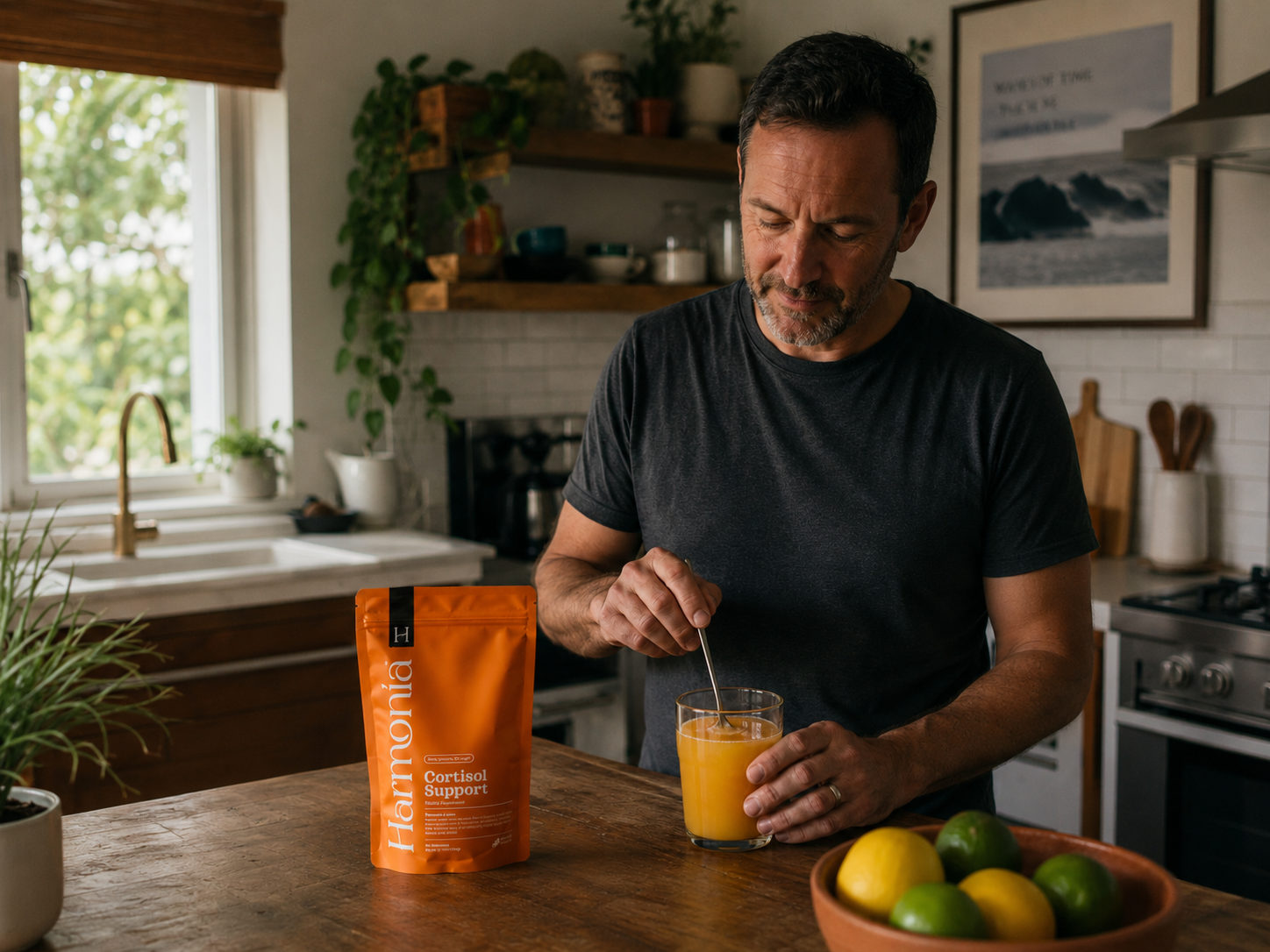
For those looking for a more convenient way to include it alongside other evidence-backed stress support ingredients, Harmonia's Cortisol Cocktail brings vitamin C together with Ashwagandha, L-Theanine, Rhodiola, Phosphatidylserine, Magnesium, and other key nutrients into a single daily formula.
That kind of multi-pathway support tends to do more for cortisol balance than any single supplement on its own.
Cortisol balance is rarely about one thing. Women dealing with stress alongside hormonal shifts, cycle irregularities, or PCOS often find that addressing the broader hormonal picture makes the biggest difference.
The connection between stress, cortisol, and natural remedies for hormonal imbalance is a thread worth pulling on if that resonates with your experience.
Frequently Asked Questions
Does vitamin C lower cortisol levels?
Research suggests that vitamin C can help modulate the cortisol response, particularly in people with elevated cortisol due to chronic stress or in those facing acute psychological or physical stressors.
It does not suppress cortisol broadly, but it supports faster recovery and healthier adrenal function.
How much vitamin C do I need to affect cortisol?
The studies showing cortisol-related effects have generally used doses between 500 mg and 3,000 mg per day. Dietary sources alone are unlikely to reach these levels, so supplementation is often considered for people under significant chronic stress.
What is the relationship between vitamin C and cortisol?
The adrenal glands hold very high concentrations of vitamin C and actively release it during the stress response alongside cortisol. Vitamin C acts as a cofactor in adrenal steroid hormone production and helps regulate the HPA axis. Deficiency is linked to higher cortisol output, while adequate vitamin C is associated with more balanced cortisol patterns.
What are the best natural ways to lower cortisol?
The most effective natural approaches include consistent sleep habits, balanced nutrition that supports stable blood sugar, moderate movement, stress reduction practices, and targeted nutritional support.
Vitamin C, magnesium, and adaptogenic herbs like ashwagandha are among the most evidence-backed nutrients for supporting cortisol balance.
Can I get enough vitamin C from food alone?
Food sources like red bell peppers, kiwi, citrus, and broccoli are excellent and should form the base of your intake. However, the doses used in cortisol research are typically higher than what food provides, making supplementation worth considering for those under chronic stress.
References
- Brody, S., Preut, R., Schommer, K., & Schürmeyer, T.H. 2002.. "A randomized controlled trial of high dose ascorbic acid for reduction of blood pressure, cortisol, and subjective responses to psychological stress.." Psychopharmacology, 159, 319-324. Link
- Peters, E.M., Anderson, R., Nieman, D.C., Fickl, H., & Jogessar, V. 2001.. "Vitamin C supplementation attenuates the increases in circulating cortisol, adrenaline and anti-inflammatory polypeptides following ultramarathon running.." International Journal of Sports Medicine, 22(7), 537-543. Link
- Wlodarczyk, M., Ciebiera, M., & Nowicka, G. 2023.. "Vitamin C supplementation alleviates hypercortisolemia caused by chronic stress.." PubMed (NCBI). Link
- Padayatty, S.J., Doppman, J.L., Chang, R., et al. 2007.. "Human adrenal glands secrete vitamin C in response to adrenocorticotrophic hormone.." The American Journal of Clinical Nutrition, 86(1), 145-149. Link
- Patak, P., Willenberg, H.S., & Bornstein, S.R. 2004.. "Vitamin C is an important cofactor for both adrenal cortex and adrenal medulla.." Endocrine Research, 30(4), 871-875. Link