Sleep problems are no longer limited to difficulty falling asleep. Many people lie awake with racing thoughts, wake up multiple times during the night, or feel unrefreshed despite spending enough hours in bed.
For a growing number of individuals, stress - not a lack of sleep opportunity - is the real issue. This is why interest in L-theanine for sleep support has increased rapidly.
L-theanine is often described as calming but non-sedating. Unlike traditional sleep aids that aim to force sleep, L-theanine works by supporting relaxation in the brain and nervous system.
This article takes a clear, evidence-based look at L-theanine and sleep, how it works, what research shows, and where it fits within a broader approach to stress and cortisol regulation.
What Is L-Theanine?
L-theanine is a naturally occurring amino acid most commonly found in green tea leaves. Unlike amino acids that are used to build proteins, L-theanine primarily affects brain function. It has been studied for its ability to promote relaxation, mental clarity, and stress resilience without causing drowsiness.
What makes L-theanine unique is that it crosses the blood–brain barrier and directly influences neurotransmitter activity. This allows it to affect how the brain responds to stress and mental stimulation, which is why it’s frequently discussed in relation to focus, anxiety, and sleep quality.
Importantly, L-theanine is not a sedative. It does not suppress the nervous system or act like sleeping pills. Instead, it helps shift the brain into a calmer state that is more receptive to rest.
How L-Theanine Works in the Brain
L-theanine supports balance among several key neurotransmitters involved in relaxation and emotional regulation:
- GABA (gamma-aminobutyric acid): Promotes calm and reduces excessive neural firing
- Serotonin: Supports mood stability and relaxation
- Dopamine: Helps regulate motivation and mental clarity
By supporting these neurotransmitters simultaneously, L-theanine helps reduce mental hyperactivity without impairing alertness or cognitive performance.
This is especially relevant for people whose sleep problems stem from mental overstimulation rather than physical fatigue.
Additionally, one of the most studied effects of L-theanine is its ability to increase alpha brain wave activity. Alpha waves are associated with a calm but alert mental state - often described as “relaxed awareness.”
This brain state is ideal for transitioning into sleep because it reduces stress signals while allowing the body’s natural sleep mechanisms to activate. Rather than forcing sleep, L-theanine helps remove the mental friction that keeps many people awake at night.
L-Theanine and Sleep: What the Research Shows

Clinical research suggests that L-theanine may improve several aspects of sleep quality, particularly when stress is a contributing factor.
Studies have linked L-theanine use to:
- Reduced time needed to fall asleep
- Improved sleep efficiency (time asleep vs. time in bed)
- Fewer nighttime awakenings
- Better subjective sleep quality
It’s important to note that L-theanine does not act like a sleeping pill. It doesn’t induce unconsciousness or override natural sleep rhythms. Instead, it supports the conditions required for healthy sleep to occur.
This distinction matters because stress-related sleep problems often persist even when sedatives are used. Addressing the underlying nervous system imbalance tends to produce more sustainable results.
Benefits of L-Theanine for Sleep Support
L-theanine supports sleep indirectly by calming the nervous system and reducing the mental and physiological barriers that prevent restful sleep.
Rather than forcing sedation, it helps the body shift from a state of stress and alertness into one that is more receptive to sleep. This makes it particularly valuable for individuals whose sleep issues are rooted in stress, anxiety, or cortisol imbalance.
Calms a Racing Mind at Night
One of the most common reasons people struggle to fall asleep is persistent mental activity. Even when the body feels tired, the brain may remain overstimulated - replaying conversations, worrying about responsibilities, or feeling unable to “switch off.”
L-theanine helps quiet this mental noise by modulating neurotransmitters associated with relaxation, particularly GABA. By reducing excessive neural firing, it promotes a calmer mental state without suppressing awareness.
This allows the brain to disengage naturally, making it easier to fall asleep without feeling groggy or sedated.

Reduces Stress-Related Sleep Disruptions
Stress activates the body’s fight-or-flight response, increasing alertness and making deep sleep difficult. When stress becomes chronic, this response can remain active even at night, leading to shallow sleep, frequent awakenings, or early-morning waking.
L-theanine supports a more balanced stress response, helping the nervous system downshift in the evening. By reducing stress signaling, it may decrease nighttime awakenings and improve overall sleep continuity - both critical factors for feeling rested the next day.
Supports Deeper, More Restful Sleep Quality
While L-theanine does not necessarily increase total sleep time, research suggests it can improve sleep quality. This includes better sleep efficiency (the percentage of time spent asleep while in bed) and fewer disruptions during the night.
People who use L-theanine for sleep often report waking up feeling more refreshed, even if their total hours of sleep remain unchanged. This suggests that L-theanine may support more restorative sleep cycles rather than simply longer sleep duration.
Helps Balance Cortisol for Healthier Sleep Rhythms

Cortisol plays a central role in regulating the sleep–wake cycle. Under normal conditions, cortisol levels decline in the evening, allowing the body to transition into sleep. Chronic stress can disrupt this rhythm, keeping cortisol elevated at night and interfering with sleep onset and depth.
L-theanine has been shown to help moderate the stress response, which may support a healthier evening cortisol pattern. This is particularly relevant for individuals who feel “tired but wired” at night - a common sign of cortisol dysregulation.
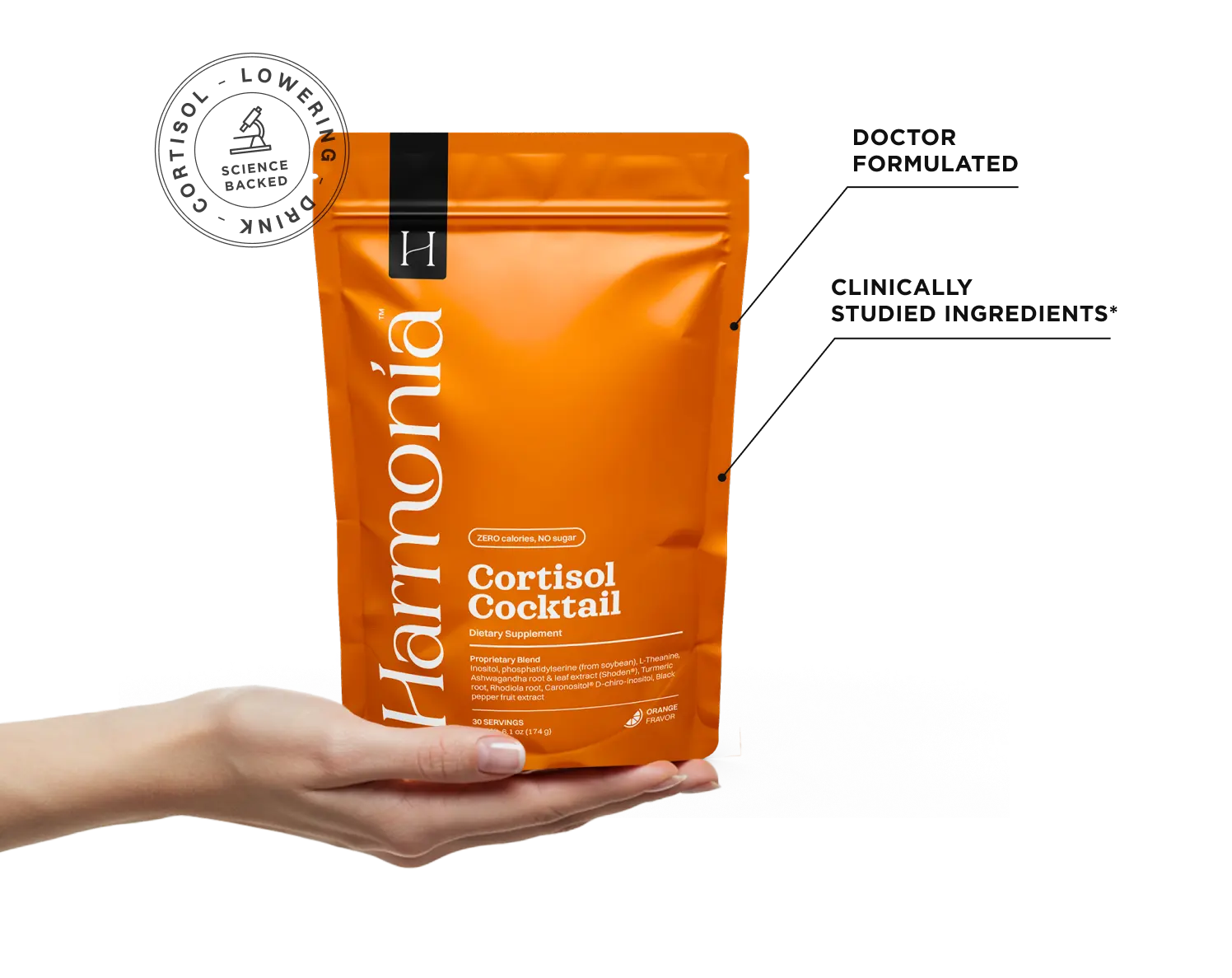
This cortisol-balancing effect is one reason L-theanine is often included in comprehensive stress-support formulas like Harmonia, where it works alongside adaptogens and minerals to support relaxation and sleep quality without acting as a sedative.
Promotes Relaxation Without Daytime Grogginess
Unlike many sleep aids, L-theanine does not cause next-day drowsiness or cognitive impairment. Its calming effects are subtle and physiological rather than suppressive.
This allows it to support sleep while still being safe for use during the day as part of a broader stress-management routine.
For individuals who experience both daytime stress and nighttime sleep difficulties, this dual benefit makes L-theanine especially useful. By supporting calm during the day, it may also help improve sleep quality at night.
L-Theanine vs. Melatonin vs. Magnesium for Sleep
Not all sleep supplements work the same way. Some support relaxation, others influence sleep timing, and some help calm the body physically.
Understanding how L-theanine, melatonin, and magnesium differ can help clarify which option may be most appropriate depending on the root cause of sleep disruption.
The table below compares these three compounds based on how they work, what types of sleep issues they support, and key considerations for use.
Can L-Theanine Be Taken During the Day Without Causing Drowsiness?
Yes. One of L-theanine’s defining features is that it promotes calm without sedation. Many people use it during the day to manage stress, improve focus, and reduce anxiety without impairing performance.
This makes L-theanine especially valuable for individuals who experience both daytime stress and nighttime sleep difficulties. Supporting nervous system balance during the day often leads to improved sleep at night.
Functional stress-support drinks like Harmonia include L-theanine for this reason - it supports relaxation across the day rather than acting as a night-only sleep aid.
Using L-Theanine as Part of a Complete Sleep & Stress Routine

Sleep does not exist in isolation. It is influenced by stress levels, hormonal balance, nervous system regulation, and daily habits.
L-theanine works best when combined with supportive lifestyle practices, such as:
- Consistent sleep and wake times
- Reduced evening screen exposure
- Balanced nutrition
- Stress management during the day
Because stress and cortisol dysregulation are common root causes of poor sleep, addressing them holistically tends to produce better long-term outcomes than relying on single-ingredient sleep aids.
L-Theanine in Harmonia
Harmonia includes L-theanine as part of a broader approach to stress and sleep support. Rather than focusing solely on sleep induction, the formulation targets the upstream factors that interfere with rest - particularly chronic stress and elevated cortisol.
In Harmonia, L-theanine works alongside ingredients such as adaptogens, inositols, magnesium, and B vitamins. This synergy supports:
- Nervous system relaxation
- Stress hormone balance
- Improved sleep quality
- Daytime calm without sedation
By addressing stress throughout the day, this approach helps create the conditions for more natural, restorative sleep at night.
Final Thoughts
L-theanine is not a sleeping pill - and that is precisely its strength.
For individuals whose sleep struggles are driven by stress, anxiety, and mental overactivity, L-theanine offers meaningful support by calming the brain and nervous system without forcing sleep. Research supports its role in improving sleep quality, reducing nighttime restlessness, and promoting relaxation.
Rather than acting as a quick fix, L-theanine works best as part of a broader strategy that addresses stress and cortisol balance.
If your sleep issues are tied to chronic stress, racing thoughts, or feeling “wired but tired,” consider a more complete approach. Harmonia combines L-theanine with adaptogens, minerals, and hormone-supporting nutrients to help calm the nervous system, support cortisol balance, and promote deeper, more restorative sleep - without sedation.
Supporting sleep starts with supporting calm.
References
- Bulman, A., D’Cunha, N. M., Marx, W., Turner, M., Mckune, A., & Naumovski, N. (2025). The effects of L-theanine consumption on sleep outcomes: A systematic review and meta-analysis. Sleep medicine reviews, 81, 102076. Link.
- Gilbert, C. (2014). The Effect of Tea and Its Constituent L-theanine on Anxiety: a Review of the Literature. Link.
- Juneja, L. R., Chu, D. C., Okubo, T., Nagato, Y., & Yokogoshi, H. (1999). L-theanine—a unique amino acid of green tea and its relaxation effect in humans. Trends in Food Science & Technology, 10(6-7), 199-204. Link.