The best supplements for menopause belly fat target the systems driving the problem: cortisol dysregulation, insulin resistance, and low-grade inflammation.
For many women, menopause brings a shift that feels both sudden and unfair: weight gain that settles almost exclusively around the midsection and seems resistant to everything that worked before. Diets that once delivered results stop working. Exercise feels harder, recovery takes longer, and the belly fat simply stays.
This isn’t a failure of discipline or consistency. Menopause belly fat is driven by hormonal, metabolic, and nervous system changes that require a different strategy than traditional weight loss advice.
Understanding these changes - and using supplements that support the body rather than stress it - can make menopause weight loss feel possible again.
Why Menopause Belly Fat Is Different
Estrogen Decline and Fat Redistribution
Estrogen plays a protective role in how and where the body stores fat. During reproductive years, it encourages fat storage in the hips and thighs, areas that are metabolically safer. As estrogen levels decline during perimenopause and menopause, this protective pattern changes.
Fat storage shifts toward the abdomen, increasing visceral fat. Visceral fat sits deep within the abdominal cavity, around vital organs, and is both more hormonally active and more inflammatory than subcutaneous fat.
Visceral fat is more hormonally active and more inflammatory, making it harder to lose through calorie restriction alone.
This is why many women notice that even when their weight stays relatively stable, their waistline increases.
Increased Stress Sensitivity and Nervous System Changes
Hormonal changes during menopause affect neurotransmitters that regulate mood, sleep, and appetite. As a result, the nervous system becomes more sensitive to stress. Situations that once felt manageable may now feel overwhelming, and recovery from stress takes longer.
This heightened stress response feeds directly into belly fat accumulation. Chronic stress signals the body to conserve energy, often by storing fat - particularly in the abdominal region.

Insulin Resistance and Carb Cravings After 40
Another common shift during menopause is reduced insulin sensitivity. This means the body becomes less efficient at moving glucose from the bloodstream into cells for energy.
In a 2003 review in the Journal of Clinical Endocrinology and Metabolism, estrogen loss was found to directly impair insulin signaling, increasing visceral fat accumulation independently of total calorie intake.
Excess glucose is more likely to be stored as fat, especially around the belly. This metabolic change often shows up as:
- Stronger cravings for carbohydrates and sugar
- Energy crashes in the afternoon or evening
- Increased hunger despite eating balanced meals
These patterns often overlap with hormonal bloating. Hormonal belly bloating vs fat is a distinction worth understanding before assuming any supplement will address the root cause.
Can Supplements Really Help With Menopause Belly Fat?
Supplements don’t replace lifestyle habits, but they can significantly support the systems that regulate weight during menopause.
The most effective ones work by addressing regulation: cortisol balance, insulin sensitivity, sleep quality, and inflammation. The goal is supporting the body, not forcing fat loss through stimulation.
The right supplements work by helping the body regain balance rather than forcing fat loss through stimulation or appetite suppression.
Effective supplements can:
- Support hormonal regulation
- Improve stress resilience
- Enhance sleep quality
- Stabilize blood sugar
- Reduce emotional eating and cravings
Effective supplements support hormonal regulation, improve stress resilience, stabilize blood sugar, and reduce the cravings and emotional eating patterns that tend to drive weight gain during menopause.This is why the best supplements for weight loss in females during menopause focus on stress, hormones, and metabolism together - not on quick fixes.
Best Supplements for Menopause Belly Fat

Ashwagandha
In a double-blind, placebo-controlled trial of 64 adults with chronic stress, ashwagandha root extract reduced serum cortisol by 27.9% and significantly lowered stress scores over 60 days. Chronic stress is closely linked to abdominal fat storage, emotional eating, and sleep disruption - all common during menopause.
Ashwagandha supports:
- A healthier stress response
- Improved sleep quality
- Reduced anxiety and tension
By helping the body shift out of constant “fight-or-flight,” ashwagandha indirectly supports metabolic balance and makes consistent healthy habits easier to maintain.
Adaptogens address the cortisol side. The insulin-signaling piece is where myo-inositol's role in weight gain and loss becomes relevant and the two systems reinforce each other more than most supplement protocols account for.
Rhodiola Rosea
Rhodiola acts on the HPA axis to reduce stress-induced fatigue without stimulant effects. A randomized, double-blind trial of 40 students found that 370mg of Rhodiola SHR-5 extract reduced stress-related fatigue and improved cognitive performance during a high-demand period.
Many menopausal women experience fatigue alongside restlessness - tired but wired. Rhodiola helps smooth energy levels, reducing burnout and emotional overwhelm.When energy and mood are more stable, stress-driven eating and reliance on quick carbs often decrease, supporting gradual reductions in belly fat.
Myo-Inositol
Myo-Inositol improves cellular insulin sensitivity by acting as a second messenger in insulin receptor signaling.
A randomized controlled trial in postmenopausal women with metabolic syndrome found that 2g of myo-inositol daily for 6 months reduced fasting insulin, triglycerides, and diastolic blood pressure compared to placebo. When blood sugar regulation improves, cravings tend to decrease and energy levels become more consistent.
Belly fat during menopause sits at the intersection of cortisol and insulin which is why supplements targeting both cortisol and belly fat tend to outperform single-system approaches.
D-Chiro Inositol
D-Chiro Inositol complements Myo-Inositol by enhancing insulin sensitivity at the cellular level. Together, they help address one of the most stubborn contributors to menopause belly fat: impaired glucose metabolism.
This combination is especially relevant for women who notice weight gain in the midsection even with moderate food intake and consistent movement. That pattern points to insulin signaling disruption rather than simple calorie excess.
Magnesium
Magnesium deficiency is common in perimenopausal and postmenopausal women. A meta-analysis of 18 randomized trials found that magnesium supplementation significantly improved fasting glucose and insulin sensitivity in individuals with insulin resistance.
Poor sleep raises ghrelin and reduces leptin sensitivity, which increases caloric intake. Magnesium's role in sleep onset and nervous system relaxation makes it one of the more indirect but consistent supports for weight regulation during menopause.
Magnesium supports:
- Nervous system relaxation
- Sleep onset and depth
- Muscle recovery
- Blood sugar balance
Poor sleep alone can increase hunger hormones and reduce insulin sensitivity. Supporting magnesium levels often improves sleep quality, which indirectly supports appetite regulation and fat metabolism.
Phosphatidylserine
Phosphatidylserine helps modulate the cortisol response to stress. A double-blind, placebo-controlled trial found that 600mg daily blunted post-exercise cortisol and ACTH responses, a mechanism relevant to women managing chronic stress loads during menopause.
During menopause, mental fatigue and decision overload can quietly undermine healthy routines. When cognitive resources are depleted, impulsive eating and emotional food choices become more likely. By supporting focus and stress regulation, phosphatidylserine may help reduce stress-driven behaviors that contribute to belly fat accumulation.
Turmeric (Curcumin)

Curcumin, turmeric's active compound, directly influences NF-κB and other pro-inflammatory signaling pathways.
A pilot trial in 30 adults with metabolic syndrome found that curcumin supplementation significantly reduced body weight, BMI, and waist circumference compared to placebo. As estrogen declines, low-grade chronic inflammation tends to rise, making fat loss more difficult.
Curcumin also improves insulin sensitivity by reducing inflammatory interference in glucose uptake. When inflammation is lower, cells respond more effectively to insulin, and glucose is used for energy rather than stored.
Potential support for joint comfort is a practical benefit too. Regular movement is easier when joints aren't impeding it.
Chromium
Chromium enhances insulin's action by increasing the number of insulin receptors on cell membranes and improving signaling efficiency.
A randomized controlled trial in women with polycystic ovary syndrome found that chromium picolinate significantly improved insulin sensitivity and reduced fasting glucose after 8 weeks.
For menopausal women, chromium may support:
- Improved blood sugar regulation
- Reduced frequency and intensity of carb cravings
- More stable energy levels throughout the day
These effects are especially important for women who experience afternoon energy crashes or feel drawn to sweets later in the day - patterns that often contribute to menopause belly fat.
Vitamin D
Vitamin D functions more like a hormone than a typical vitamin, binding to nuclear receptors and influencing gene expression throughout the body.
A longitudinal study of 4,492 women found that lower vitamin D levels were associated with higher visceral fat accumulation and greater insulin resistance over a five-year follow-up.
Vitamin D supports:
- Healthy insulin sensitivity
- Regulation of fat cell function
- Mood stability and emotional well-being
Low vitamin D levels have also been linked to increased visceral fat accumulation. By supporting hormone signaling and metabolic health, adequate vitamin D levels may help reduce some of the biological barriers to menopause weight loss.
Because consistent intake matters, some women prefer formulations that include vitamin D as part of a broader hormonal support approach. Harmonia includes vitamin D alongside stress-supporting adaptogens, inositols, and key minerals, making it easier to support hormone signaling and metabolic health without relying on multiple separate supplements.
B-Complex Vitamins
B6, B12, and folate are essential for the methylation reactions that govern neurotransmitter synthesis and hormonal metabolism. Low B12 status has been associated with elevated homocysteine, which correlates with higher inflammatory markers, relevant during menopause when inflammation is already elevated.
Key roles of B-complex vitamins include:
- Converting food into usable energy
- Supporting neurotransmitters involved in mood and focus
- Assisting liver detoxification of hormones
When energy production is compromised, the body often compensates by increasing cravings and slowing metabolism. Adequate B-vitamin intake supports both physical and mental energy, indirectly supporting weight regulation.
Menopause Weight Loss Pills vs. Hormone-Supporting Supplements
Most menopause weight loss pills work by stimulating the central nervous system or suppressing appetite through CNS activation. These mechanisms worsen anxiety, disrupt sleep, and raise cortisol further in women who are already in a high-stress physiological state.
Understanding these differences is essential for choosing an option that supports long-term health rather than short-term results.
The table below highlights the key distinctions between these two approaches.
What to Look for When Choosing Supplements for Menopause Belly Fat
Clinically Researched Ingredients
Look for formulations that list specific doses, not proprietary blends that obscure how much of each ingredient is actually present. The clinical evidence for ashwagandha, myo-inositol, and magnesium is dose-dependent; a product containing trace amounts isn't equivalent to the doses used in trials.
Stress, Sleep & Hormone Support
Products that focus only on metabolism often miss the core drivers of menopause weight gain. Nervous system support, sleep quality, and hormonal balance are essential.
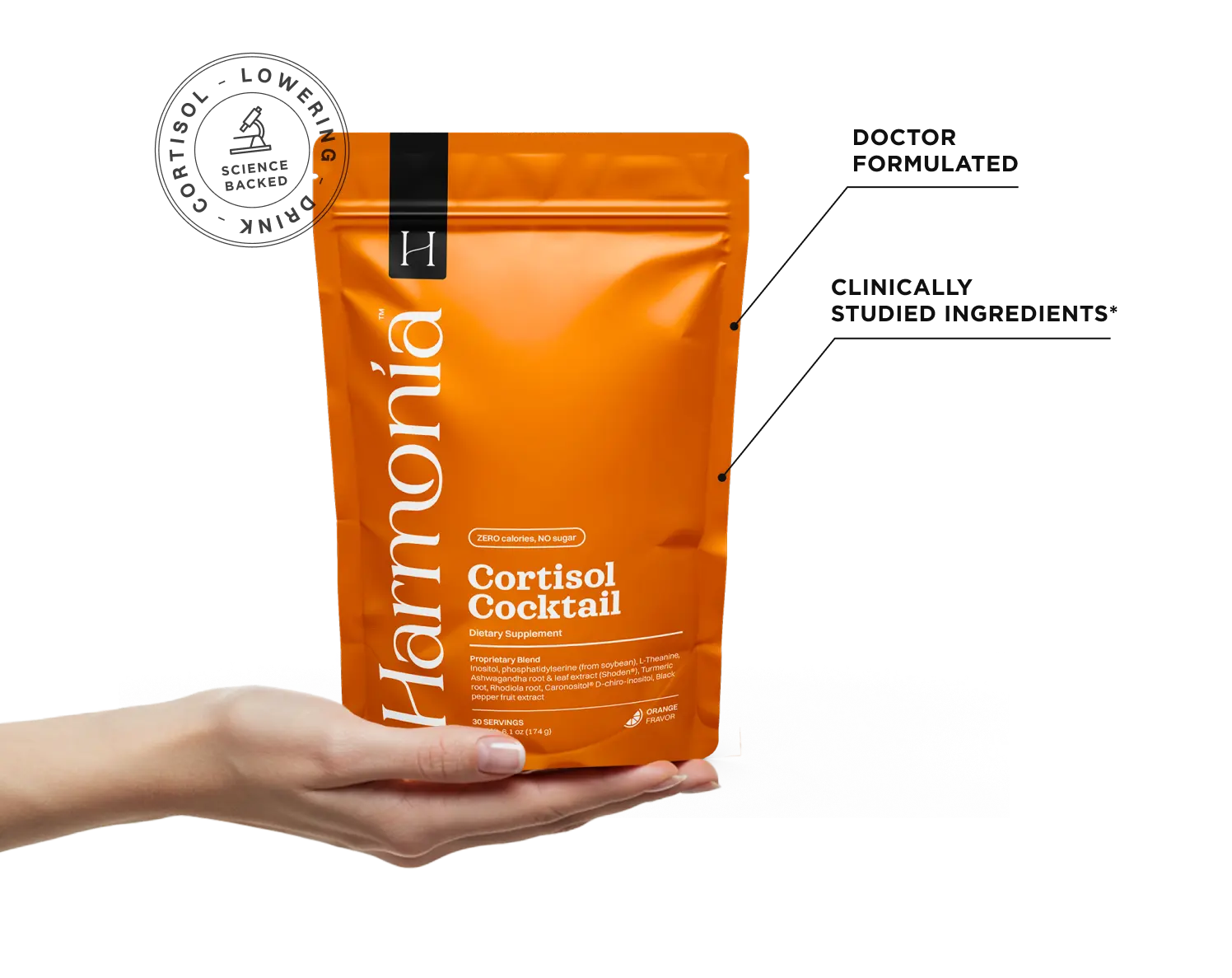
Formulas like Harmonia Cortisol Cocktail are designed to address stress and hormonal regulation alongside metabolic support, structured differently from traditional weight loss supplements that target calorie burn alone.
Clean, Hormone-Friendly Formulas
Choose supplements that are stimulant-free and sugar-free. Stimulants raise cortisol, which is counterproductive when elevated cortisol is part of what's driving the belly fat. Avoid formulas with synthetic fillers or compounds untested in menopausal women.
Lifestyle Factors That Improve Supplement Effectiveness

Supplements work best when paired with supportive habits:
- Consistent sleep and wake times
- Gentle movement like walking or strength training
- Adequate protein intake to support muscle mass
- Stress-reduction practices that calm the nervous system
Stress-reduction practices, whether breathwork, walking, or adequate rest, calm the nervous system in ways that complement supplementation.
Why a Multi-Ingredient Formula Works Better Than Single Supplements
Menopause belly fat rarely stems from a single issue. Stress dysregulation, sleep disruption, insulin resistance, and inflammation often overlap.
A well-designed multi-ingredient formula lets nutrients act on multiple pathways simultaneously. Ashwagandha lowers cortisol while myo-inositol addresses insulin signaling, and magnesium supports the sleep quality that makes both work better.
Some women prefer comprehensive daily blends that address stress, sleep, and hormonal balance together. For example, formulations like Harmonia combine adaptogens, inositols, minerals, and vitamins to support the systems most affected during menopause - without relying on stimulants.
Conclusion
Menopause belly fat is a biological response to hormonal and metabolic change. The supplements most likely to help are the ones that address those root mechanisms: cortisol regulation, insulin sensitivity, sleep quality, and inflammation. The clinical evidence for ashwagandha, myo-inositol, magnesium, and curcumin is strong enough that these form the foundation of any hormone-supporting approach worth taking seriously.
If your symptoms have been pointing toward disrupted cortisol or hormonal imbalance, you can take the quiz to see whether the Harmonia Cortisol Cocktail fits where you are right now.
References
- Motlani, V., Motlani, G., Pamnani, S., Sahu, A., & Acharya, N. (2023). Endocrine changes in postmenopausal women: a comprehensive view. Cureus, 15(12). Link.
- Chandrasekhar, K., et al. (2012). A prospective, randomized double-blind, placebo-controlled study of ashwagandha root extract for reducing stress and anxiety. Indian J Psychological Medicine, 34(3), 255–262. Link
- Shevtsov, V. A., et al. (2003). A randomized trial of two doses of Rhodiola rosea SHR-5 extract versus placebo. Phytomedicine, 10(2–3), 95–105. Link
- Giordano, D., et al. (2011). Effects of myo-inositol supplementation in postmenopausal women with metabolic syndrome. Menopause, 18(1), 102–104. Link
- Simental-Mendía et al. (2014). Magnesium supplementation on insulin sensitivity and glucose control: a meta-analysis. Pharmacological Research, 80, 99–105. Link
- Monteleone, P., et al. (1992). Effects of phosphatidylserine on the neuroendocrine response to physical stress. Neuroendocrinology, 52(3), 243–248. Link
- Panahi, Y., et al. (2015). Curcuminoid treatment for knee osteoarthritis: a randomized double-blind placebo-controlled trial. Phytotherapy Research. Link
- Lydic, M. L., et al. (2006). Chromium picolinate improves insulin sensitivity in patients with PCOS. Fertility and Sterility, 86(1), 243–246. Link
- Gupta, A., et al. (2012). Vitamin D status and fat distribution in a cohort of postmenopausal women. J Clinical Endocrinology and Metabolism, 97(10). Link
- Clarke, R., et al. (2007). Folate, vitamin B12, and homocysteine levels. Archives of Neurology, 63(11). Link
- Carr, M. C. (2003). The emergence of the metabolic syndrome with menopause. J Clinical Endocrinology and Metabolism, 88(6), 2404–2411. Link