Stubborn belly fat can feel uniquely frustrating. You clean up your diet, increase your workouts, cut back on sugar - yet your midsection barely changes. If this sounds familiar, the issue may not be effort. It may be stress physiology.
Cortisol belly fat develops when chronic stress shifts your hormonal balance in a way that favors abdominal fat storage. This pattern affects both men and women, and it often comes with fatigue, poor sleep, and intense cravings that seem out of proportion to your habits.
Understanding what cortisol is doing inside your body - and how to regulate it - changes the entire strategy for losing belly fat.
What Is Cortisol Belly Fat?
Cortisol is your body’s primary stress hormone. It is produced by the adrenal glands and follows a natural daily rhythm: higher in the morning to wake you up, gradually declining at night to allow sleep.
In healthy amounts, cortisol helps regulate:
- Blood sugar
- Inflammation
- Energy production
- Focus and alertness
- Sleep-wake cycles
The problem is not cortisol itself. The problem is chronically elevated cortisol.
When stress becomes ongoing - whether from work pressure, poor sleep, overtraining, emotional strain, or blood sugar instability - cortisol remains elevated longer than it should.
Over time, this hormonal environment signals the body to store energy more efficiently, especially in the abdominal region. That pattern is commonly referred to as cortisol belly or cortisol belly fat.
This is not simply “extra calories.” It is a hormonal adaptation to perceived stress.
What Does Cortisol Belly Look Like?
Cortisol-related belly fat tends to have specific characteristics:
- Soft, centralized abdominal fat
- Weight gain concentrated around the lower stomach
- Difficulty losing midsection fat despite calorie control
- Bloating or fluid retention
- Leaner arms and legs with disproportionate abdominal fullness
Internally, this may involve an increase in visceral fat, which surrounds internal organs and is more hormonally active than subcutaneous fat. Visceral fat is particularly sensitive to stress hormones.
Unlike fat gain driven purely by overeating, cortisol belly fat often develops even when calorie intake is moderate. Many people experiencing it report that they are “doing everything right” but still cannot reduce abdominal weight.
That’s because when stress remains high, the body prioritizes survival over aesthetics.
Why High Cortisol Causes Belly Fat

Cortisol influences multiple systems that directly affect fat storage.
Cortisol and Survival Mode
From an evolutionary perspective, stress signaled potential danger or scarcity. The body responded by conserving energy. One of the most efficient ways to do that was by storing fat centrally.
The abdominal area is highly responsive to stress hormones. When cortisol remains elevated, it increases fat cell activity in this region. The body essentially prepares for prolonged challenge by building a reserve.
This means:
- Slowing metabolic flexibility
- Increasing fat storage efficiency
- Prioritizing abdominal fat storage
In short, your physiology is acting protectively - even if the stressor is modern and not life-threatening.
Cortisol and Insulin Resistance
Cortisol increases blood sugar to provide quick fuel during stress. When this happens repeatedly, insulin must continually work to bring glucose back down.
Over time, cells can become less sensitive to insulin. This state, known as insulin resistance, makes fat storage more likely - especially around the abdomen.
Blood sugar instability also triggers cravings. The cycle becomes self-reinforcing:
Stress → elevated cortisol → higher blood sugar → insulin response → energy crash → cravings → more stress.
Breaking this loop is essential if you want to reduce cortisol belly fat.
Cortisol and Emotional Eating
Stress doesn’t just affect your mood - it changes your brain chemistry.
When cortisol rises, it interacts with dopamine, the brain’s reward chemical. This increases the desire for quick, high-reward foods, especially refined carbohydrates, sugar, and salty snacks. These foods temporarily boost dopamine and create a short-lived sense of relief.
That’s why stress cravings feel urgent and hard to ignore.
It’s important to understand: this is not a discipline issue - it’s a biological response. When the nervous system feels overwhelmed, it looks for fast comfort. Food becomes an accessible coping tool because it briefly lowers perceived stress.
The problem is what happens afterward. Frequent stress eating keeps blood sugar unstable, which can trigger more cortisol release. Over time, this creates a loop:
Stress → cravings → temporary relief → blood sugar crash → more stress.
Trying to control emotional eating through willpower alone usually fails because the root cause - chronic stress - hasn’t been addressed.
To break the cycle, the nervous system must feel safer and more regulated. When cortisol levels stabilize, cravings often decrease naturally, making healthier choices feel easier instead of forced.

Cortisol and Sleep Disruption
Cortisol and sleep are deeply connected. When stress is high, cortisol can spike at night, making it difficult to fall asleep or stay asleep.
Many people with cortisol imbalance describe feeling “wired but tired.” They are exhausted but mentally alert.
Poor sleep further increases cortisol the next day and alters hunger hormones such as ghrelin and leptin. Appetite rises, satiety decreases, and belly fat storage becomes easier.
Without improving sleep quality, losing cortisol belly fat becomes significantly more difficult.
Symptoms That Often Accompany Cortisol Belly
Abdominal fat is usually not the only sign of cortisol imbalance. Other common symptoms include:
- Feeling “wired but tired”
- Anxiety or persistent restlessness
- Brain fog
- Mood swings
- Afternoon energy crashes
- Reduced stress tolerance
- Strong evening cravings
- Irregular hormonal patterns
- Reduced workout recovery
When several of these symptoms occur together, cortisol dysregulation is often involved.
How to Test If Cortisol Is Causing Your Belly Fat

Testing is not always required, but it can provide clarity. Common options include:
- Saliva cortisol testing (measures daily rhythm)
- Blood cortisol tests
- Comprehensive hormone panels such as DUTCH testing
However, many people can identify cortisol-driven patterns based on symptoms alone - especially when stress, poor sleep, and central fat storage occur together.
If symptoms are severe or persistent, consulting a healthcare professional is advisable.
How to Get Rid of Cortisol Belly
If you’re searching for how to get rid of cortisol belly, you need a different strategy than traditional fat-loss advice.
Cutting calories aggressively, fasting excessively, or doubling your cardio sessions may seem logical. But if your belly fat is stress-driven, those tactics often raise cortisol even more. The result? More fatigue, more cravings, stalled progress.
The real solution begins with restoring hormonal balance and nervous system stability. When your body no longer feels under threat, it becomes far more willing to release stored abdominal fat.
Here’s how to do that effectively.
Regulate the Nervous System
Your body will not prioritize fat loss if it perceives ongoing stress. Safety comes first.
When cortisol stays elevated, your system remains in survival mode. To shift out of that state, daily signals of calm are essential.
Practical strategies include:
- Slow diaphragmatic breathing (5–10 minutes daily)
- Morning sunlight exposure to anchor circadian rhythm
- Gentle movement such as walking, mobility work, or yoga
- Reducing late-night screen exposure
- Taking short “reset” breaks during the day
Low-intensity, consistent habits are more powerful than occasional intense efforts.
It’s also important to avoid overtraining. High-intensity workouts without adequate recovery can spike cortisol further. Strength training and moderate cardio are beneficial, but they must be balanced with recovery.
When your nervous system becomes more regulated, fat loss shifts from resistance to cooperation. Consistency matters more than intensity.
Prioritize Deep, Restorative Sleep
Sleep is one of the strongest regulators of cortisol rhythm.
Cortisol should naturally rise in the morning and decline at night. Irregular sleep disrupts this pattern and keeps stress hormones elevated longer than they should be.
To improve sleep quality:
- Go to bed and wake up at consistent times
- Keep your bedroom dark and cool
- Avoid caffeine after midday
- Limit heavy meals or intense workouts late at night
- Reduce stimulating content before bed
Magnesium, calming nutrients, and relaxation practices can also support better sleep onset.
When sleep improves, several things happen:
- Morning energy increases
- Cravings decrease
- Blood sugar stabilizes
- Cortisol patterns normalize
Improved sleep alone can significantly reduce cortisol belly fat over time.
Stabilize Blood Sugar
Blood sugar swings are a major hidden stressor.
When glucose rises rapidly and then crashes, cortisol increases to bring levels back up. This creates repeated stress spikes throughout the day.
Balanced meals help prevent this. Each meal should include:
- Adequate protein (often 25–40 gr)
- Fiber from whole foods
- Healthy fats for satiety
- Minimally processed carbohydrates
Avoid long gaps between meals if they leave you shaky, irritable, or overly hungry. For many people, extreme calorie restriction increases stress signaling and backfires.
The goal is metabolic stability, not aggressive dieting. When insulin sensitivity improves, abdominal fat becomes easier to reduce.
Reduce Emotional Stress Load

You cannot eliminate stress entirely. But you can improve resilience.
Chronic psychological stress keeps cortisol elevated just as much as physical stress does.
Helpful strategies include:
- Daily decompression rituals (walking, journaling, quiet time)
- Setting realistic work boundaries
- Delegating when possible
- Limiting unnecessary commitments
- Practicing short mindfulness sessions
Small, repeated actions lower the overall stress baseline.
As stress perception decreases:
- Your hormonal environment shifts
- Fat storage signals weaken
- Energy improves
- Cravings reduce
This is where sustainable change begins.
Support Cortisol Regulation Nutritionally
Because cortisol belly fat involves multiple systems - stress, sleep, insulin, inflammation - targeted nutritional support can accelerate progress.
Several ingredients have been studied for their role in stress resilience and metabolic health:
- Ashwagandha: Supports healthy stress response
- Rhodiola Rosea: Improves mental and physical resilience
- L-Theanine: Promotes calm without sedation
- Phosphatidylserine: May help regulate evening cortisol
- Myo-Inositol & D-Chiro Inositol: Support insulin sensitivity
- Magnesium: Supports relaxation and sleep
- Vitamin D: Plays a role in metabolic and hormonal balance
- Chromium: Assists blood sugar regulation
Because cortisol belly fat is not caused by a single pathway, comprehensive support is often more effective than isolated supplements.
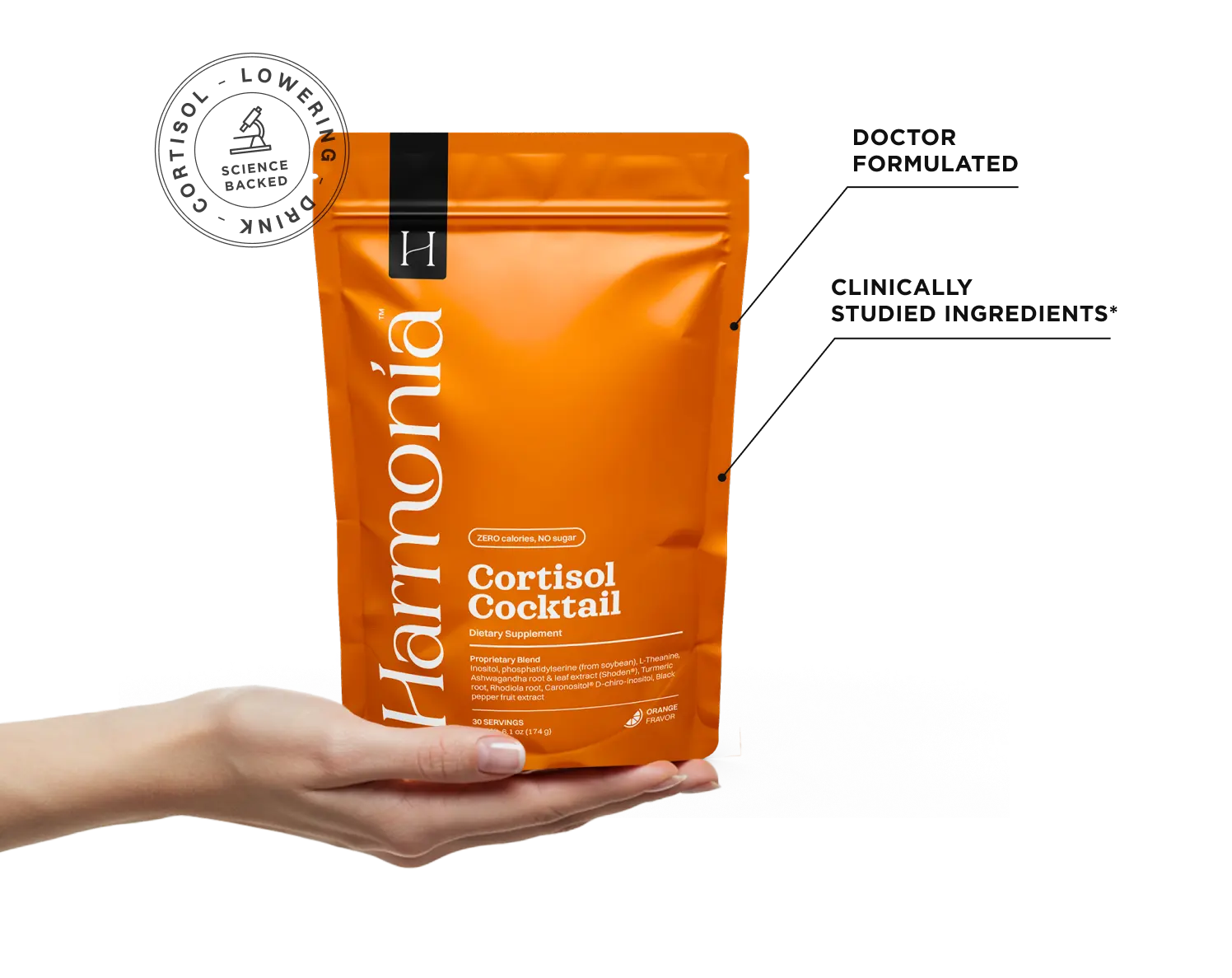
Harmonia’s cortisol-support formula combines several of these clinically researched ingredients into a single daily drink designed to help lower stress hormone activity and promote hormonal alignment
Unlike stimulant-based fat burners, it focuses on nervous system balance and metabolic stability, which are the true drivers of stress-related belly fat.
When stress decreases and sleep improves, fat loss becomes a downstream effect - not a constant uphill battle.
Can You Fully Reverse Cortisol Belly Fat?
In most cases, yes.
Cortisol belly fat develops gradually under prolonged stress. It requires consistent regulation to reverse.
Most people begin noticing improvements in energy, sleep, and cravings within several weeks of focused stress support. Visible abdominal changes often follow once the nervous system stabilizes.
The timeline varies, but the principle remains consistent: when the body feels safe, it shifts out of survival mode.
Final Thoughts
Cortisol belly fat is not a failure of discipline. It is a reflection of chronic stress signaling.
If you focus only on calories and workouts, you may continue fighting your own physiology. But when you improve sleep quality, stabilize blood sugar, regulate the nervous system, and support hormonal balance, you create the internal conditions required for sustainable fat loss.
If stress, poor sleep, cravings, and stubborn belly fat are showing up together, cortisol imbalance may be playing a role.
Take the Harmonia stress quiz today to discover whether elevated cortisol could be contributing to your belly fat - and learn how to support your body with a smarter, research-backed approach to stress regulation.
References
- Adam, T. C., & Epel, E. S. (2007). Stress, eating and the reward system. Physiology & behavior, 91(4), 449-458. Link.
- Van Cauter, E., Spiegel, K., Tasali, E., & Leproult, R. (2008). Metabolic consequences of sleep and sleep loss. Sleep medicine, 9, S23-S28. Link.