
You are in your late thirties or early forties. Your periods have started to feel different, less regular, heavier, or shorter than they used to be.
You have been under significant pressure for years, and somewhere in the back of your mind you have started to wonder whether the stress is doing something more lasting than making you tired and anxious.
It is an important question that deserves a clear answer. Can stress cause early menopause? Research does not give a simple yes or no, but it does show a growing link between chronic stress, cortisol, and faster reproductive aging.
This article covers what the science actually says, how chronic stress interacts with ovarian function, what stress symptoms in women may signal hormonal acceleration, and what you can do to protect your reproductive health.
What Is Early Menopause and How Is It Defined?
Menopause is defined as the point at which a woman has gone 12 consecutive months without a menstrual period, marking the end of natural reproductive function. The average age of natural menopause in most Western countries is 51 to 52 years.
Early menopause hits before age 45, and premature ovarian insufficiency refers to cases where ovarian function declines before age 40, affecting approximately 1 percent of women.
Before menopause itself, many women experience perimenopause, the transitional phase during which estrogen and progesterone levels begin to fluctuate and decline.
When perimenopause begins before age 40, it is considered an early transition and warrants attention.
How Stress Hormones Affect Ovarian Function
To understand the link between stress and reproductive aging, it helps to understand what chronic cortisol elevation actually does to the ovaries and the hormonal system that regulates them.
When the brain detects ongoing threat, it activates the stress response system and triggers a sustained release of cortisol from the adrenal glands. Cortisol competes with reproductive hormones, and chronic cortisol demand diverts resources away from estrogen and progesterone production.
Both rely on the same biological building blocks, and when cortisol dominates, reproductive hormones are deprioritized.
Elevated cortisol also suppresses the brain signals that drive follicle development and ovulation.
A follicle pool does not regenerate, and if chronic stress accelerates follicle loss or disrupts the hormonal signals that govern follicle development, the reproductive clock moves faster.
A review on stress and ovarian aging confirmed that chronic psychological stress disrupts the hormonal axis that controls ovulation through multiple converging pathways, including direct cortisol suppression of reproductive hormones and stress-induced inflammation that impairs follicle development.

Can Stress Cause Early Menopause? What the Research Shows
The direct evidence linking chronic stress to earlier menopause age is growing, though it does not yet reach the threshold of established medical consensus.
Population Studies on Stress and Menopause Timing
A cohort study on stress and menopause timing followed more than 2,000 women over multiple years and found that high perceived stress was associated with earlier age at natural menopause, even after controlling for smoking, body weight, and other known risk factors.
High stress accelerated menopause on average compared to women with lower stress levels. Women in the highest stress group reached menopause earlier, even after accounting for lifestyle factors.
Stress, Inflammation, and Ovarian Aging
Chronic psychological stress raises inflammatory signals in the body. These signals have been shown to impair follicle development and accelerate the programmed cell death of ovarian follicles.
A review on cortisol and reproductive aging found that sustained stress system activation measurably accelerates biological aging markers in reproductive tissue.The damage from chronic stress accumulates at a cellular level in the ovaries, not just in how you feel day to day.
Cortisol and Ovarian Reserve
Anti-Mullerian hormone, or AMH, is a reliable marker of how much ovarian reserve a woman has remaining. Research has found a relationship between chronic stress markers and reduced AMH levels in women of reproductive age.
Stress aging shows in ovarian markers before perimenopause symptoms even appear. This adds to a consistent body of evidence suggesting the relationship between chronic stress and earlier ovarian decline is biological rather than coincidental.
Why Supporting Cortisol Early Matters for Reproductive Longevity
The emerging research on stress and reproductive aging points toward a practical takeaway: managing cortisol consistently during the reproductive years may be relevant to protecting long-term ovarian function, not just managing day-to-day stress symptoms.
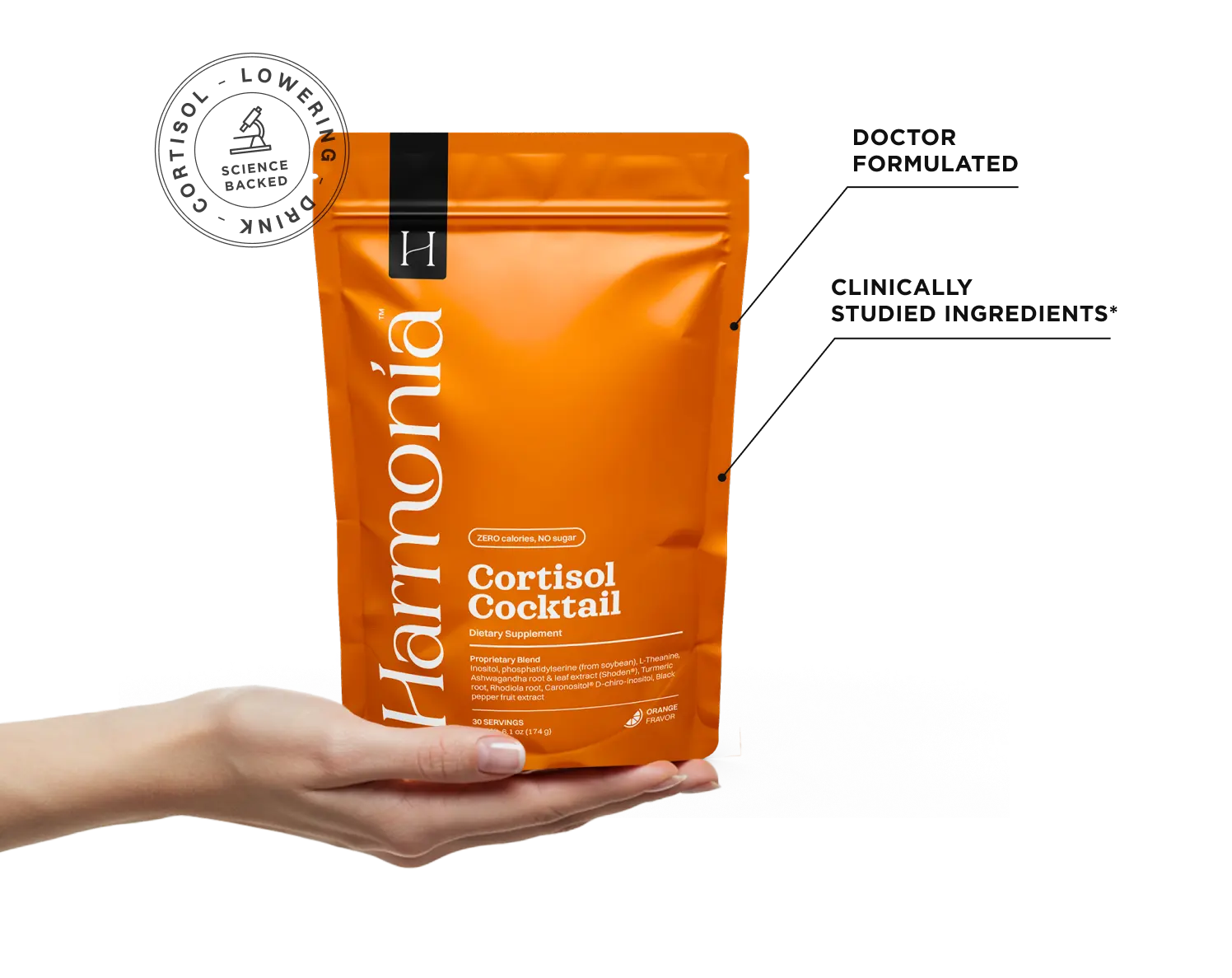
The Harmonia Cortisol Cocktail is a daily cortisol support drink that includes Ashwagandha, Rhodiola Rosea, Phosphatidylserine, and L-Theanine, ingredients studied for their ability to reduce cortisol, lower inflammation, and support the hormonal stress response system.
For women already noticing cycle changes or early hormonal shifts, a broader understanding of hormonal imbalance symptoms in females can help clarify how stress-driven disruption presents and progresses.
Can Stress Delay Your Period?
Before discussing early menopause, it is worth addressing a more common and often overlooked stress-related reproductive signal: irregular or delayed periods.
Yes, stress can delay your period through the same mechanism described above, where cortisol suppresses the brain signals that trigger ovulation.
A single delayed period during a stressful period is not cause for alarm. But when stress makes your period late repeatedly over months or years, it signals that the reproductive hormonal axis is under sustained pressure.
Repeated cycles without ovulation accelerate the consumption of ovarian follicles without the normal regulatory rhythm. Cycle irregularity is an early sign that perimenopause may be beginning ahead of schedule.

Stress Symptoms in Women That May Signal Hormonal Impact
Many of the stress symptoms in women that appear in daily life are also early indicators of hormonal disruption that warrants attention. Recognizing the overlap helps distinguish between temporary stress responses and accumulating hormonal change.
Cycle Changes
Irregular cycles, heavier or lighter periods, and increased PMS severity are among the earliest signs that cortisol is affecting reproductive hormones.
These changes may signal early perimenopause in women approaching their forties. Stress-driven disruption and the natural beginning of perimenopause are not mutually exclusive.
Sleep Disruption
Difficulty falling asleep, waking in the early hours, or feeling unrefreshed despite adequate sleep are among the most consistent signs of elevated cortisol.
Night sweats beginning before the mid-forties may reflect early estrogen fluctuation driven partly by cortisol disrupting the hormonal signaling that normally keeps estrogen stable.
Mood and Cognitive Changes
Increased irritability, low mood, brain fog, and reduced emotional resilience often reflect the neurological effects of sustained cortisol elevation and declining progesterone.
Progesterone has natural calming properties, and when cortisol suppresses progesterone production, that calming effect diminishes noticeably. Many women describe this as feeling like they have lost access to their usual emotional steadiness.
Hot Flashes or Vasomotor Symptoms Before 45
Hot flashes and night sweats are hallmark symptoms of the menopausal transition. When they appear before age 45, they may signal early perimenopause rather than being attributed solely to anxiety or stress.
Supporting Your Hormonal Health Through the Transition
Whether you are in your mid-thirties managing early cycle changes or in your early forties navigating the beginning of perimenopause, addressing cortisol consistently is one of the most evidence-backed steps available for protecting your hormonal health during this window.
The Harmonia Cortisol Cocktail is a daily drink that provides a hormonal support foundation, addressing cortisol through adaptogens, supporting insulin sensitivity through inositols, and replenishing the nutrients that chronic stress most reliably depletes.
Women navigating these transitions find it most effective when incorporated as a consistent part of their daily routine rather than used reactively during acute periods of stress.

What Can Stress Do to a Woman's Body Over the Long Term?
Understanding what chronic stress does to the body over years of sustained pressure helps connect the specific question of early menopause to a broader pattern of systemic hormonal aging.
Accelerated Cellular Aging
Chronic psychological stress is associated with shorter telomeres, the protective caps at the ends of chromosomes that shorten with each cell division. Shorter telomeres mean faster biological aging.
This cellular aging effect is not confined to any one tissue and likely includes ovarian cells.
Thyroid Disruption
Chronic cortisol interferes with the conversion of the inactive form of thyroid hormone into its active form.
Women with thyroid function that is below optimal, often driven by chronic stress, frequently experience cycle irregularity, heavier periods, and fatigue that closely mirrors early perimenopause.
Immune Disruption and Autoimmune Risk
Sustained cortisol elevation first suppresses and then dysregulates immune function. This dysregulation increases the risk of autoimmune conditions, which are themselves a recognized cause of premature ovarian insufficiency.
The pathway from chronic stress to elevated autoimmune risk to accelerated reproductive aging is indirect but biologically plausible.
Metabolic Changes That Worsen the Hormonal Environment
Cortisol drives insulin resistance and central fat accumulation. This metabolically active fat produces inflammatory signals that further disrupt ovarian function.
The hormonal and metabolic consequences of chronic stress compound each other in a way that makes the total reproductive impact greater than any single mechanism would suggest.
Understanding how cortisol and menopause interact provides a detailed account of how these factors converge.

How to Protect Your Reproductive Health from Stress-Related Aging
Chronic stress is a modifiable contributor to reproductive aging. Addressing it consistently during the reproductive years can meaningfully reduce its impact on ovarian aging.
Prioritize Sleep as the Primary Cortisol Regulator
A consistent wake time reinforces the natural morning cortisol rise and helps normalize the hormone's daily rhythm. Poor sleep raises cortisol and inflammation, suppresses progesterone, and worsens ovarian aging independently of other stressors.
Stabilize Blood Sugar to Reduce Cortisol Spikes
Skipping meals and relying on caffeine instead of food all trigger cortisol spikes that add to the cumulative hormonal load.
Stabilizing blood sugar with protein-anchored meals at regular intervals keeps cortisol lower throughout the day.
Choose Exercise That Supports Recovery
High-intensity daily exercise in a chronically stressed, sleep-deprived body is an additional cortisol burden rather than a benefit.
Walking, yoga, moderate strength training, and swimming support cortisol regulation and metabolic health without adding to the stress load.
Monitor Hormonal Markers Proactively
Women with a family history of early menopause, significant occupational stress, or cycle changes beginning before 40 should consider asking their healthcare provider to check AMH, FSH, estradiol, and thyroid function at baseline and periodically over time.
Earlier detection means more options available and more time to respond than waiting for symptoms to become pronounced.

test
Building a Long-Term Cortisol Strategy for Hormonal Protection
The science does not yet support a definitive conclusion that stress causes early menopause in all women. But it consistently supports a more important practical message: cortisol accelerates reproductive aging that drives reproductive decline.
For women who want a consistent, daily approach to cortisol management rather than reactive stress management during acute periods, Harmonia is a daily cortisol support drink that provides the hormonal support foundation designed specifically for this purpose.
Its combination of adaptogens, inositols, Magnesium, and Vitamin D addresses the cortisol, insulin, and nutrient depletion pathways that chronic stress activates simultaneously.
Building this support into a daily routine before symptoms become pronounced is the most effective way to use it.
Conclusion
So can stress cause early menopause? The science suggests that chronic stress does not simply trigger menopause in an otherwise healthy reproductive system.
But it does meaningfully contribute to the biological conditions that accelerate reproductive aging: cortisol-driven suppression of the hormonal axis, ovarian inflammation, accelerated cellular aging, and hormonal disruption that compounds over years of sustained pressure.
For women already noticing that stress makes their period late or that cycle irregularity has become a pattern, take these as early warning signals of hormonal change that deserves a proactive response.
The most important takeaway is that the window for intervention exists. Cortisol is a modifiable contributor to reproductive aging, and consistent sleep, blood sugar stability, movement, and adaptogenic support are active strategies for protecting the hormonal health you still have.
Take the Harmonia quiz to find out how the Harmonia Cortisol Cocktail may support your hormonal health and whether it is a good fit for where you are right now.
Frequently Asked Questions
Can stress cause early menopause?
Chronic stress does not directly trigger menopause, but research increasingly supports a relationship between sustained psychological stress, cortisol, and accelerated reproductive aging.
Population studies have found that women with high chronic stress levels reach natural menopause earlier on average than low-stress counterparts, even after controlling for other known risk factors.
What are the signs that stress is affecting your hormones?
The most consistent signs include irregular or absent periods, worsened PMS, disrupted sleep including night waking and night sweats, persistent fatigue unresponsive to rest, brain fog, mood changes including irritability and low mood, and strong carbohydrate cravings particularly in the afternoon.
Can stress delay your period and is it connected to early menopause?
Yes, stress can delay your period through cortisol suppression of the hormonal axis that drives ovulation.
A single delayed period during an acute stressor is not connected to early menopause, but when stress makes your period late repeatedly across months or years, it indicates sustained hormonal axis suppression that may be relevant to the overall pace of reproductive aging.
At what age should I be concerned about early menopause?
If you experience irregular or absent periods before age 40, hot flashes or night sweats before 45, or a significant and unexplained change in cycle pattern before your mid-forties, these are worth discussing with a healthcare provider.
Testing AMH, FSH, estradiol, and thyroid hormones provides an accurate picture of where you are in your hormonal trajectory.
What can stress do to a woman's body over time?
Over years of chronic elevation, stress produces accelerated cellular aging through telomere shortening, disrupted reproductive hormone production, increased inflammatory burden on ovarian tissue, thyroid conversion impairment, insulin resistance, and immune disruption that raises autoimmune risk.
These effects accumulate gradually and are often not recognized until symptoms are well established.
References
- Westphal, L. M., et al. (2025). Cortisol and HPA axis dysregulation in reproductive aging: a systematic review. PMC. Link
- Lawlor, D. A., et al. (2012). Perceived stress and age at natural menopause in the Study of Women's Health Across the Nation. Human Reproduction, 27(9), 2720-2728. Link
- Harlow, S. D., et al. (2016). Psychosocial stress and the menstrual cycle and ovarian aging. PMC. Link
- Office on Women's Health. (2021). Early menopause. womenshealth.gov. Link