
You have not changed your diet. You are still moving your body. But the weight is shifting anyway, settling around your midsection in a way that feels stubborn and unfamiliar.
This is one of the most common experiences of perimenopause and menopause.
The reason standard diet advice often fails during this transition is that it was designed for a different hormonal environment than the one you are now living in.
The best macros for menopause weight loss are not simply a lower-calorie version of what you ate in your thirties. They are a deliberate recalibration of protein, fat, and carbohydrate targets to account for declining estrogen, elevated cortisol, increasing insulin resistance, and accelerating muscle loss.
This guide explains what macros are, why menopause changes the equation, how to calculate macros for weight loss during this transition, and which specific targets support fat loss rather than working against your hormonal reality.
What Are Macros and Why Do They Matter More During Menopause?
Macronutrients, or macros, are the three categories of nutrients that provide calories: protein, fat, and carbohydrates. The ratio you consume them in directly affects body composition, hormonal signaling, metabolic rate, and satiety.
Before menopause, estrogen supports insulin sensitivity, preserves lean muscle, regulates fat distribution, and keeps appetite hormones in reasonable balance. As estrogen declines, all of these functions become more vulnerable.
The result is a metabolic environment more prone to insulin resistance, faster muscle loss, central fat accumulation, and stronger appetite signals. Standard macro ratios built around a younger hormonal profile do not account for any of this.
Why Menopause Changes the Weight Loss Equation
Understanding menopause weight loss starts with understanding what is actually changing hormonally during this transition.
Declining Estrogen and Fat Redistribution
As estrogen drops, fat shifts toward the abdomen and deeper belly fat stores.
A British Menopause Society nutrition review outlines how this redistribution is a direct consequence of estrogen withdrawal. In plain terms: the hormonal shift tells your body to store fat differently, and nutrition is one of the most powerful levers for managing it.

Accelerated Muscle Loss and Slowed Metabolism
Estrogen helps maintain skeletal muscle. Its decline accelerates natural muscle loss, and since muscle is the primary driver of resting metabolic rate, losing it means burning fewer calories at rest.
The caloric intake that maintained your weight in your forties now produces gradual gain. This is not a willpower issue. It is a hormonal one.
Rising Cortisol and Insulin Sensitivity
The hormonal shifts of menopause often coincide with elevated cortisol, the primary stress hormone. Cortisol promotes central fat storage, drives insulin resistance, and increases cravings for high-carbohydrate foods.
To understand how cortisol intersects with these menopausal shifts, the cortisol and menopause connection explains how these two factors interact and compound each other.
The Role of Cortisol in Menopause Weight Gain
Cortisol is one of the most underappreciated drivers of weight loss resistance during the menopausal transition.
When it stays elevated, it directly promotes fat storage in the midsection, worsens insulin resistance, and undermines the dietary changes you are already making.
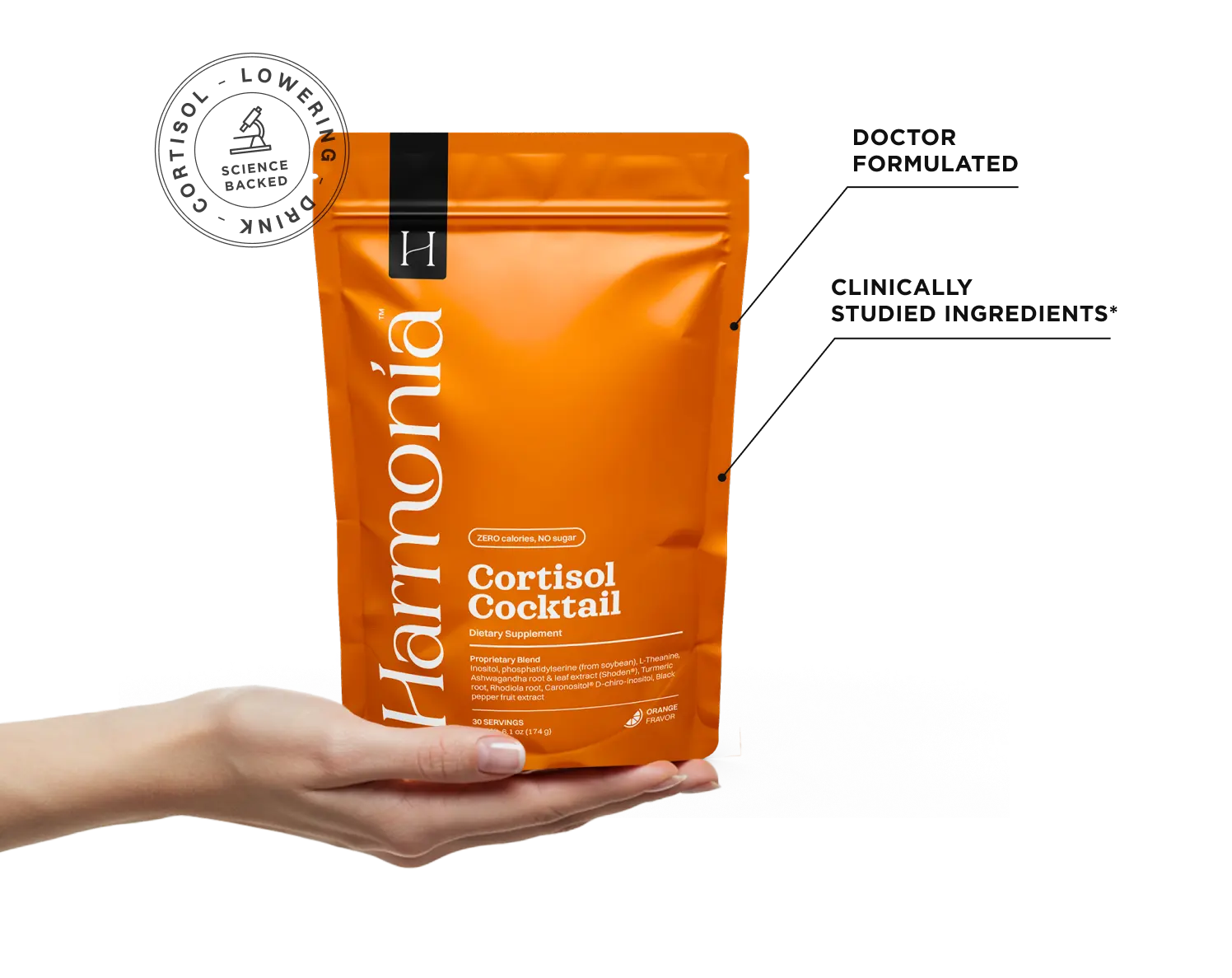
This is where Harmonia Cortisol Cocktail, a daily stress-support drink, fits in. It includes Ashwagandha, Rhodiola Rosea, Phosphatidylserine, Myo-Inositol, and D-Chiro Inositol, ingredients that support how your brain regulates stress and help improve insulin sensitivity.
For women whose weight is not responding to diet changes alone, understanding the broader hormonal imbalance symptoms in females can help clarify whether cortisol is contributing to the resistance.

The Best Macros for Menopause Weight Loss
There is no single macro ratio that works identically for every woman. But the evidence consistently points to targets that outperform general population guidelines during the menopausal transition.
Protein: The Most Important Macro During Menopause
Protein is the most critical macronutrient for women in menopause. It preserves muscle and burns more calories digesting it than carbs or fat do.
Standard guidelines recommend 0.8 grams of protein per kilogram of body weight. A study on protein needs in older women found that women over 50 need significantly more 1.2 to 1.6 grams per kilogram to preserve lean mass.
The amount most people consider adequate is not enough once estrogen starts declining.
Women over 50 also become less efficient at turning protein into muscle, which makes spreading protein evenly across meals especially important.
Prioritize complete protein sources: eggs, lean poultry, fish, Greek yogurt, cottage cheese, and legumes paired with whole grains for plant-based options.
Carbohydrates: Quality and Timing Over Quantity
A moderate carbohydrate approach of 35 to 40 percent of total calories works well for most menopausal women.
A clinical review of postmenopausal dietary patterns found that carbohydrate quality matters more than quantity for metabolic outcomes. High-fiber, low-glycemic sources consistently produced better insulin and weight results than refined carbohydrates at equivalent caloric intakes.
The takeaway: swap the type, not just the amount.
Prioritize vegetables, legumes, whole grains, berries, and sweet potatoes. Reduce refined carbohydrates and sugary foods, which spike insulin and trigger the fat storage cycle that worsens menopause symptoms.
Fat: Essential, Not Optional
Fat is a prerequisite for hormone production. Cutting fat too aggressively during menopause can worsen hormonal symptoms rather than improve body composition.
A fat intake of 30 to 35 percent of total calories supports hormone synthesis, satiety, and absorption of fat-soluble vitamins.
Anti-inflammatory fats, particularly omega-3 fatty acids from fatty fish, walnuts, and flaxseed, also reduce the low-grade inflammation that worsens insulin resistance and promotes central fat storage.
Prioritize olive oil, avocado, fatty fish, and nuts. Limit saturated fat from processed meats and avoid trans fats entirely.
Recommended Macro Ratios for Menopause Weight Loss
These are starting targets, not fixed rules. Adjust after 4 to 6 weeks based on how your energy, body composition, and exercise recovery are responding.

How to Calculate Macros for Weight Loss During Menopause
Using a macro calculator for weight loss gives you a personalized starting point. Here is a simple three-step process.
Step 1: Estimate Your Total Daily Energy Expenditure
Use the Mifflin-St Jeor equation to estimate your basal metabolic rate:
BMR = (10 × weight in kg) + (6.25 × height in cm) − (5 × age in years) − 161
Then multiply by your activity factor: 1.2 for sedentary, 1.375 for lightly active (1–3 days per week), 1.55 for moderately active (3–5 days), 1.725 for very active (6–7 days).
Step 2: Set a Moderate Deficit
A deficit of 300 to 400 calories per day is more sustainable and better for muscle preservation than aggressive restriction.
Large deficits backfire in menopause. They elevate cortisol, accelerate muscle loss, and trigger adaptive metabolic slowing. Subtract your deficit from your total to get your daily calorie target.
Step 3: Apply the Macro Ratios
Divide your calorie target using these conversions: protein and carbohydrates each provide 4 calories per gram; fat provides 9 calories per gram.
Example for 1,600 calories at 32% protein, 38% carbohydrates, 30% fat: approximately 128g protein, 152g carbohydrates, 53g fat. Track for two to four weeks, then adjust based on your response.

Common Macro Mistakes Women Make During Menopause
Even women carefully tracking their macros for weight loss often make the same errors that limit progress.
Under-eating Protein
This is the most common and consequential mistake. Most women need far more protein than they think. If your current intake is below 1.0 grams per kilogram of body weight, increasing it is likely the single most impactful change you can make.
Setting Too Large a Calorie Deficit
A deficit larger than 500 calories per day is consistently associated with accelerated muscle loss, elevated cortisol, and adaptive metabolic slowing in menopausal women.
The goal is a sustainable deficit, not eating as little as possible.
Ignoring Meal Timing
Skipping breakfast and eating most calories in the evening is associated with poorer insulin responses and worse body composition outcomes.
Distributing protein and calories across three to four meals supports steadier blood sugar, better satiety, and improved muscle protein synthesis throughout the day.

Why Nutrition Alone May Not Be Enough
Even with well-calibrated macro targets, many women in menopause find that results remain slower than expected.
This is often because the cortisol layer has not been addressed. Elevated cortisol stores fat independently of calories. It worsens insulin resistance and actively works against the hormonal environment needed for fat metabolism.
The Harmonia Cortisol Cocktail was designed to support cortisol and hormonal foundation that allows your dietary changes to actually produce visible results.
For broader context on how insulin resistance and cortisol drive weight resistance across hormonal conditions, understanding how to lose weight with PCOS covers the overlapping mechanisms that apply during the menopausal transition as well.
Building a Complete Menopause Weight Loss Strategy
Macro targets are a powerful tool, but they work best as part of a complete hormonal strategy.
- Protein intake preserves muscle.
- Carbohydrate quality reduces insulin spikes.
- Healthy fat supports hormone production.
The cortisol layer is where many women find the remaining resistance lives. When both nutrition and cortisol support are in place simultaneously, your body has the conditions it needs to respond to the effort you are putting in.
For context on why abdominal fat is so persistent during this transition, the cortisol and belly fat connection explains the hormonal drivers at work.
Conclusion
Setting the best macros for menopause weight loss is not about following a generic formula. It is about building a nutritional approach that accounts for declining estrogen, accelerated muscle loss, increasing insulin resistance, and elevated cortisol.
Standard dietary advice was not designed for this hormonal environment, and applying it without adjustment is why so many women find their previous approaches no longer produce results.
Higher protein intake, quality carbohydrates timed appropriately, and sufficient healthy fat create the macro foundation. Addressing cortisol and insulin resistance fills in the hormonal layer that diet alone often cannot reach.
Take the Harmonia quiz to see how it can support your body through the weight challenges that come with menopause and whether it is the right fit for where you are right now.
Frequently Asked Questions
What are the best macros for menopause weight loss?
The best macro starting point for most menopausal women is 30 to 35 percent protein, 35 to 40 percent carbohydrates from high-fiber, low-glycemic sources, and 30 to 35 percent healthy fats.
Protein is the highest priority given the accelerated muscle loss that occurs during hormonal transition.
Should menopausal women eat fewer carbs?
Not necessarily fewer, but different. Carbohydrate quality matters more than quantity as insulin sensitivity declines with estrogen. Reduce refined carbohydrates and high-glycemic foods.
Maintain adequate intake from fiber-rich vegetables, legumes, and whole grains.
How much protein do menopausal women need per day?
Research supports 1.2 to 1.6 grams of protein per kilogram of body weight, significantly higher than the standard 0.8 grams per kilogram guideline.
For a woman weighing 70 kg, this translates to approximately 84 to 112 grams of protein per day, distributed across meals for optimal muscle protein synthesis.
Why am I not losing weight during menopause even with a calorie deficit?
If your calorie deficit is not producing results, cortisol is often the missing piece. Elevated cortisol promotes fat storage independently of caloric intake and can effectively override a moderate dietary deficit.
Understanding the full range of cortisol and menopause interactions can help identify whether this is a significant factor for you.
References
- Bauer, J., et al. (2015). Evidence-based recommendations for optimal dietary protein intake in older people. Journal of the American Medical Directors Association. Link
- Bea, J. W., et al. (2024). Dietary macronutrient quality, body composition, and metabolic health in postmenopausal women. Nutrients. Link
- British Menopause Society. (2023). Menopause, nutrition, and weight gain. BMS Tools for Clinicians. Link