The relationship between cortisol and testosterone influences everything from energy and mood to metabolism, cravings, and weight regulation.
These two hormones don’t operate in isolation - they function like a seesaw. When cortisol rises too high for too long, testosterone often drops. And when testosterone decreases, stress resilience weakens, allowing cortisol to climb even higher.
This article breaks down what the science shows, how this hormonal connection impacts daily life, and the lifestyle shifts that help both hormones return to equilibrium.
What Is Cortisol?
Cortisol is produced by the adrenal glands and is essential for survival. This hormone cortisol plays several crucial roles:
- Regulates the body’s response to stress
- Maintains steady blood sugar
- Controls inflammation
- Supports metabolism
- Shapes wakefulness and alertness throughout the day
A healthy cortisol rhythm follows a predictable pattern: high in the morning to help you wake up, and gradually declining as the day progresses.
Problems arise when this rhythm becomes dysregulated.
Signs of Cortisol Imbalance
Cortisol can be too high, too low, or upside-down, leading to symptoms such as:
- Difficulty waking up or morning grogginess
- Fatigue that worsens during the day
- Feeling “tired but wired” at night
- Anxiety, irritability, or emotional sensitivity
- Increased cravings, especially for sugar or salty foods
- Stubborn belly fat
- Mood swings and brain fog
These symptoms are increasingly common because chronic stress - whether emotional, physical, or metabolic - forces cortisol to stay elevated for long periods, throwing the entire hormonal system off balance.
What Is Testosterone?
Testosterone is often labeled a “male hormone,” but it is essential for both women and men.
Women need testosterone for mood stability, libido, energy, cognitive function, and maintaining lean muscle.
Key roles of testosterone include:
- Supporting muscle mass and strength
- Enhancing motivation and drive
- Regulating libido
- Promoting emotional stability
- Supporting healthy metabolism
- Strengthening bones
Despite its importance, testosterone levels are declining across populations due to stress, poor sleep, endocrine-disrupting chemicals, and metabolic imbalances.
Low testosterone is not only a concern for men - many women experience symptoms of low androgen levels without realizing their cortisol levels may be contributing.
The Cortisol-Testosterone Connection: How Stress Suppresses Hormonal Balance

One of the clearest hormonal interactions is the inverse relationship between cortisol and testosterone.
When cortisol increases during periods of prolonged stress, the body prioritizes survival over reproduction, motivation, and resilience. As a result, testosterone production is reduced.
Why High Cortisol Suppresses Testosterone
There are several physiological mechanisms behind this:
Shared hormonal pathways
Cortisol and testosterone are made from the same precursor hormone, pregnenolone. When stress is high, the body diverts pregnenolone toward cortisol production - often called “pregnenolone steal.”
HPA axis suppression
Chronic stress disrupts communication between the brain and hormone-producing glands, reducing testosterone output.
Increased aromatization
High cortisol increases inflammation and abdominal fat, which raise aromatase activity - an enzyme that converts testosterone into estrogen.
Disrupted circadian rhythm
Poor sleep and late-day cortisol spikes suppress nighttime testosterone restoration.
These interactions explain why a person can experience low testosterone symptoms even when test results fall within “normal” ranges.
Stress changes how the body uses and converts hormones, not just how much it produces.
Signs Your Cortisol Levels May Be Affecting Testosterone
Low testosterone and high cortisol share multiple symptoms, making them easy to confuse.
When cortisol disrupts testosterone production, the signs often appear subtly and worsen over time.
Common signs include:
- Low libido or decreased sexual responsiveness
- Fatigue and difficulty concentrating
- Reduced motivation or drive
- Mood instability, irritability, or anxiety
- Difficulty building or retaining muscle
- Increased abdominal fat
- Poor sleep quality, especially early-morning awakening
- Slower recovery from workouts
Women may also notice irregular cycles, increased cravings, worsening PMS, or symptoms resembling PCOS. Men may experience decreased morning erections, slower metabolism, and reduced strength.
When these symptoms appear alongside chronic stress, cortisol imbalance is often an underlying factor.
The Effects of High Cortisol on Testosterone Levels

High cortisol has wide-ranging effects on hormone health, especially on testosterone. These effects can impact emotional well-being, metabolic function, and physical performance.
Hormonal Effects
- Decreased production of testosterone at the glandular level
- Reduced responsiveness to luteinizing hormone (signals needed for testosterone synthesis)
- Increased conversion of testosterone to estrogen via aromatase activity
Metabolic Effects
- Elevated blood sugar and insulin levels
- Increased storage of abdominal fat
- Reduced muscle mass due to catabolic effects of cortisol
- Greater inflammation throughout the body
Psychological Effects
- Lower motivation and mental drive
- Shorter attention span and impaired focus
- Increased emotional reactivity
Many people attribute these symptoms to “aging,” but stress is often a more powerful driver than age alone.
When cortisol remains elevated, testosterone cannot perform its functions effectively - even when the body technically produces enough of it.
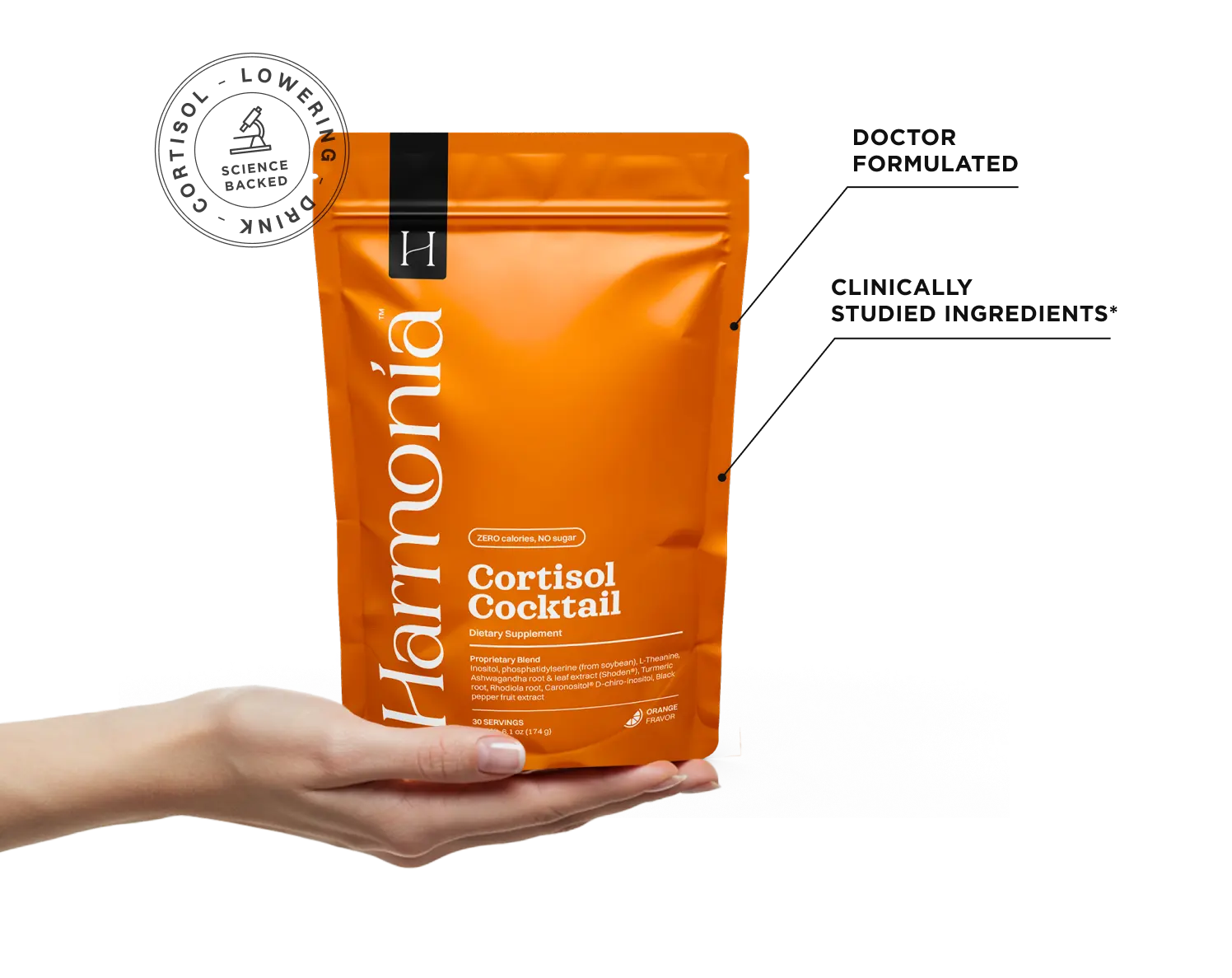
For those dealing with chronically elevated cortisol, Harmonia can help reinforce healthier cortisol rhythms as part of a broader lifestyle approach, supporting stress regulation and overall hormonal balance.
Cortisol and Testosterone in Women: The Missing Conversation
Most hormonal discussions for women focus on estrogen and progesterone, but testosterone plays a crucial role that is often overlooked.
Women produce testosterone in the ovaries and adrenal glands, and imbalances are surprisingly common.
How Cortisol Affects Women’s Hormones
- High cortisol disrupts the balance between estrogen, progesterone, and testosterone
- Chronic stress reduces progesterone, causing estrogen dominance
- Women with cortisol imbalance often experience lower libido, irritability, fatigue, and cravings
- Abdominal fat increases aromatase activity, reducing available testosterone

Cortisol and PCOS
Women with PCOS often already struggle with androgen and insulin imbalance. Elevated cortisol can worsen:
- Irregular cycles
- Weight gain
- Mood instability
- Cravings and blood sugar fluctuations
Cortisol During Perimenopause
During perimenopause, hormones naturally shift. Stress magnifies symptoms such as:
- Hot flashes
- Anxiety
- Low libido
- Sleep disturbances
- Slowed metabolism
For many women, supporting cortisol balance becomes essential for feeling stable, rested, and hormonally grounded throughout each life stage.
Cortisol and Testosterone in Men: The Stress-Testosterone Decline Pattern
Men experience a more direct and noticeable decline in testosterone when cortisol remains elevated.
Stress affects the hypothalamus and pituitary gland, signaling the testes to slow testosterone production.
Common effects on men include:
- Reduced libido and erectile challenges
- Loss of strength or slower muscle development
- Increased belly fat
- Emotional flatness, irritability, or low motivation
- Poor sleep and early-morning fatigue
- Decreased endurance and slower recovery
Abdominal fat also increases estrogen conversion, further lowering available testosterone and amplifying stress’s impact.
Many men initially blame aging, but cortisol is often a more significant factor than age.
Lifestyle Factors That Improve Both Cortisol and Testosterone

The most effective ways to rebalance cortisol and improve testosterone involve supporting the nervous system, stabilizing metabolic function, and improving sleep.
Stress Regulation
- Deep breathing practices
- Grounding exercises
- Short breaks throughout the day
- Consistent daily rhythm
These help the body shift away from the fight-or-flight response and rebalance the HPA axis.
Exercise - But Not Over-Exercising
Strength training boosts testosterone, but excessive high-intensity exercise elevates cortisol. The ideal balance includes:
- 2–4 strength sessions per week
- Light or moderate movement on off-days
- Adequate rest and recovery
Sleep Optimization
- Morning sunlight exposure
- Limiting screens at least an hour before bed
- Keeping consistent sleep and wake times
- Avoiding heavy meals late at night
When sleep improves, cortisol naturally resets.
Blood Sugar Stability
Unstable glucose spikes cortisol throughout the day. Helpful strategies include:
- Prioritizing protein in meals
- Eating balanced fiber and healthy fats
- Avoiding skipping meals if it causes fatigue or irritability
Nutrition and Digestion
Anti-inflammatory foods support hormone synthesis and reduce internal stress. Supporting gut health is also essential, as digestion issues increase cortisol and impair nutrient absorption.
Many of these strategies work together, gradually improving how both hormones function.
Conclusion
Cortisol and testosterone influence far more than most people realize. When cortisol rises beyond what the body can efficiently manage, it suppresses testosterone, disrupts metabolic balance, and alters mood, sleep, cravings, and overall resilience.
When testosterone decreases, stress feels heavier, motivation declines, and the body becomes even more sensitive to cortisol, creating a cycle that’s difficult to break without the right support.
For many women and men experiencing chronic stress symptoms, adding targeted support can make this process smoother.
This is where Harmonia fits in. Its blend of research-backed ingredients - such as ashwagandha, L-theanine, inositols, Rhodiola, and phosphatidylserine - supports healthy cortisol regulation, calmer mood, better sleep quality, and improved hormonal balance.
When cortisol becomes more stable, the entire hormonal system, including testosterone, can operate with greater ease and efficiency.
References
- Bracci, M., Zingaretti, L., Martelli, M., Lazzarini, R., Salvio, G., Amati, M., ... & Santarelli, L. (2023). Alterations in pregnenolone and testosterone levels in male shift workers. International journal of environmental research and public health, 20(4), 3195. Link.
- Mehta, P. H., & Josephs, R. A. (2010). Testosterone and cortisol jointly regulate dominance: Evidence for a dual-hormone hypothesis. Hormones and behavior, 58(5), 898-906. Link.
- Newton, C. J., Samuel, D. L., & James, V. H. T. (1986). Aromatase activity and concentrations of cortisol, progesterone and testosterone in breast and abdominal adipose tissue. Journal of steroid biochemistry, 24(5), 1033-1039. Link.