Ashwagandha is often associated with stress and relaxation, but it’s also becoming popular for weight loss. The idea isn’t that it directly burns fat. Instead, it may help with some of the factors that can make weight harder to manage, including stress, cravings, sleep, and emotional eating.
So, can ashwagandha actually help you lose weight? Possibly, especially when stress is part of the problem. But its effects are likely to be supportive rather than dramatic, and it works best viewed as one piece of a broader approach to healthy weight management.
Does ashwagandha actually help with weight loss?
Ashwagandha may help with weight management, but it is not a fat burner. Its potential benefit appears more relevant when stress, cravings, poor sleep, or emotional eating are making it harder to maintain healthy habits. Some human studies have reported weight or BMI reductions, but results are mixed.
Ashwagandha has its clearest human evidence around stress and cortisol. A 2024 systematic review and meta-analysis of nine randomized trials found lower perceived stress and blood cortisol with ashwagandha formulations compared with placebo. That stress evidence helps explain why researchers continue to test the herb in weight-management studies.
What human studies actually found
The research so far is mixed. Two randomized trials reported greater weight reductions with ashwagandha than placebo, while a shorter 2025 study found no significant overall effect.
Reduced weight, cortisol, and cravings
One 2017 study looked at 52 adults dealing with chronic stress. Half took 300 mg of KSM-66 ashwagandha twice a day for 8 weeks, while the others took a placebo.
By the end of the study, the ashwagandha group had lost about 3% of their body weight, compared with about 1.5% in the placebo group. They also had lower cortisol levels and reported fewer food cravings and less emotional or uncontrolled eating.
The results are encouraging, but weight loss was not the main focus of the 2017 randomized KSM-66 trial. So this is better viewed as an early sign that ashwagandha may help when stress and cravings are making weight management harder.
A larger drop in weight and BMI
A 2025 study followed 100 adults with overweight or obesity for 24 weeks. Participants took either 300 mg of ashwagandha twice a day or a placebo.
The 24-week randomized trial reported an average weight loss of 8.46 kg in the ashwagandha group, compared with 2.41 kg in the placebo group. BMI, stress, and food-craving scores also improved.
That does not mean you should expect to lose 8 kg from taking ashwagandha. The researchers did not closely track diet, sleep, or physical activity, all of which can affect weight. The result is promising, but it needs to be repeated in more studies before we know how typical it is.
Not every study found weight loss
The results have not all been positive. In another 2025 study, 43 adults took either ashwagandha or a placebo for 40 days while both groups also received dietary guidance.
This time, researchers found no significant overall change in body weight, BMI, or waist circumference.
The study was much shorter than the two positive trials, which may partly explain the different result. Overall, ashwagandha may support weight management, especially when stress and cravings are part of the picture, but the research does not show that it reliably causes weight loss or predict how much someone might lose.
Why stress may matter for weight management
Stress can make weight management harder in several ways. It can disrupt sleep, influence appetite and cravings, change food choices, and make it harder to stay consistent with everyday routines.
That is where ashwagandha may be most relevant.
Chronic stress can also affect hunger signals and eating behavior, helping explain why stress can make weight loss harder even when someone is trying to stay consistent with food and activity.
Ashwagandha and cortisol
Ashwagandha has its strongest human evidence around stress and cortisol.
In the 2017 weight-management trial, cortisol decreased more in the ashwagandha group than in the placebo group. A 2024 meta-analysis of nine randomized trials involving 558 participants also found reductions in perceived stress and blood cortisol with ashwagandha formulations.
That makes stress regulation a plausible part of the weight story. What researchers cannot yet tell us is how much any weight change comes from cortisol itself versus changes in cravings, sleep, activity, eating behavior, or other factors.
Stress and eating behavior
Cravings and emotional eating may be another part of the connection.
The 2017 study found improvements in uncontrolled and emotional eating, while the longer 2025 trial also reported lower food-craving scores.
That does not prove ashwagandha causes weight loss by reducing cravings, but it suggests one possible way stress support could make weight management easier for some people.

Does ashwagandha suppress appetite or reduce cravings?
Ashwagandha has not been shown to work as a direct appetite suppressant. There is, however, some evidence that it may help reduce cravings and stress-related eating.
In the 2017 chronic-stress trial, participants taking ashwagandha improved on several measures of food cravings and emotional or uncontrolled eating.
A separate 30-day randomized trial in 60 college students also found lower food-craving scores with 700 mg of ashwagandha per day.
That distinction matters. Feeling fewer cravings is not necessarily the same as having a lower appetite, and neither automatically leads to weight loss. But for someone whose eating patterns change significantly during periods of stress, the effect may still be useful.
Changes in hunger can also come from sleep, medications, thyroid function, stress, and changes in eating patterns, so appetite changes should not automatically be attributed to ashwagandha.
Can ashwagandha cause weight loss?
It may contribute to weight loss in some people, but the evidence is not strong enough to say that ashwagandha itself will cause weight loss.
Randomized trials are encouraging because some participants taking standardized extracts lost more weight than those taking placebo. At the same time, another trial found no meaningful overall weight effect.
The most useful conclusion is that ashwagandha may support weight management when stress, cravings, or related factors are part of the problem. It should not be expected to produce a specific number on the scale.
Does ashwagandha help with belly fat?
There is no good evidence that ashwagandha specifically targets belly fat.
The positive studies mainly measured overall body weight and BMI, so they cannot tell us whether the weight lost came specifically from abdominal fat.
A 2025 randomized pilot that measured waist circumference found no significant overall reduction. A small subgroup of women showed a difference between the ashwagandha and placebo groups, but this was an exploratory finding rather than the main result.
For now, ashwagandha is better thought of in terms of overall weight management rather than targeted belly-fat loss.
What does the research show for women?
For women, ashwagandha may be most relevant when stress, cravings, or sleep are contributing to difficulty managing weight.
Women were included in the available studies, but the trials were not designed to determine whether ashwagandha has a different weight-loss effect in women than in men.
The 2017 chronic-stress trial included 14 women among 52 participants, while the 2025 pilot included more women but found no significant overall change in weight or waist circumference.
Weight can also be influenced by hormonal stage, menopause, PCOS, thyroid function, insulin sensitivity, sleep, and medications. That is why hormone health and weight loss may be relevant when several of these factors overlap.
Ashwagandha has not yet been tested specifically as a weight-loss intervention for perimenopausal women.
How long does ashwagandha take to affect weight?
If ashwagandha does affect weight, current studies suggest the change would be gradual rather than immediate.
Positive weight outcomes were measured after 8 weeks in one trial and 24 weeks in another. By comparison, the 40-day pilot found no significant overall weight effect.
Those timelines tell us when researchers measured changes, not how quickly an individual person should expect to notice a difference. Current evidence does not support a fixed week-by-week weight-loss timeline.

What doses have been studied for weight management?
There is no established ashwagandha dose for weight loss.
The two positive weight-management trials both used 300 mg of standardized ashwagandha root extract twice daily, for a total of 600 mg per day. That gives 600 mg per day the most direct research in the studies discussed here, but it does not make it an established or recommended weight-loss dose.
The earlier positive trial specifically used KSM-66 root extract standardized to 5% withanolides. The 2025 pilot used 500 mg once daily and found no significant overall weight change.
The type of ashwagandha matters too. Root powder, standardized root extracts, and root-and-leaf extracts can contain different concentrations of active compounds, so results from one formulation do not automatically apply to another.
Could ashwagandha make you gain weight instead?
Weight gain does not appear to be a consistent effect of ashwagandha in randomized trials.
Some studies found weight loss or fewer cravings, and current research on ashwagandha and weight gain does not suggest unwanted weight gain is a typical response.
If your weight increases after starting a supplement, other factors may be worth considering, including appetite, sleep, thyroid function, medications, activity levels, fluid shifts, and overall food intake.
Persistent or unexplained weight changes are worth discussing with a clinician, particularly if they come with new thyroid, digestive, or other symptoms.
Who should be cautious with ashwagandha?
Ashwagandha is generally well tolerated by many adults in short-term clinical studies, although digestive upset and drowsiness are among the more commonly reported side effects.
Longer-term safety is less certain, and rare liver-related cases have been reported. Current NCCIH safety guidance also advises avoiding ashwagandha during pregnancy and breastfeeding.
Extra caution is appropriate if you:
- are preparing for surgery
- have an autoimmune or thyroid condition
- take medicines that affect blood sugar or blood pressure
- take seizure, sedating, immune-suppressing, or thyroid medications
If you take prescription medication or have a thyroid, liver, autoimmune, metabolic, or reproductive health condition, review the exact supplement and dose with your clinician before using it.
Where Harmonia fits
%20(1).jpeg)
Ashwagandha's role in Harmonia is less about weight loss itself and more about one of the factors that can make weight management harder: chronic stress.
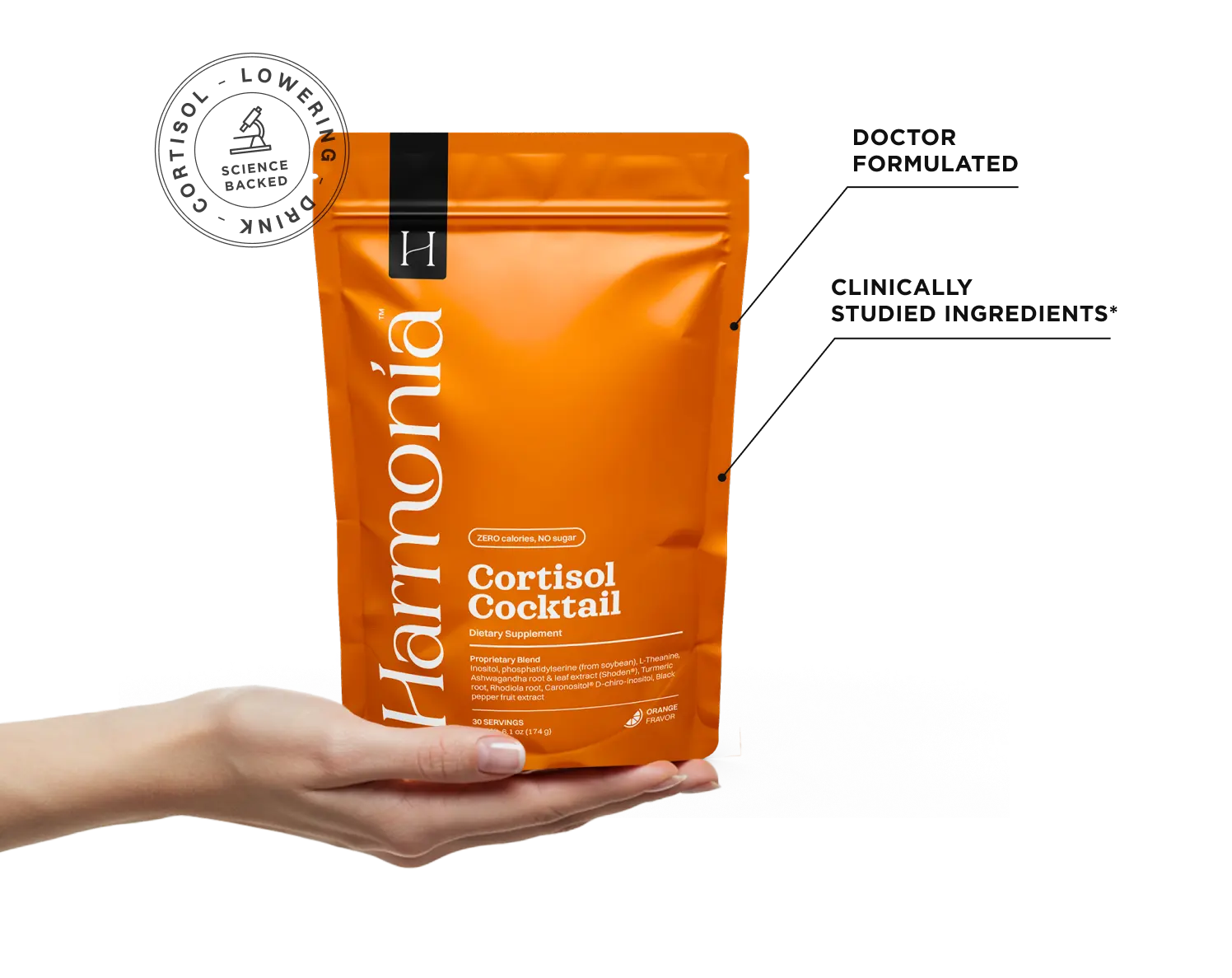
The Harmonia Cortisol Cocktail uses KSM-66 ashwagandha as part of a broader formula designed to support the stress response. The ingredient list also includes L-theanine for calm focus, Rhodiola rosea for stress-related fatigue, magnesium and phosphatidylserine for nervous-system and stress-response support, and myo- and D-chiro-inositol for insulin and hormone signaling.
That makes Harmonia most relevant when stress is showing up alongside cravings, poor sleep, low energy, or difficulty staying consistent with healthy routines. KSM-66 is not included as a fat-burning ingredient, and the weight-loss studies discussed above tested ashwagandha extracts on their own rather than the finished Harmonia formula.
If stress seems to be affecting several parts of your routine at once, you can take the Harmonia quiz to see whether the Cortisol Cocktail fits what you are experiencing.
The bottom line
Ashwagandha may support weight management, particularly when chronic stress and cravings are part of the picture. Two randomized trials using standardized root extracts reported greater reductions in body weight or BMI than placebo, while a shorter 40-day pilot did not find a significant overall weight effect.
Its strongest evidence remains stress and cortisol support. If stress, cravings, poor sleep, or difficulty staying consistent are part of your weight-management picture, the Harmonia Cortisol Cocktail uses KSM-66 ashwagandha within a broader stress-support formula.
If stress keeps showing up in your sleep, cravings, focus, or daily routine, you can take the Harmonia quiz to see whether the Cortisol Cocktail fits what you are experiencing.
Frequently asked questions
Can ashwagandha cause weight loss?
Ashwagandha may contribute to weight loss in some adults. Two randomized trials using standardized root extracts reported greater reductions in weight or BMI than placebo, although results vary across studies and do not predict the same response for everyone.
Does ashwagandha reduce belly fat?
Current research does not show selective belly-fat loss from ashwagandha. Positive trials measured overall body weight and BMI, while a recent short pilot found no significant overall change in waist circumference.
Does ashwagandha suppress appetite?
Ashwagandha may reduce food cravings or stress-related eating in some people. Current trials have not established a direct appetite-suppressing effect, so craving changes and appetite suppression should be treated as different outcomes.
How long does ashwagandha take to work for weight loss?
Positive weight outcomes have been measured after 8 and 24 weeks in different trials. Those windows are research timepoints, and current evidence does not support a guaranteed week-by-week weight-loss timeline.
What is the best time to take ashwagandha for weight loss?
Clinical research has not shown that morning or night dosing produces greater weight loss. In the 24-week study, participants split the dose after breakfast and dinner, so total daily dose and consistency have more direct study support than a specific clock time.
Does ashwagandha help women lose weight?
Ashwagandha may be relevant for women when stress, cravings, or sleep are part of the weight picture, but a female-specific weight-loss advantage has not been established. Women were included in the available trials, although the studies were not designed to provide a strong women-only estimate.
References
• Choudhary, D., Bhattacharyya, S., & Joshi, K. (2017). Body Weight Management in Adults Under Chronic Stress Through Treatment With Ashwagandha Root Extract: A Double-Blind, Randomized, Placebo-Controlled Trial. Journal of Evidence-Based Complementary & Alternative Medicine, 22(1), 96-106. Link
• Pakhale, K., Pakhale, R., Srivathsan, M., Langade, J., & Langade, D. (2025). Efficacy and safety of Ashwagandha (Withania somnifera) root extract on stress and weight management in adults: a prospective, randomized, double-blind, placebo-controlled study. Journal of Medicine and Life, 18(12), 1140-1154. Link
• Ballesteros-Torres, J. M., Vázquez-Aguilar, A., Luzardo-Ocampo, I., Escalante-Aburto, A., & Caballero-Prado, C. J. (2025). Impact of ashwagandha (Withania somnifera L.) supplementation on serum lipid concentrations and anthropometric parameters in adults with overweight and obesity: a double-blind, placebo-controlled pilot study. Nutrition & Metabolism, 22, 134. Link
• O’Connor, J., Lindsay, K., Baker, C., Kirby, J., Hutchins, A., & Harris, M. (2022). The Impact of Ashwagandha on Stress, Sleep Quality, and Food Cravings in College Students: Quantitative Analysis of a Double-Blind Randomized Control Trial. Journal of Medicinal Food, 25(12), 1086-1094. Link
• Arumugam, V., Vijayakumar, V., Balakrishnan, A., Bhandari, R. B., Boopalan, D., Ponnurangam, R., Thirupathy, V. S., & Kuppusamy, M. (2024). Effects of Ashwagandha (Withania Somnifera) on stress and anxiety: A systematic review and meta-analysis. Explore, 20(6), 103062. Link
• National Center for Complementary and Integrative Health. Ashwagandha: Usefulness and Safety. Link