You're eating well and moving more, but the scale isn't budging. Or it does move, a little, and then creeps right back up the moment you ease off. It can feel like your body is working against you.
It might actually be. Hormones control hunger, fat storage, metabolic rate, and how your body responds to a calorie deficit. When they're dysregulated, weight loss gets harder in a way that has nothing to do with effort.
Quick answer
The key hormones that affect weight loss are cortisol, insulin, leptin, ghrelin, thyroid hormones, and estrogen. When cortisol stays elevated for long periods, it can increase insulin levels, encourage fat storage around the abdomen, and increase appetite at the same time. Because of this, improving the cortisol-insulin balance is often more effective than simply cutting more calories.
Here's how the main hormones interact, why the cortisol-insulin connection is the most overlooked factor in weight loss, and what the evidence actually supports for working with them.
Why hormones matter for weight loss
Hormones and weight loss are connected through a signalling system that runs constantly in the background. These chemical messengers regulate hunger, fat storage, and how fast your metabolism runs.
When that system is working well, modest changes in food and activity tend to show up in your weight over time. When it's dysregulated, the body actively resists change. Hunger increases and metabolism slows, both pushing in the same direction: storing fat rather than burning it.
This is why "eat less, move more" can be technically correct and still not produce the expected results. The hormonal environment determines whether the same calorie deficit gets you weight loss or metabolic adaptation.
Understanding that distinction is more useful than trying harder at the same approach.
The key hormones involved in weight management
Cortisol
Cortisol is your body's primary stress hormone, produced by the adrenal glands when the HPA axis (hypothalamic-pituitary-adrenal axis) is activated.
Short-term cortisol release is adaptive: it mobilises glucose for energy and sharpens focus during a stressor. Chronic elevation is where the problems start. Visceral fat has more cortisol receptors than subcutaneous fat, so when cortisol stays high for weeks or months, the body preferentially stores fat around the abdomen.
Research consistently shows that high-cortisol responders are more prone to abdominal weight gain than low-cortisol responders, with the connection appearing across multiple study populations.
Cortisol also drives appetite for high-calorie, high-fat foods. That's an evolved survival mechanism. In a genuine emergency, fuelling up makes sense. In modern life it just looks like stress eating. (Which is a completely normal response to a real physiological signal, for the record.)
If you're noticing broader hormonal imbalance symptoms like persistent fatigue, disrupted sleep, or mood changes alongside weight changes, the picture tends to fit together.

Insulin
Insulin is secreted by the pancreas and controls blood sugar by directing cells to take up glucose for energy or to store it.
Every time blood sugar rises, insulin rises with it. This works well in a balanced system. When blood sugar spikes frequently, from refined carbohydrate intake, chronic stress, or poor sleep, insulin stays elevated for longer periods.
Over time, cells become less responsive to the signal. This is insulin resistance.
In an insulin-resistant state, the body is essentially stuck in fat-storage mode. This is a major reason why weight loss stalls despite a real calorie deficit. The hormonal environment is actively working against it.
Leptin and ghrelin
Leptin is produced by fat cells and signals the brain that energy stores are sufficient. Ghrelin is produced in the stomach and signals hunger. In a well-regulated system, these two balance each other.
After weight loss, something notable happens. Leptin drops (the "full" signal gets quieter) and ghrelin rises, increasing hunger.
A study in the New England Journal of Medicine found that hunger hormone shifts persist for at least one year after weight loss, meaning the body continues signalling for its previous weight long after the diet ends. This is the biology behind weight regain, and it has nothing to do with willpower.
Sleep makes both hormones worse fast. Research by Spiegel et al. found that two nights of sleep restriction raised ghrelin by 28% and reduced leptin by 18%, with a corresponding increase in hunger. That's enough of a shift to undo careful eating during the same period.
Thyroid hormones
The thyroid produces T3 and T4, which regulate how quickly the body burns energy at rest.
An underactive thyroid (hypothyroidism) slows basal metabolic rate and causes persistent fatigue, both of which make weight management genuinely harder. Even subclinical hypothyroidism, where TSH is elevated but T4 is still within the normal range, can affect energy and weight meaningfully.
If the foundational strategies are solid and weight still isn't moving, thyroid function is worth checking with a physician. This is a medical issue that diet and lifestyle can support but can't replace. A registered dietitian and a physician working together is the right approach here.
Estrogen
Estrogen influences fat distribution, metabolic rate, and insulin sensitivity. When levels are adequate, fat tends to be stored peripherally. As estrogen declines (in perimenopause, or with chronic undereating), fat redistributes toward the abdomen and metabolic rate slows.
The research on this is consistent. Whether estrogen causes weight gain is more nuanced than a yes or no: it's less that low estrogen directly causes fat gain, and more that the metabolic and fat-distribution changes it drives create conditions where weight accumulates differently and proves harder to shift.
The cortisol-insulin loop: why stress makes weight loss harder
Most content on hormones and weight loss treats each hormone separately. The cortisol-insulin connection is where the real picture lives, and it's consistently underexplained.
Stress activates the HPA axis. Cortisol is released to mobilise glucose for the stress response, blood sugar rises, and the pancreas responds by releasing insulin to clear that glucose from circulation.
If the glucose isn't burned (because the stressor is a deadline, not a physical emergency), it gets stored as fat.
When the stress is ongoing, this cycle runs repeatedly throughout the day. Cortisol up, blood sugar up, insulin up, fat storage on. Over time, cells become desensitised to insulin's signal, deepening insulin resistance.
And because cortisol simultaneously drives appetite for calorie-dense foods, the body is both storing more and wanting more at the same time.
The research on cortisol and belly fat shows where this specifically accumulates: visceral tissue, the fat most closely associated with metabolic risk. The practical implication is that stress management is a weight management strategy.
Many people focus entirely on food and movement while the hormonal environment keeps resetting their progress.

What actually supports hormonal balance for weight loss
Prioritise sleep
Sleep is the most underutilised tool in weight management, and it works by changing the hormonal environment directly.
Seven to nine hours per night restores the cortisol diurnal curve (cortisol should peak in the morning and be lowest at night) and allows ghrelin and leptin to normalise. Insulin sensitivity improves with it. Every one of those hormonal problems worsens measurably with sleep deprivation.
Consistency matters as much as total hours. Going to bed and waking at the same time daily regulates circadian rhythms, which govern the timing of cortisol release. People who get enough hours but at irregular times often still feel dysregulated, because the cortisol curve gets disrupted either way.
If you're implementing good weight loss strategies but skipping this one, the hormonal math is working against you.
Eat to support insulin sensitivity
This is about patterns, not a specific diet. The goal is reducing unnecessary blood sugar spikes and giving the body a consistent environment to improve cell responsiveness.
Protein and fibre at every meal slow glucose absorption and extend satiety without requiring restriction. Reducing ultra-processed food intake matters. The refined carbohydrate load in most processed foods drives rapid glucose spikes that keep insulin elevated. ‘
The goal is a stable blood sugar pattern, and that's achievable without labelling any food as off-limits. Eating regularly also matters: skipping meals to compensate for overeating raises cortisol, which feeds the loop described above.
The balance principle applies here too. A diet aggressive enough to spike cortisol is working against its own goal. Sustainable eating at a moderate deficit consistently outperforms severe restriction, both for hormonal health and for long-term adherence.
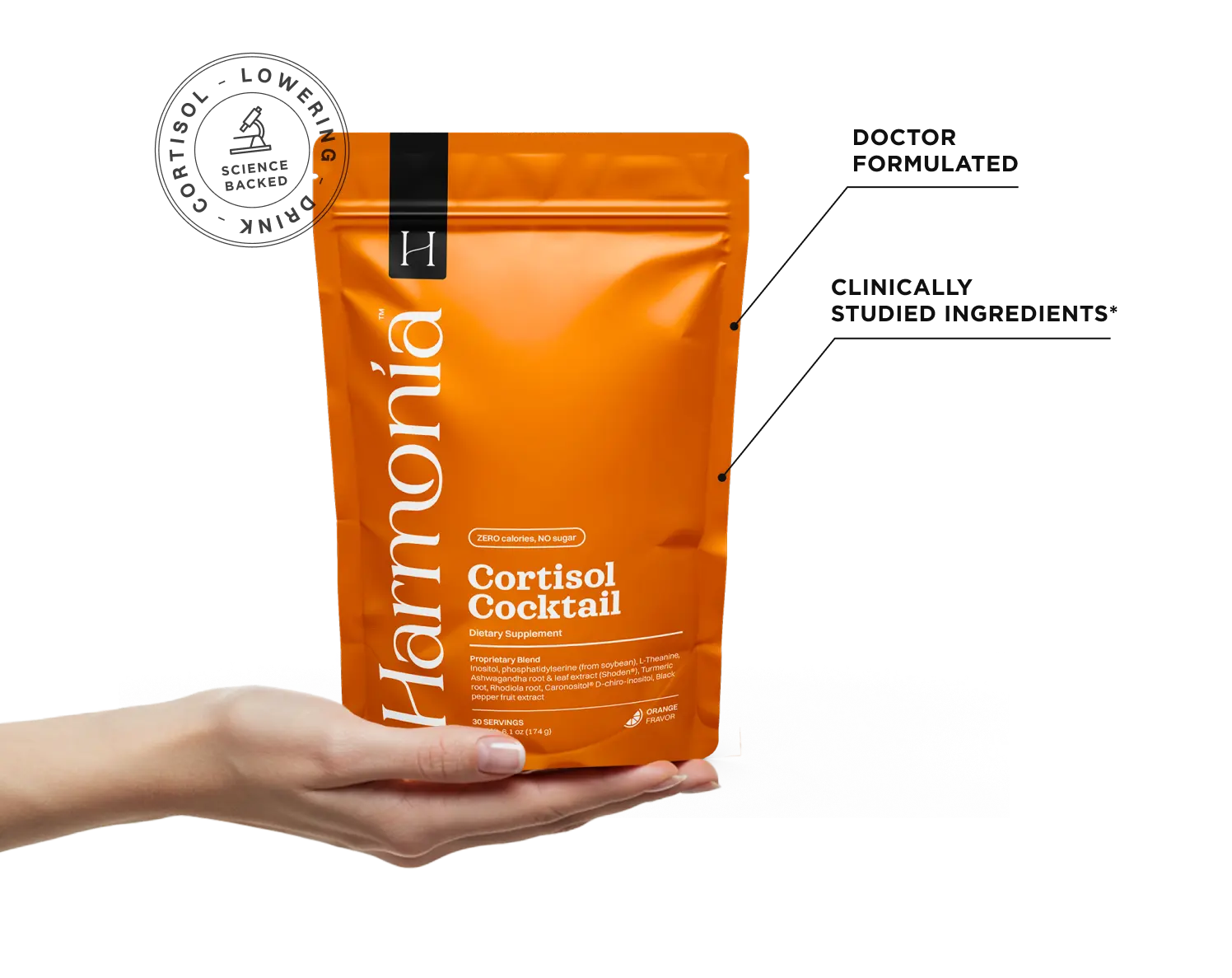
For people dealing with the cortisol-insulin cycle specifically, Harmonia addresses this at the hormonal level.
The cortisol cocktail combines Ashwagandha and Rhodiola Rosea, two adaptogens with clinical evidence for HPA axis regulation and cortisol reduction, with Myo-Inositol, which improves insulin sensitivity and supports blood sugar regulation. Managing upstream signalling can matter as much as managing what's on your plate.

Build strength
Resistance training improves body composition through two mechanisms that cardio alone doesn't address as directly.
Lean muscle is metabolically active tissue. More muscle mass raises resting metabolic rate, meaning the body burns more energy at rest. For anyone whose hormonal environment has slowed metabolism, this is a meaningful advantage.
Second, resistance training measurably improves insulin sensitivity, with effects lasting 24 to 48 hours per session. For people with an insulin-resistance component to their weight challenges, this is one of the most effective interventions available.
Two to three sessions per week is enough to see hormonal benefit. Intensity matters more than duration. This is a particularly useful strategy for anyone experiencing the estrogen-related metabolic slowdown that comes with midlife, because building metabolically active muscle partly compensates for the drop in baseline metabolic rate.
Manage cortisol directly
Generic stress reduction advice ("try meditating") misses the specificity of the hormonal problem. A few approaches have real mechanistic evidence.
Adaptogens are herbs that help the body modulate the stress response by working on the HPA axis. Ashwagandha (Withania somnifera) is the most studied: a double-blind RCT by Chandrasekhar et al. found that standardised Ashwagandha extract significantly reduced serum cortisol and stress scores over 60 days compared to placebo.
Rhodiola Rosea has evidence for attenuating cortisol response to stress and reducing chronic stress-related fatigue.
The Harmonia cortisol cocktail combines both adaptogens with Myo-Inositol in one formulation, specifically designed for the cortisol-insulin dynamic. The ingredients are the same ones that appear in the clinical research.
_11zon.jpeg)
For a broader look at supplements with evidence behind them, the stress relief supplements article covers several that work well alongside an adaptogen routine.
Slow diaphragmatic breathing also has documented cortisol-reducing effects through parasympathetic activation. Even five to ten minutes of deliberate, slow breathing lowers cortisol response measurably.
Chronic under-eating is itself a cortisol stressor, so a moderate deficit consistently beats aggressive restriction for both hormonal health and long-term results.
The bottom line
Hormones don't cause weight problems in isolation. They create the environment in which all your food and movement choices either work or don't.
When cortisol is chronically elevated, it feeds the insulin loop, shifts hunger signals, and prioritises abdominal fat storage. When leptin resistance sets in, hunger persists regardless of how much you've eaten. Managing those upstream drivers is a different approach than managing calories alone, and for a lot of people it's the piece that finally makes the rest of it work.
Good weight loss tips account for the hormonal environment: prioritise sleep, eat to support insulin sensitivity, build strength, and manage cortisol with evidence-based strategies. That's where hormone health and weight loss actually connect.
Take the Harmonia quiz to see how the cortisol cocktail can support your stress, metabolism, and weight loss goals.
Frequently asked questions
Can hormones prevent weight loss entirely?
Hormonal imbalances, particularly insulin resistance and chronically elevated cortisol, can make weight loss significantly harder and in some cases effectively stall it. Hypothyroidism is another common culprit worth ruling out with a physician.
If you're doing the foundational work consistently and nothing is moving, hormonal testing with a physician is a reasonable next step.
Which hormone has the biggest impact on weight?
Insulin resistance is probably the most common hormonal barrier to weight loss in adults without a diagnosed thyroid condition. It puts the body in a near-constant fat-storage state and makes a calorie deficit work much harder than it should.
Cortisol feeds into it directly through the cortisol-insulin loop, so the two are closely connected in practice.
Does stress really cause weight gain?
Yes, through documented physiological pathways. Chronic stress raises cortisol, which raises blood sugar, which drives insulin release and promotes fat storage, particularly in the abdomen. Cortisol also increases appetite for calorie-dense foods.
This is an evolved response to prolonged threat, and in modern life it produces real, measurable weight gain.
What are signs that hormones are affecting my weight?
Common signs include weight gain that doesn't respond to diet and exercise changes, fat accumulating specifically around the abdomen, persistent cravings for sugar or high-calorie foods, fatigue that worsens with dieting, and weight that returns quickly after loss. These patterns suggest the hormonal environment may be working against progress rather than simply a calorie balance issue.
Do weight loss strategies need to change when hormones are involved?
The foundational strategies are the same: sleep, protein and fibre intake, stress management, and resistance training. When hormonal dysregulation is the primary issue, the order of priority shifts.
Managing cortisol and improving insulin sensitivity become more important than tightening calorie counts.
How long does it take to rebalance hormones for weight loss?
Sleep improvements can shift ghrelin and leptin within days. Insulin sensitivity responds to dietary and exercise changes within weeks. Adaptogens show measurable cortisol reduction in 4 to 8 weeks in clinical trials. Consistency with the basics matters more than speed.
References
- Sumithran, P., Prendergast, L. A., Delbridge, E., Purcell, K., Shulkes, A., Kriketos, A., & Proietto, J. (2011). Long-term persistence of hormonal adaptations to weight loss. New England Journal of Medicine, 365(17), 1597–1604. Link
- Spiegel, K., Tasali, E., Penev, P., & Van Cauter, E. (2004). Brief communication: Sleep curtailment in healthy young men is associated with decreased leptin levels, elevated ghrelin levels, and increased hunger and appetite. Annals of Internal Medicine, 141(11), 846–850. Link
- Chandrasekhar, K., Kapoor, J., & Anishetty, S. (2012). A prospective, randomized double-blind, placebo-controlled study of safety and efficacy of a high-concentration full-spectrum extract of Ashwagandha root in reducing stress and anxiety in adults. Indian Journal of Psychological Medicine, 34(3), 255–262. Link