Cortisol is one of the most important hormones in your body - and one of the easiest to disrupt.
When balanced, it gives you morning energy, stabilizes your mood, and helps you handle stress. But when cortisol stays elevated for too long, it can affect nearly every system: digestion, sleep, metabolism, cravings, hormonal balance, and even skin.
One of the most effective, natural ways to lower cortisol is through food. Certain foods contain nutrients that support your nervous system, calm inflammation, stabilize blood sugar, and strengthen the stress-response pathways that regulate cortisol production.
This guide walks you through 15 powerful foods that lower cortisol, why they work, the science behind them, and how to build a daily routine that supports calm, steady energy.
How Food Helps Regulate Cortisol Naturally
Your body’s stress response - also known as the HPA axis - is influenced heavily by what you eat. Every meal either stabilizes your internal environment or adds more strain on the system.
Here’s how food directly affects cortisol:
1. Blood Sugar Stability
When blood sugar crashes (from skipping meals or eating high-sugar foods), cortisol rises to bring glucose back into your bloodstream.
2. Nutrient Availability
Your adrenal glands need specific nutrients - magnesium, vitamin C, B vitamins, potassium, healthy fats - to function properly. Deficiencies make your system more reactive.
3. Inflammatory Load
Chronic inflammation signals “danger” to the brain, which can raise cortisol output even if you’re psychologically calm.
4. Gut-Brain Communication
Your gut and brain communicate constantly. Dysbiosis, bloating, and poor digestion can send stress signals through the vagus nerve, triggering cortisol spikes.
This makes food an essential pillar of cortisol regulation - and the 15 foods below are at the top of the list.
15 Powerful Foods That Lower Cortisol
These foods contain vitamins, minerals, antioxidants, and amino acids shown to support a healthy stress response. Incorporate several into your daily meals for best results.
1. Dark Leafy Greens (Spinach, Swiss Chard, Kale)

Dark greens are some of the richest sources of magnesium, a mineral known for its calming effect on the nervous system.
Magnesium helps regulate GABA (your brain’s primary relaxation neurotransmitter) and supports adrenal health.
Why they lower cortisol:
- Magnesium reduces stress sensitivity
- Folate improves mood and supports neurotransmitter balance
- Antioxidants reduce inflammation that can raise cortisol
How to use: Add a handful to smoothies, sauté with olive oil, or use as a base for bowls.
2. Salmon & Omega-3 Rich Fish
Wild salmon, sardines, and mackerel contain omega-3 fatty acids, which support brain health and reduce stress-induced inflammation.
Why they lower cortisol:
- Omega-3s reduce inflammation that activates cortisol
- Improve mood stability during stressful periods
- Support hormonal balance and brain function
How to use: Aim for 2–3 servings per week - grilled, baked, or pan-seared.
3. Berries (Blueberries, Raspberries, Strawberries)
Berries contain polyphenols, powerful antioxidants that counteract oxidative stress - one of the most common triggers of elevated cortisol.
Why they lower cortisol:
- Reduce cellular stress
- Lower inflammation
- Support stable blood sugar
How to use: Add yogurt, oatmeal, or snack on a cup of mixed berries in the afternoon.
4. Avocado
Avocado is rich in monounsaturated fats, fiber, and B vitamins - all important for stress resilience.
Why it lowers cortisol:
- B vitamins support adrenal health
- Healthy fats reduce cortisol by stabilizing blood sugar
- Potassium supports healthy nervous system activity
How to use: Smash onto toast, add to salads, or blend into smoothies.
5. Eggs

Eggs are nutrient-dense and provide amino acids, choline, and B vitamins that support neurotransmitter production.
Why they lower cortisol:
- B6 and B12 help regulate mood
- High-quality protein supports stable energy
- Choline improves brain and nervous system function
How to use: Poached, boiled, scrambled, or added to veggie bowls.
6. Pumpkin Seeds, Almonds & Magnesium-Rich Nuts
Nuts and seeds are some of the easiest ways to increase magnesium, healthy fats, and zinc - all essential for lowering cortisol.
Why they lower cortisol:
- Magnesium calms the nervous system
- Healthy fats reduce stress-induced blood sugar fluctuations
- Zinc supports hormonal balance
How to use: Eat a handful as a snack or sprinkle onto salads or oatmeal.
7. Fermented Foods (Yogurt, Kefir, Kimchi, Sauerkraut)
Your gut and brain communicate continuously via the vagus nerve. A balanced gut microbiome helps regulate stress hormones and inflammation.
Why they lower cortisol:
- Improve digestion and nutrient absorption
- Reduce inflammation
- Support serotonin production in the gut
How to use: Add a scoop of kimchi or sauerkraut to meals or enjoy yogurt with berries.
8. Green Tea & Matcha
Green tea and matcha contain L-theanine, an amino acid shown to increase alpha brain waves - promoting calm focus without sedation.
Why they lower cortisol:
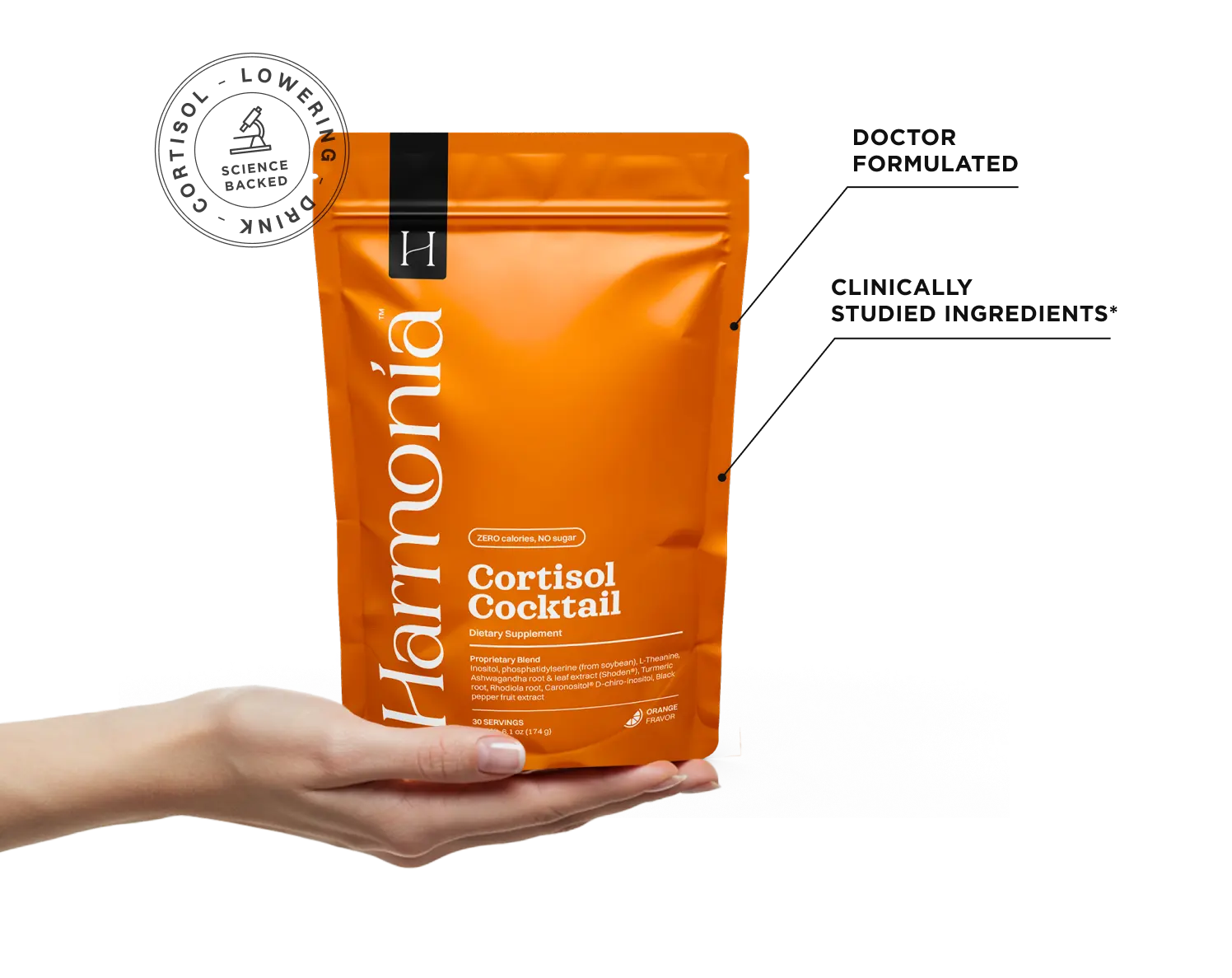
- L-theanine reduces stress-driven cortisol spikes, Harmonia contains L-theanine for a similar calming and mood-balancing effect.
- Polyphenols reduce inflammation
- Supports smoother energy than coffee
How to use: Sip matcha in the morning or replace your afternoon coffee with green tea.
9. Citrus Fruits (Oranges, Lemon, Grapefruit)
Citrus fruits are rich in vitamin C, one of the key nutrients your adrenal glands use during stress.
Why they lower cortisol:
- Vitamin C reduces cortisol during stressful situations
- Antioxidants reduce inflammation
- Support immune function
How to use: Add lemon to water, snack on oranges, or include grapefruit in breakfast dishes.
10. Turmeric
Turmeric’s active compound, curcumin, is a powerful anti-inflammatory agent that helps modulate cortisol production. Turmeric is one of the functional ingredients in Harmonia’s cortisol-supporting blend.
Why it lowers cortisol:
- Reduces inflammation-driven stress signals
- Supports hormonal balance
- Enhances mood and brain function
How to use: Add to soups, roasted vegetables, smoothies, or make turmeric tea.
11. Bananas

Bananas provide natural carbohydrates, vitamin B6, and potassium, all helpful for energy and stress control.
Why they lower cortisol:
- Potassium supports nervous system calm
- B6 helps the body produce serotonin
- Natural sugars fuel stable energy
How to use: Eat as a quick snack, blend into smoothies, or pair with almond butter.
12. Chickpeas, Lentils & Other Plant Proteins
Plant proteins help stabilize blood sugar, preventing cortisol spikes that come from glucose fluctuations.
Why they lower cortisol:
- Keep energy stable
- High in B vitamins
- High fiber supports gut health
How to use: Make lentil soups, chickpea salads, or add beans to grain bowls.
13. Dark Chocolate (70% or Higher)
High-quality dark chocolate contains flavonoids that support blood flow, reduce inflammation, and enhance mood.
Why it lowers cortisol:
- Promotes endorphin release
- Reduces perceived stress
- Improves mood and cognitive function
How to use: Enjoy one to two squares after meals.
14. Calming Herbal Teas (Chamomile, Lemon Balm, Ashwagandha Tea)
Herbal teas calm both the body and mind and support a lower evening cortisol curve.
Why they lower cortisol:
- Promote relaxation
- Support deeper sleep
- Help regulate nighttime cortisol
How to use: Replace late-night snacks or wine with a soothing herbal tea.
15. Whole Grains (Oats, Quinoa, Brown Rice)
Whole grains digest slowly and provide steady fuel, preventing cortisol spikes caused by erratic blood sugar.
Why they lower cortisol:
- Support serotonin production
- Provide stable energy
- Contain B vitamins for stress resilience
How to use: Make oatmeal bowls, quinoa salads, or pair proteins with brown rice.
Sample “Cortisol-Calming” Daily Meal Plan

Use this as inspiration for structuring meals that help reduce cortisol naturally.
Breakfast
- Oatmeal with blueberries, chia seeds, and a boiled egg on the side
- Green tea or matcha
Lunch
- Salmon bowl with quinoa, leafy greens, avocado, and sauerkraut
- Lemon water
Snack
- Almonds or pumpkin seeds
- A cup of citrus fruit or a few pieces of dark chocolate
Dinner
- Turmeric-roasted vegetables
- Lentil soup or chickpea stir-fry
- Chamomile or lemon balm tea
This type of day supports stable energy, steady mood, and a smoother cortisol rhythm.
Who Benefits Most From a Cortisol-Lowering Diet
A cortisol-friendly diet can help anyone - but it’s especially beneficial for:
- Individuals with chronic stress: Who experience energy crashes, irritability, or brain fog.
- Women with PCOS or thyroid imbalance: Since cortisol influences insulin, hormones, and inflammation.
- Individuals struggling with cravings or emotional eating: Because cortisol shifts appetite hormones and creates cycles of stress-eat-repeat.
- Those waking up tired despite getting enough sleep: A sign of a disrupted cortisol rhythm.
- Anyone dealing with anxiety, overwhelm, or restlessness: Since nutrition strongly influences the nervous system.
Conclusion
Cortisol isn’t the enemy - it’s essential for energy, mood, and resilience. But when it stays elevated or becomes dysregulated, it can affect everything from sleep to cravings to hormone balance.
Adding foods that lower cortisol into your daily meals is one of the most effective, natural ways to support your stress response.
Pairing a nutrient-rich diet with supportive daily habits - gentle movement, a consistent sleep routine, and targeted nutrients like the ones found in Harmonia - can help restore calm, clarity, and hormonal balance.
If you want to understand whether your symptoms are connected to high cortisol, you can take the quiz to see what your body may be trying to tell you.
References
- Beglaryan, N., Hakobyan, G., & Nazaretyan, E. (2024). Vitamin C supplementation alleviates hypercortisolemia caused by chronic stress. Stress and Health, 40(3), e3347. Link.
- Murck, H. (2002). Magnesium and affective disorders. Nutritional neuroscience, 5(6), 375-389. Link.
- Tavva, S., Avagyan, M., & Martirosyan, D. (2025). Blueberries and raspberries as endocrine modulators: Mechanisms, clinical evidence, and translational guidance. Bioactive Compounds in Health and Disease-Online ISSN: 2574-0334; Print ISSN: 2769-2426, 8(11), 445-461. Link.
- Williams, J. L., Everett, J. M., D’Cunha, N. M., Sergi, D., Georgousopoulou, E. N., Keegan, R. J., ... & Naumovski, N. (2020). The effects of green tea amino acid L-theanine consumption on the ability to manage stress and anxiety levels: a systematic review. Plant foods for human nutrition, 75(1), 12-23. Link.