Stress is no longer an occasional disruption - it has become a constant background signal for many people. Long work hours, irregular schedules, digital overload, poor sleep, and ongoing mental pressure all contribute to elevated stress hormones. One of the most important of these hormones is cortisol.
Cortisol plays a vital role in helping the body respond to challenges. It mobilizes energy, supports alertness, and helps regulate inflammation. However, when cortisol remains elevated for long periods, it can begin to interfere with nearly every system in the body, including sleep, metabolism, mood, focus, and recovery.
Learning how to lower cortisol naturally is not about eliminating stress entirely. Instead, it’s about helping the body return to balance after stress and reducing the signals that keep cortisol unnecessarily high.
Signs Your Cortisol Levels May Be Too High
Elevated cortisol does not always feel like obvious stress. In many cases, it shows up in subtle, persistent patterns that people normalize over time.
Common signs of high cortisol include:
- Feeling tired even after a full night of sleep
- Difficulty winding down in the evening
- Anxiety, irritability, or restlessness
- Afternoon energy crashes
- Strong cravings for sugar, refined carbs, or salty snacks
- Trouble focusing or feeling mentally scattered
- Feeling “wired but tired,” especially at night
These symptoms often worsen during periods of prolonged pressure, irregular sleep schedules, heavy caffeine use, or intense physical demands.
While occasional stress responses are normal, ongoing symptoms are often a sign that the body is struggling to return to balance.
How to Lower Cortisol Naturally Through Daily Habits

Prioritize Deep, Restorative Sleep
Sleep is one of the most powerful regulators of cortisol. Under healthy conditions, cortisol rises in the early morning to promote wakefulness and gradually declines throughout the day, reaching its lowest point at night. Poor sleep disrupts this rhythm, often leading to elevated evening cortisol and sluggish mornings.
Inconsistent bedtimes, exposure to bright light at night, late-night screen use, and irregular sleep schedules all interfere with this cycle. Over time, the body may struggle to distinguish between day and night, keeping cortisol elevated longer than necessary.
Supporting restorative sleep involves more than simply spending enough hours in bed. Key strategies include:
- Going to bed and waking up at consistent times
- Reducing bright light exposure in the evening
- Avoiding heavy meals and intense exercise close to bedtime
- Creating a pre-sleep routine that signals safety and calm to the nervous system
Even small improvements - such as dimming lights after sunset or establishing a short wind-down routine - can help signal safety to the nervous system and encourage cortisol to decline naturally.
Reduce the Total Daily Stress Load
Many people try to manage stress by adding relaxation techniques without addressing the overall volume of stress they carry each day. Cortisol responds not just to intense stressors, but to the accumulation of smaller, ongoing pressures.
Mental stress from constant notifications, multitasking, and information overload keeps the brain in a heightened state of alertness. Emotional stress from unresolved conflicts or lack of downtime further compounds this effect. Physical stress from under-eating, dehydration, or overtraining adds another layer.
Lowering cortisol naturally requires reducing this cumulative load. Practices that support nervous system regulation include:
- Short breaks throughout the day
- Deep breathing or slow exhalation breathing
- Time outdoors or exposure to natural light
- Moments of stillness without stimulation
These practices may seem simple, but their impact compounds over time.

Move Your Body Without Overstimulating Stress Hormones
Movement is essential for health, but more is not always better. Intense exercise is a form of physical stress, and while it can be beneficial in moderation, excessive or poorly timed training can elevate cortisol.
High-intensity workouts performed frequently, especially in combination with insufficient sleep or calorie intake, can push cortisol higher rather than lower. This often leads to fatigue, poor recovery, and diminished performance.
Cortisol-supportive movement focuses on consistency and recovery. Activities such as walking, resistance training with adequate rest, and low-impact cardio help regulate stress hormones without overwhelming the system. Gentle movement also improves circulation, supports metabolic health, and promotes mental clarity.
The goal is to use movement as a tool for resilience, not as another stressor the body must compensate for.
How to Reduce Cortisol Through Nutrition
Stabilize Blood Sugar to Prevent Cortisol Spikes
Blood sugar stability is closely tied to cortisol regulation. When blood sugar drops too low, the body releases cortisol to mobilize stored energy.
Frequent fluctuations - caused by skipping meals, consuming highly refined carbohydrates, or relying on caffeine instead of food - can keep cortisol chronically elevated.
To support stable blood sugar:
- Eat balanced meals with protein, fiber, and healthy fats
- Avoid skipping meals for long periods
- Limit highly refined carbohydrates without protein or fat
- Reduce reliance on sugary snacks and energy drinks
People who experience afternoon crashes or intense cravings often see improvements simply by eating more consistently and avoiding long gaps between meals.
Foods and Dietary Patterns That Support Lower Cortisol
Whole-food dietary patterns tend to support lower cortisol by reducing inflammation and metabolic stress. Diets rich in vegetables, fruits, lean proteins, healthy fats, and complex carbohydrates provide the micronutrients needed for stress regulation.
Mineral-rich foods such as leafy greens, nuts, seeds, and legumes support nervous system function. Omega-3 fatty acids from fish, flax, or walnuts help regulate inflammatory pathways that interact with cortisol signaling.
Limiting excessive caffeine and alcohol intake can also reduce cortisol burden. While caffeine temporarily increases alertness, excessive use may keep cortisol elevated throughout the day, particularly in individuals who are already under stress.
Natural Ways to Lower Cortisol With Targeted Nutrients

Vitamins and Minerals That Support Stress Balance
Certain nutrients are rapidly depleted during periods of stress.
- Magnesium plays a central role in nervous system relaxation and muscle recovery. Low magnesium levels are associated with increased stress sensitivity and poor sleep quality.
- Vitamin C is heavily utilized during stress responses, as the adrenal glands rely on it for hormone production.
- B vitamins support energy metabolism and neurotransmitter balance, both of which influence stress tolerance.
- Vitamin D contributes to hormonal signaling and immune regulation, and deficiency has been linked to mood disturbances and fatigue.
Adaptogens and Bioactive Compounds
Adaptogens help the body respond to stress more efficiently rather than simply suppressing symptoms.
- Ashwagandha has been studied for its ability to reduce stress reactivity and support calm energy.
- Rhodiola supports endurance and mental stamina, particularly during periods of fatigue.
- L-theanine promotes relaxed focus without sedation, making it useful for individuals who feel overstimulated.
- Phosphatidylserine supports healthy cortisol rhythms, particularly when stress disrupts normal daily patterns.
These compounds are most effective when used alongside lifestyle changes rather than as standalone solutions.
Integrating Support Into a Sustainable Routine
The most effective cortisol-lowering strategies are those that can be maintained long term. Radical overhauls often fail because they add pressure rather than reducing it.
A sustainable routine focuses on small, repeatable actions:
- Consistent sleep and meal timing
- Manageable movement
- Daily stress reduction
Some individuals also choose to incorporate a functional wellness product that aligns with these goals.
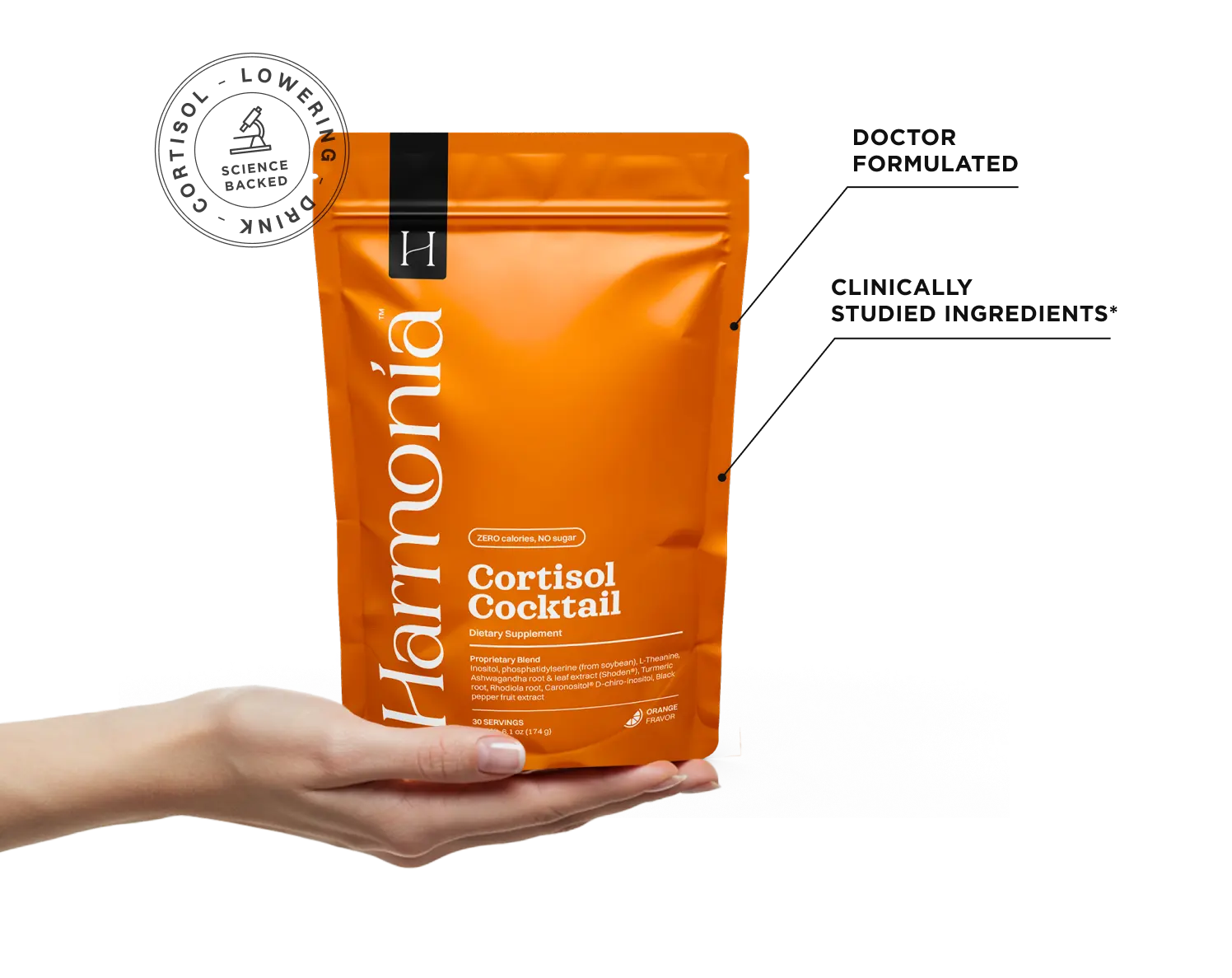
Harmonia is designed to complement stress-reducing habits by combining adaptogens, inositols, and calming nutrients into a simple daily ritual.
Rather than replacing lifestyle changes, it fits alongside them, supporting the same pathways involved in nervous system balance, metabolic stability, and relaxation.
Why Consistency Matters More Than Perfection
Cortisol responds best to predictability. Irregular routines, extreme dieting, and fluctuating sleep schedules send mixed signals that keep the stress response activated.
Consistency - rather than intensity - is what allows the body to recalibrate. Regular sleep, regular meals, and regular movement provide stability that gradually lowers cortisol output. Over time, this leads to improved energy, better sleep, clearer thinking, and greater resilience to stress.
Progress may be gradual, but it is often more sustainable and meaningful than quick fixes.
Final Thoughts

Lowering cortisol naturally is about restoring balance, not eliminating stress entirely. By improving sleep quality, stabilizing blood sugar, reducing cumulative stress, and supporting the nervous system with targeted nutrients, cortisol levels can return to a healthier rhythm.
This approach supports not only stress reduction, but also long-term energy, mental clarity, and overall well-being.
If you want a simple way to support your daily cortisol-lowering habits, Harmonia is designed to fit seamlessly into a balanced routine. With carefully selected ingredients that support relaxation, stress resilience, and metabolic balance, it helps reinforce the habits that allow cortisol to normalize over time.
Support calmer days, better sleep, and steadier energy - make Harmonia part of your daily routine today.
References
- Jones, C., & Gwenin, C. (2021). Cortisol level dysregulation and its prevalence—Is it nature's alarm clock?. Physiological reports, 8(24), e14644. Link.
- Stachowicz, M., & Lebiedzińska, A. (2016). The effect of diet components on the level of cortisol. European Food Research and Technology, 242(12), 2001-2009. Link.