Some ingredients get attention because they are trendy. Others stay relevant because they keep showing up in serious conversations about brain health, stress resilience, and recovery. Phosphatidylserine belongs in the second category.
It is naturally present in the body, especially in brain cell membranes, where it helps support cell structure and communication. That is one reason interest in phosphatidylserine benefits has grown so much.
People are not only looking at it for memory and attention, but also for mental clarity, stress support, and better sleep when a wired, overstimulated nervous system is part of the problem. As Cleveland Clinic explains, phosphatidylserine is often discussed in connection with memory, focus, stress relief, and sleep.
The appeal is easy to understand. When you are dealing with brain fog, poor concentration, restless evenings, or a mind that refuses to switch off, you are rarely looking for hype. You are looking for something that makes physiological sense and fits into a realistic routine.
This guide breaks down the most relevant phosphatidylserine benefits, what current research suggests, and why this ingredient is often discussed in relation to sleep, focus, and broader stress support.
Quick Answer
If you want the short version first, here it is:
- Phosphatidylserine is a phospholipid found in cell membranes, especially in the brain.
- It is often discussed for memory, focus, attention, stress support, and sleep-related wellness.
- Research suggests it may support certain aspects of cognitive performance in some populations.
- Its sleep relevance is usually connected to stress physiology rather than direct sedation.
- It is generally well tolerated, but it still makes sense to use it thoughtfully, as noted by Cleveland Clinic.
What Is Phosphatidylserine?
Phosphatidylserine is a type of phospholipid, a fat-like compound that helps form and protect cell membranes. In the brain, that matters because healthy membranes help support cell signaling, adaptability, and normal cognitive function. A clinical review indexed on PubMed notes that phosphatidylserine plays an important structural and functional role in healthy nerve cell membranes, which helps explain why it is so often studied in relation to cognition and healthy aging.
This is why phosphatidylserine is usually described as a foundational brain-support ingredient rather than a quick stimulant. It does not work like caffeine, and that is part of its appeal. Instead of pushing the brain into a more activated state, it is usually discussed in the context of supporting the systems that help cognition stay steady.
That distinction matters. Many people searching for phosphatidylserine benefits are not looking for something that makes them feel wired. They are looking for something that supports memory, focus, and resilience without adding more internal noise.
Phosphatidylserine Benefits at a Glance
When people search for this ingredient, they are usually asking about one or more of these areas:
- sharper focus
- memory support
- mental clarity under stress
- calmer evenings
- sleep support
- support for healthy cognitive aging
Not every possible benefit is proven equally in every group, but the overall pattern is strong enough that phosphatidylserine keeps showing up in evidence-informed formulas aimed at brain and stress support.
1. Phosphatidylserine Benefits for Focus and Attention
One of the most practical reasons people turn to phosphatidylserine is focus. Not the edgy kind of focus that comes with overstimulation, but the more useful kind: better mental steadiness, less scattered thinking, and a greater ability to stay on task.
Because phosphatidylserine is closely tied to cell membrane health, it is often discussed in relation to attention and cognitive performance. Cleveland Clinic lists memory, focus, concentration, and learning among the commonly discussed areas of interest around phosphatidylserine.
This also helps explain why it is relevant in the wider stress conversation. Poor focus is often not just a brain issue. It is frequently tied to poor sleep, excessive caffeine, and chronic stress. That is why it fits naturally alongside resources like how caffeine can affect cortisol, where the real issue is not just alertness, but regulation.

2. Memory and Cognitive Performance Support
Memory is one of the best-known areas of interest. Several studies have explored phosphatidylserine in relation to cognitive performance, especially in older adults and in people with self-reported memory concerns.
What makes this useful is not the fantasy of becoming dramatically sharper overnight. It is the more realistic possibility that phosphatidylserine may help support short-term memory, processing efficiency, and mental performance in the right context. For example, a randomized, double-blind, placebo-controlled trial on PubMed reported improvements in some cognitive outcomes, especially short-term memory, in older adults with mild cognitive impairment.
That broader context matters. Cognitive support is rarely about one magic ingredient. It is about whether sleep is working, whether stress is too high, and whether the brain is constantly operating under pressure. This is one reason Harmonia’s article on phosphatidylserine and cortisol support fits so naturally with this conversation. It frames phosphatidylserine as part of a bigger regulatory picture rather than as an isolated promise.
3. Phosphatidylserine Benefits for Sleep
Sleep is where this ingredient becomes especially interesting.
Phosphatidylserine is not a sedative, and it should not be described as one. Its sleep-related value is usually discussed through the lens of stress regulation, especially for people who feel tired but wired at night.
That pattern is familiar to a lot of people. You are physically tired, but mentally you still feel switched on. Your body is ready for sleep, but your nervous system is still behaving like it has unfinished work to do. That is the kind of situation where phosphatidylserine tends to enter the conversation.
Its role here is not about knocking you out. It is about supporting a healthier stress response, which may make it easier for the body to settle into sleep in the first place. That is also why it fits well alongside the best tea to reduce cortisol and promote calm and how L-theanine may support cortisol balance. All three belong to the same broader discussion: helping an overstimulated system come down more smoothly.

4. Stress Support and Evening Recovery
One reason phosphatidylserine keeps showing up in modern wellness formulas is that it makes sense in the bigger picture of stress support. When people talk about wanting better cortisol balance, they are usually not looking for one isolated effect. They want steadier energy during the day, better focus when life gets demanding, and an easier time winding down at night.
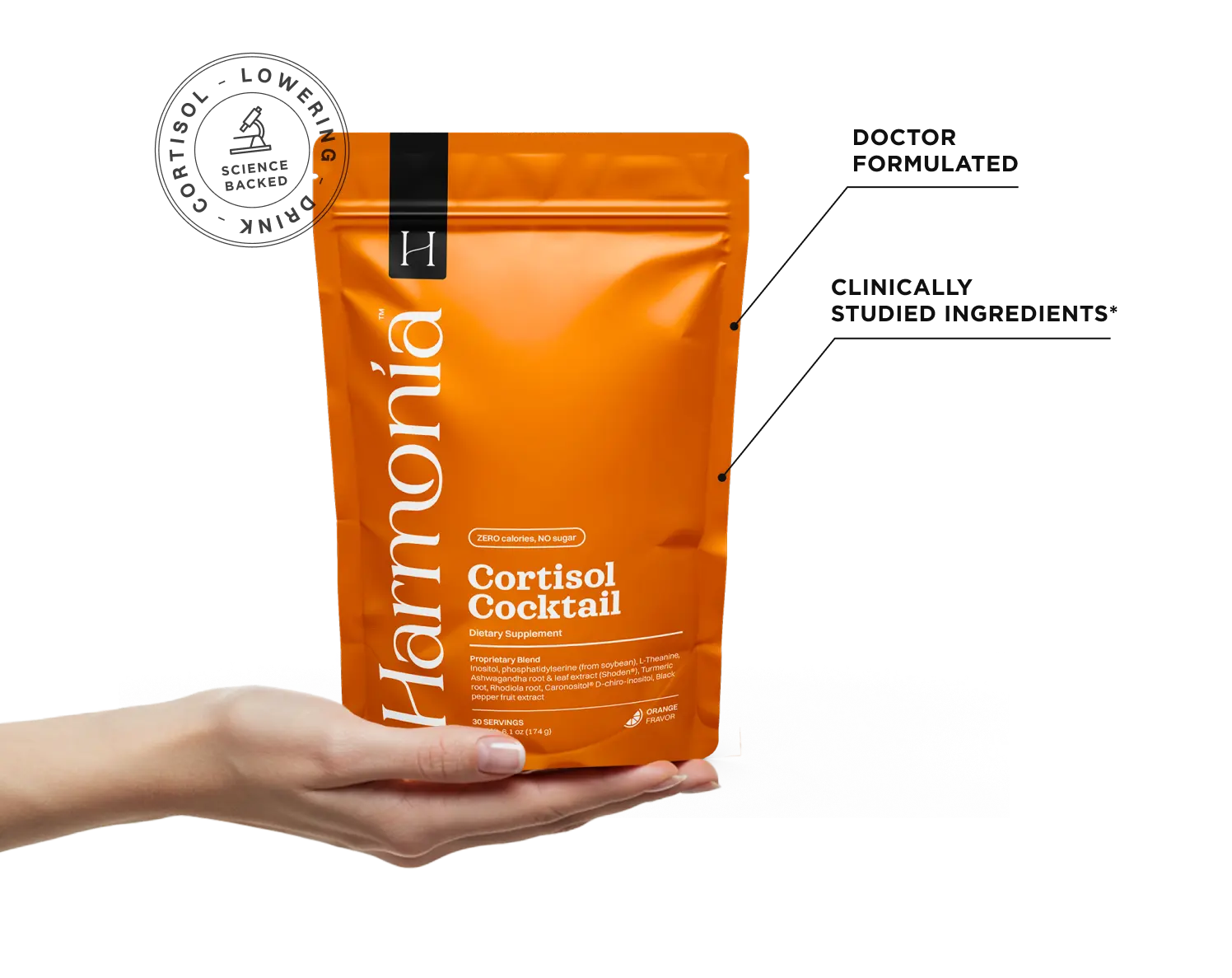
That is where Harmonia Cortisol Cocktail fits naturally into the conversation. Phosphatidylserine is one of the ingredients in Harmonia, and it works alongside other ingredients that support many of the same goals from different angles.
L-theanine helps support a calmer mental state, smoother focus, and an easier wind-down at night, which is especially helpful for people who feel mentally overstimulated. Rhodiola rosea is often used to support stress resilience, mental stamina, and steadier performance during demanding periods. Myo-inositol and D-chiro inositol help round out the formula with support for mood, steadier daily energy, and overall balance.
Taken together, that combination makes Harmonia feel less like a single-ingredient solution and more like a broader stress-support formula. In other words, phosphatidylserine strengthens the focus-and-recovery side of the blend, while the other ingredients help support better sleep, calmer evenings, steadier focus, and stronger day-to-night balance.
5. A More Practical Kind of Brain Support
One of the most useful things about phosphatidylserine is that its potential benefits feel practical.
People are not just asking whether it is good for the brain. They are asking:
- Will I feel more mentally steady during stressful periods?
- Can it help with focus without making me feel overstimulated?
- Might it support better evenings if stress is keeping me switched on?
- Does it make sense in a formula designed around cortisol balance and recovery?
Those are better questions, because they reflect how people actually use ingredients in real life.

Safety, Side Effects, and What to Keep in Mind
Phosphatidylserine is generally considered well tolerated, but that does not mean it should be treated casually.
As Cleveland Clinic notes, possible side effects may include upset stomach, gas, insomnia, headache, skin rash, mood changes, and low blood sugar in some cases. It also notes that adults commonly take about 100 to 200 mg daily depending on the reason for use, though individualized guidance matters.
A few practical points are worth keeping in mind:
- more is not always better
- timing may matter depending on your goal
- the source can matter, such as soy, fish, or sunflower-derived phosphatidylserine
- it is worth checking with a healthcare professional if you are pregnant, breastfeeding, or taking medications
That balanced approach matters because the best supplements are rarely the ones used impulsively. They are the ones used in a way that matches the goal.
A Simple Real-Life Example
Imagine you are dealing with a familiar loop: afternoon brain fog, too much caffeine to stay productive, a wired feeling at night, and sleep that never feels fully restorative. In that situation, the appeal of phosphatidylserine is not that it promises everything. It is that it fits logically into the pattern.
It may support cognition. It may support stress resilience. It may support a calmer evening rhythm. And when combined with other supportive habits, it can feel less like a random supplement and more like part of a smarter routine.
That is also why the complete cortisol cocktail guide is a relevant internal next step. It helps connect the dots between ingredients, stress patterns, and the kind of daily recovery people are actually trying to build.
Conclusion
The best way to think about phosphatidylserine benefits is not as a single promise, but as part of a pattern. This ingredient matters because it sits at the intersection of brain function, mental clarity, stress support, and sleep-related recovery.
For some people, the biggest benefit may be sharper concentration. For others, it may be calmer evenings or more stable cognitive performance during stressful periods. And for readers trying to support all of those areas at once, phosphatidylserine makes the most sense as part of a broader strategy rather than a standalone fix.
That is exactly why it fits so naturally into a formula like Harmonia Cortisol Cocktail. Phosphatidylserine is one of the ingredients, but it is not working alone. It is paired with other supportive compounds such as L-theanine for calm, focus, and smoother wind-downs, rhodiola rosea for stress resilience and mental stamina, and inositols for mood support, steadier energy, and better overall balance. Together, those ingredients create a more complete approach for people looking for better sleep, steadier daytime focus, calmer evenings, and stronger recovery.
FAQs
What is phosphatidylserine best known for?
It is best known for its role in brain cell membranes and its connection to memory, attention, focus, stress support, and sleep-related wellness.
Can phosphatidylserine help with focus?
It is often discussed as a focus-supportive ingredient because it may support attention and cognitive performance in certain contexts.
Can phosphatidylserine help with sleep?
It is not a sedative, but it is often discussed in relation to sleep because of its connection to stress support and evening recovery.
Is phosphatidylserine safe?
It is generally considered well tolerated, but it is still worth checking with a healthcare professional if you have medical concerns, take medication, or want personalized guidance.