
A sudden outbreak of raised, itchy welts on your skin can be alarming, especially when you cannot immediately identify a cause. Understanding the difference between stress hives vs allergy hives is not always straightforward, because both types look nearly identical and share the same underlying mechanism.
Yet the distinction matters. What triggered the outbreak determines how you treat it and how you prevent it from recurring.
What Are Hives? The Shared Biology Behind Both Types
Hives, medically known as urticaria, are raised, itchy welts that form when immune cells in the skin release histamine into surrounding tissue. Histamine causes small blood vessels beneath the skin to leak fluid, which pools and creates the characteristic swelling and redness seen on the surface.
This mechanism is the same whether hives are triggered by a food allergen, a medication, an insect sting, or a surge of psychological stress. Both types look the same.
This is precisely why distinguishing stress hives from allergy hives requires looking beyond how they look and focusing on when they appeared, what preceded them, and whether other symptoms accompanied them.
A study on urticaria lifetime prevalence found that approximately 15 to 25 percent of adults experience at least one episode of acute hives in their lifetime.
What Are Stress Hives?
_11zon.jpeg)
Stress hives are a physical reaction to emotional or psychological overload. When stress levels rise, the brain activates the body’s stress response, releasing cortisol and other signaling hormones.
These signals stimulate immune cells in the skin to release histamine and other inflammatory substances, leading to visible irritation.
A peer-reviewed review on stress and chronic urticaria confirmed that psychological stress can act as both a triggering factor and a modulating factor in hives, influencing how severely and how frequently they appear.
Stress does not just affect how you feel emotionally. It creates measurable skin inflammation.
This is why asking can stress cause hives has a clear scientific answer: yes, it can, and it does so through the same histamine pathway that drives allergic reactions.
What Do Stress Hives Look Like?
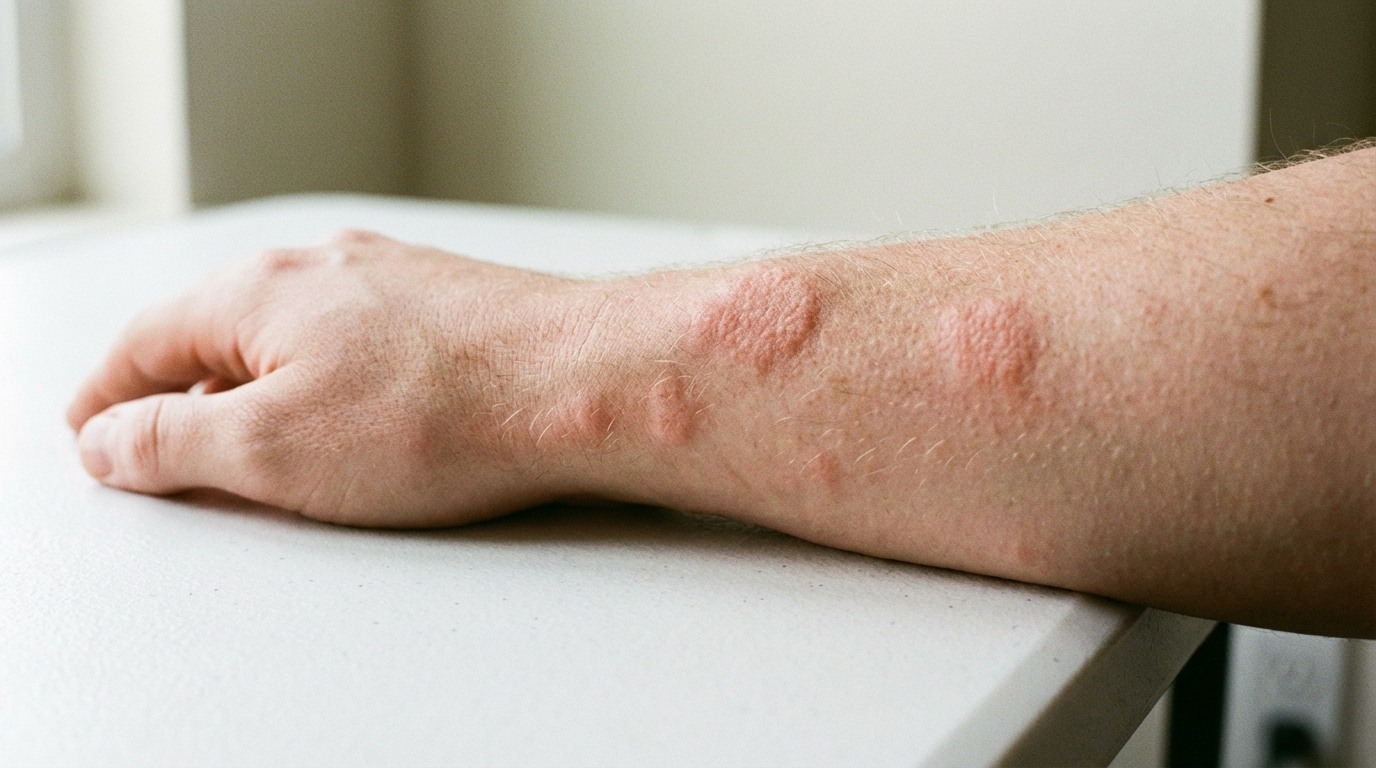
Stress hives present as raised, red or skin-coloured welts that are intensely itchy and may vary in size from a few millimetres to several centimetres. They often appear suddenly and can shift location, fading in one area and reappearing elsewhere within hours.
Individual hives typically resolve within 30 minutes to 24 hours, though new ones may continue to develop as long as the stress response remains active. Common locations include the neck, chest, face, and arms, though they can appear anywhere on the body.
The itching associated with hives from stress may intensify during periods of heightened anxiety or emotional tension, and may also worsen with heat or physical exertion.
Skin between the welts looks normal. Some people describe a burning sensation alongside the itch.
What Are Allergy Hives?
Allergy hives are triggered by the immune system's response to a specific external substance. When the body identifies an allergen as a threat, it activates immune cells in the skin that release histamine and other inflammatory chemicals.
The resulting welts are physically identical to those caused by stress.
Common hive triggers include foods like nuts, shellfish, eggs, and dairy, as well as medications such as penicillin, aspirin, and NSAIDs. Insect stings, latex, pollen, and pet dander can also cause reactions. In some cases, hives develop from direct skin contact rather than ingestion or inhalation.
Allergic hives tend to appear within minutes to a few hours of exposure to the trigger. They are often well-defined, may cluster near the area of contact, and typically persist until the allergen clears the body or antihistamine treatment reduces the histamine response. Recurrence is tied to re-exposure to the same allergen.
Stress Hives vs Allergy Hives: Side by Side
The Trigger
This is the most reliable distinguishing factor. Stress hives have no external cause. They appear during or shortly after a period of emotional strain, intense anxiety, grief, or physical exhaustion with no exposure to a new substance.
Allergy hives follow direct contact with a specific allergen, whether eaten, touched, inhaled, or injected.
The Timing
Allergy hives typically appear within minutes to two hours of exposure. The onset is often rapid and predictable once the trigger is identified.
Stress hives can appear more gradually, building over hours as the stress response intensifies, or they may appear suddenly during a peak moment of anxiety or emotional distress.
If your hives keep returning without a clear environmental or dietary trigger, and they tend to coincide with demanding periods in your life, stress is a strong candidate.
Accompanying Symptoms
Allergy hives frequently appear alongside other allergic symptoms: a runny or itchy nose, watery eyes, sneezing, swelling of the lips or eyelids, or in more severe cases, difficulty breathing or signs of a serious allergic reaction.
These systemic symptoms point clearly to an immune response to an external allergen.
Stress hives, by contrast, are accompanied by stress-related symptoms rather than allergic ones. These may include tension headaches, disrupted sleep, digestive discomfort, muscle tightness, or a general sense of anxiety or mental fatigue.
The connection between cortisol and skin symptoms is well documented, and skin reactions are among the more visible downstream effects of a chronically activated stress response.
Duration and Pattern
Individual hives from both causes tend to fade within 24 hours. The key difference lies in the overall pattern. Allergy hives resolve completely once the allergen clears the system and do not return unless the person is re-exposed.
Stress hives may continue for several days if the underlying stress persists, with new welts appearing as old ones fade. If hives last longer than six weeks, the condition is classified as chronic urticaria.
Chronic hives are rarely allergic. They are more frequently linked to autoimmune factors, infections, or sustained psychological stress. Persistent or frequently recurring hives always warrant evaluation by a healthcare provider.
Why Chronic Stress Makes Hives Worse
The relationship between cortisol and hives is more complex than a simple cause and effect. In the short term, cortisol actually has anti-inflammatory properties. It suppresses immune overactivity and moderates the histamine response, which is why a single stressful event does not always cause hives.
The problem arises with chronic or sustained stress. When cortisol remains elevated over extended periods, the body's sensitivity to its own anti-inflammatory signals diminishes.
A study linking anxiety and acute urticaria found that psychological stress activates the stress response system, releasing hormones that directly stimulate immune cells in the skin to release histamine. The longer stress persists, the lower the reaction threshold.
Someone who rarely gets hives under normal circumstances may find they break out repeatedly during prolonged periods of stress because their skin's immune threshold has effectively been lowered.
Recognising the broader symptoms of cortisol imbalance is often the first step in understanding why stress-related skin reactions keep recurring.
For those whose stress-related flare-ups keep returning, the Harmonia Cortisol Cocktail is a daily cortisol support drink designed to work at the source. By helping lower the chronic cortisol elevation that reduces the skin's immune threshold, it addresses the reason hives keep appearing rather than just the symptoms they leave behind.

How to Manage and Prevent Stress Hives
The most effective long-term approach to managing hives from stress is addressing the stress response itself, not just the skin symptoms. Antihistamines provide short-term relief by blocking histamine activity, but they do not address the underlying stress activation that is driving the mast cell response.
Immediate Relief
- Antihistamines. Over-the-counter options such as cetirizine or loratadine can reduce itching and help individual welts fade more quickly. Non-drowsy formulations are suitable for daytime use.
- Cool compresses. Applying a cool, damp cloth to affected areas reduces local inflammation and soothes the itching sensation. Heat worsens histamine release, so warm showers or baths should be avoided during an outbreak.
- Loose clothing. Tight or rough fabrics can physically aggravate hives and worsen the itch. Loose, breathable cotton reduces friction and allows the skin to recover more comfortably.
- Avoid scratching. Scratching worsens local histamine release and can extend the duration and spread of the outbreak. Cool compresses help manage the urge without aggravating the skin.
Long-Term Prevention
Because stress hives are rooted in the body's stress response, sustainable prevention requires managing cortisol levels and nervous system reactivity over time.
- Consistent sleep. Sleep directly regulates the cortisol rhythm. Chronically disrupted or insufficient sleep keeps cortisol elevated, which lowers the threshold for stress-related skin reactions. Prioritising 7 to 9 hours of consistent sleep is one of the highest-impact changes you can make.
- Regular physical activity. Moderate exercise is one of the most reliable ways to discharge accumulated stress hormones and reset cortisol patterns. High-intensity training late in the evening can have the opposite effect and should be timed carefully.
- Breathwork and mindfulness. Slow, diaphragmatic breathing directly activates the calming side of the nervous system and lowers cortisol reactivity. Even five minutes of structured breathing practice during a stressful moment can reduce the peak of the stress response.
- Nutritional support. Certain nutrients play a documented role in moderating cortisol and adrenal function. Magnesium, Ashwagandha, and Phosphatidylserine have clinical support for reducing the body's stress response reactivity. Understanding how to lower cortisol quickly can be especially useful during periods of acute stress.
The Harmonia Cortisol Cocktail combines Ashwagandha, L-Theanine, Rhodiola Rosea, Phosphatidylserine, and Myo-Inositol in a single daily drink formulated to support lower cortisol and more balanced stress reactivity.
Addressing the hormonal root of stress hives, rather than only treating the skin, is the approach most likely to produce lasting results.
When to See a Doctor
Most hives resolve on their own or with over-the-counter antihistamines and do not require medical attention. However, there are circumstances where prompt evaluation is necessary.
- Hives last longer than six weeks.
- Hives are accompanied by swelling of the face, lips, tongue, or throat.
- Hives are accompanied by difficulty breathing, chest tightness, or dizziness.
- Hives recur frequently without an identified trigger.
- Antihistamines provide no relief.
Conclusion
The difference between stress hives and allergy hives comes down to the trigger. While both involve histamine, allergy hives are driven by external allergens, while stress hives reflect an internal stress response.
If your hives tend to appear during stressful periods without a clear trigger, it may be a sign your body is struggling to regulate cortisol effectively.
Short-term relief like antihistamines can help manage symptoms. But lasting change comes from addressing the root cause through better stress regulation, sleep, movement, and nutrition.
Take the Harmonia quiz to see how the Harmonia Cortisol Cocktail can help reduce the stress reactivity that keeps triggering your symptoms and whether it is the right fit for where you are right now.
Frequently Asked Questions
Can stress cause hives?
Yes. When the body experiences significant psychological or emotional stress, it activates the stress response system and releases hormones that directly stimulate immune cells in the skin to release histamine, producing the raised welts characteristic of hives.
This is the same biological mechanism behind allergic hives, but the trigger is internal rather than external.
What do stress hives look like?
Stress hives look identical to allergic hives: raised, red or skin-coloured welts that are intensely itchy and may range from a few millimetres to several centimetres in size. They often appear suddenly, may shift location across the body, and individual welts typically fade within 24 hours.
They most commonly appear on the neck, chest, face, and arms, though they can develop anywhere.
How long do stress hives last?
Individual stress hives typically resolve within 30 minutes to 24 hours. However, new hives may continue forming as long as the stress response remains active, meaning an outbreak can last several days.
If hives persist beyond six weeks, the condition is classified as chronic urticaria and should be evaluated by a healthcare provider.
How do I know if my hives are from stress or an allergy?
The most reliable indicator is the context surrounding the outbreak. If your hives appeared after eating a new food, taking a new medication, or being stung by an insect, allergy is the more likely cause.
If no new substance was involved but you are going through a demanding or emotionally difficult period, stress is the more probable trigger.
Accompanying symptoms also help: allergy hives often come with a runny nose, watery eyes, or swelling, while stress hives tend to be accompanied by tension, disrupted sleep, or digestive discomfort.
Are stress hives dangerous?
Stress hives are generally not dangerous on their own. They are uncomfortable but not harmful. However, if hives are accompanied by swelling of the face or throat, difficulty breathing, or dizziness, these are signs of a severe reaction requiring immediate emergency care.
Recurrent stress hives that do not respond to antihistamines should be evaluated by a doctor.
What is the fastest way to get rid of stress hives?
For immediate relief, an over-the-counter antihistamine such as cetirizine or loratadine is the most effective option. Cool compresses applied to the affected area can also reduce itching and inflammation quickly.
For sustained relief, addressing the underlying stress response through sleep, movement, and cortisol-supporting practices will reduce the frequency and severity of future outbreaks.
References
- Zuberbier, T., et al. (2010). Epidemiology of urticaria: a representative cross-sectional population survey. Clinical and Experimental Dermatology. Link
- Tomaszewska, K., et al. (2023). Neuro-Immuno-Psychological Aspects of Chronic Urticaria. International Journal of Molecular Sciences, 24(9). Link
- Grzanka, A., et al. (2025). Anxiety and Nonpsychotic Mental Disorders in Acute Urticaria. Frontiers in Psychiatry. Link