
Adrenal fatigue is a popular explanation for exhaustion that sleep does not fix, brain fog, cravings, and low stress tolerance. The term gives one name to a scattered set of symptoms, which is part of its appeal.
Persistent fatigue deserves a careful evaluation, especially when it has lasted for weeks or changed what you can do. The Endocrine Society reports that adrenal fatigue has no scientific proof, accepted diagnostic criteria, or validated test.
Routine labs may be only the first pass. Sleep apnea, iron deficiency without anemia, thyroid disease, depression, perimenopause, medication effects, ME/CFS, long COVID, and true adrenal insufficiency can overlap with the symptoms people call adrenal fatigue.
Is adrenal fatigue real?
Adrenal fatigue is an unsupported theory that chronic stress exhausts the adrenal glands. Major endocrine organizations do not recognize it, and no validated blood, saliva, or urine test diagnoses it. Chronic stress can affect sleep, mood, appetite, and stress-response signaling, while persistent fatigue may come from several medical, psychological, medication-related, or post-viral causes.
What does adrenal fatigue mean?
The adrenal fatigue theory says prolonged stress overworks the adrenal glands until they can no longer produce enough cortisol. Supporters use that theory to explain tiredness, poor sleep, salt or sugar cravings, brain fog, and difficulty coping with ordinary demands.
Cortisol is one of the body's main stress-response hormones, and chronic stress can affect many systems. The proposed gland-exhaustion mechanism has not held up in research. A 2016 systematic review in BMC Endocrine Disorders examined 58 studies and found no substantiation for adrenal fatigue as a medical condition.
A 2025 review in the Journal of the Endocrine Society classified adrenal fatigue among pseudo-endocrine disorders because the proposed condition lacks proof, diagnostic standards, and evidence-based treatment. The review also warned that non validated cortisol profiles and hormone-containing products can create real harm.
Adrenal fatigue vs. adrenal insufficiency
Adrenal insufficiency is a recognized endocrine disorder. Its causes, testing, treatment, and risks are different from the adrenal fatigue theory.
Primary adrenal insufficiency, also called Addison's disease, begins in the adrenal glands. Central adrenal insufficiency begins in the pituitary or hypothalamus, and aldosterone usually remains intact. Skin darkening and salt craving are more closely associated with primary adrenal insufficiency, where aldosterone can also be deficient.
Symptoms that need a wider evaluation
The symptom pattern can guide the first clinical questions. Use this table to prepare for an appointment rather than to diagnose yourself.

Sleep disorders
Sleep apnea can appear as fatigue, insomnia, morning headaches, poor concentration, or daytime sleepiness. Loud snoring can be a clue, but its absence does not rule out a sleep disorder.
Iron deficiency
Iron deficiency can contribute to fatigue before anemia develops. A normal hemoglobin result does not rule it out. The World Health Organization recommends ferritin as a marker of iron stores, interpreted alongside health status and inflammation. WHO guidance on ferritin testing supports checking iron stores rather than relying on a complete blood count alone.
Heavy periods, frequent blood donation, pregnancy, gastrointestinal conditions, and low iron intake can raise the likelihood of deficiency. Iron supplements also carry risks, so testing and individualized advice matter.
Thyroid disease
Hypothyroidism can cause fatigue, cold intolerance, constipation, dry skin, hair changes, depression, and menstrual changes. Symptoms alone cannot confirm it, so diagnosis relies on clinical assessment and thyroid blood testing.
If fatigue and temperature sensitivity have been building for months, how cortisol and thyroid function interact gives more context. A thyroid diagnosis still depends on appropriate medical testing, not a cortisol theory.
Depression and anxiety
Depression can affect energy, concentration, sleep, appetite, and daily function. It is assessed through symptoms, duration, impairment, medical history, and clinical judgment rather than one laboratory result.
Anxiety and sustained stress can also interrupt sleep and leave you physically depleted. A mental-health evaluation belongs in a full fatigue workup without implying that physical symptoms are imagined.
Perimenopause
Perimenopause involves changing and fluctuating ovarian hormones. Hot flashes, night sweats, mood changes, sleep disruption, forgetfulness, and difficulty concentrating can all add up to persistent fatigue.
A single hormone measurement may not capture a fluctuating transition. Menstrual history, age, symptoms, medication use, and other possible causes help guide the assessment.

ME/CFS, long COVID, and post-exertional malaise
Fatigue that becomes markedly worse 12 to 48 hours after physical, mental, or emotional effort deserves special attention. The CDC identifies this delayed worsening, called post-exertional malaise, as a core feature of ME/CFS. CDC guidance on ME/CFS symptoms also includes unrefreshing sleep, cognitive problems, and orthostatic intolerance.
People with this pattern can deteriorate when they repeatedly push through activity. The CDC recommends activity management, often called pacing, to reduce symptom flares while a clinician evaluates the broader picture.
Burnout and chronic stress
Burnout is an occupational pattern linked to chronic workplace stress. It can involve exhaustion, mental distance or cynicism toward work, and reduced professional effectiveness, so the term is best kept within the work context.
Stress outside work can also drain energy through sleep loss, persistent arousal, reduced appetite or overeating, pain, and changes in daily habits. The broader comparison of acute stress versus chronic stress explains the time course without treating burnout as an adrenal disease.
Medication effects
Antihistamines, sleep medicines, some blood pressure drugs, sedating psychiatric medicines, alcohol, and other substances can contribute to daytime fatigue. A complete medication and supplement list helps a clinician spot timing, dose, and interaction issues.
Glucocorticoids need separate attention because they can suppress the hypothalamic-pituitary-adrenal axis. Prednisone, prednisolone, dexamethasone, methylprednisolone, repeated injections, and high-dose inhaled or topical exposure can matter depending on dose, duration, route, and individual susceptibility.
How chronic stress can affect energy without exhausting the adrenal glands
_11zon.png)
Chronic stress can affect energy through sleep disruption, sympathetic nervous-system activation, mood changes, pain, appetite shifts, and behavior. Cortisol is one part of that response, alongside adrenaline, autonomic signaling, immune activity, and other hormones.
Cortisol normally follows a daily pattern, with higher levels around waking and lower levels later in the day. The pattern varies with sleep timing, illness, medication, sample collection, and the laboratory method used.
There is no single cortisol curve that explains persistent exhaustion. A cortisol result only becomes useful when it is collected and interpreted for a specific clinical question.
If you want the broader physiology, how daily habits affect cortisol covers sleep, light, food timing, movement, and recovery. Use those habits as supportive inputs, not as proof of a cortisol disorder.
Is there a test for adrenal fatigue?
No validated blood, saliva, urine, hair, or questionnaire-based test diagnoses adrenal fatigue. Cortisol changes across the day and responds to illness, medication, sleep, food, exercise, and the stress of the test itself.
The Endocrine Society warns that saliva and blood panels sold for adrenal fatigue lack a scientifically accepted condition to confirm. Testing becomes useful when a clinician is answering a specific question, such as suspected adrenal insufficiency or excess cortisol.
Before paying for a cortisol panel, ask which recognized condition the result is meant to confirm or exclude, what timing is required, and how the answer would change your care.
How is adrenal insufficiency diagnosed?
A clinician starts with symptoms, medical history, medication exposure, physical findings, and blood testing. Morning cortisol and ACTH can help frame the question, and the ACTH stimulation test is the most commonly used confirmatory test for adrenal insufficiency. The NIDDK explains how ACTH stimulation testing works.
Additional testing may be needed to identify primary, central, or medication-induced disease. Results depend on timing, the cortisol assay, recent glucocorticoid exposure, illness, and the clinical context, so one isolated “low-normal” value should not be interpreted as adrenal fatigue.
Unintentional weight loss, repeated nausea or abdominal pain, low blood pressure, fainting, severe weakness, or symptoms after glucocorticoid reduction deserve prompt medical attention. Skin darkening and strong salt craving raise more concern for primary adrenal insufficiency. The guide to adrenal fatigue symptoms and medical warning signs can help you organize what to report.
Fatigue after reducing prednisone or another steroid needs medical assessment
Glucocorticoid-induced adrenal insufficiency is a recognized medication-related disorder. Long-term or sufficiently high exposure can suppress the body's own cortisol production, and recovery varies widely between people.
The 2024 joint guideline from the European Society of Endocrinology and the Endocrine Society states that risk depends on dose, duration, potency, route, and individual susceptibility. Withdrawal symptoms can overlap with adrenal insufficiency, which makes clinician-managed tapering essential.
Do not change or stop a prescribed glucocorticoid on your own. Severe weakness, vomiting, diarrhea, fainting, confusion, or low blood pressure during or after a taper requires urgent medical advice.
Do adrenal fatigue supplements work?
No supplement has been shown to treat a condition called adrenal fatigue. Some individual ingredients have human research on perceived stress, acute stress responses, or fatigue, and the strength of that evidence varies considerably.
The evidence levels below consider study design, sample size, replication, product specificity, duration, and whether the outcome directly matches persistent fatigue.
Ashwagandha
A 2024 systematic review and meta-analysis included nine randomized trials with 558 participants. Ashwagandha formulations were associated with lower perceived-stress, anxiety, and serum-cortisol measures compared with placebo. The authors also identified variation in formulations, doses, populations, and study methods.
NCCIH states that short-term use may be tolerated by some adults, while long-term safety remains unclear. Pregnancy, breastfeeding, thyroid disease, autoimmune disease, upcoming surgery, sedatives, anticonvulsants, thyroid medicine, blood-pressure medicine, and diabetes medicine require caution. Rare liver injury has also been reported.
Rhodiola rosea
Rhodiola has been studied for physical and mental fatigue, but results are inconsistent and many trials have important design or reporting limitations.
Results from one standardized extract should not be carried across every rhodiola product. Extract composition, dose, medication use, and health status can change the safety and relevance of the evidence.
L-theanine
Small short-term trials have tested isolated L-theanine for stress, attention, sleep, and salivary cortisol. Results are mixed, samples are small, and the findings often apply to a specific dose or branded ingredient.
That evidence supports cautious language rather than a broad cortisol-lowering claim.
Adrenal glandular products
Adrenal glandular and “adrenal support” products carry a different risk. A 2018 study tested 12 over-the-counter products. All contained detectable triiodothyronine, and most contained at least one steroid hormone.
Undeclared hormones can interfere with thyroid and adrenal function. Avoid products with animal adrenal tissue, undisclosed amounts, proprietary glandular blends, or claims that they rebuild adrenal glands.
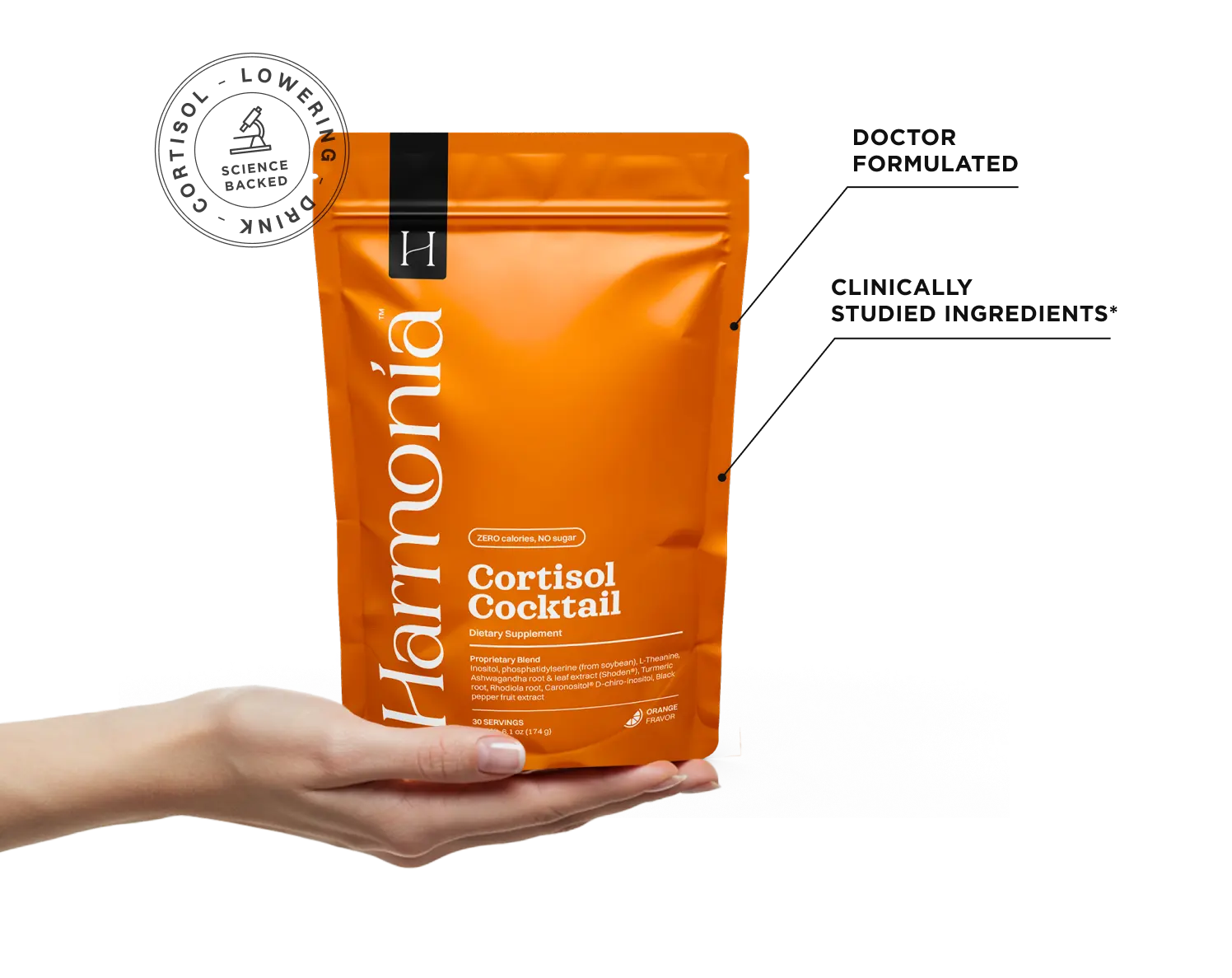
Ashwagandha, rhodiola rosea, and L-theanine are among the ingredients listed on Harmonia's ingredients page. The findings above apply to specific ingredients, extracts, doses, and study populations. They do not establish the effect of a finished multi-ingredient formula.
What can help persistent fatigue?
Treatment follows the cause. Sleep apnea needs sleep-specific care. Iron deficiency requires confirmation and a plan that addresses the reason iron stores are low. Thyroid disease, depression, perimenopausal symptoms, medication effects, and adrenal insufficiency each have their own clinical pathways.
Supportive habits still matter. Regular sleep timing, adequate food and fluids, caffeine timing, stress-reduction practices, and movement matched to your current capacity can reduce avoidable strain.
Activity advice needs one safety check: a delayed crash after exertion is a reason to stop pushing through. If symptoms worsen 12 to 48 hours after ordinary physical or mental activity, discuss post-exertional malaise, ME/CFS, or long COVID with a clinician and use pacing principles while the cause is assessed.
When symptoms need urgent care
Seek urgent medical care for severe weakness, repeated vomiting or diarrhea, confusion, fainting, very low blood pressure, or sudden severe abdominal or back pain, especially with known or suspected adrenal insufficiency or recent glucocorticoid use.
The 2024 glucocorticoid guideline advises clinicians to consider adrenal crisis in current or recent glucocorticoid users who develop hemodynamic instability, vomiting, or diarrhea before recovery of the HPA axis has been confirmed. Emergency treatment should not wait for a wellness supplement or home cortisol test.
Where Harmonia fits
Persistent fatigue is rarely caused by one thing, which is why this guide focuses on identifying the most likely explanation before reaching for a supplement. Once serious medical conditions, medication effects, and common nutrient deficiencies have been considered, many people are left dealing with the day-to-day impact of ongoing stress on their sleep, energy, focus, and resilience.
That's where Harmonia may fit into your routine.
The Harmonia Cortisol Cocktail brings together ingredients with human research for supporting stress-related wellbeing, including ashwagandha, rhodiola rosea, L-theanine, myo-inositol, magnesium, vitamin C, and B vitamins. Rather than promising to "repair" adrenal glands, the formula is designed to support the body's normal response to everyday stress while complementing healthy sleep, balanced nutrition, and other lifestyle habits.
Like all dietary supplements, Harmonia should be viewed as part of a broader wellness plan not as a replacement for medical assessment or treatment when symptoms suggest adrenal insufficiency, thyroid disease, iron deficiency, perimenopause, or another underlying condition.
%20(1).jpeg)
The bottom line
Adrenal fatigue has no accepted diagnosis or validated test. Persistent exhaustion deserves a broader look at sleep, iron status, thyroid function, mood, perimenopause, medication exposure, post-viral illness, and adrenal insufficiency when the symptoms fit.
Bring a clear symptom timeline and medication history to the appointment. That information gives a clinician a better starting point than a commercial adrenal panel.
If persistent fatigue sits alongside a sustained stress load and you have already worked through the basic medical questions, you can take the quiz to see whether the Harmonia Cortisol Cocktail fits where you are right now.
References
- Endocrine Society. (2022). Adrenal fatigue. Link
- Cadegiani, F. A., & Kater, C. E. (2016). Adrenal fatigue does not exist: A systematic review. BMC Endocrine Disorders, 16, 48. Link
- McDermott, M. T. (2025). Pseudo-endocrine disorders: Recognition, management, and action. Journal of the Endocrine Society, 9(1), bvae226. Link
- World Health Organization. (2020). WHO guideline on use of ferritin concentrations to assess iron status in individuals and populations. Link
- Centers for Disease Control and Prevention. (2024). Symptoms of ME/CFS. Link
- National Institute of Diabetes and Digestive and Kidney Diseases. Diagnosis of adrenal insufficiency and Addison’s disease. Link
- Beuschlein, F., Else, T., Bancos, I., et al. (2024). European Society of Endocrinology and Endocrine Society joint clinical guideline: Diagnosis and therapy of glucocorticoid-induced adrenal insufficiency. The Journal of Clinical Endocrinology & Metabolism, 109(7), 1657–1683. Link
- Arumugam, V., Vijayakumar, V., Balakrishnan, A., et al. (2024). Effects of ashwagandha (Withania somnifera) on stress and anxiety: A systematic review and meta-analysis. Explore, 20(6), 103062. Link
- National Center for Complementary and Integrative Health. Ashwagandha: Usefulness and safety. Link
- Akturk, H. K., Chindris, A. M., Hines, J. M., Singh, R. J., & Bernet, V. J. (2018). Over-the-counter “adrenal support” supplements contain thyroid and steroid-based adrenal hormones. Mayo Clinic Proceedings, 93(3), 284–290. Link