Your stress levels have been climbing for months, affecting your sleep, mood, and overall sense of wellbeing. Traditional stress management techniques like meditation and breathing exercises help somewhat, but you're looking for additional support to calm your overwhelmed nervous system.
You've heard about reishi mushroom as a natural stress remedy. Friends mention improved sleep and calmer moods. However, you wonder whether the benefits have scientific backing or simply reflect wellness trends and clever marketing.
But, does reishi lower cortisol? Emerging research suggests this adaptogenic mushroom may support healthy stress hormone regulation. Mushroom blends including reishi significantly reduced cortisol levels by 4.4% at 6 weeks and 5.5% at 12 weeks, while the placebo group showed almost no reduction.
Understanding reishi mushroom benefits requires examining the growing body of research on this ancient medicinal fungus. From sleep support to anxiety reduction, reishi offers multiple pathways for supporting your stress response.
What Is Reishi Mushroom?
Reishi (Ganoderma lucidum) is a medicinal mushroom used in Traditional Chinese Medicine for over 2,000 years. Known as the "mushroom of immortality," reishi has been valued for promoting longevity, vitality, and stress resilience.
This woody fungus grows on deciduous trees throughout Asia. While edible, reishi tastes extremely bitter and woody, making it unsuitable for culinary use. Instead, people consume it as tea, extract, powder, or capsules.
The mushroom contains bioactive compounds including:
- Polysaccharides supporting immune function
- Triterpenes with anti-inflammatory effects
- Peptidoglycans affecting cellular communication
- Beta-glucans modulating immune response
- Sterols supporting cardiovascular health
These compounds work synergistically to create reishi's adaptogenic effects. Adaptogens help your body respond to stress more effectively rather than simply masking symptoms. Learn more about adaptogenic herbs that help regulate cortisol naturally for comprehensive stress support.
Does Reishi Lower Cortisol?
The relationship between reishi and cortisol involves multiple mechanisms. Research suggests Ganoderma lucidum extract may inhibit cortisone-to-cortisol conversion, helping regulate stress hormone levels.
This mechanism differs from simply suppressing cortisol production. Reishi appears to modulate how your body processes cortisol, potentially preventing excessive activation while maintaining necessary stress response capacity.
The 2026 randomized controlled trial provides the strongest evidence to date. Participants taking the mushroom blend containing reishi experienced measurable cortisol reductions that increased over time. The progressive improvement suggests reishi works cumulatively rather than providing immediate effects.
However, limitations exist in current research. Most studies use reishi in combination with other mushrooms or compounds, making it difficult to isolate reishi's specific contribution. Dosing varies widely between studies. Long-term safety data remains limited.
Does reishi lower cortisol definitively? The evidence suggests it may help support healthy cortisol regulation, particularly when used consistently over weeks to months. It works best as part of comprehensive stress management rather than a standalone solution.
Reishi Mushroom Benefits for Sleep

Beyond cortisol effects, reishi mushroom benefits sleep through multiple pathways. Randomized controlled trials found Ganoderma lucidum improved sleep quality, increased sleep duration, and reduced insomnia symptoms.
Many people ask does reishi make you sleepy during the day. The mushroom doesn't typically cause drowsiness like sedating medications. Instead, it supports your natural sleep-wake cycle by helping regulate cortisol rhythm and calming nervous system activation.
How Reishi Supports Sleep
Reishi influences sleep through several mechanisms:
- Reduces cortisol elevation that interferes with falling asleep
- Calms central nervous system overactivation
- Supports GABA activity promoting relaxation
- Reduces inflammation that disrupts sleep architecture
- Helps regulate circadian rhythm timing
People using reishi often report falling asleep more easily and waking less frequently during the night. Sleep feels more restorative, leaving them refreshed rather than groggy upon waking.
The sleep benefits typically emerge after several weeks of consistent use rather than immediately. Patience and consistency prove essential for experiencing full effects.
Combining reishi with other sleep-supporting practices amplifies benefits. Quality sleep hygiene, stress management, and natural ways to support healthy cortisol levels and improve sleep work synergistically.
Reishi Mushroom for Anxiety
Reishi mushroom anxiety benefits appear across multiple studies. A double-blind placebo-controlled trial found reishi supplementation improved depression, life satisfaction, and quality of life.
The anxiety-reducing effects likely stem from multiple pathways. Reishi's cortisol-modulating properties help prevent the excessive stress hormone elevation that intensifies anxious feelings. The mushroom also appears to influence neurotransmitter systems involved in mood regulation.
Mechanisms for Anxiety Relief
Reishi supports calmer mood through:
- Modulating cortisol and stress hormone balance
- Supporting GABA receptors that promote relaxation
- Reducing inflammatory cytokines affecting mood
- Protecting neurons from stress-induced damage
- Improving sleep quality that stabilizes emotions
People experiencing chronic stress often notice subtle mood improvements within weeks of starting reishi. Anxious thoughts become less intrusive. Stress feels more manageable. Emotional reactivity decreases.
The benefits work gradually rather than providing immediate anxiety relief like prescription medications. Reishi supports your nervous system's natural regulation rather than forcing changes through pharmaceutical mechanisms.
Additional Reishi Mushroom Benefits
What is reishi mushroom good for beyond stress and sleep? Research demonstrates multiple health-supporting properties.
Immune System Support
Reishi's polysaccharides and beta-glucans modulate immune function. The mushroom helps balance immune response rather than simply boosting it indiscriminately.
This matters particularly during chronic stress when immune function often becomes impaired. Reishi may help maintain healthy immune activity despite stress-related suppression.
Anti-Inflammatory Effects
The triterpenes in reishi demonstrate anti-inflammatory properties across multiple body systems. Chronic inflammation worsens stress response and contributes to numerous health conditions.
By reducing systemic inflammation, reishi potentially supports cardiovascular health, metabolic function, and overall wellbeing. The anti-inflammatory effects complement stress-reduction benefits.
Antioxidant Protection
Reishi contains compounds that neutralize free radicals and reduce oxidative stress. This protection matters because chronic stress increases oxidative damage throughout your body.
The antioxidant properties help protect cells from stress-induced aging and dysfunction. This may explain some of reishi's traditional reputation for promoting longevity.
Blood Sugar Regulation
Some research suggests reishi may help support healthy blood glucose levels. This becomes relevant because cortisol elevation often disrupts blood sugar regulation.
Stable blood sugar prevents the cortisol spikes triggered by hypoglycemia. Supporting glucose balance creates a positive feedback loop for stress management.
How to Use Reishi for Cortisol Support

Maximizing reishi mushroom benefits requires understanding proper dosing, timing, and formulation selection.
Choosing Quality Reishi Products
Look for products specifying Ganoderma lucidum with standardized extracts. Hot water extraction or dual extraction (hot water plus alcohol) provides the most comprehensive compound profile.
Third-party testing verifies purity and absence of contaminants. Mushrooms absorb compounds from their environment, making clean growing conditions essential.
Organic certification ensures the mushrooms weren't grown with pesticides or exposed to industrial pollutants.
Effective Dosing
Research studies typically use 1,000 to 3,000 mg daily of reishi extract. Most commercial products provide 500 to 1,500 mg per serving.
Start with lower doses and gradually increase to assess tolerance. Some people experience mild digestive upset initially that typically resolves within days.
Take reishi consistently for at least 6 to 8 weeks before evaluating effectiveness. The cortisol-modulating effects build over time rather than working immediately.
Optimal Timing
Reishi can be taken morning or evening depending on your primary goals. For sleep support, take it 1 to 2 hours before bed. For daytime stress management, morning dosing works well.
Some people split dosing, taking half in the morning and half in the evening. This maintains steady blood levels throughout the day.
Consistency matters more than specific timing. Choose a schedule you can maintain long-term.
Combining with Other Adaptogens
.webp)
Reishi works synergistically with other adaptogenic herbs. Understanding how adaptogens support stress resilience and hormone balance helps you create comprehensive support.
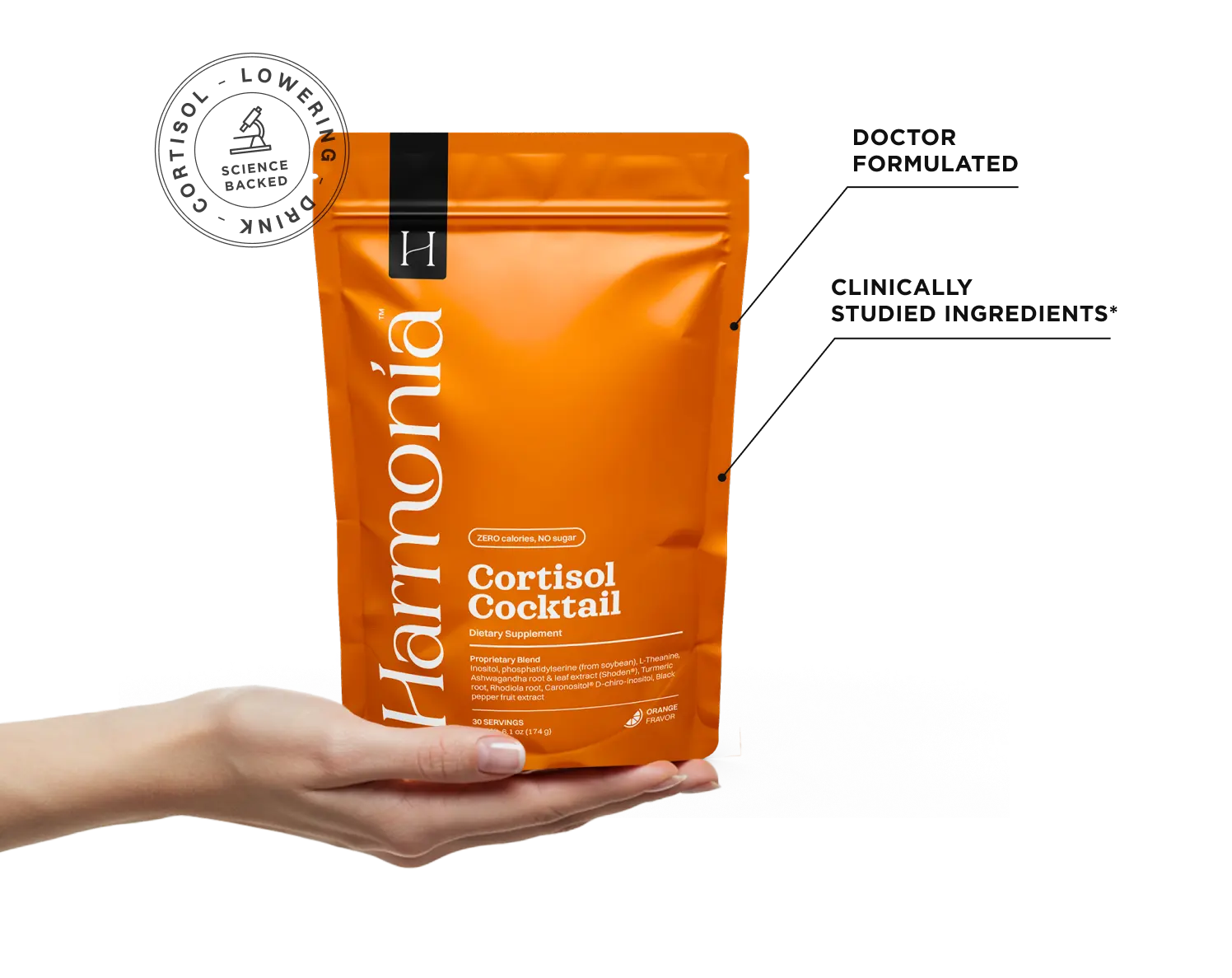
Harmonia is formulated to provide comprehensive stress and cortisol support through multiple adaptogens and nutrients. While it doesn't contain reishi, the formula includes ashwagandha, rhodiola rosea, and L-theanine that work through complementary pathways.
Rhodiola builds stress resilience and prevents burnout. L-theanine promotes calm focus without drowsiness.
The formula also includes myo-inositol and D-chiro inositol for insulin sensitivity, magnesium for nervous system support, and vitamin D for mood and immune health.
By targeting stress-related pathways through multiple mechanisms, Harmonia helps people experiencing symptoms of chronic stress. When combined with reishi supplementation, the synergistic approach addresses cortisol regulation comprehensively.
Supporting healthy stress response requires consistency over time. A daily routine combining targeted supplementation with stress management, quality sleep, and balanced nutrition produces the best results.
Ready to support your stress response comprehensively? Take the Harmonia quiz to discover if this formula fits your needs.
Safety and Side Effects
Reishi mushrooms benefits generally come with minimal side effects when used appropriately. However, certain considerations matter.
Common Side Effects
Most people tolerate reishi well. Occasional mild effects include:
- Digestive upset or loose stools initially
- Dry mouth or throat
- Mild dizziness in some individuals
- Skin rash in rare cases
These typically resolve within a few days as your body adjusts. Starting with lower doses and gradually increasing minimizes initial reactions.

Who Should Avoid Reishi
Certain populations should exercise caution or avoid reishi:
- People taking blood thinners (reishi may increase bleeding risk)
- Those scheduled for surgery (discontinue 2 weeks prior)
- Individuals with bleeding disorders
- People taking immunosuppressants
- Pregnant or breastfeeding women (safety not established)
Reishi may interact with blood pressure medications, diabetes drugs, and chemotherapy. Consult healthcare providers before combining reishi with prescription medications.
Quality and Contamination Concerns
Mushrooms absorb heavy metals and toxins from their environment. Poor quality reishi products may contain contaminants.
Choose products from reputable manufacturers using third-party testing. Verify the product specifically contains Ganoderma lucidum rather than other mushroom species marketed as reishi.
Conclusion
Does reishi lower cortisol? Emerging research suggests this adaptogenic mushroom may help support healthy cortisol regulation through multiple mechanisms. Studies show promising results for stress reduction, sleep improvement, and anxiety relief.
Reishi mushroom benefits extend beyond cortisol to include immune support, anti-inflammatory effects, and antioxidant protection. The mushroom offers multiple pathways for supporting overall health and stress resilience.
For comprehensive stress and cortisol support, consider Harmonia, which combines adaptogens like ashwagandha and rhodiola with key nutrients for hormonal balance.
Remember that no single supplement replaces the foundation of stress management, quality sleep, balanced nutrition, and healthy lifestyle. Reishi works best when integrated into comprehensive wellness practices.
FAQs About Reishi and Cortisol
Does reishi lower cortisol levels?
Research suggests does reishi lower cortisol through modulating cortisone-to-cortisol conversion and supporting stress response regulation. A 2026 study found a mushroom blend containing reishi reduced cortisol by 4.4% at 6 weeks and 5.5% at 12 weeks. Effects build gradually over consistent use rather than working immediately.
Does reishi make you sleepy?
Does reishi make you sleepy during the day? No, reishi doesn't typically cause daytime drowsiness like sedating medications. Instead, it supports natural sleep-wake cycles by helping regulate cortisol rhythm and calming nervous system activation. People report better sleep quality without morning grogginess.
What are the main reishi mushroom benefits?
Reishi mushroom benefits include supporting healthy cortisol regulation, improving sleep quality and duration, reducing stress and anxiety, providing immune system support, offering anti-inflammatory effects, and protecting against oxidative stress. Research shows improvements in quality of life and mood across multiple studies.
Is reishi mushroom good for anxiety?
Yes, reishi mushroom for anxiety shows promise in research. A double-blind placebo-controlled trial found reishi supplementation improved depression, life satisfaction, and quality of life. The anxiety-reducing effects likely stem from cortisol modulation, GABA support, and reduced inflammation affecting mood.
How does reishi help with sleep?
Reishi mushroom benefits sleep through multiple pathways including reducing cortisol elevation that interferes with falling asleep, calming central nervous system overactivation, supporting GABA activity, reducing inflammation, and helping regulate circadian rhythm. Sleep improvements typically emerge after several weeks of consistent use.
What is reishi mushroom good for?
Beyond stress and sleep support, reishi provides immune system modulation, anti-inflammatory effects, antioxidant protection, potential blood sugar regulation, and cardiovascular support. Traditional medicine values it for promoting longevity, vitality, and overall resilience.