The hormone detox kit your favorite wellness account recommended costs real money and has no published evidence showing it can rebalance your hormones.
That matters, because the promise is tempting. A 3-day reset sounds much easier than looking at sleep, blood sugar, stress load, alcohol, plastics, and the messy middle of perimenopause.
Your body already has systems for processing hormones. Your liver, kidneys, gut, lungs, skin, and lymphatic system are working all day, whether you bought the cleanse or skipped it.
The straight answer is this: commercial hormone detoxes don't fix hormone regulation. The useful work is slower, less dramatic, and much more physiological.
Quick Answer
Hormone detox kits do not have good clinical evidence showing they can rebalance estrogen, reset cortisol, or cleanse your endocrine system. Your body already processes hormones through the liver, kidneys, gut, and other systems.
The more useful path is supporting sleep rhythm, blood sugar stability, stress recovery, fiber intake, liver health, and targeted supplementation when the mechanism is clear.
What "hormone detox" actually means
A hormone detox usually claims to clear excess estrogen, reset cortisol, flush the liver, or support a hormone cleanse through powders, teas, capsules, juices, or a short food protocol.
The language changes, but the pitch stays the same: your body is clogged, your hormones are dirty, and a product can clean the system for you.
That framing is the problem.
The NCCIH review says human studies on detox programs are few, low quality, and limited by design problems, small samples, or lack of peer review. The review found no compelling research to support detox diets for weight management or toxin removal.
So when a hormone detox claims to rebalance estrogen, clear cortisol, or reset your endocrine system, ask for the clinical trial. A real trial in people, using that product, measuring the hormone outcome it claims to change. Testimonials and before-and-after photos are not the same thing.
Most don't have one.
This doesn't mean every part of a detox plan is useless. Drinking more water, eating more vegetables, reducing alcohol, and cutting ultra-processed foods can make you feel better quickly, especially if your usual routine has been chaotic.
But feeling lighter after 3 days of fewer salty foods and fewer late-night snacks is not proof of hormone detoxification.
The physiology matters here. If your concern is cortisol, start with normal cortisol rhythm. If your concern is estrogen, look at liver metabolism, gut clearance, and life-stage hormone shifts.
A hormone cleanse sells certainty. Biology asks for context.
How the liver actually handles hormones
The liver really does process hormones.
That is the grain of truth detox marketing grabs onto.
Your liver breaks down used hormones through enzyme systems often described as Phase 1 and Phase 2 pathways. A liver enzyme review explains that detoxification uses enzymatic reactions to convert substances into forms the body can eliminate.
The liver changes compounds so they can leave through bile or urine.
For estrogen, that means the liver modifies estrogen metabolites, then helps move them toward excretion. For cortisol, it helps metabolize active cortisol into inactive forms that can be cleared.
This happens continuously, with or without lemon water.

The better version of "liver detox hormones" is liver support. That means giving your liver the raw materials it uses every day, not forcing it through a short cleanse.
Protein matters because Phase 2 pathways use amino acids. Fiber matters because hormone metabolites can leave through bile and stool. Cruciferous vegetables such as broccoli, cauliflower, cabbage, and Brussels sprouts provide compounds that support normal estrogen metabolism.
Hydration matters too. A simple drink can support fluid intake, and some gentle routines make people pay better attention to their body. That is the useful part behind many adrenal drink recipes.
The kit is usually the least interesting part.
What actually impairs liver function is more serious: heavy alcohol intake, fatty liver disease, some medications, severe under-eating, viral hepatitis, and other medical conditions. Missing one serving of vegetables does not stop your liver from processing hormones.
A 3-day cleanse also can't compensate for months of sleep debt, daily alcohol, chronic stress, and blood sugar swings.
Your liver wants consistency.
The endocrine disruptor problem is real
The worry behind hormone detoxes is not imaginary.
Endocrine disruptors are real chemicals that can mimic, block, or interfere with hormone signaling. The NIEHS fact sheet says these chemicals are found in everyday products including cosmetics, food packaging, toys, carpet, pesticides, and some flame retardants, and that exposure can happen through diet, air, skin, and water.
That is worth taking seriously.
BPA is one example. Phthalates are another. NIEHS lists BPA and phthalates among common endocrine-disrupting chemicals, and notes that hormones work in very small amounts, so small disruptions can have meaningful biological effects.
A BPA evidence review describes how BPA can bind to estrogen receptors and influence estrogen-related biological processes. That does not mean one receipt or one plastic container ruined your hormones.
It means repeated exposure belongs in the conversation.
This is where detox marketing takes a real concern and points it in the wrong direction. You cannot drink tea and flush out years of plastic exposure on command.
The practical move is exposure reduction. Use glass or stainless steel when you can. Avoid heating food in plastic. Choose fragrance-free personal care products if you tolerate them. Check cosmetics labels when you have the bandwidth.
Do the boring thing that lowers the incoming load.
If you are already dealing with hormone symptoms during perimenopause, PCOS, or high stress, environmental exposures can feel like one more thing you are supposed to control perfectly. You don't need perfection.
You need fewer repeated hits.
For women trying to understand why estrogen and cortisol can feel tangled, the estrogen-cortisol relationship is a better starting point than a liver flush. It explains why your stress system and reproductive hormones rarely act like separate departments.
That is the piece detox language usually misses.
The cortisol detox myth specifically
Cortisol detox is its own corner of the internet now.
The promise is familiar: lower cortisol fast, melt belly fat, calm anxiety, fix sleep, reset your body. The problem is that cortisol is a hormone your body requires for blood sugar regulation, immune control, blood pressure, alertness, and survival.
Your goal is a healthier cortisol rhythm.
A circadian cortisol study notes that circulating cortisol usually peaks 30 to 60 minutes after waking, a pattern called the cortisol awakening response. After that, levels generally decline through the day and reach their low point at night.
That morning rise is supposed to happen. It helps you wake up, think clearly, mobilize energy, and meet the day.
Problems start when the pattern gets pushed around. Chronic stress, inconsistent sleep, under-eating, blood sugar crashes, excessive caffeine, and high-intensity training without recovery can all add pressure to the HPA axis.
The HPA axis is the communication line between your brain and adrenal glands. Your brain senses stress, sends signals through the hypothalamus and pituitary gland, and your adrenal glands respond by releasing cortisol.
This is a signaling pathway, which is why timing and recovery matter.
When you are under pressure for weeks or months, your body may start acting like the demand never ends. Some women feel wired at night, flat in the morning, hungry for sugar at 3 p.m., and strangely tired after workouts that used to feel fine.
That pattern is much more relatable than a vague detox claim.
If cravings or belly weight seem to flare when stress rises, the link may come through cortisol, insulin, inflammation, and sleep. The same pattern often appears in discussions of menopause belly fat, where stress chemistry and metabolic changes can overlap.
For cortisol support, the research gets more specific.
One well-cited 60-day double-blind RCT in 64 adults with chronic stress found that 300 mg of high-concentration ashwagandha root extract twice daily was associated with a 27.9% reduction in serum cortisol from baseline. The study used KSM-66, which is why the phrase ashwagandha cortisol matters only when you know the extract, dose, and population.
Here is what that means in real life: the ingredient was studied in stressed adults, over 60 days, at a defined dose. It was studied as daily stress support over time.
Phosphatidylserine works differently. A phosphatidylserine trial using 400 mg phosphatidylserine with phosphatidic acid found that supplementation helped normalize the endocrine stress response in chronically stressed participants, especially when their cortisol response was tested under acute stress.
Translation: the goal was not to erase cortisol. It was to help the stress response rise and recover more appropriately.
That distinction matters.
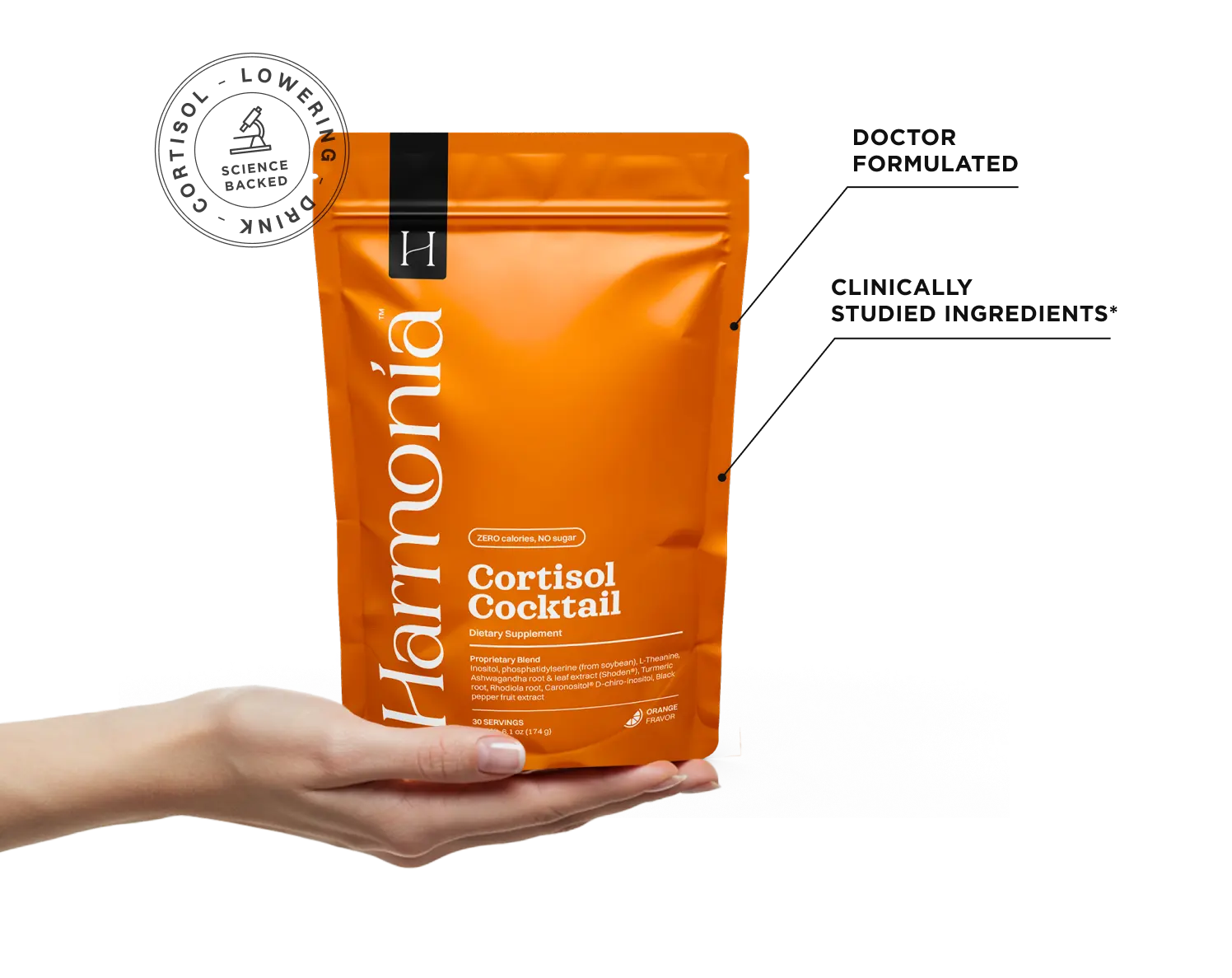
Harmonia’s Cortisol Cocktail includes KSM-66 Ashwagandha and phosphatidylserine because those ingredients are tied to HPA axis stress signaling, not because cortisol needs cleansing.
If you’ve been drawn to hormone detoxes because your symptoms feel scattered, start by looking for the pattern underneath them. Poor sleep, cravings, afternoon crashes, stress reactivity, and cycle changes can point to different stress and hormone pathways, not one

What your body needs instead of a hormone detox
The answer to how to balance hormones naturally is less dramatic than the detox aisle suggests.
It starts with rhythm.
Sleep consistency
Sleep timing anchors cortisol rhythm. A review on sleep and HPA activity describes the relationship between sleep, stress, metabolism, and HPA axis activation.
For practical purposes, your wake time matters as much as your bedtime. If your schedule swings wildly between weekdays and weekends, your cortisol rhythm has to keep adapting.
Aim for 7 to 9 hours when possible, but start with a consistent wake time. That is often the easier lever.
Blood sugar stability
Cortisol helps keep blood glucose available. When blood sugar drops, your body can use cortisol as part of the rescue system.
That is one reason aggressive fasting can feel terrible for some women in their late 30s, 40s, and 50s. If you are already under-slept, over-caffeinated, and under-fueled, skipping breakfast can become another stress signal.
Protein at breakfast is boring advice because it works. Pair protein with fat or fiber at meals, and you reduce the number of times your body has to call cortisol for backup.
If cravings are part of the picture, hormone-supportive supplements can make more sense when they are paired with blood sugar basics rather than used to cover inconsistent meals.
Food comes first.
Stress recovery
Stress reduction sounds vague until you define the mechanism.
A Cognitive Behavioral Theraphy (CBT) and mindfulness study found that CBT and mindfulness-based stress reduction supported greater HPA axis habituation compared with no training. Habituation means your stress system learns that it does not need the same strong response every time.
That is what you want when life keeps pressing the same buttons.
Movement helps too, when it matches your current stress load. A 2025 meta-analysis found that exercise, especially mind-body practices such as yoga and qigong, can reduce cortisol in people with psychological stress.
For some women, that means swapping one high-intensity workout for walking, strength training, yoga, or a true rest day. You are still training resilience.
You are just not mistaking exhaustion for progress.
Food-based liver support
Liver support is real when it means food patterns that provide building blocks for normal metabolism.
Use protein daily. Add cruciferous vegetables several times a week if you digest them well. Get enough fiber from beans, oats, chia, flax, vegetables, fruit, and whole grains.
Fiber matters because gut bacteria and bile flow play a role in how estrogen metabolites move through the body. Early research on the gut-estrogen connection points to the microbiome as part of estrogen metabolism, which is one reason constipation and low-fiber diets belong in hormone conversations.
A supplement cannot replace bowel regularity.
Supplementation with a clear mechanism
Supplements are most useful when they target a specific pathway.
Ashwagandha has human stress data. Phosphatidylserine has cortisol reactivity data. Magnesium has stress and sleep relevance, and a randomized trial found magnesium supplementation was associated with lower 24-hour urinary cortisol excretion in adults with overweight or obesity.
Those details matter because "adaptogen for hormone balance" is too broad. The question is which adaptogen, at what dose, for which pattern, in which person.
Myo-inositol is another good example. It is often discussed for insulin signaling and PCOS patterns, which is why it belongs in a hormone conversation through metabolism rather than detox. If weight change is part of your symptom picture, a better next step is understanding which menopause hormone supports have a clearer mechanism than cleanse claims.
Harmonia’s Cortisol Cocktail combines ashwagandha, phosphatidylserine, magnesium, L-theanine, rhodiola, and myo-inositol around stress-system and hormone support. The formulation logic is HPA axis support, sleep quality, stress reactivity, and blood sugar steadiness.
That is where supplementation can make sense.
If ashwagandha is the ingredient you are most curious about, the details around extract type and absorption matter. The discussion of ashwagandha with black pepper is useful because bioavailability changes how much of a compound your body may actually use.
A label can look impressive and still tell you very little.

The straight answer
You deserve a straight answer before you spend another $89 on a hormone detox kit.
Your liver processes hormones every day. Your endocrine disruptor exposure is worth reducing. Your cortisol rhythm can be supported. Your blood sugar, sleep timing, stress load, gut function, and nutrient status all matter.
The hard part is that none of those fit neatly into a 3-day cleanse.
That may be frustrating, but it's also good news. You don't have to chase a reset every time your body feels off.
You can build the conditions your hormones respond to: regular sleep, enough food, fewer blood sugar crashes, less repeated exposure where possible, and targeted support when the mechanism is clear.
For women dealing with stress-related hormone shifts, especially during perimenopause, PCOS, or long seasons of overload, the better question is what your stress system has been adapting to. The same pattern shows up in adrenal PCOS symptoms, where cortisol, insulin, and androgen signaling can overlap.
Context beats cleanse language every time.
Real endocrine disruption from BPA, phthalates, or a liver condition belongs with a doctor. What most women are dealing with is the middle ground: a stress and hormone system pulled out of rhythm by scattered sleep, chronic stress, and blood sugar swings that build up slowly.
If your symptoms have been pointing toward a disrupted stress or hormone pattern, you can take the quiz to see whether the Harmonia Cortisol Cocktail fits where you are right now.
FAQ
Do hormone detox kits actually work?
There is no peer-reviewed evidence showing that commercial hormone detox kits rebalance hormones. Some people feel better during a cleanse because they reduce alcohol, sugar, ultra-processed foods, or late-night snacking for a few days. That can improve how you feel, but it does not prove hormone detoxification.
Is a hormone cleanse different from a detox?
Most hormone cleanse and hormone detox programs use different language for the same idea: a short protocol that claims to reset or clear hormones. The body does clear hormone metabolites, but it does that through normal liver, kidney, gut, and bile pathways. A cleanse kit does not take over that job.
What does liver support mean for hormones?
Liver support means giving your body the nutrients and daily patterns it needs for normal hormone metabolism. Protein, fiber, cruciferous vegetables, hydration, and lower alcohol intake are more meaningful than a liver flush. If you have known liver disease, that needs medical care rather than a supplement protocol.
Can adaptogens balance hormones?
Certain adaptogens can support stress signaling through the HPA axis, which can influence cortisol rhythm. KSM-66 Ashwagandha has RCT evidence in stressed adults, and phosphatidylserine has evidence for cortisol response under stress. That is specific pathway support, with limits around what the evidence can claim.
How do you detox excess estrogen naturally?
You do not need to detox estrogen with a cleanse. Your body processes estrogen metabolites through liver, bile, gut, and stool pathways. The practical support is enough protein, enough fiber, regular bowel movements, lower alcohol intake, and cruciferous vegetables if you tolerate them.
What is the fastest way to support hormone balance naturally?
Start with sleep timing and blood sugar stability. Keep your wake time consistent, eat enough protein, and avoid using caffeine to push through under-fueling. Those steps may feel plain. Your cortisol rhythm responds to repeated patterns.
References
- National Center for Complementary and Integrative Health. (2025). “Detoxes” and “cleanses”: What you need to know. National Institutes of Health. Link
- National Institute of Environmental Health Sciences. (n.d.). Endocrine disruptors. National Institutes of Health. Link
- Kasarinaite, A., Sinton, M., Saunders, P. T. K., & Hay, D. C. (2023). The influence of sex hormones in liver function and disease. Cells, 12(12), 1604. Link
- Acconcia, F., Pallottini, V., & Marino, M. (2015). Molecular mechanisms of action of BPA. Dose-Response, 13(4). Link
- Bowles, N. P., Thosar, S. S., Butler, M. P., Clemons, N. A., Robinson, L. D., Ordaz, O. H., Herzig, M. X., McHill, A. W., Rice, S. P. M., & Shea, S. A. (2022). The circadian system modulates the cortisol awakening response in humans. The Journal of Clinical Endocrinology & Metabolism, 107(12), e4840-e4850. Link
- Chandrasekhar, K., Kapoor, J., & Anishetty, S. (2012). A prospective, randomized double-blind, placebo-controlled study of safety and efficacy of a high-concentration full-spectrum extract of ashwagandha root in reducing stress and anxiety in adults. Indian Journal of Psychological Medicine, 34(3), 255-262. Link
- Hellhammer, J., Vogt, D., Franz, N., Freitas, U., & Rutenberg, D. (2014). A soy-based phosphatidylserine/phosphatidic acid complex normalizes the stress reactivity of hypothalamus-pituitary-adrenal-axis in chronically stressed male subjects: A randomized, placebo-controlled study. Lipids in Health and Disease, 13, 121. Link
- Hirotsu, C., Tufik, S., & Andersen, M. L. (2015). Interactions between sleep, stress, and metabolism: From physiological to pathological conditions. Sleep Science, 8(3), 143-152. Link
- Manigault, A. W., Shorey, R. C., Hamilton, K. R., & Bardeen, J. R. (2019). Cognitive behavioral therapy, mindfulness, and cortisol habituation: A randomized controlled trial. Psychoneuroendocrinology, 104, 276-285. Link
- Li, X., et al. (2025). The optimal exercise modality and dose for cortisol reduction in psychological distress: A systematic review and network meta-analysis. Sports, 13(12), 415. Link
- Hu, S., Wang, J., Xu, Y., Yang, H., & Wang, J. (2023). Gut microbial beta-glucuronidase: A vital regulator in female estrogen metabolism. Gut Microbes. Link
- Schutten, J. C., Joosten, M. M., de Borst, M. H., & Bakker, S. J. L. (2021). Long-term magnesium supplementation improves glucocorticoid metabolism: A post-hoc analysis of an intervention trial. Clinical Endocrinology, 94(2), 150-157. Link