_11zon.jpeg)

Chronic stress leaves measurable traces earlier than most people expect.
Within weeks, researchers can see changes in brain signaling, immune function, sleep rhythm, and inflammation. Over months and years, the long-term effects of stress can reach the gut, heart, reproductive hormones, metabolism, and cellular aging markers.
The timeline is the missing piece. A symptom list tells you what can happen. A timeline tells you what may already be starting, what can still shift, and why earlier support gives your body more room to recover.
Quick answer
Chronic stress affects the body in stages. In the first week, your nervous system stays on high alert. Within weeks, stress can affect brain connectivity, immune balance, digestion, and sleep. Over months and years, chronic stress is linked with inflammation, insulin resistance, cardiovascular risk, hormone disruption in women, and shorter telomeres, one marker researchers use to study biological aging.
Timeline at a glance
What makes stress chronic
Acute stress lasts minutes to hours. A difficult conversation, a near miss in traffic, a deadline your body has to meet. Cortisol rises, helps you mobilize energy, then comes back down.
That is healthy physiology. Cortisol helps maintain blood pressure, blood sugar, metabolism, immune activity, and the stress response, which is why it touches so many body systems when the rhythm stays activated for too long. The problem starts when the normal pattern of cortisol physiology stops feeling temporary and begins shaping the body's daily baseline.
Chronic stress starts when the HPA axis, the brain-adrenal communication loop, does not fully settle. Your body keeps acting as if demand is still active.
The signal keeps repeating. Short-term cortisol usually helps control inflammation. Sustained stress exposure can push the immune system toward a less regulated pattern, where inflammatory signals and stress hormones begin reinforcing each other.
Long-term activation of the stress response can disrupt sleep, digestion, memory, weight regulation, blood pressure, and heart health because prolonged exposure to cortisol and other stress hormones keeps the body operating as if demand has not passed.
The line between acute and chronic stress is not one exact number of days. The more useful question is whether your body is getting a real recovery signal.
If every day looks manageable from the outside, but your nervous system never gets to stand down, your body still reads the pattern as chronic.
Cortisol itself is not the problem. The pattern matters more, especially whether your body can return to a healthy cortisol rhythm after the stress signal passes. For context on what that rhythm looks like in practice, the research on normal cortisol levels covers why the curve matters as much as the number.
Days 1-7: the body on high alert
In the first week, stress effects on the body can feel strangely productive. You may focus harder, move faster, and respond more quickly.
That is your nervous system shifting resources toward immediate threat detection.
Stress and brain health
The amygdala, your brain's threat-detection center, becomes more reactive during stress. The prefrontal cortex, the area that helps with planning, judgment, impulse control, and emotional regulation, has to work harder to keep that threat response in context.
Stress and brain health are emotional, structural, and chemical at the same time. Chronic stress can reshape the brain's communication network, including dendrites and synaptic connections in regions involved in memory, emotion, and decision-making.
Alert does not equal steady. You may get through the task in front of you, then snap at someone, forget a simple detail, or struggle to switch gears.
Immune system
In the first few days, acute stress can briefly increase certain immune defenses. The body prepares for injury or infection because that is what stress meant for much of human history.
The problem begins when the same signal keeps repeating. Acute stress can briefly sharpen immune readiness, but chronic stress can suppress adaptive immune responses and push the immune system toward a less regulated pattern.
At this stage, the flip has not fully happened yet. The immune system is still trying to protect you.
Sleep and cortisol rhythm
Even in the first week, sleep may start to feel different. You are tired, but your body does not feel convinced that it is safe to power down.
Cortisol usually follows a daily rhythm: higher in the morning, lower at night. When stress stays active, evening cortisol can remain higher than it should.
That is the familiar wired-at-night feeling. Your body is asking for rest, while the stress system is still scanning for what comes next.
This is the stage many women are already in when they start searching for chronic stress symptoms.
Stress has moved past a hard week. The body has begun adjusting around a repeated signal.

Brain fog has a mechanism
Experimental stress research shows that repeated stress can reduce dendritic spine density in the medial prefrontal cortex. Dendritic spines are small connection points that help neurons communicate.
In a rat model, repeated stress reduced apical dendritic spine density in medial prefrontal cortex neurons by about 16% and reduced total apical dendritic length by about 20%. Animal data cannot be pasted directly onto human timelines, but it gives a biological explanation for a very human experience: the moment when stress stops feeling energizing and starts feeling foggy.
You may notice slower recall, decision fatigue, more emotional reactivity, or the feeling that simple tasks take more effort than they should.
Brain fog has biology. Your brain is trying to operate under a sustained threat signal.
Stress and immune system changes
By weeks 2-4, the immune pattern can start to shift from short-term readiness to strain.
The same review on stress and immune function notes that chronic stress can reduce T and B lymphocyte proliferation, which weakens parts of the adaptive immune response. In plain terms, the immune system may become less precise and less resilient.
This is where some people notice they catch every cold, take longer to recover, or feel inflamed and run down at the same time.
Stress and gut health
Stress and gut health often show up earlier than people expect. The gut has its own nervous system, and it communicates with the brain through the gut-brain axis.
A review on the gut-brain axis explains how stress-related signaling can affect gut motility, gut sensitivity, immune activity, and microbial balance. That means bloating, urgency, constipation, reflux, or sudden food sensitivity can appear while you are still telling yourself you are just busy.
The gut is receiving the same stress message as the rest of the body.
Months 1-3: system-wide adaptation
At this stage, your body has stopped treating stress as temporary. It begins building a new normal around it.
That new normal can show up as gut changes, disrupted sleep, blood sugar swings, cravings, cycle changes, and a heavier feeling in the body.
The gut-brain axis gets louder
Over a few months, sustained stress can change the gut environment more noticeably. Microbial diversity may decline, gut barrier function can become more reactive, and low-grade inflammation can increase.
The gut digests food, trains the immune system, and sends chemical messages to the brain.
Your gut hears stress. The practical support is boring in the best way: regular meals, enough protein, fiber-rich carbohydrates, hydration, and fewer long gaps between meals. The goal is to reduce the number of stress signals your gut has to interpret in a day.
If nighttime hunger or early-morning waking is part of the pattern, the connection between cortisol, blood sugar, and eating patterns after dark can help you figure out whether it is a blood sugar question, a sleep question, or a restriction question.

Stress effects on hormones in women
For women, chronic stress can also interfere with the HPO axis, the brain-ovary signaling system that helps regulate ovulation, progesterone, estrogen rhythm, and cycle timing.
A review on the HPA axis across women's reproductive life describes how stress biology interacts with the menstrual cycle, pregnancy, postpartum, and hormone-related mood vulnerability. The useful point: the stress system and reproductive hormone system are in constant conversation.
During perimenopause, this conversation can get louder. Estrogen and progesterone fluctuate, sleep often becomes lighter, and blood sugar can feel less forgiving.
Some women notice the same workload feels harder to recover from than it did 10 years earlier. That experience has biology behind it.
This is also where weight changes in midlife can start to overlap with cortisol, sleep, insulin, and muscle loss rather than calories alone. The research on cortisol and why weight loss stalls under stress gives a useful lens on those interconnections.
Blood sugar and cravings
Cortisol helps your body maintain blood glucose during stress. That is helpful when you need fast energy. It becomes harder when the signal repeats every day.
Sustained cortisol can push the liver to release more glucose. Insulin then has to work harder to move that glucose into cells.
Cravings can be stress math. Your body is trying to maintain energy in a state that feels unsafe. That can feel like shakiness between meals, afternoon crashes, or a stronger pull toward quick carbohydrates.
Sleep becomes a loop
By months 2-3, poor sleep can stop feeling like a symptom and start acting like a driver.
Elevated evening cortisol can delay sleep. Short or broken sleep raises next-day stress reactivity. The next day feels harder, so the body carries more activation into the evening.
This is the 2-4 a.m. wake-up pattern many women recognize. Your cortisol rhythm is trying to rise for the morning, but the timing has drifted too early.
This is where ingredient choice has to stay tied to mechanism. In a 60-day randomized controlled trial of 64 adults with chronic stress, 300 mg of high-concentration ashwagandha root extract twice daily was associated with reduced stress scores and lower serum cortisol compared with placebo.
That is why KSM-66 Ashwagandha belongs in a cortisol conversation. It has been studied in the same HPA-axis pathway that can affect sleep, appetite, mood, and recovery.
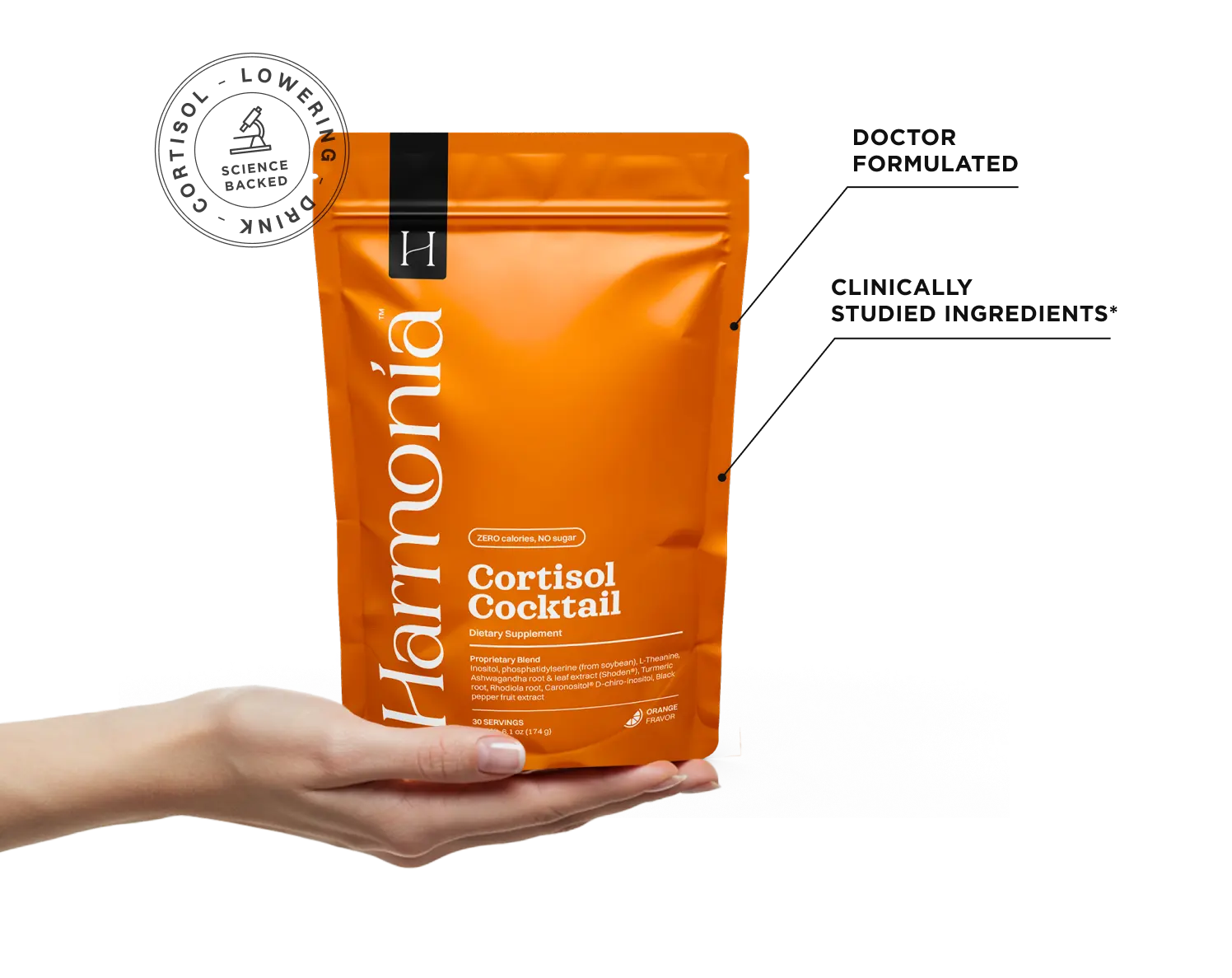
The Harmonia Cortisol Cocktail includes it for that physiology: cortisol rhythm, stress reactivity, and the downstream patterns that can show up when the stress system stays active for too long.
Month 6 and beyond: compounding stress load
By month 6, chronic stress has had enough time to involve multiple systems at once.
This is where chronic stress and heart disease, metabolic risk, and deeper brain changes become more relevant.
Chronic stress and heart disease
Stress affects the heart through several routes: blood pressure, inflammation, blood sugar, sleep, health behaviors, and autonomic balance.
A CARDIA study analysis that followed 3,401 adults over 20 years found that chronic stress was associated with cardiovascular events in middle-aged adults, partly through clinical mediators such as blood pressure and metabolic factors.
Stress becomes one part of the cardiovascular risk environment, especially when it travels with poor sleep, higher blood pressure, metabolic strain, or inflammation.
The heart tracks total load. It responds to sleep debt, high pressure, inflammation, blood sugar swings, lower movement, and fewer recovery windows.
Brain structure and burnout
Longer-term stress can continue affecting the hippocampus, amygdala, and prefrontal cortex. Those regions shape memory, threat detection, and emotional regulation.
Burnout often feels like a motivation problem from the outside. Inside the body, it looks more like a system that has been asked to stay online too long.
Brain fog sounds vague, but the mechanism is not vague. Chronic stress can change the structures that help you remember, regulate, and decide.
Reproductive and midlife symptoms
Prolonged stress can make hormone-related symptoms feel harder to predict. Cycles may become less regular, PMS may feel sharper, sleep may become more fragile, and perimenopausal symptoms may feel amplified.
The more accurate frame is HPA-HPO axis interaction. The stress system and ovarian signaling system both talk to the brain, and they both respond to energy availability, sleep, inflammation, and emotional load.
Phosphatidylserine is a phospholipid found in high concentrations in the brain and involved in cell signaling, including pathways tied to memory and cognitive function. Rhodiola rosea has been studied in stress-related fatigue, with one randomized trial reporting reduced cortisol awakening response and improved concentration in adults with stress-related fatigue.
In the Harmonia Cortisol Cocktail, phosphatidylserine is included for stress-linked brain signaling, Rhodiola rosea for stress-related fatigue, L-theanine and magnesium for nervous-system calm, and KSM-66 Ashwagandha for cortisol rhythm.
The formula follows the same pattern this timeline keeps showing: chronic stress can move through sleep, mood, appetite, recovery, and hormone signaling at the same time.

Year 1 and beyond: stress, telomeres, and aging
The deepest long-term effects of stress show up at the cellular level.
Telomeres are protective caps at the ends of chromosomes. They shorten with age, oxidative stress, and cell division. Shorter telomeres are one marker researchers use to study biological aging.
A landmark PNAS study of women found that those with the highest perceived stress had shorter telomeres, lower telomerase activity, and higher oxidative stress. The authors estimated the telomere difference as roughly equivalent to at least 10 additional years of biological aging compared with low-stress women.
A 10-year longitudinal study later found that moving from low to high chronic stress was associated with telomere shortening over the decade.
Telomeres do not give you a personal expiration date. They do show that chronic stress can leave measurable cellular marks.
Repair takes resources. Chronic stress spends those resources faster.
The intervention window
The research timeline points to one clear idea: earlier support gives the body more systems to work with.
Brain signaling can begin shifting within weeks. Immune balance can change within weeks. Gut and sleep patterns can become self-reinforcing over months. Heart and cellular aging markers take longer to appear, which also means they are downstream of earlier stress patterns.
Many earlier-stage changes are more responsive than they feel. Sleep timing can start reshaping cortisol rhythm within days. Gut microbial patterns can respond to food changes within weeks. Emotional reactivity often softens when the nervous system gets repeated recovery signals.
Start where the body can hear you fastest.
Keep your wake time consistent. Eat enough protein at breakfast. Reduce long gaps between meals if they leave you shaky or wired. Choose movement that helps you recover, not movement that leaves you more activated. Build one real decompression window into the day, even if it is 10 minutes.
If you are in a high-stress season and eating patterns feel harder to manage, the relationship between fasting windows and cortisol output can give you a practical lens on why long gaps between meals sometimes feel worse during stress.
Magnesium is involved in nervous system signaling, sleep, and stress regulation. If tension, poor sleep, or high stress are part of your pattern, the research on magnesium, cortisol, and nervous system recovery gives useful context for why this mineral appears in cortisol-support formulas.
When to bring in a clinician
Chronic stress can overlap with thyroid disease, anemia, sleep apnea, depression, anxiety disorders, perimenopause, autoimmune conditions, blood sugar problems, and medication effects.
Bring a clinician into the conversation if symptoms are sudden, severe, or affecting daily function. This is especially important with chest pain, fainting, unexplained weight change, heavy or irregular bleeding, persistent insomnia, panic symptoms, or depression.
You do not need to prove that stress is the only cause before asking for help. You need enough information to stop guessing.

Conclusion
Your body is responding to the same signal over and over.
Your brain, gut, immune system, hormones, sleep, heart, and cellular repair can all respond to the same ongoing signal: keep mobilizing, keep compensating, keep preparing for more load.
That is why the timeline matters. Early stress may feel like tension, cravings, poor sleep, or a shorter fuse. Over time, the same pattern can pull in inflammation, blood sugar, reproductive signaling, recovery, and the cortisol rhythm itself.
The Harmonia Cortisol Cocktail is built around that physiology: KSM-66 Ashwagandha for HPA-axis signaling and serum cortisol, Rhodiola rosea for stress-fatigue patterns and cortisol awakening response, phosphatidylserine for brain resilience and acute stress response, and myo-inositol for the insulin and androgen patterns that can become more relevant when stress runs long.
If your pattern includes poor sleep, afternoon energy crashes, cravings, or stress reactivity that keeps repeating despite your best efforts, take the Harmonia quiz to see whether the Cortisol Cocktail is a fit for what you are experiencing right now.
Frequently asked questions
How quickly does chronic stress start affecting the body?
Some effects can begin within days, especially sleep disruption, elevated alertness, muscle tension, and emotional reactivity. Deeper brain and immune changes are more often discussed over weeks, especially when the stress signal does not resolve.
The earliest chronic stress symptoms usually show up before people label the situation as chronic.
What does chronic stress do to your body long term?
Long-term stress can affect sleep, digestion, immune balance, blood pressure, blood sugar, appetite, reproductive hormones, memory, mood, and cardiovascular risk. The strongest pattern is cumulative load.
One stressful week is different from months of poor sleep, high pressure, and no recovery.
Can chronic stress cause inflammation?
Yes, chronic stress can contribute to inflammatory signaling through the HPA axis, immune changes, sleep disruption, gut barrier changes, and metabolic strain. Cortisol is usually anti-inflammatory in the short term.
Sustained stress exposure can make the system less regulated over time.
Why does chronic stress affect women's hormones?
The stress system and reproductive hormone system both communicate with the brain. When stress stays high, it can affect sleep, ovulation, cycle rhythm, progesterone patterns, insulin sensitivity, and perimenopause symptoms.
This is why stress effects on hormones in women often show up as mood changes, cravings, irregular cycles, heavier PMS, or poor sleep.
Can the effects of chronic stress be reversed?
Some changes can improve when the stress load comes down and recovery becomes consistent. Sleep rhythm, gut function, appetite signals, and emotional reactivity can shift faster than people expect.
Cardiovascular risk and cellular aging markers develop over longer timelines and need longer, more comprehensive support.
What is the most useful first step during chronic stress?
Sleep consistency is usually the best first lever because cortisol rhythm anchors to the sleep-wake cycle. Keep your wake time steady, eat a protein-containing breakfast, reduce long fasting windows if they make you shaky, and choose movement that leaves you calmer rather than depleted.
Start with the signal your body receives every day.
References
- Ajibewa, T. A., et al. (2024). Chronic stress and cardiovascular events: Findings from the CARDIA Study. Journal of the American Heart Association. Link
- Alotiby, A. A. (2024). Immunology of stress: A review article. Journal of Clinical Medicine Research and Reviews. Link
- Chandrasekhar, K., Kapoor, J., & Anishetty, S. (2012). A prospective, randomized double-blind, placebo-controlled study of safety and efficacy of a high-concentration full-spectrum extract of ashwagandha root in reducing stress and anxiety in adults. Indian Journal of Psychological Medicine, 34(3), 255-262. Link
- Epel, E. S., Blackburn, E. H., Lin, J., et al. (2004). Accelerated telomere shortening in response to life stress. Proceedings of the National Academy of Sciences, 101(49), 17312-17315. Link
- Foster, J. A., Rinaman, L., & Cryan, J. F. (2017). Stress and the gut-brain axis: Regulation by the microbiome. Neurobiology of Stress, 7, 124-136. Link
- Hantsoo, L., et al. (2023). The role of the hypothalamic-pituitary-adrenal axis in depression across the female reproductive lifecycle. Frontiers in Endocrinology, 14, 1295261. Link
- Kaur, J., Gandhi, J., & Sharma, S. (2025). Physiology, cortisol. StatPearls. Link
- Mayo Clinic Staff. (2023). Chronic stress puts your health at risk. Mayo Clinic. Link
- McEwen, B. S., Nasca, C., & Gray, J. D. (2016). Stress effects on neuronal structure: Hippocampus, amygdala, and prefrontal cortex. Neuropsychopharmacology, 41, 3-23. Link
- Meier, H. C. S., et al. (2019). Cellular response to chronic psychosocial stress: Ten-year longitudinal changes in telomere length in the Multi-Ethnic Study of Atherosclerosis. Psychoneuroendocrinology. Link
- Olsson, E. M. G., von Scheele, B., & Panossian, A. G. (2009). A randomised, double-blind, placebo-controlled, parallel-group study of the standardised extract SHR-5 of the roots of Rhodiola rosea in the treatment of subjects with stress-related fatigue. Planta Medica, 75(2), 105-112. Link
- Radley, J. J., et al. (2006). Repeated stress induces dendritic spine loss in the rat medial prefrontal cortex. Cerebral Cortex, 16(3), 313-320. Link
- Vyas, A., Mitra, R., Rao, B. S. S., & Chattarji, S. (2002). Chronic stress induces contrasting patterns of dendritic remodeling in hippocampal and amygdaloid neurons. Journal of Neuroscience, 22(15), 6810-6818. Link