_11zon.jpeg)

For women under stress, the pattern can feel more personal than that number sounds: the late-night snack after holding everything together, the sweet craving after a tense meeting, the feeling that you understand the behavior but still can't interrupt it.
Emotional eating is best understood as a stress-response pattern. Cortisol, ghrelin, leptin, dopamine, sleep pressure, loneliness, and shame can all change what food feels like in the body. This is biology, not a character test.
The better question is what your body is trying to regulate when food becomes the fastest available relief.
Quick answer
Emotional eating statistics show that stress-driven eating is common, especially among women and people living with higher stress burden.
Large datasets place past-month emotional eating around 38%, frequent emotional eating around 20.5% of U.S. adults, and emotional eating in overweight and obese populations around 44.9%. Women also report higher comfort eating and stress-related cravings than men.
Food becomes a buffer when the nervous system is looking for fast relief.
Key findings at a glance
How to use the data
Emotional eating shows up across the same set of pathways in study after study: stress biology, reward seeking, sleep disruption, loneliness, shame, and hormone changes. The pattern matters more than any single number.
Some numbers come from surveys. Others come from clinical studies, meta-analyses, or brain imaging research. They don't all carry the same evidence weight, so use them as a map, not a diagnosis.
Start with the trigger you recognize most. Is it stress, boredom, loneliness, poor sleep, perimenopause, or shame after eating? The answer changes what support makes sense next.
How common emotional eating actually is
Emotional eating is common enough to be normal, but not meaningless. The data matters because it removes the isolation around the behavior before asking what drives it.
A 2024 Alliance for Eating Disorders update found that 38% of adults reported emotional eating regularly, and nearly half of that group did so weekly.
A separate U.S. analysis found 20.5% of adults reported emotional eating often or very often, with higher rates among younger adults and people who had more difficulty delaying immediate gratification.
The rate rises in higher-risk groups. A systematic review of 18 studies representing 21,237 people found 44.9% in higher-weight groups. In middle-aged adults, a pooled analysis of 38 studies found 16% negative emotional eating, with higher rates in more stressed groups.
College student data shows the same stress link in a younger population: about 21% highly emotional eaters, while 54% were classified as emotional eaters in a sample where stress burden was also high. Harvard's Brain Science Initiative reports that about 75% of eating is driven by something other than physical hunger, including emotion, stress, boredom, and habit.
If you've been treating emotional eating as a private failure, the prevalence data says something different. The behavior is widespread. The task is to understand which pressure point is keeping it active in you.
Why women are more affected
Women don't simply report emotional eating more often. Several datasets point to a different risk environment: more comfort eating, more sweet cravings under stress, and more overlap with anxiety, depression, body dissatisfaction, and hormone shifts.
In APA national survey data, 31% of women identified as comfort eaters compared with 19% of men. Those comfort eaters also reported higher stress and were more likely to report cardiometabolic concerns.
A 2025 systematic review and meta-analysis of 30 studies with 14,347 participants found higher emotional eating in women in response to stress, anxiety, and depression. In a separate stress-craving study, 77.42% of stressed women experienced sweet cravings, with measurable differences in leptin and body composition compared with stressed men.
Culture, body pressure, caregiving, sleep disruption, food access, hormones, and stress biology all sit in the same room. For many women, emotional eating is what happens when too many of those pressures arrive at once.
Why stress changes what you want to eat
The stress-eating link is more specific than comfort. Stress can change appetite signals, food reward, impulse control, and the relief you feel after eating.
Cortisol helps the body mobilize energy during stress. When the signal stays active, research on prolonged cortisol exposure links chronic stress with appetite shifts, while Harvard Health explains how cortisol can affect ghrelin and leptin signaling. That combination can make high-calorie food feel more necessary than it objectively is.
Stress also shifts the brain. Research on reduced prefrontal activity helps explain why impulse control can feel harder under chronic stress, while food reward pathways become louder. In Nature Scientific Reports, emotional eating was associated with lower dopamine D2 binding in striatal and midbrain regions, independent of BMI.
The hardest part is that comfort food can work briefly. Research on high-fat and high-sugar foods shows they can dampen the cortisol response in the short term. The loop makes sense: your body learns that food changes the stress state fast.
The cost arrives later, especially when food becomes the main available regulation tool. The pattern can move from stress to craving, from craving to short relief, from relief to shame, and from shame back into stress.
KSM-66 Ashwagandha has been studied directly in this pathway. A 30-day double-blind trial of 700mg daily in college students found reduced food cravings, and a separate study found reduced stress-induced preference for high-calorie foods in participants using ashwagandha alongside mindfulness.
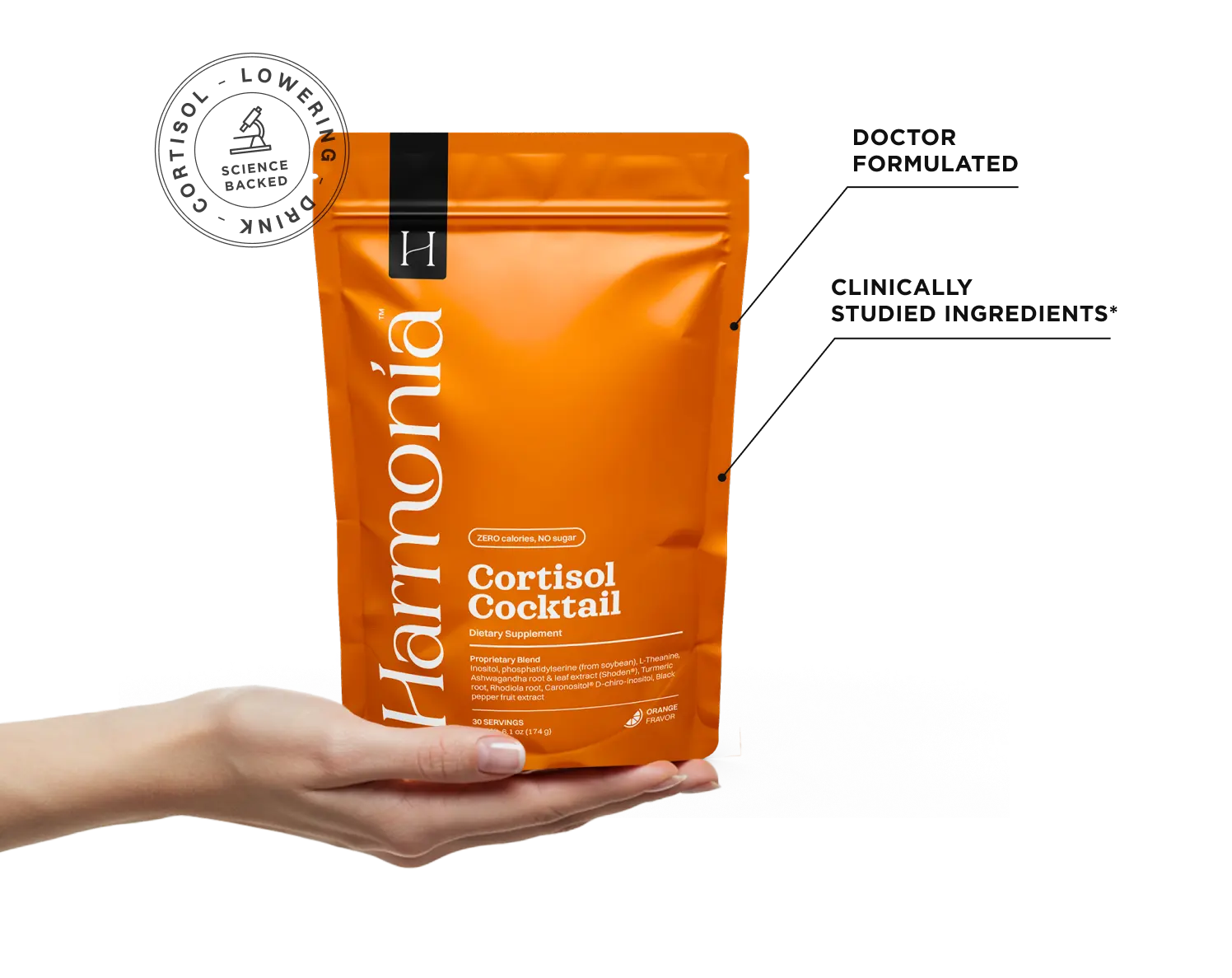
The mechanism runs through HPA-axis modulation, which is why it's a core ingredient in the Harmonia Cortisol Cocktail alongside L-Theanine, Rhodiola Rosea, and Magnesium.
.jpg)
Weight, sleep, and the compounding loop
Emotional eating and weight are linked, but the relationship is not a straight line from one hard day to weight gain. The data points to a loop: stress changes sleep, sleep changes cortisol and appetite, appetite changes food choices, and repeated food choices can change weight patterns.
Prospective studies show emotional eating predicts weight gain in adults, especially in adults with obesity. Other research links poor sleep quality with higher emotional eating scores and sleep restriction with cortisol and energy-metabolism changes. After a poor night of sleep, the body often wants faster energy and has less regulatory capacity to pause.
Financial hardship data adds another layer. Research on economic stress and BMI suggests anxiety can amplify emotional eating, not only reduce movement. Many women blame the food choice while ignoring the pressure system around the choice.
Restriction can make emotional eating worse when the body is already under stress. A better first step is steadier eating earlier in the day, enough protein, and fewer glucose swings. Does fasting increase cortisol covers why restriction strategies can backfire when the stress system is already activated.
If emotional eating appears most often after poor sleep, start with sleep and meal rhythm first: breakfast protein before caffeine, a consistent wake time, and one planned afternoon snack if the crash is predictable.
The menopause and hormone layer
Perimenopause can make emotional eating feel louder because several systems become less forgiving at once: sleep, insulin sensitivity, estrogen rhythm, hunger cues, and stress recovery.
During the menopausal transition, appetite and cravings can rise alongside sleep disruption and changing body composition. Some women notice food feels more urgent before they can name the hormonal shift happening underneath.
Estrogen changes can affect leptin and ghrelin signaling, stress hormones can become more reactive, and poor sleep can amplify cravings the next day. Perimenopause adds pressure to a loop that may have already existed for years.
The cortisol-estrogen relationship is central here. Understanding cortisol imbalance symptoms can help make sense of why emotional eating in midlife rarely lives in isolation.
Boredom and loneliness are stronger triggers than people expect
Stress gets most of the attention, but boredom and loneliness deserve their own place in the data. This is one of the most useful contrarian findings in the emotional eating research.
In a 2022 comparison study of men and women with obesity, boredom and eating urges were strongly connected, with boredom ranking above stress, anxiety, and loneliness as an emotional trigger.
Loneliness has its own mechanism. Loneliness and emotional eating are significantly associated, and a 2024 UCLA study on the lonely brain found loneliness can increase brain reactivity to food cues while reducing activity in regions involved in executive control. Food becomes more noticeable and self-regulation harder at the same time.
Women reporting social isolation were also 3.40 times more likely to meet criteria for ultra-processed food addiction in a 2025 analysis. Connection is part of appetite regulation in ways most diet advice ignores.
Boredom matters because the nervous system still looks for stimulation when life is flat or emotionally underfed. For context on how anxiety and appetite intersect, can anxiety cause weight loss explains how the stress-appetite mechanism can suppress hunger in some women and amplify it in others.
Shame keeps the loop active
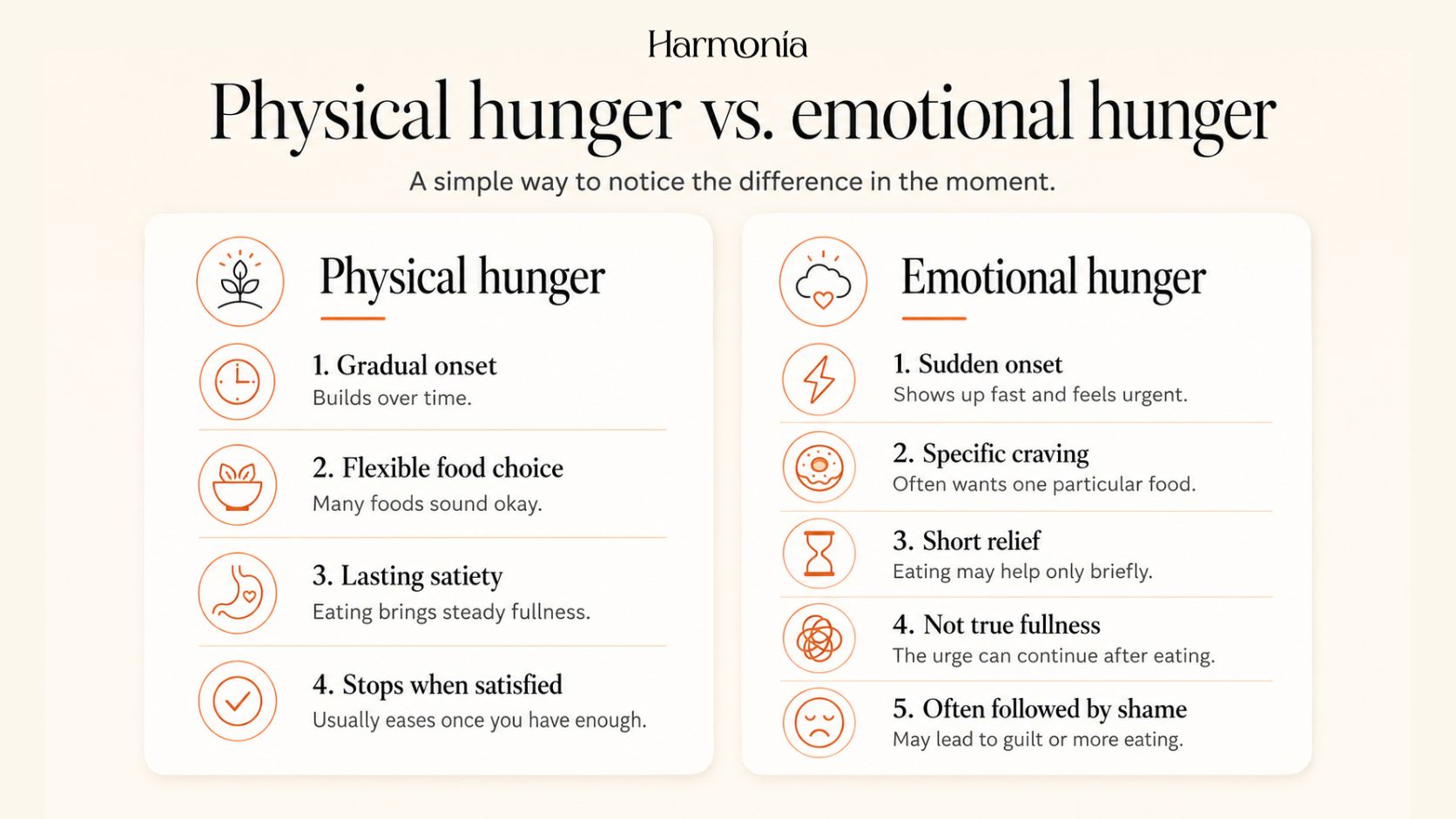
Many people think shame arrives after emotional eating. The research suggests shame can also become one of the inputs that drives the next episode.
Real-time ecological momentary assessment research found that shame predicts binge eating, along with body shame and shame around eating, at the within-person level. Guilt can sometimes lead to repair. Shame tends to collapse the person into the behavior.
Body dissatisfaction and weight self-stigma add another layer. Research links body dissatisfaction with disordered eating behaviors, while weight self-stigma is associated with shame, guilt, and self-deprecation. Those emotions can become the state food is used to regulate.
Shame is fuel for the cycle. The more useful question is what happens in the 10 minutes after eating, when the shame story usually starts.
After an emotional eating episode, use one neutral sentence before any plan: "My body was trying to regulate something." Then identify the trigger: stress, boredom, loneliness, hunger, fatigue, or shame. This interrupts the shame loop without pretending the behavior didn't happen.
Childhood patterns and trauma can set the stage
For some women, emotional eating didn't start in adulthood. It began as a learned regulation strategy long before there was language for stress, nervous system load, or hunger hormones.
Research on children shows emotional eating can appear early and remain moderately stable across childhood. Parent reports place emotional eating in children around 65% in some datasets, and children as young as four eat more in the absence of hunger after stress.
Parent feeding patterns can mediate the relationship between parent emotional eating and child emotional eating. That points to learned behavior, not a fixed flaw.
Adverse childhood experiences have been linked with higher binge eating disorder risk, and newer research suggests stress and depression pathways can influence emotional eating after ACEs. A behavior that began as adaptation can become costly later.
When emotional eating becomes a clinical concern
Emotional eating and binge eating disorder sit on a spectrum, but they're not the same. The distinction matters because the right next step changes when loss of control, frequency, distress, and impairment enter the picture.
Emotional eating is common and may be occasional. Emotional eating and BED differ when episodes involve significantly larger amounts than usual, happen at least weekly for three months or more, and include a genuine sense of loss of control. Binge eating disorder statistics place lifetime prevalence at 3.5% in women and 2.0% in men. It is the most common eating disorder in the U.S.
More than 62% of people with binge eating disorder report some impairment, and a significant minority report severe impairment. BED also has high comorbidity with anxiety and depression, with one analysis reporting 93.8% psychiatric comorbidity.
Bring in a qualified clinician if eating episodes feel out of control, happen weekly or more, involve secrecy or distress, include purging or compensation, or are affecting your health, relationships, or daily function.
What the research says actually helps
The strongest interventions improve emotion regulation, stress physiology, sleep, and the body's ability to tolerate discomfort without needing fast relief from food.
In binge eating disorder research, DBT plus CBT produced 89% full remission at follow-up in one controlled study, compared with 20% for CBT alone. Among participants who reached full remission, 80% reported fewer difficulties with emotion regulation. Separate CBT research also found 47.3% full remission in eating disorder patients, with emotion-regulation improvement identified as a key mechanism.
Mindfulness-based interventions also have evidence. A meta-analysis of 24 studies with 1,920 participants found reduced craving intensity. Mindfulness gives the nervous system a small window between urge and action.
Magnesium and stress data showed reduced stress scores in a randomized clinical trial of 264 subjects, with stronger improvement in severely stressed adults.
The ashwagandha, L-Theanine, and magnesium evidence above reflects three of the core ingredients in the Harmonia Cortisol Cocktail. The formula also includes Rhodiola Rosea for stress-related fatigue, Phosphatidylserine for cortisol response modulation, and Myo-Inositol for blood sugar steadiness.
Each ingredient targets a specific part of the stress-appetite pathway the emotional eating data keeps returning to. These sit alongside food, therapy skills, sleep, and recovery habits, not in place of them.
How to turn this into a real plan
Choose one pattern. Don't try to fix every eating behavior at once.
If cravings show up after restriction, eat earlier. If they show up after conflict, build a transition ritual. If they show up during boredom, add stimulation or connection before food becomes the only reward. If they show up after poor sleep, protect sleep timing before changing food rules.
The pattern is the signal. Emotional eating becomes easier to understand when you stop asking what is wrong with me and start asking what is my body trying to regulate right now.
For women whose cravings tend to show up beside poor sleep, blood sugar swings, and nervous-system reactivity, hormonal imbalance symptoms in females can help clarify which part of the stress-hormone loop is most active.
If the pattern you recognize most is stress-driven cravings, poor sleep, blood sugar swings, and nervous-system reactivity, the Harmonia Cortisol Cocktail was built around that same physiology: KSM-66 Ashwagandha for HPA-axis signaling, L-Theanine for calmer stress reactivity, Rhodiola for stress-related fatigue, Phosphatidylserine for cortisol response, Magnesium for nervous-system regulation, and Myo-Inositol for blood sugar steadiness. Take the Harmonia quiz to see whether the Cortisol Cocktail fits where you are right now.
Frequently asked questions
What percentage of people emotionally eat?
Regular emotional eating has been reported in 38% of adults, with about half of that group doing so weekly. Other data puts frequent emotional eating at 20.5% of U.S. adults. Rates rise in overweight and obese populations, where a meta-analysis found emotional eating in 44.9% of people.
Why do women stress eat more than men?
Women report higher comfort eating and higher emotional eating in response to stress, anxiety, and depression in several datasets. Hormone variability, sleep disruption, caregiving load, body pressure, and perimenopause can all raise the stress burden. Stress changes appetite hormones, food reward, and emotional regulation capacity.
Is emotional eating the same as binge eating disorder?
No. Emotional eating can be occasional and doesn't always involve loss of control. Binge eating disorder involves recurrent episodes of eating much larger amounts than usual, at least weekly for three months or more, with a genuine sense of loss of control and distress. If that pattern sounds familiar, clinical support is appropriate.
What triggers emotional eating most often?
Stress is common, but boredom may be the strongest trigger in some studies. Loneliness also matters because it can increase brain reactivity to food cues while reducing executive control. Emotional eating often happens when you feel depleted, under-stimulated, or disconnected, not only when you feel visibly stressed.
What helps emotional eating?
The best-supported approaches target emotion regulation and stress physiology. DBT plus CBT, mindfulness-based interventions, sleep consistency, regular meals, and stress-supportive ingredients such as ashwagandha and magnesium all have evidence in relevant pathways. The goal is to reduce the need for food as the fastest available regulation tool.
References
- Alliance for Eating Disorders. (2024). Eating disorder statistics: An updated view for 2024. Link
- Mason, T. B., et al. (2021). Emotional eating frequency in U.S. adults. National Institutes of Health / PMC. Link
- PubMed. (2025). Emotional eating in overweight and obese populations: A systematic review and meta-analysis. Link
- Springer. (2025). Emotional eating and perceived stress in university students. Link
- Harvard Brain Science Initiative. (n.d.). Probing the neurobiology of emotional eating. Link
- National Institutes of Health / PMC. (2025). Negative emotional eating in middle-aged adults: A pooled analysis. Link
- American Psychological Association. (2013). Stress in America: Stress and eating. Link
- National Institutes of Health / PMC. (2025). Gender differences in emotional eating: A systematic review and meta-analysis. Link
- PubMed. (2014). Sweet cravings, leptin, body composition, and stress in women. Link
- Harvard Health Publishing. (2021). Why stress causes people to overeat. Link
- Frontiers in Psychology. (2023). HPA-axis dysregulation, cortisol, and binge eating disorder. Link
- Dallman, M. F., et al. (2011). Stress, comfort food, and cortisol feedback. National Institutes of Health / PMC. Link
- Frontiers in Integrative Neuroscience. (2025). Chronic stress and prefrontal executive-control circuitry. Link
- Nature Scientific Reports. (2015). Emotional eating and dopamine D2 receptor binding. Link
- ScienceDirect. (2013). Cortisol response and emotional eating under stress. Link
- PubMed. (2020). Emotional eating predicts later weight gain in adults. Link
- PubMed. (2013). Sleep quality and emotional eating scores. Link
- PubMed. (2024). Sleep restriction, cortisol, and energy metabolism. Link
- News-Medical. (2025). Anxiety, emotional eating, and weight gain study. Link
- National Institutes of Health / PMC. (2025). Depression, anxiety, stress, and emotional eating among college students. Link
- National Institutes of Health / PMC. (2023). Psychiatric comorbidity in binge eating disorder. Link
- National Institute of Mental Health. (n.d.). Eating disorders statistics. Link
- National Institutes of Health / PMC. (2022). Boredom as an emotional eating trigger. Link
- National Institutes of Health / PMC. (2023). Loneliness, boredom, emotional eating, and obesity risk. Link
- UCLA Health. (2024). Feeding the lonely brain. Link
- National Institutes of Health / PMC. (2025). Social isolation and ultra-processed food addiction in women. Link
- ScienceDirect. (2023). Shame and binge eating urges. Link
- National Institutes of Health / PMC. (2022). Body dissatisfaction and disordered eating behaviors. Link
- Frontiers in Psychology. (2026). Weight self-stigma, shame, and emotional eating triggers. Link
- International Journal of Eating Disorders. (2024). Targeting shame in eating disorder treatment. Link
- National Institutes of Health / PMC. (2018). Child emotional eating and stress eating in the absence of hunger. Link
- National Institutes of Health / PMC. (2022). Parent emotion-regulation feeding and child emotional eating. Link
- ScienceDirect. (2022). Adverse childhood experiences and binge eating risk. Link
- Frontiers in Psychology. (2025). ACEs, perceived stress, depression, and emotional eating. Link
- U.S. Pharmacist. (n.d.). Emotional eating and binge eating disorder overview. Link
- National Institutes of Health / PMC. (2020). DBT plus CBT for binge eating disorder. Link
- National Institutes of Health / PMC. (2025). CBT remission and emotion regulation in eating disorders. Link
- Springer. (2025). Mindfulness-based interventions and food craving intensity. Link
- PubMed. (2022). Ashwagandha and food cravings: A double-blind randomized controlled trial. Link
- Taylor & Francis. (2024). Ashwagandha, meditation, and stress-induced preference for obesogenic foods. Link
- National Institutes of Health / PMC. (2018). Magnesium, vitamin B6, and stress reduction. Link