
Menopause statistics can feel cold until they describe something you've been living through.
Waking at 3 a.m. with your mind already moving. Gaining weight in places your body never used to store it. Feeling anxious for no obvious reason. Forgetting words mid-sentence.
Getting through the day, then wondering why the same life suddenly feels harder to carry.
The data says those changes are connected.
Menopause is often reduced to hot flashes and the end of periods, but the research shows a wider transition: sleep, cortisol, blood sugar, mood, weight, inflammation, cognition, and cardiovascular risk can all shift as estrogen and progesterone become less predictable.
That doesn't mean every symptom is "just menopause." It means your body may be working from a different stress-response background than it did ten years ago.
The most useful menopause statistics do more than count symptoms. They help you see the pattern behind them, so you can bring clearer questions to your clinician, make better decisions about sleep and recovery, and stop treating every change as a separate personal failure.
Quick answer
Menopause is usually described as the end of periods. The data shows a longer story: a multi-year shift in how your body handles stress, sleep, mood, metabolism, temperature, inflammation, and recovery.
Cortisol is one of the threads running through that story. As estrogen and progesterone fluctuate, the HPA axis, your brain-adrenal stress system, can become more reactive. That helps explain why the same life stress can feel heavier at 47 than it did at 37.
The useful question is cortisol rhythm. Can your body still rise in the morning, recover after pressure, sleep deeply enough, regulate blood sugar, and settle back down? When those rhythms start to break, menopause symptoms can feel scattered even when they share connected biology.
Key findings at a glance
How to read this data
The same systems keep appearing together across the research: sleep, stress response, hot flashes, mood, glucose, weight distribution, cognition, inflammation, and cardiovascular risk.
Some numbers come from large population studies. Others come from clinical samples, menopause cohorts, or ingredient trials. They don't all carry the same evidence weight, so the better use is pattern recognition.
Use this article as a guide to your pattern. The goal is to help you name what's changing, ask better questions, and choose support that matches the system under pressure.
Menopause is bigger than most people are told
About 6,000 women reach menopause each day in the United States. That number matters because menopause is often treated like a private inconvenience, even though it affects work, caregiving, relationships, sleep, metabolism, and long-term health.
Perimenopause can last years, often beginning in the 40s, though some women notice changes in their mid-30s. Symptoms can come and go before periods stop, which is why many women spend years searching for one clean explanation.
Women may spend one-third of life postmenopausal. That changes the meaning of this transition. It's a long window where sleep, stress recovery, blood pressure, glucose, bone, brain, and cardiovascular health can either be supported or ignored.
The first takeaway is simple: menopause is a long transition, and your stress system is part of it from the beginning.
.jpg)
The symptom picture is wider than hot flashes
Hot flashes matter. The larger story reaches across systems, which is why menopause can feel confusing rather than linear.
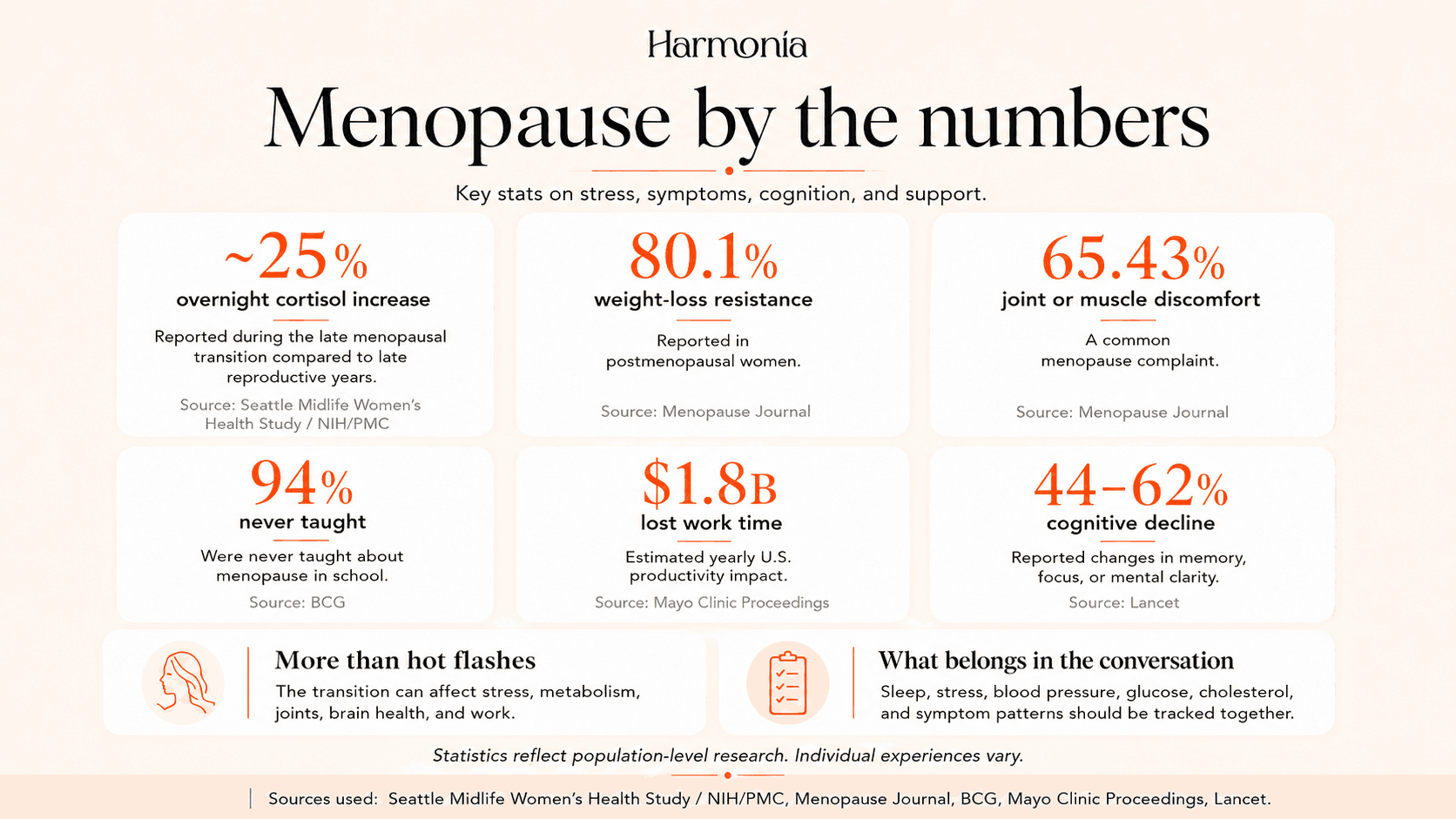
A 2024 global meta-analysis of 321 studies and 482,067 middle-aged women found joint and muscular discomfort was the most common symptom, affecting 65.43% of women. That helps explain why some women first notice stiffness, aches, or slower recovery before they think about hormones.
Psychogenic symptoms, including irritability, anxiety, depression, impaired concentration, and reduced self-esteem, occur in up to 70% of women during perimenopause and menopause.
Some data needs careful reading. A 2023 to 2024 clinical study of 1,212 menopausal patients found 98% reported mood symptoms, and 16% reported self-harm thoughts or suicidal ideation.
That was a high-burden clinical population, so it should not be read as a prediction for every woman. Any self-harm thoughts deserve prompt professional support.
Hot flashes can also last longer than many women are told. In a SWAN analysis, median duration was 7.4 years, with longer duration when vasomotor symptoms began earlier in the transition.
Bone health belongs in the same conversation. Up to 20% of bone loss can happen during the menopause transition, and about 1 in 2 postmenopausal women will develop osteoporosis.
If your symptoms feel scattered, sore joints one month, sleep disruption the next, then anxiety or brain fog that feels unfamiliar, the data points to a shared transition. Several systems are adapting at once.
Why stress feels different now
Menopause can change how your stress-response system works, so the same pressure can land differently in your body.
A menopause transition study found a 68% cortisol increase among women moving from the middle to late transition, independent of external stressors. That independence matters because cortisol changed with the hormonal transition itself.
Another study found late-transition urinary cortisol reached about 53.4 ng/mg creatinine, compared with 42.7 ng/mg in late reproductive years. That's roughly a 25% increase.
The mechanism centers on the HPA axis, the brain-adrenal communication system that helps regulate cortisol. The estrogen-HPA axis relationship helps explain why fluctuating estrogen can affect stress reactivity, mood, sleep, and inflammation at the same time.
Hot flashes connect to that pathway too. Women with more severe vasomotor symptoms showed altered HPA-axis activity, linking symptom severity to stress-system regulation rather than temperature symptoms alone.
Progesterone matters because it helps buffer stress signaling. Research on ovarian hormones and stress reactivity helps explain why declining progesterone can leave the nervous system with less of a break.
Timing makes this harder. Midlife often brings caregiving, career pressure, aging parents, relationship changes, and less recovery time, while the body is also dealing with extreme hormone variability. That's why stress can feel louder even when your coping skills are the same.
You may wake up already tense, feel wired at night, react faster than you used to, or need longer to recover after a hard day. Your stress threshold can change because the system regulating it has changed.
KSM-66 Ashwagandha works on this specific pathway. A 2025 randomized, double-blind study published in Frontiers in Reproductive Health found it reduced menopausal symptom severity, including sleep disturbances, hot flashes, and anxiety, with measurable changes at 4 to 8 weeks.
The mechanism runs through HPA-axis modulation, which is why it's one of the core ingredients in the Harmonia Cortisol Cocktail alongside L-Theanine, Rhodiola Rosea, and Phosphatidylserine.
For a deeper look at how estrogen shifts press on the stress-response system during the transition, cortisol and menopause covers the overlap between declining hormones and HPA-axis reactivity.
Sleep becomes the loop that keeps everything louder
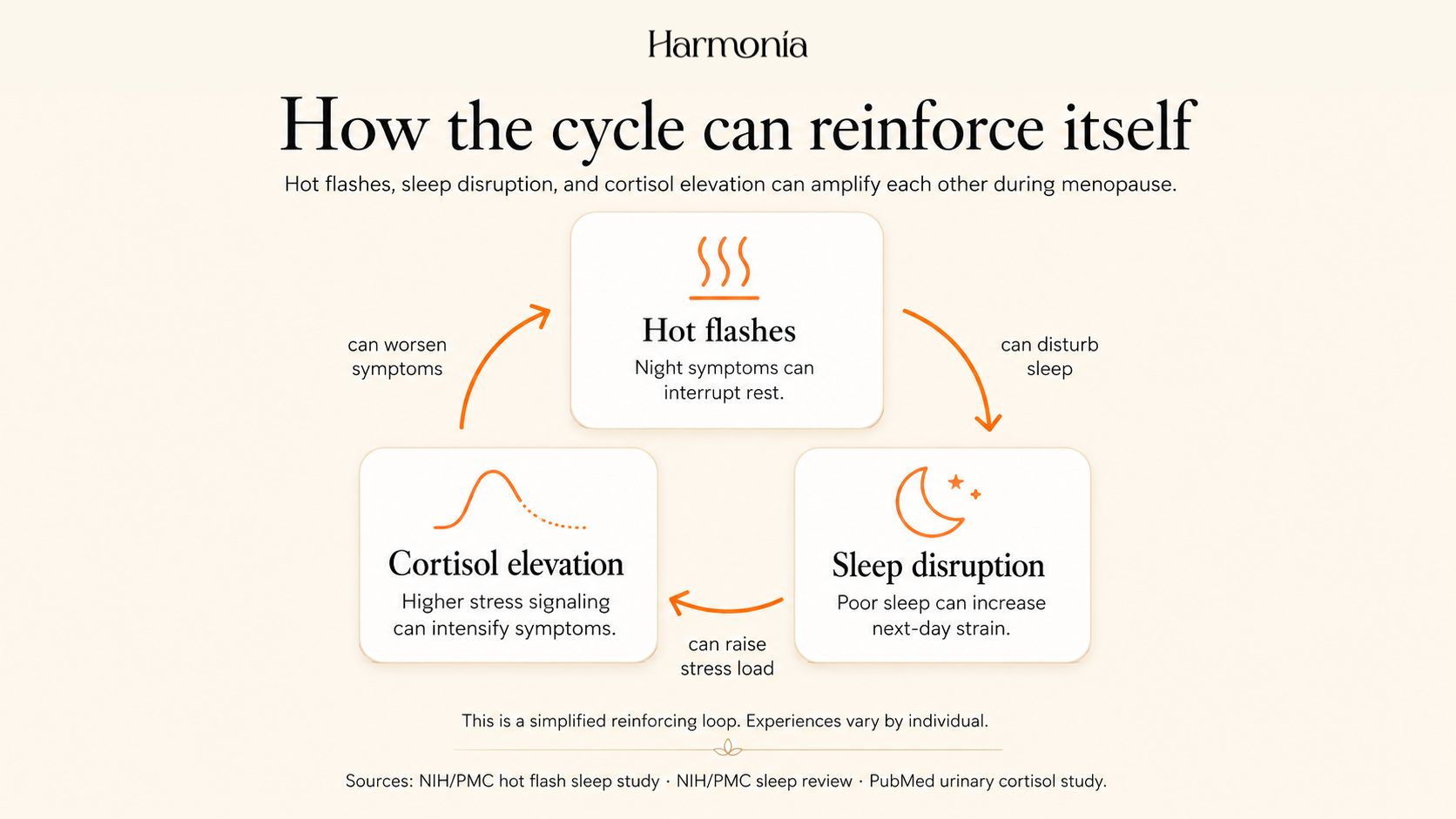
Sleep disruption is easy to minimize and hard to live with. It matters because sleep is when the stress system is supposed to settle.
Sleep problems affect 16% to 60% of women across perimenopause and postmenopause, depending on the population and measurement method.
A polysomnography study documented 165 hot flash episodes and found 66% of nocturnal hot flashes occurred within 5 minutes of an awakening. That helps explain why many women describe sleep as broken rather than simply short.
Longer-term cortisol exposure may track with symptom burden. Women with higher hair cortisol had higher hot flash frequency.
A 3 a.m. wake-up affects more than the next morning. Broken sleep raises the stress signal, and a higher stress signal makes the next night more fragile. The body gets caught in a loop: hot, awake, alert, exhausted, then wired again.
Pick one sleep anchor before adding more tools. Keep your wake time steady, reduce late-evening stimulation, cool the sleep environment, and eat in a way that reduces overnight blood sugar swings. Sleep is the first domino for many women.
Mental health risk rises during the transition
The useful frame here is recognition: hormonal volatility can make the nervous system more reactive while daily life asks more from you.
The risk of depressive episodes during perimenopause is about twice that of premenopause, and major depressive disorder risk can rise two- to three-fold. Clinically significant depressive symptoms affect 26% to 33% of women in the transition.
One postmenopausal study found 55% had depression and 83.7% had mild to severe anxiety. This describes a high-burden population, so it should be read as context rather than a forecast for every woman.
Estradiol-related mood risk suggests changing hormone patterns can shape mood alongside outside circumstances.
Support changes the experience. Women with stronger social networks had lower symptom frequency and severity, which means connection can shape how the transition feels in the body.
If anxiety showed up in midlife without a clear reason, your nervous system may have less hormonal buffering than it used to, while your responsibilities stayed the same or grew. That's biology worth naming.
Weight and metabolism need a hormone lens
Weight changes in menopause are often discussed as willpower or discipline. A better reading of the data: hormonal shifts change where fat is stored, how insulin works, how sleep affects hunger, and how cortisol shapes energy use.
A 2026 study reported weight-loss resistance rates of 67.3% in premenopausal women, 74.6% in perimenopausal women, and 80.1% postmenopause. That creates a clear transition-related pattern.
For the same total fat mass, postmenopausal women store more visceral fat than premenopausal women, tied to the higher testosterone-to-estradiol ratio after menopause.
Metabolic syndrome prevalence after menopause ranges from 30% to 70%, compared with 14% to 45% in women of reproductive age.
Risk compounds when early menopause and obesity occur together. Women with both had a 6.30 diabetes hazard ratio in one study.
Thyroid symptoms can overlap with menopause symptoms, including fatigue, weight change, brain fog, and mood shifts. Stress and thyroid conversion gives one reason these patterns can be hard to separate clinically.
The practical takeaway: the body may need a different strategy than it did ten years ago. Protein, strength training, sleep timing, blood sugar steadiness, and stress recovery become more important because the metabolic background has changed.
For a direct look at how hormone shifts drive abdominal weight changes in midlife, best supplements for menopause belly fat covers the hormone, sleep, and glucose side of the pattern.
Brain fog has a measurable research trail
Brain fog can feel personal because it affects names, words, focus, task switching, and confidence. The research suggests many women are describing a real cognitive shift, even when standard testing still falls within expected ranges.
Population-based studies estimate 44% to 62% prevalence of subjective cognitive decline during the menopause transition.
A 2026 Lancet Regional Health study found verbal learning decline during the menopausal transition, while noting that many women remain within expected neuropsychological ranges.
Long-term dementia risk is shaped by many factors. Roughly two-thirds of Alzheimer's cases are women.
A 2025 Framingham Heart Study analysis linked elevated midlife cortisol with greater amyloid deposition about 15 years later, with the strongest association in postmenopausal women.
Earlier menopause may also matter. Women who experienced menopause before 40 had a 35% higher dementia risk later in life, and women before 45 had a 1.3 times higher risk of early-onset dementia.
Sleep, blood pressure, glucose, mood, hot flashes, and stress load are all part of cognitive health. Every forgotten word doesn't need to become a fear spiral.
Cardiovascular and immune risk shift after menopause
Heart and immune changes are often left out of consumer menopause content, but they're central to the long-term picture. Estrogen decline affects blood vessels, lipids, inflammation, and stress signaling.
Among women aged 40 to 54, postmenopausal women had a two- to six-fold higher incidence of cardiovascular disease compared with premenopausal women in Framingham data.
Cortisol may be part of that risk story. Urinary cortisol was associated with coronary artery calcium progression in women, making it a sex-specific cardiovascular risk marker in the study population.
After menopause, inflammatory markers can rise while some immune-cell measures decline, contributing to low-grade inflammation.
Chronic stress adds another layer because cortisol affects immunity. That helps explain why women can feel both inflamed and depleted when sleep, stress, and hormone changes stack together.
The practical lesson to bring to an appointment: menopause is a cardiovascular and metabolic transition too. Blood pressure, cholesterol, glucose, sleep, and stress symptoms deserve to be tracked together.
Work, care, and support shape the experience
Menopause affects work, family life, and access to care. These areas are harder to measure, but they influence whether symptoms are recognized early or quietly managed for years.
Menopause symptoms cost the U.S. economy about $1.8 billion yearly in lost work time, and the estimate rises when medical expenses are included.
Workplace support remains limited. One in 3 women reported moderate to severe work challenges related to menopause symptoms, while only 26% of companies had formal policies or programs.
The education gap starts early. 94% were never taught about menopause in school, and nearly 50% felt uninformed when entering the transition.
Clinical training gaps add to the problem. Only 31% of OB/GYN residencies include a formal menopause curriculum, and just 7% of residents felt prepared to manage menopause patients.
Family relationships shape the experience too. A qualitative family study found that sleep quality, self-concept, communication, and support shape the experience for women and their families.
Many women were never taught what to ask, workplaces often lack a clear response, and many clinicians received limited menopause training. A clear symptom pattern helps.
Race, ethnicity, and documentation gaps change the experience
Menopause varies across bodies, communities, and care systems. Race, ethnicity, chronic stress exposure, access to care, and documentation practices all shape how symptoms show up and whether women receive support.
A 2024 study of 68,864 women found 1.87 times higher odds of hot flashes among Black women and 1.54 times higher odds of skin and hair changes among Hispanic women compared with white women.
Black-white menopause disparities in reproductive aging include menopause timing, vasomotor symptoms, sleep, and cardiometabolic risk. Research points to stress and structural inequities as part of the picture.
SWAN-related findings showed Black and Hispanic women reached menopause about 1.2 years earlier than white women when earlier exclusions tied to weathering were accounted for.
A stronger menopause conversation has to leave room for different symptom burdens, different care access, and different levels of being believed when symptoms are reported.
What the intervention evidence shows
The strongest interventions support the systems under more pressure during the transition: sleep, stress response, inflammation, glucose, strength, and recovery.
A 2025 randomized, double-blind, placebo-controlled study found KSM-66 Ashwagandha reduced menopausal symptom severity, including sleep disturbances, hot flashes, anxiety, and mood changes, with benefits measured at 4 to 8 weeks.
Ashwagandha research in menopausal women has also reported changes in estradiol, FSH, and LH. That's promising ingredient-level evidence, and it belongs inside a broader plan that includes sleep, food, movement, and clinical care when needed.
L-Theanine has measurable stress-response data too. A placebo-controlled crossover study found lower salivary cortisol after a stress task.
Moderate-intensity walking reduced inflammatory markers in postmenopausal women with obesity.
Yoga also has cortisol evidence behind it. A 2025 systematic review of 44 randomized trials found yoga ranked first among exercise modalities for cortisol reduction.
Build a steadier rhythm. Keep a consistent wake time, strength train to preserve muscle, eat meals that reduce blood sugar swings, and choose movement that lowers inflammation without exhausting you.
The question worth asking is which part of the pattern you're trying to support first. For women where sleep disruption is the loudest symptom, L-theanine and sleep covers how L-theanine supports sleep quality through nervous-system calming rather than sedation.
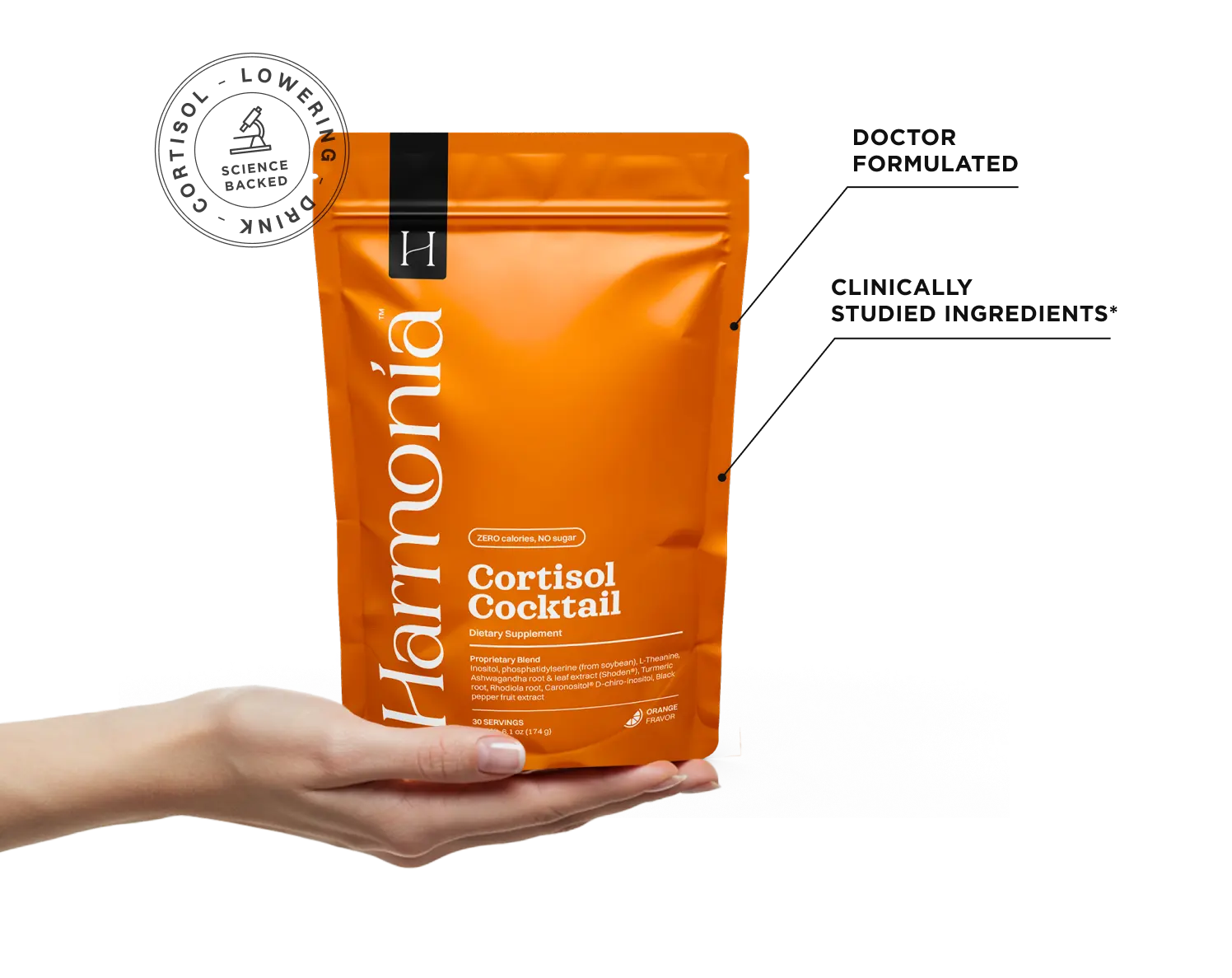
The Ashwagandha and L-Theanine evidence above reflects two of the core ingredients in the Harmonia Cortisol Cocktail. The formula also includes Rhodiola Rosea for fatigue resilience, Phosphatidylserine for cortisol response modulation, and Myo-Inositol for hormone balance. Each ingredient targets a specific part of the stress-response pathway the menopause data keeps returning to.

What this data is trying to tell you
The statistics point to one clear idea: menopause changes the stress-response background your body is working from. Cortisol rhythm, sleep quality, hot flashes, mood, glucose, body composition, and inflammation move together because they're regulated by connected systems.
Bring forward the pattern. Track sleep timing, hot flashes, mood shifts, cycle changes, weight distribution, blood pressure, glucose if you monitor it, and the stressors that make symptoms worse. A pattern is more useful than a disconnected symptom list.
If symptoms are severe, sudden, disabling, or include thoughts of self-harm, bring them to a healthcare professional promptly. You deserve care that treats menopause as a real physiological transition with clear clinical attention.
If the stress-response pattern described here sounds like what you're experiencing, the Harmonia Cortisol Cocktail was built around this specific physiology: HPA-axis signaling, cortisol rhythm, nervous system recovery, sleep support, and blood sugar steadiness. KSM-66 Ashwagandha, L-Theanine, Rhodiola Rosea, Phosphatidylserine, Myo-Inositol, and Magnesium each target a different part of that pattern.
Take the Harmonia quiz to see whether the Cortisol Cocktail fits where you are right now.
Frequently asked questions
Does menopause cause cortisol levels to rise?
Yes. Cortisol can rise during the late menopause transition, tied to hormonal change rather than only external stress. Declining estrogen and progesterone can make the HPA axis more reactive, which helps explain why stress, sleep, and hot flashes can feel connected.
Why does stress feel worse during perimenopause?
The stress-response system can have less hormonal buffering. Progesterone declines, estrogen fluctuates, and the body may take longer to settle after activation. That can feel like staying wired at night, reacting faster than usual, or needing more recovery after the same stressors.
Is menopause weight gain inevitable?
No. But the biology does change, especially around visceral fat, insulin sensitivity, sleep disruption, muscle loss, and cortisol rhythm. That's why standard advice often feels less predictable than it did before.
Can menopause cause anxiety or depression?
Menopause can raise the risk of mood symptoms, especially during perimenopause. Estradiol volatility can affect brain systems involved in mood, sleep, and stress response. Severe depression, panic, or self-harm thoughts deserve prompt professional care.
When should women start tracking menopause symptoms?
Start when patterns change, even if periods are still regular. Many women notice sleep, mood, cycle, skin, joint, or weight changes before the final menstrual period. Tracking helps you see whether symptoms cluster around sleep, stress, cycle changes, food, or hot flashes.
References
- Boston Consulting Group. (2025). Closing the menopause care gap in women’s health. Link
- Catalyst. (2024). Survey: Menopause workplace support global. Link
- Cleveland Clinic. (n.d.). Perimenopause: Age, stages, signs, symptoms, and treatment. Link
- Endocrine Society. (n.d.). Menopause and bone loss. Link
- Frontiers in Psychiatry. (2023). Ovarian hormones and stress. Link
- Frontiers in Public Health. (2024). Estradiol-related mood risk during menopause. Link
- Frontiers in Reproductive Health. (2025). Safety and efficacy of KSM-66 Ashwagandha root extract on menopause symptoms. Link
- Gerber, L. M., et al. (2016). Hot flashes and midlife symptoms in relation to levels of salivary and hair cortisol. Clinical Endocrinology. Link
- Journal of Mid-life Health. (2022). Menopause and sleep disorders. Link
- Journal of the North American Menopause Society. (2024). The association of race, ethnicity, and socioeconomic status on the severity of menopause symptoms. Link
- Maturitas. (2024). Worse sleep architecture is associated with higher cortisol levels in menopausal women. Link
- Mayo Clinic Proceedings. (2023). Impact of menopause symptoms on women in the workplace. Link
- Menopause. (2009). Cortisol levels during the menopausal transition and early postmenopause. Link
- Menopause. (2020). Hypothalamic-pituitary-adrenal axis responses in women with vasomotor symptoms. Link
- Nature Scientific Reports. (2021). Menopause and visceral fat distribution. Link
- NIH / PMC. (2015). Duration of menopausal vasomotor symptoms over the menopause transition. Link
- NIH / PMC. (2016). Nocturnal hot flashes and objective awakenings. Link
- NIH / PMC. (2018). Estrogen and HPA-axis regulation. Link
- NIH / PMC. (2020). Menopause and inflammatory markers. Link
- NIH / PMC. (2021). Cognitive symptoms during the menopause transition. Link
- NIH / PMC. (2022). Black-white disparities in reproductive aging and midlife health. Link
- NIH / PMC. (2023). Menopause and metabolic syndrome. Link
- NIH / PMC. (2023). Thyroid conversion and stress physiology. Link
- NIH / PMC. (2023). Extreme hormone variability during the menopausal transition. Link
- NIH / PMC. (2023). Moderate-intensity walking and inflammatory markers in postmenopausal women. Link
- NIH / PMC. (2023). Mental health during the menopausal transition. Link
- NIH / PMC. (2024). Menopausal symptoms among middle-aged women: A global systematic review and meta-analysis. Link
- NIH / PMC. (2024). Chronic stress and immune function. Link
- NIH / PMC. (2024). Cortisol and coronary artery calcium progression in women. Link
- NIH / PMC. (2024). Metabolic risk in early menopause and obesity. Link
- NIH / PMC. (2024). Mood symptoms and suicidal ideation during perimenopause and menopause. Link
- NIH / PMC. (2025). Ashwagandha and reproductive hormone markers in menopausal women. Link
- NIH / PMC. (2025). Yoga and cortisol reduction: A systematic review and network meta-analysis. Link
- NIH / PMC. (2025). Women and the risk of Alzheimer’s disease. Link
- NIH / PMC. (2025). Postmenopausal life span and menopause-related health. Link
- NIH / PMC. (2026). Weight-loss resistance across the menopausal transition. Link
- PubMed. (2025). Elevated midlife cortisol and later amyloid deposition in women. Link
- SAGE Journals. (2025). Family care, communication, support, and menopause experience. Link
- Society for Women’s Health Research. (n.d.). Menopause. Link
- Springer. (2021). L-Theanine and cortisol response after acute stress. Link
- The Lancet Regional Health. (2026). Cognitive symptoms during the menopausal transition. Link
- University of Michigan School of Public Health. (2023). Racial disparities in menopausal aging. Link
- American Heart Association. (2022). Early menopause may raise dementia risk later in life. Link
- Physicians Weekly. (2025). Menopause curriculum lacking in most OB/GYN residency programs. Link