You've tried tracking calories, cutting carbs, following some plan someone swore by. At some point, someone mentioned intuitive eating as the alternative: eat what your body wants, stop when you're full, ditch the rules. It sounded like freedom. Maybe even relief.
The research on intuitive eating weight loss is more interesting than either its advocates or its critics tend to admit. Understanding what it actually does and doesn't do gives you a more useful framework than anything promising quick results or dismissing the approach entirely.
Quick answer
Intuitive eating wasn't designed for weight loss and most people don't lose weight as a direct result of practicing it. What the evidence consistently shows is weight stability over time, significantly better psychological health around food, and a break from the restriction-binge cycle that drives long-term weight gain in chronic dieters. Whether it works well for you depends heavily on where your hunger signals currently are.
Here's what it is, what the evidence actually shows, the real pros and cons, and what makes it work for some people and not others.
What is intuitive eating?
Intuitive eating is a self-care eating framework developed by registered dietitians Evelyn Tribole and Elyse Resch in 1995. It teaches people to eat based on internal hunger and satiety signals rather than external rules, calorie targets, or diet plans.
The 10 principles cover: rejecting diet culture, honouring hunger, making peace with food, challenging the food police, respecting fullness, discovering satisfaction, coping with emotions without food, respecting your body, joyful movement, and gentle nutrition.
Key distinction: this is a framework for restoring the relationship with food, not a weight loss program by design. It was developed as a clinical response to the documented harms of chronic dieting, and it has over 200 peer-reviewed studies behind it as of 2024.
A systematic review of intuitive eating's associations with health outcomes covers the breadth of the evidence base, if you want to go deeper.
Does intuitive eating lead to weight loss?
Intuitive eating is not designed for weight loss, and most people who practice it don't lose weight as a direct result. The research does show consistent weight maintenance and lower rates of weight gain compared to chronic dieters over time.
The evidence on BMI is mixed. Some studies show modest reduction, most show stability rather than loss. What's more consistent in the longitudinal data: people with higher IE scores are significantly more likely to maintain their weight and less likely to gain it over multi-year follow-up.
Research tracking intuitive eating and long-term weight outcomes found this association held over a 5-year follow-up period.
That distinction matters. The alternative to IE for most people isn't maintaining their goal weight. It's weight cycling, which carries documented metabolic and psychological costs.
Gaining and losing the same 15 pounds repeatedly does real damage to hunger hormones, metabolism, and mental health over time.
There's also a hormonal mechanism worth understanding: chronic restriction raises cortisol, and elevated cortisol raises insulin and promotes fat storage. IE removes the restriction-stress cycle that drives this pattern.
Stopping the cycle is a different outcome than losing weight, but for anyone who has been cycling for years, it's not a small thing.

The real pros of intuitive eating
Psychological health: the clearest finding
The research here is consistent. A meta-analysis found intuitive eating significantly associated with reduced eating pathology and higher psychological wellbeing, including lower body image disturbance, reduced binge eating behaviours, and better self-esteem across studies.
For anyone who has spent years calculating macros, eating "clean" Monday to Thursday and falling apart on the weekend, and feeling genuinely anxious around certain foods. That quality-of-life improvement is significant regardless of what the scale does.
Better hunger signal restoration
Chronic dieting erodes your ability to recognize genuine hunger and fullness. IE progressively rebuilds that capacity.
Eating in response to physical hunger (rather than rules or emotion) is associated with more stable energy intake over time. The gut-brain signalling that governs hunger takes time to recalibrate.
IE provides the framework for that process. It's not instant, but it's real and it compounds.
Weight maintenance over time
Longitudinal data consistently shows an association between intuitive eating and weight stability rather than gain. An 8-year longitudinal study found that baseline intuitive eating scores and increases in IE over time were both associated with lower binge eating and higher wellbeing at follow-up.
Sustainable weight management is more achievable with IE than with restriction-based approaches that have documented high recidivism.
Most diets fail not because people lack willpower but because physiological adaptation makes sustained restriction biologically unsustainable. Understanding the stages of weight loss helps explain why early results plateau and why the hormonal environment IE addresses matters more in the long run.

The real cons of intuitive eating
Most articles written from an IE-advocacy position are defensive about the cons. I'd rather be honest, because that's actually more useful.
Your hunger signals may not be trustworthy yet
This is the gap most IE content doesn't address, and it's clinically the most important one.
Hunger signals depend on hormones that can be genuinely disrupted. Leptin resistance is common in people who have dieted repeatedly or carry higher body weight. The brain doesn't receive the "full" signal clearly even when energy stores are adequate.
Ghrelin dysregulation from chronic stress and poor sleep raises appetite signals independently of actual energy need. Insulin resistance causes blood sugar crashes that feel like real hunger but are driven by metabolic instability.
For someone in any of these states, trying to eat intuitively without addressing the hormonal environment first can mean eating in response to signals that don't accurately represent the body's needs. You can follow every IE principle and still feel like it's not working.
This also connects closely to emotional eating. When cortisol stays elevated for long periods, eating in response to stress is not simply about willpower. It can also be driven by hormonal changes that increase cravings and appetite. Learning how to stop emotional eating often requires addressing that stress response alongside the IE framework instead of treating them as completely separate issues.
Chronic cortisol elevation is one of the primary drivers of disrupted hunger hormones. When cortisol stays elevated, it dysregulates both ghrelin (producing false hunger signals) and leptin (reducing satiety signalling).
Managing cortisol creates the physiological environment where intuitive eating actually becomes workable.
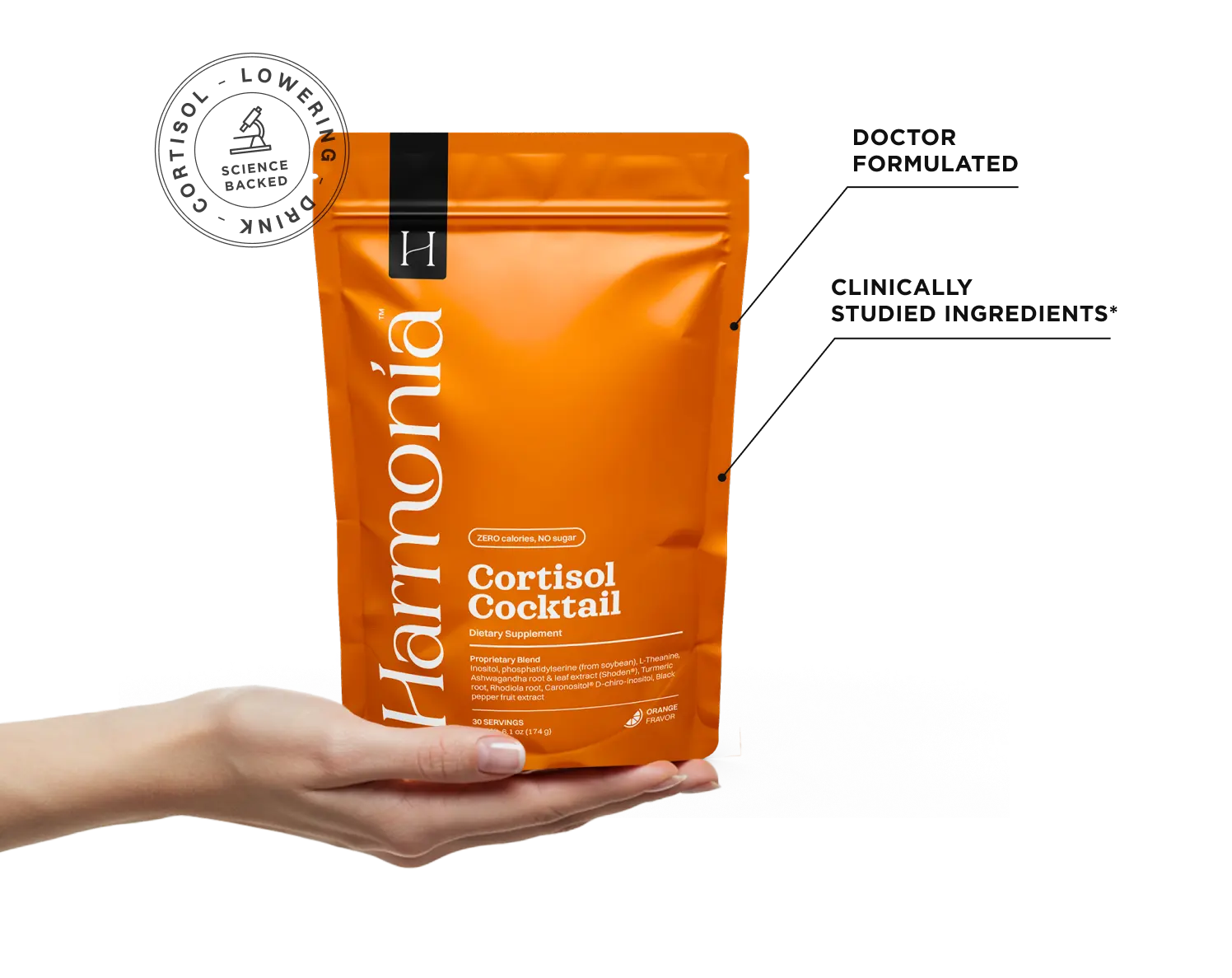
The Harmonia cortisol cocktail is formulated for exactly this: it combines Ashwagandha and Rhodiola Rosea (adaptogens with clinical evidence for HPA axis regulation and cortisol reduction) with Myo-Inositol for insulin sensitivity and blood sugar stability.
When cortisol and blood sugar are more regulated, hunger signals become clearer. That's the physiological foundation IE depends on.
_11zon.jpeg)
Ultra-processed food environments undermine it
Engineered foods are designed to override satiety signals. High salt, fat, and sugar combinations bypass the brain's normal "full" response by design. That's not an accident; that's the product.
IE works most effectively for people eating predominantly whole foods, because satiety signals function more reliably when the food itself isn't engineered to short-circuit them. This isn't a reason to avoid IE, but it's a real practical barrier that deserves acknowledgment.
It requires skill-building, which takes time
IE is often misunderstood as "just eat what you want." The actual framework involves developing new awareness, dismantling food rules built up over years, and learning to distinguish physical hunger from emotional or habitual eating.
That's a process that takes months: often 6 to 12 before meaningful shifts happen. It usually goes better with an IE-informed dietitian alongside, because the internal work isn't straightforward when you've spent years operating under external rules.
Limited evidence for people with certain health conditions
For people with type 1 diabetes, insulin-requiring type 2 diabetes, or conditions requiring careful macro management, pure IE needs significant adaptation. The principles still apply, but external structure is required alongside them.
Acknowledging this upfront matters. IE is a useful framework, but it's not a universal prescription.
Who does intuitive eating work best for?
IE has the strongest evidence and practical outcomes for people who have a history of chronic dieting or weight cycling, people experiencing significant dietary anxiety or obsessive food thoughts, and people with a history of disordered eating.
It has specific clinical evidence in binge eating disorder treatment.
It tends to require more support for people with significant insulin resistance or leptin resistance, where hunger signals are hormonally disrupted, and for people dealing with chronic high stress, where the hormonal environment needs to be addressed alongside the eating approach.
Persistent carb cravings are one of the clearest signs that hunger signals are being driven by metabolic instability rather than genuine energy need. Why you crave carbs explains the hormonal mechanisms behind it and is worth understanding before assuming IE alone will resolve the pattern.
My general read: IE is a framework worth learning for almost everyone. But the readiness to use it effectively depends a lot on what's going on metabolically and hormonally. Starting it without addressing those layers first can lead to real frustration and the false conclusion that the approach doesn't work for you personally.
How to start with intuitive eating practically
Begin with hunger and fullness awareness
Before changing anything about what you eat, start noticing hunger and fullness on a scale from 1 to 10. Just build the awareness muscle first.
Aim to eat when you're at about 3 or 4 (hungry, not starving). Stop around a 6 or 7 (comfortable, not stuffed). The signalling often isn't clear at first, especially after years of eating by rules. Expect some static before it clears.
Address the cortisol picture first
If you're dealing with high stress, poor sleep, or classic cortisol symptoms like afternoon energy crashes and persistent sugar cravings, address that layer before expecting IE to work cleanly.
Cortisol disrupts both ghrelin and leptin directly. Managing it creates a cleaner physiological signal environment, which is what IE actually requires to work as intended. Sleep, stress management, and anti-inflammatory nutrition all work together here.
The Harmonia cortisol cocktail combines Ashwagandha and Rhodiola Rosea (adaptogens with clinical evidence for HPA axis regulation and cortisol reduction) with Myo-Inositol, which supports insulin sensitivity and blood sugar regulation.
When cortisol and blood sugar are more stable, hunger signals become more reliable. That's the physiological foundation intuitive eating is built on.
Focus on gentle nutrition as a later step
IE's "gentle nutrition" principle comes last for a reason. Food rules need to be released before nuanced nutrition awareness can land without triggering anxiety.
Once hunger and fullness awareness is developing, you can layer in nutrition knowledge that informs your choices rather than governing them with guilt.This is honestly where the most interesting work happens. It's a different skill than following someone else's plan.
The bottom line
Intuitive eating won't give most people dramatic weight loss. Any registered dietician who tells you otherwise is misrepresenting the research.
What the evidence does show is genuinely useful: people who practice IE tend to maintain weight more stably over time, experience measurably better psychological health around food, and break the restriction-binge cycle that drives long-term weight gain in chronic dieters.
Those are meaningful outcomes for intuitive eating and weight loss that deserve to be taken seriously.
Whether IE works well for you depends a lot on where your hunger signals currently are. If cortisol, insulin resistance, or chronic stress have disrupted those signals at a physiological level, addressing that layer first makes the whole framework more workable.
Take the Harmonia quiz to find out how the cortisol cocktail can support your stress, metabolism, and sustainable weight goals.

Frequently asked questions
Can you lose weight with intuitive eating?
Some people do, but it's not what IE is designed to produce. The research shows consistent weight stability and lower rates of weight gain compared to chronic dieting over time.
What's more reliable: people with high intuitive eating scores are significantly less likely to gain weight over multi-year follow-up. If weight loss is the goal, IE works better as part of a broader approach that includes managing the hormonal environment, rather than as a standalone weight loss method.
Will I gain weight doing intuitive eating?
Some people do gain weight initially, particularly after a period of restriction. Over time, research shows people practicing IE are more likely to maintain stable weight than chronic dieters. Short-term fluctuations tend to stabilise as hunger signals recalibrate over weeks and months.
Is intuitive eating the same as eating whatever you want?
No. The full framework includes gentle nutrition as one of its 10 principles. The goal is building awareness of how different foods affect how you feel, so nutrition choices come from knowledge and attunement rather than anxiety.
The "make peace with food" principle gets taken out of context. It's about removing fear, not removing awareness.
Can intuitive eating work if I have PCOS or insulin resistance?
With support, yes. Insulin resistance disrupts hunger signals, which means eating intuitively requires addressing the metabolic component alongside the psychological one.
A registered dietician who understands both intuitive eating and hormonal conditions can help you adapt the framework to your specific situation.
What are the sustainable weight loss tips from an intuitive eating perspective?
Consistent sleep, stress management, movement you enjoy, and eating in response to physical hunger. These create the hormonal and psychological environment for sustainable weight loss and management over time.
IE-based research suggests these factors support weight stability better than restriction-based approaches in the long run.
How long does intuitive eating take to work?
Most people need 6 to 12 months to see meaningful changes in their relationship with food. Psychological benefits tend to come first, and weight-related outcomes, if they occur, tend to follow gradually.
IE is a long-term shift, and treating it like a short-term strategy is the most common reason it feels like it isn't working.
References
- Tribole, E. (2019). Definition of intuitive eating. Intuitive Eating.Link
- Linardon, J. (2021). Positive effects of intuitive eating on eating behaviours, body image, weight, mental health and overall wellbeing. Appetite, 167, 105606. Link
- Bento Ramos, J., Rodrigues, V. M., & Oliveira, A. (2020). Intuitive eating scale and its association with indicators of diet quality, weight status, and 5-year weight change. Appetite, 155, 104842. Link
- Denny, K. N., Loth, K., Eisenberg, M. E., & Neumark-Sztainer, D. (2020). Intuitive eating in young adults: Who is doing it, and how is it related to disordered eating behaviors? 8-year prospective associations (EAT 2010-2018). Appetite, 144, 104440. Link
- Ramalho, S. M., Trovisqueira, A., de Lourdes, M., Gonçalves, S., Ribeiro, I., Vaz, A., Macedo, L., Poínhos, R., & Conceição, E. (2022). The impact of intuitive eating on eating behaviour outcomes and quality of life: A systematic review. Nutrients, 15(1). Link