You finally have a quiet evening. Nothing urgent is happening, no deadlines, no emergencies. And yet the stillness feels uncomfortable. Your mind starts racing. You reach for your phone, check your email, or manufacture the next task.
Rest feels harder than staying busy.
This is what many people describe when they talk about cortisol addiction. It is not a formal medical diagnosis, but the pattern it refers to is real, well-documented, and increasingly common.
The body becomes so accustomed to elevated stress hormones that calm begins to feel foreign, even threatening.
Understanding what cortisol is, how the stress cycle works, and why the body can become reliant on chronic activation is the first step toward genuine recovery.
This article explains the biology behind cortisol addiction, the signs it may be affecting you, and what it actually takes to reset.
What Is Cortisol?
Cortisol is a steroid hormone produced by the adrenal glands, two small organs that sit just above the kidneys. It is often called the primary stress hormone, but that label understates how fundamentally it shapes everyday function.
In a well-regulated system, cortisol follows a steady and predictable daily rhythm. It rises shortly after waking, helping the body move gently from rest into alertness.
From there, levels taper gradually throughout the day, settling at their lowest point in the evening to create the conditions for deep, restorative sleep.
Beyond the stress response, cortisol regulates blood sugar, manages inflammation, supports immune function, controls blood pressure, and influences memory.
It is not something the body can do without. The problem is chronic overactivation, not cortisol itself.

What Is Cortisol Addiction?
"Cortisol addiction" describes a state where the body becomes adapted to elevated stress hormones. Stress becomes the baseline, and calm begins to feel unfamiliar.
People often feel most productive under pressure and uneasy when things are quiet. The nervous system stops recognizing stillness as safe.
Is Cortisol Addiction Real?
While not a formal diagnosis, the pattern is supported by research on chronic stress.
A study on stress and cortisol awakening response found that sustained life stressors alter the body's natural morning cortisol rhythm, reflecting how the brain's stress control system adapts to prolonged pressure.
This helps explain why the body can become habituated to high-stress states, even without a substance dependency.
How the Stress Cycle Works
The Brain's Stress Control System
The body's stress response is governed by a communication network between three structures: the hypothalamus in the brain, the pituitary gland just below it, and the adrenal glands above the kidneys.
When the brain perceives a threat, whether a physical danger or a stressful email, the hypothalamus sends a chemical signal that travels down to the adrenal glands and triggers cortisol release.
Under healthy conditions, rising cortisol feeds back to the brain and signals it to slow down, a self-regulating loop. Once the stressor passes, cortisol drops and the body returns to baseline. This acute response is adaptive.
When the Cycle Becomes Chronic
Modern life rarely delivers the clean resolution that the stress response was designed for. Today's stressors tend to be ongoing, abstract, and unresolved.
Deadlines roll into the next. Financial concerns linger. Social media delivers a constant stream of stimulation. The brain's stress system never receives a clear signal to power down.
Over time, this sustained activation changes the system itself. The feedback mechanisms that should regulate cortisol become less sensitive. The nervous system stops treating calm as the default state, and what began as a temporary response can settle into the persistent symptoms of cortisol imbalance that color daily life.

Why the Brain Starts to Crave Stress
Cortisol does not just prepare the body for action. It also interacts with the brain's reward system. Research on cortisol and dopamine reward signaling shows how stress hormones create a mild sense of focus, urgency, and even pleasure associated with busyness and productivity.
This is why high-pressure moments can feel energizing. Completing tasks, resolving problems, or meeting tight deadlines delivers a form of neurological reward that reinforces the behavior.
Over time, the brain begins to rely on this state. Without urgency, tasks feel flat. Downtime brings restlessness instead of recovery. Stimulation stops feeling optional. This shift is at the core of what many describe as cortisol addiction.
The Role of Adrenaline
Cortisol works alongside adrenaline, also called epinephrine, in the stress response. While cortisol sustains energy, adrenaline drives the immediate surge: faster heart rate, heightened alertness, and a rapid release of energy.
For some, this surge becomes part of what they seek. As the nervous system adapts, heightened arousal begins to feel normal, and stillness feels unfamiliar.
Although cortisol and adrenaline operate on different timelines, they are released together. Their combined effect deepens the cycle, making stimulation feel necessary rather than optional.
Signs You May Be Caught in a Cortisol Stress Cycle
Cortisol addiction rarely announces itself clearly. It tends to develop gradually, as chronic busyness becomes the norm and the capacity for genuine rest quietly disappears.
The following patterns are among the most common signs that the cortisol stress cycle may have taken hold.
You Cannot Switch Off
Even when nothing urgent is happening, the mind keeps moving. You replay conversations, plan ahead, or reach for distractions. Sitting in stillness feels uncomfortable rather than restorative.
This reflects a nervous system that has been conditioned to stay active. Stillness no longer signals recovery. The natural evening shift, where cortisol drops and the body prepares for sleep, becomes harder to access.
Calm Feels Threatening
Instead of relief, quiet moments bring unease. Vacations feel unsettling. Free time creates guilt or restlessness, as though something should be happening.
When stress becomes the baseline, calm feels like a disruption. The nervous system interprets that disruption as a potential threat, creating anxiety even when nothing is wrong.
You Are Exhausted But Cannot Rest
You feel deeply tired, but rest does not come easily. Sleep may be light or unrefreshing, and switching off feels difficult even when you are depleted.
This "wired but tired" state is one of the clearest indicators of cortisol dysregulation. Understanding how cortisol spikes affect sleep at night helps explain how elevated evening cortisol prevents the drop in arousal that sleep requires, while the accumulated cost of chronic activation produces deep fatigue.
The two states coexist because they have different mechanisms.
You Manufacture Urgency
In the absence of real pressure, the mind creates it. Small issues feel amplified. Worry fills empty space. You may take on more than necessary or feel drawn to high-stress situations.
This pattern is not deliberate. It is driven by nervous system adaptation, not personality. The body has learned to expect stimulation and now relies on it to feel functional.
Other Common Signs
- Difficulty concentrating without pressure
- Persistent low-grade anxiety
- Reliance on caffeine or stimulants
- Waking between 2 and 4 AM with a racing mind
- Emotional reactions that feel disproportionate
- Digestive changes, especially when stress decreases
- A sense that slowing down means falling behind
What Chronic Cortisol Does to the Body
To understand why breaking the stress cycle matters, it helps to look at what sustained cortisol elevation does over time. Because cortisol affects nearly every system, its impact is wide-ranging.
Brain and Mood
Research shows that chronic cortisol damages the hippocampus, the brain region responsible for memory and emotional regulation. This is the part of the brain that helps you learn, remember, and keep your emotions in perspective. Over time, sustained cortisol can reduce its size and responsiveness, making stress harder to manage.
Cortisol also suppresses serotonin and GABA, the brain chemicals that support calm and mood stability. The result is persistent anxiety and low mood.
Metabolism and Weight
Cortisol raises blood sugar during stress, triggering insulin release. With chronic elevation, this leads to insulin resistance and the kind of cortisol-driven belly fat that does not respond well to calorie restriction alone.
It also breaks down muscle tissue and disrupts appetite hormones, increasing cravings for sugar and refined carbohydrates while slowing metabolism.
Sleep
Cortisol and melatonin operate in opposition. When cortisol stays elevated in the evening, it delays sleep onset and reduces its quality.
This creates a feedback loop. Poor sleep raises cortisol the next day, compounding fatigue, mood instability, and stress sensitivity over time.
Immune and Inflammatory Function
Cortisol is a powerful anti-inflammatory agent in the short term. But a review of cortisol and chronic inflammation found that chronic elevation eventually desensitizes immune cells to cortisol's signals.
The body's own anti-inflammatory mechanism stops working properly, which paradoxically increases baseline inflammation and further impairs the stress response.
How to Break the Cortisol Stress Cycle
Breaking the cycle requires more than occasional rest. A nervous system adapted to chronic stress needs consistent signals of safety to recalibrate. Change happens through patterns, not isolated efforts.
Teach the Nervous System That Calm Is Safe
Recovery begins by helping the body relearn that stillness is not a threat.
Slow, diaphragmatic breathing is one of the most effective tools. Extending the exhale longer than the inhale signals the nervous system to downshift, often within minutes. Practiced consistently, it rebuilds tolerance for calm.
Other supportive practices include gentle movement, time in nature, body awareness, and physical touch, all of which reinforce a sense of safety.

Stabilize Blood Sugar
Blood sugar fluctuations are a common but overlooked trigger for cortisol release. Skipping meals, relying on refined carbohydrates, or excessive caffeine all create additional stress signals that feed into the cortisol and anxiety spiral.
Balanced meals with protein, fiber, and healthy fats help stabilize energy and reduce unnecessary cortisol spikes throughout the day.
Reintroduce Recovery as a Practice
For many, rest does not come naturally. It needs to be practiced.
Short, structured pauses, such as ten minutes without screens, a quiet walk, or brief breathing exercises, are often more effective than attempting long periods of rest. Consistency matters more than duration.
Use Adaptogens to Support the Stress Response
Adaptogens help the body respond more flexibly to stress by supporting the brain's stress control system.
Ashwagandha has been widely studied for its ability to reduce cortisol and perceived stress, while Rhodiola supports energy and resilience without overstimulation. Used alongside lifestyle changes, they can play a meaningful role in lowering cortisol naturally over time.
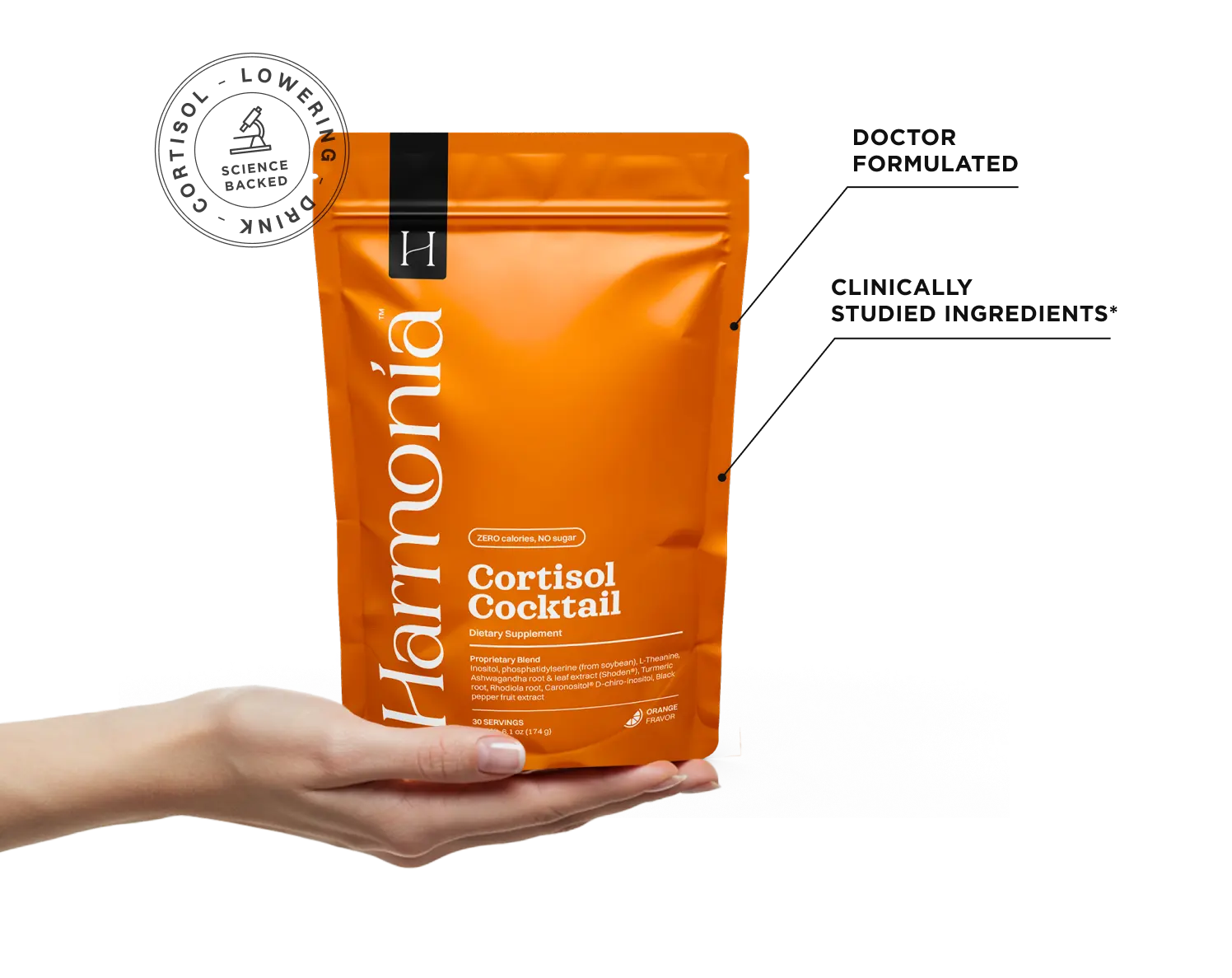
The Harmonia Cortisol Cocktail is a daily cortisol support drink that brings Ashwagandha, Rhodiola, and Magnesium together in a targeted blend designed to support the body's stress response and ease the transition out of chronic stress patterns.
Reduce Stimulation Deliberately
Constant input keeps the stress response active. Creating predictable periods of lower stimulation allows the nervous system to reset.
Simple shifts like reducing notifications, limiting screen time before bed, and spacing demanding tasks with breaks can significantly lower your daily stress load.
Prioritize Sleep as Non-Negotiable
Sleep is one of the most effective ways to reset cortisol.
A consistent sleep schedule, reduced evening light exposure, and a calm nighttime routine help support the body's natural rhythm. Without quality sleep, other interventions are less effective.
How Long Does It Take to Break the Cycle?
Recalibrating the nervous system takes time.
Early improvements, such as reduced anxiety and easier rest, often appear within two to four weeks. More noticeable changes in sleep, energy, and emotional stability typically emerge within six to twelve weeks. Deeper regulation can take three to six months.
Consistency matters more than intensity. Repeated daily signals of safety, through rest, nourishment, and reduced stimulation, create lasting change in a way that occasional effort cannot.
Supporting Cortisol Balance With Harmonia

For those looking to complement lifestyle changes with targeted nutritional support, the Harmonia Cortisol Cocktail is a daily drink formulated specifically to address the systems most affected by chronic cortisol elevation.
Rather than stimulating the body for temporary energy, it focuses on helping the stress response function more adaptively.
When the nervous system has been in a constant state of stress, returning to calm can take time and consistency.Harmonia Cortisol Cocktail can help reinforce the progress made through lifestyle changes. Used daily, it complements the habits you are building rather than replacing them.
Take the Harmonia quiz to see how the Harmonia Cortisol Cocktail can help you break the stress cycle and find your way back to calm.
Conclusion
Cortisol addiction is not a formal clinical diagnosis, but the pattern it describes is both biologically real and increasingly prevalent. When the nervous system spends long enough in a state of chronic stress activation, it begins to treat that state as normal and calm as foreign.
The stress cycle is self-reinforcing by design. Cortisol drives behavior that maintains cortisol. It requires consistent, patient recalibration through practices that teach the body, repeatedly and clearly, that it is safe to rest.
Understanding what cortisol is and how the stress cycle works is the foundation of that recalibration.
With the right approach, including nervous system support, blood sugar stability, quality sleep, reduced stimulation, and where appropriate, targeted supplementation, the body can find its way back to a baseline where rest feels restorative and calm feels natural.
Frequently Asked Questions
What is cortisol addiction?
Cortisol addiction is an informal term describing a state in which the body and nervous system have become so accustomed to chronically elevated cortisol that calm begins to feel uncomfortable.
The brain adapts to sustained stress activation and begins to require it for a sense of productivity or normalcy. While not a formal clinical diagnosis, the physiological pattern behind the term is well-supported by research on the chronic stress response.
What is cortisol and what does it do?
Cortisol is a steroid hormone produced by the adrenal glands in response to stress and low blood sugar. It regulates blood sugar, blood pressure, inflammation, immune function, and the sleep-wake cycle. In appropriate amounts it is essential and beneficial.
Problems arise when chronic stress keeps cortisol elevated beyond what the body is designed to sustain.
How do I know if I have cortisol addiction?
Common signs include an inability to relax even when nothing is wrong, anxiety during calm periods, a persistent sense of urgency without a clear source, difficulty sleeping despite exhaustion, emotional reactivity that feels disproportionate to the situation, and a reliance on busyness or pressure to feel functional.
Can you break the cortisol stress cycle?
Yes, though it requires consistent effort over time rather than a single intervention. The nervous system adapts slowly, and recalibration happens through repeated, daily practices that signal safety to the body, including breathwork, stable blood sugar, consistent sleep, reduced stimulation, and adaptogenic support.
Most people notice meaningful shifts within six to twelve weeks of consistent change.
What is cortisol stress?
Cortisol stress refers to the physiological experience of sustained cortisol elevation, whether from psychological pressure, poor sleep, blood sugar instability, or overstimulation.
When cortisol remains high for extended periods, it affects mood, metabolism, sleep, and immune function, creating a wide range of symptoms that go beyond simply feeling stressed.
Does ashwagandha help with cortisol addiction?
Ashwagandha is one of the best-researched adaptogens for cortisol support. Clinical studies have shown it can significantly reduce cortisol levels and perceived stress scores when taken consistently.
It works by modulating the stress response system rather than suppressing or stimulating it, helping the body respond to stress more flexibly over time. It is most effective as part of a broader lifestyle approach.
References
- Lee, K. F. A., et al. (2025). Effects of exposure to life stressors, perceived stress, and psychopathological symptoms on cortisol awakening response. Stress: The International Journal on the Biology of Stress, 28(1), 1-14. Link
- Tsigos, C., et al. (2020). Stress: endocrine physiology and pathophysiology. In K. R. Feingold et al. (Eds.), Endotext. MDText.com. Link
- Sapolsky, R. M., et al. (2000). How do glucocorticoids influence stress responses? Endocrine Reviews, 21(1), 55-89. Link
- Chandrasekhar, K., et al. (2012). A prospective, randomized double-blind, placebo-controlled study of safety and efficacy of a high-concentration full-spectrum extract of ashwagandha root. Indian Journal of Psychological Medicine, 34(3), 255-262. Link
- McEwen, B. S. (2008). Central effects of stress hormones in health and disease. European Journal of Pharmacology, 583(2-3), 174-185. Link
- Hinds, J. A., & Sanchez, E. R. (2022). The role of the hypothalamus-pituitary-adrenal (HPA) axis in test-induced anxiety. Stresses, 2(1), 146-155. Link