
Cortisol face is a social-media label for a puffy or round-looking face that people connect to stress. The phrase gives a single explanation for a visible change, but your face cannot measure a hormone level.
Persistent glucocorticoid excess can change facial fat distribution and soft tissue. Clinicians call that pattern moon facies or Cushingoid facial rounding, and it usually appears with other signs such as muscle weakness, easy bruising, wide purple stretch marks, central weight gain, or long-term glucocorticoid medication use.
The useful questions are how quickly the change appeared, whether it varies from day to day, which medicines you take, and whether other symptoms are present. Those details separate common puffiness from a pattern that needs medical evaluation.
What is cortisol face?
"Cortisol face" is an informal label for facial puffiness or roundness. Common explanations include fluid retention, allergies, illness, medication effects, sleep-related changes and natural facial structure. Moon facies is a clinical sign linked to prolonged glucocorticoid exposure or Cushing's syndrome. A photo cannot confirm the cause.
A face can look similar for several unrelated reasons. The timing, duration, medication history and other symptoms carry more information than the shape of your face.
Is cortisol face real, or a social-media myth?
Facial puffiness is real. Cortisol is usually an assumed cause rather than a measured one.
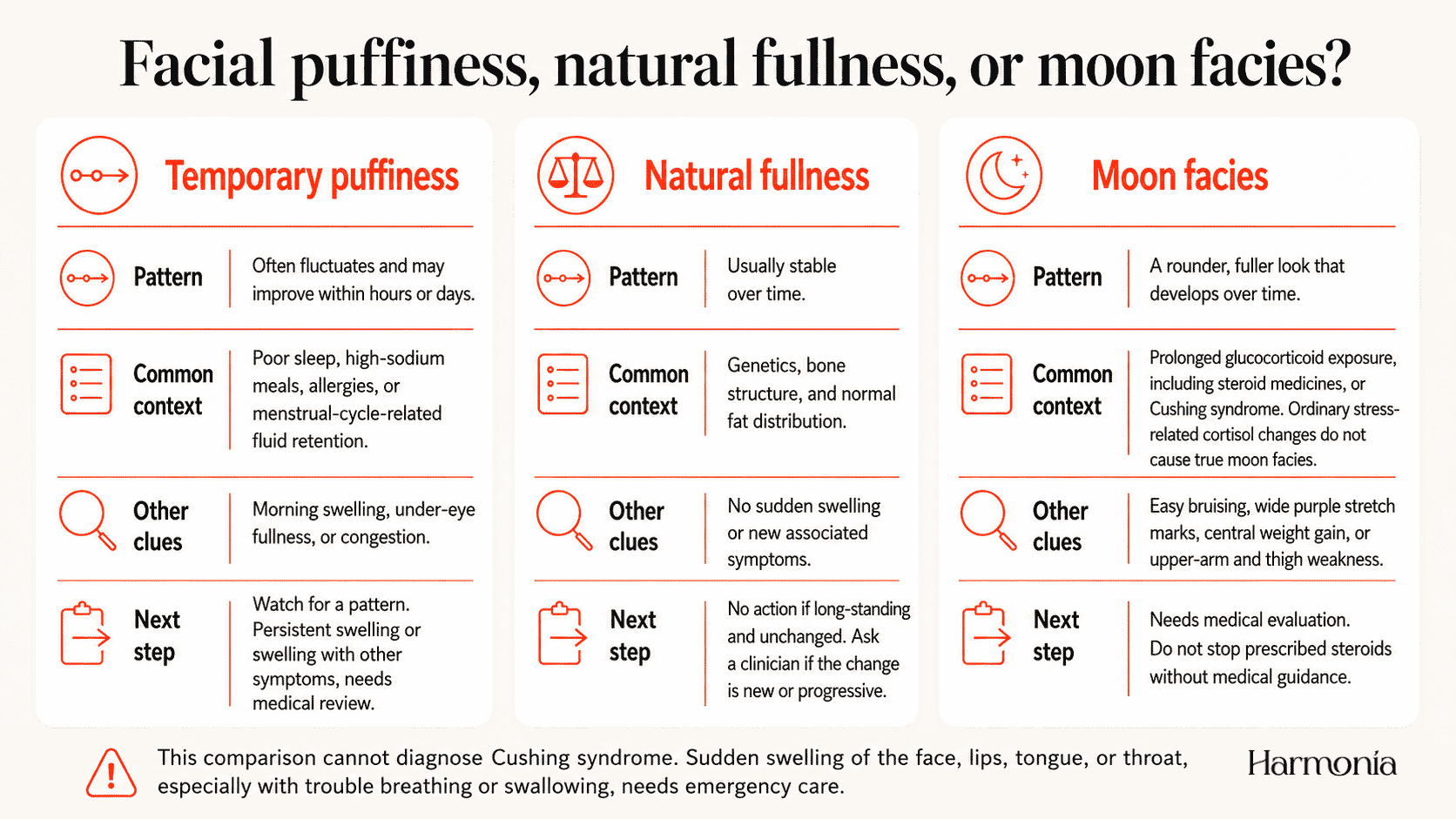
Endocrinologists at UCI Health and Ohio State Health & Discovery explain that ordinary daily stress is unlikely to create the same facial changes seen with sustained glucocorticoid exposure. High-dose or long-term steroid medication and endogenous Cushing's syndrome are separate clinical contexts.
That distinction matters because a viral label can send you toward supplements when the real issue is an allergy, a medication, thyroid disease, natural facial structure, or a condition that needs testing.
Cortisol face symptoms: what people usually mean
Online lists of cortisol face symptoms usually describe appearance: fuller cheeks, swelling around the eyes, a less defined jawline, or morning puffiness. None of those features can confirm high cortisol on their own.
A stable face shape that has looked similar for years points toward natural structure and fat distribution. A face that changes after poor sleep, alcohol, illness, allergies or a salty meal is more consistent with temporary fluid shifts.
Facial puffiness is also a narrower signal than the broader symptoms of high cortisol in females, which include changes outside the face and still require clinical context.
Cortisol face vs. moon face vs. ordinary puffiness
The comparison below separates three patterns that can look similar in a photo.
Cortisol face causes: what can make a face look puffy or round?
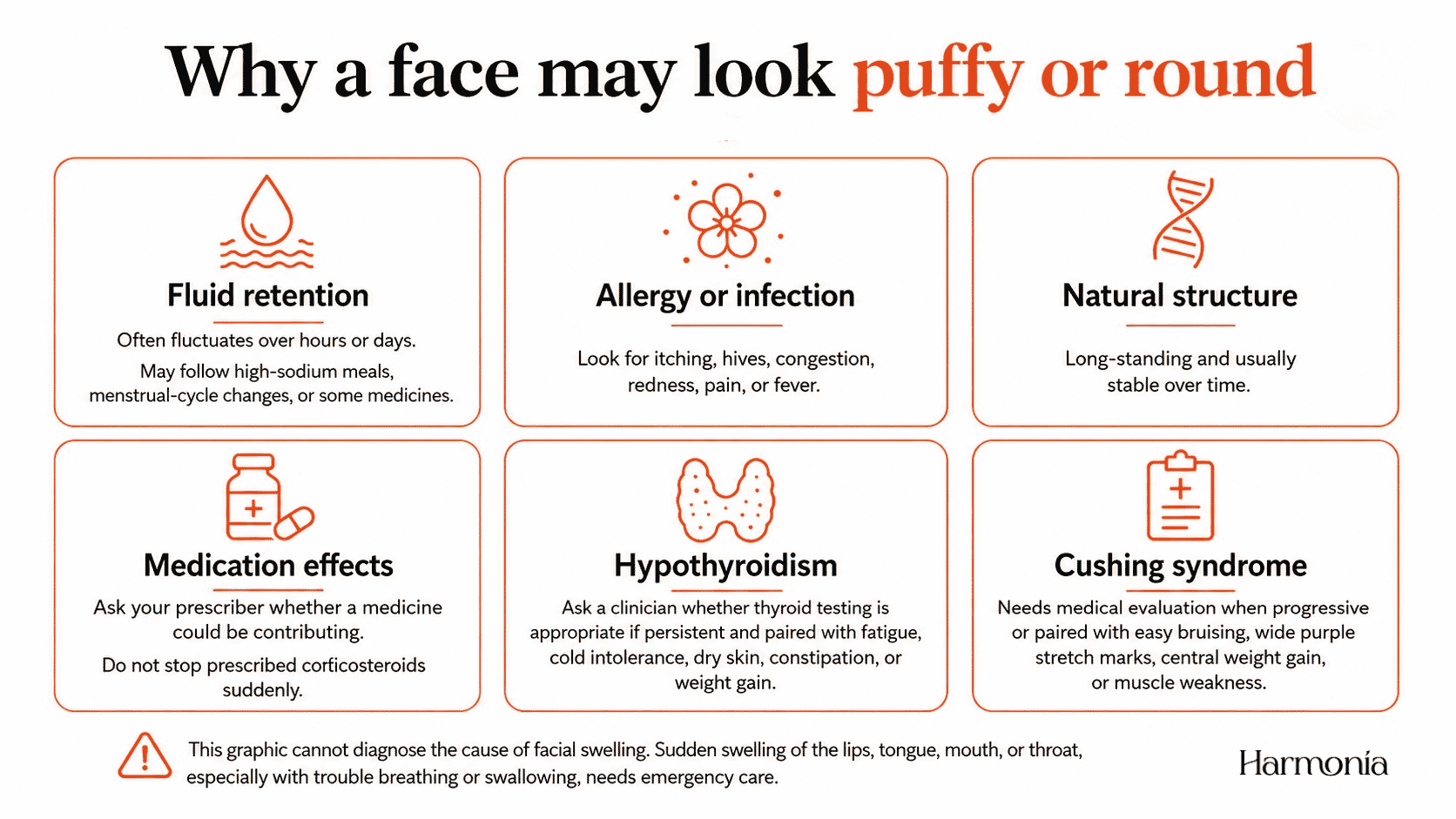
Facial puffiness can come from short-term fluid retention, allergies, illness, medication effects, thyroid disease, natural facial structure, or prolonged glucocorticoid exposure. The pattern over time helps narrow the possibilities.
Temporary fluid retention and sleep-related changes
Short-term puffiness may track with a high-sodium meal, alcohol, poor sleep, allergies or an illness. UCI Health lists sodium intake, diet, eczema, allergies and sleep position among more common explanations than excess cortisol for everyday facial puffiness.
This pattern often changes over the day or improves when the trigger resolves. Swelling that lasts, worsens, becomes painful or arrives with other symptoms deserves a medical review.
Natural facial structure and fat distribution
Some faces are naturally fuller because of bone structure, genetics, aging and where the body stores fat. A stable appearance without a new symptom pattern does not point to a cortisol disorder.
Weight loss also happens unevenly. Your face may change less, more, earlier or later than other areas, and no exercise can select one body area for fat loss.
Allergies, infections and medication reactions
The MedlinePlus facial swelling guide lists allergic reactions, infections, drug reactions and other medical conditions among possible causes. Swelling around the eyes can also follow sinus or allergy symptoms.
Sudden swelling needs a different response from a familiar morning pattern, especially when breathing, swallowing, fever, redness or pain is involved.

Glucocorticoid medication
The National Institute of Diabetes and Digestive and Kidney Diseases identifies long-term, high-dose glucocorticoid use as the most common cause of Cushing's syndrome. The NHS also notes that a rounder face can develop after weeks or months of prednisolone, with risk rising as dose and duration increase.
Oral, injected and inhaled glucocorticoids do not carry identical risk, and the dose, duration and other medicines matter. Speak with the prescribing clinician if your face changes. Stopping a steroid suddenly can be dangerous.
Cushing's syndrome
Cushing's syndrome develops after prolonged glucocorticoid exposure. Medicine can cause it, or the body may produce excess cortisol because of a pituitary, adrenal or other ACTH-producing tumor. NIDDK guidance on Cushing's syndrome describes a round face as one part of a broader pattern that may include thin arms and legs, central weight gain, easy bruising, wide purple stretch marks and muscle weakness.
A round face by itself is not enough to identify Cushing's syndrome. The medical history, physical examination and laboratory testing determine whether screening is appropriate.
For the wider list of endocrine, medication and health factors, what causes high cortisol in women separates common stress-related questions from conditions that need clinical testing.
Thyroid disease and other medical causes
An underactive thyroid can produce fatigue, weight gain, cold intolerance, dry skin and menstrual changes. NIDDK hypothyroidism guidance stresses that symptoms alone cannot diagnose thyroid disease, so clinicians use blood tests when the pattern fits.
Kidney, liver, dental, infectious and allergic causes can also produce swelling. Persistent facial change should be evaluated as a symptom with a medical history, rather than assigned to one hormone from appearance.
Can PCOS or PMOS cause cortisol face?
Facial roundness is not a diagnostic sign of PCOS, which was renamed polyendocrine metabolic ovarian syndrome (PMOS) in May 2026. The international PMOS/PCOS guideline bases adult diagnosis on ovulatory dysfunction, clinical or biochemical hyperandrogenism and polycystic ovarian morphology, after other causes are excluded.
The overlap matters because NIDDK notes that Cushing's syndrome can be mistaken for PCOS/PMOS. Irregular periods, acne, increased facial hair, weight changes and fatigue can appear in both clinical pictures, while easy bruising, wide purple stretch marks and marked muscle weakness raise a different level of concern.
Bring new or rapidly changing symptoms to your doctor, especially when several signs appear together. Facial appearance is not a reliable way to sort these conditions.
For a closer look at the relationship between stress and the condition still widely searched as PCOS, can stress cause PCOS explains what current research supports and where the causal claims go too far.
Can walking reduce cortisol face?
Walking can support sleep, anxiety, blood pressure and general health. It cannot identify the cause of facial swelling or selectively remove fat from one body area.
The Physical Activity Guidelines for Americans support regular movement for broad health benefits, including sleep and anxiety. Those benefits may change how you feel and may reduce some short-term lifestyle triggers, but walking does not treat an allergy, thyroid disease, medication effect or Cushing's syndrome.
For the wider evidence on movement, sleep, caffeine and daily routines, how to lower cortisol naturally explains which habits are useful for general stress support.
Do supplements help cortisol face?
No supplement has been shown to reverse facial puffiness by lowering cortisol. The first step is identifying the cause.
Ashwagandha has human trials examining perceived stress and cortisol. In one randomized, double-blind trial, 64 adults with chronic stress took a high-concentration root extract for 60 days and reported lower stress scores alongside a reduction in serum cortisol compared with placebo.
The NIH Office of Dietary Supplements describes the stress and cortisol findings as promising while noting that stronger evidence and long-term safety data are still needed. It also flags possible liver and thyroid effects and advises caution during pregnancy and breastfeeding.
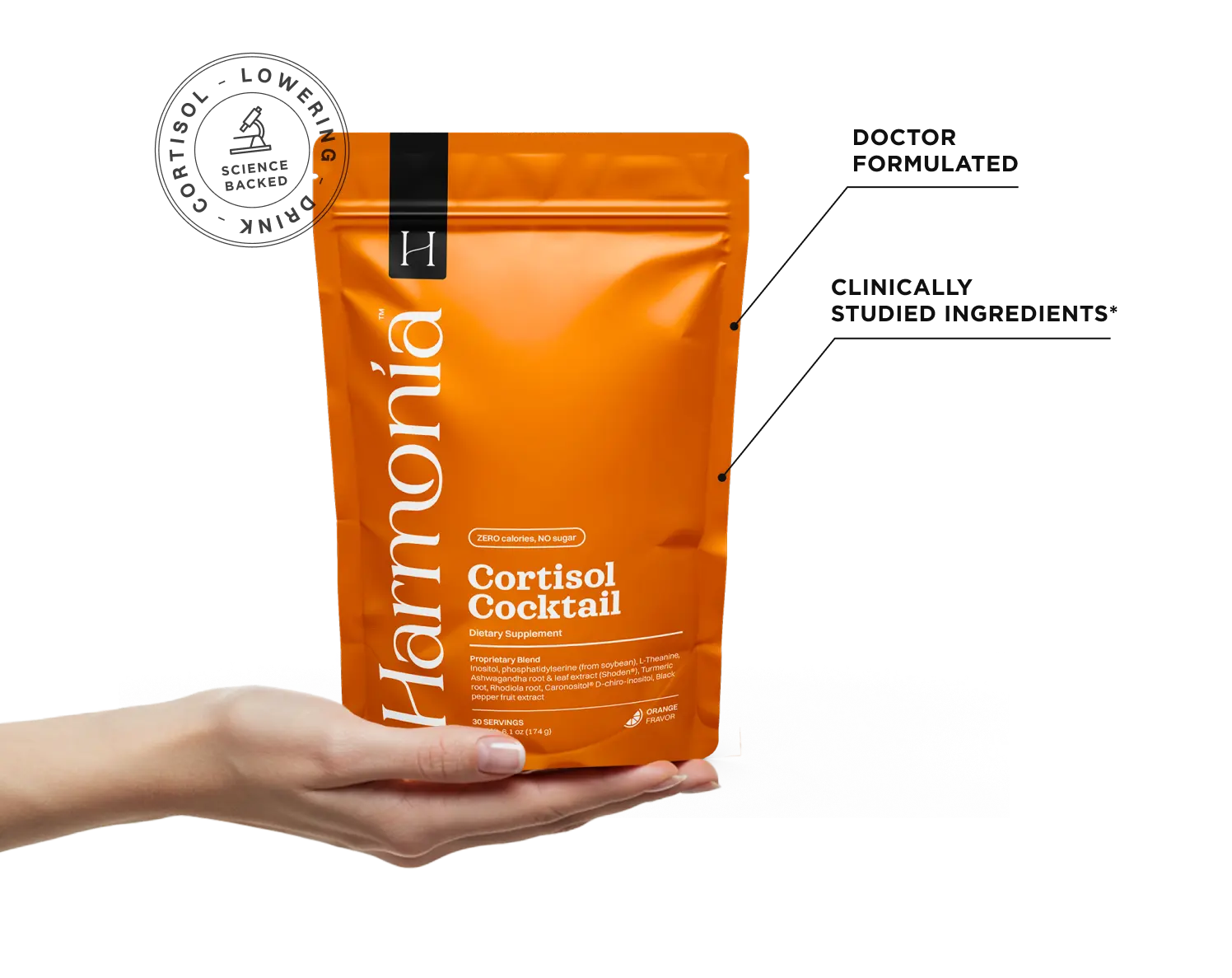
Ashwagandha is included in the Harmonia cortisol cocktail for general stress-response support. That evidence does not establish a treatment for facial appearance.
Vitamin C also appears in many cortisol searches. Does vitamin C lower cortisol reviews the human evidence and the limits of using one nutrient as a cortisol fix.
If you have tried a supplement and your face is still changing, treat that as a reason to reassess the cause. A clinician can review medication, allergy, thyroid and endocrine possibilities that a supplement cannot distinguish.
How is high cortisol actually tested?
Doctors do not diagnose Cushing's syndrome from a selfie or a random wellness-app result. Testing is selected around your symptoms, medication history and the normal daily rhythm of cortisol.
The Endocrine Society diagnostic guideline recommends validated screening methods such as 24-hour urinary free cortisol, late-night salivary cortisol and a low-dose dexamethasone suppression test. A random serum cortisol test is not recommended as an initial screening test for Cushing's syndrome.
NIDDK explains that no test is perfect and clinicians often use two tests to confirm the diagnosis. A late-night saliva sample may be collected at home when a clinician orders it, but the timing, laboratory method, medical context and follow-up interpretation remain part of the diagnostic process.
How long does cortisol face take to go away?
The timeline depends on the cause, which is why the phrase cortisol face cannot give you a reliable countdown.
When should you see a doctor?
Book a medical appointment when facial swelling persists, worsens, or appears with a wider symptom pattern. Sudden swelling with breathing or swallowing difficulty needs emergency care.
The MedlinePlus facial swelling guidance recommends urgent assessment for sudden, painful or severe swelling, worsening swelling, breathing difficulty, fever, tenderness or redness.
A clinician should also review persistent facial rounding when it appears with muscle weakness, easy bruising, wide purple stretch marks, central weight gain, high blood pressure, new menstrual changes, or long-term glucocorticoid use.
Seek urgent care now
Call emergency services or go to an emergency department when facial, tongue or throat swelling affects breathing, swallowing or speech. Do not wait for a cortisol test.
Where Harmonia fits
When ongoing stress is affecting your energy, sleep, cravings, or sense of balance, Harmonia offers a simple way to support your daily stress-response routine.
The Harmonia cortisol cocktail combines ashwagandha, myo-inositol, and complementary nutrients in an easy-to-use drink designed for consistent, everyday support. Ashwagandha has been studied for its effects on perceived stress and cortisol, while myo-inositol supports metabolic and hormonal health.
Harmonia is not a treatment for facial swelling, Cushing’s syndrome, thyroid disease, allergies, or medication-related changes. Persistent or sudden facial swelling should always be assessed by a healthcare professional.
But when medical causes have been ruled out and chronic stress remains part of the picture, Harmonia can help you build a more supportive daily routine without relying on complicated supplement stacks.
_11zon.jpeg)
The bottom line
A puffy or round face cannot confirm high cortisol. The timing, triggers, medication history and other symptoms determine whether you are seeing a short-term fluid shift, natural facial fullness, a medication effect, or a pattern that needs testing.
Persistent facial rounding with bruising, muscle weakness, wide purple stretch marks, central weight gain, high blood pressure or long-term steroid use should be discussed with a clinician. Sudden swelling that affects breathing or swallowing needs emergency care.
If chronic stress remains the concern after medical causes have been ruled out, the Harmonia cortisol cocktail is built for general stress-response support. You can take the Harmonia quiz to see whether it fits what you are experiencing right now.
Frequently asked questions
Is cortisol face a real medical diagnosis?
Clinicians do not use cortisol face as a diagnosis. The phrase describes facial puffiness or roundness that people online connect to stress. Moon facies is a recognized clinical sign, but doctors assess it alongside medication history, other symptoms and laboratory testing.
What is the difference between cortisol face and moon face?
Cortisol face is an informal online label. Moon face or moon facies describes persistent facial rounding associated with prolonged glucocorticoid exposure, including long-term steroid medication or endogenous Cushing's syndrome. Appearance alone cannot establish either cause.
Can everyday stress make your face puffy?
Everyday stress may affect sleep, eating patterns, alcohol use and other habits that can contribute to temporary puffiness. Ordinary psychological stress is unlikely to produce the Cushingoid facial changes linked to sustained glucocorticoid exposure.
Why is my face getting rounder even though I am losing weight?
Faces do not change at the same rate as every other body area. Genetics, bone structure, aging and individual fat distribution can keep the face fuller even during overall weight loss. A new or progressive change with other symptoms deserves medical review.
Can PCOS or PMOS cause a puffy or round face?
Facial roundness is not part of the diagnostic criteria for PMOS/PCOS. The condition can overlap with Cushing's syndrome in features such as irregular periods, acne, increased facial hair and weight changes, so a clinician may rule out other causes when the wider pattern fits.
Can walking get rid of cortisol face?
Walking supports general health, sleep and anxiety, but it cannot target facial fat or treat an endocrine, allergic, thyroid or medication-related cause of swelling. Any change in facial appearance would come through the wider cause, not a face-specific walking effect.
Does ashwagandha help cortisol face?
Ashwagandha has human research on perceived stress and cortisol. Those studies do not show that it changes facial puffiness or face shape. NIH also notes that long-term safety is uncertain and that liver, thyroid, pregnancy and medication considerations matter.
How do doctors test for high cortisol?
Cushing's syndrome screening may use 24-hour urinary free cortisol, late-night salivary cortisol or a low-dose dexamethasone suppression test. Doctors often confirm results with more than one test because cortisol varies with time, health conditions and medication use.
How long does cortisol face take to go away?
There is no single timeline because the appearance may come from fluid retention, allergy, infection, medication, Cushing's syndrome or natural facial structure. Temporary puffiness may improve as its trigger resolves, while medication and endocrine causes require clinician-guided treatment.
References
- Shannon, H. (2024). The skinny on “cortisol face.” UCI Health. Link
- Ghalib, L. (2024). Is “cortisol face” a real thing? Ohio State Health & Discovery. Link
- National Institute of Diabetes and Digestive and Kidney Diseases. Cushing’s syndrome. National Institutes of Health. Link
- Nieman, L. K., Biller, B. M. K., Findling, J. W., et al. (2008). The diagnosis of Cushing’s syndrome: An Endocrine Society clinical practice guideline. The Journal of Clinical Endocrinology & Metabolism, 93(5), 1526–1540. Link
- MedlinePlus Medical Encyclopedia. Facial swelling. U.S. National Library of Medicine. Link
- National Institute of Diabetes and Digestive and Kidney Diseases. Hypothyroidism (underactive thyroid). National Institutes of Health. Link
- Monash Centre for Health Research and Implementation. (2023; terminology updated 2026). International evidence-based guideline for the assessment and management of polyendocrine metabolic ovarian syndrome (PMOS; formerly PCOS). Link
- American Society for Reproductive Medicine. (2026). PCOS is now PMOS: Understanding the name change. Link
- U.S. Department of Health and Human Services. (2018). Physical Activity Guidelines for Americans (2nd ed.). Link
- National Institutes of Health, Office of Dietary Supplements. Ashwagandha: Is it helpful for stress, anxiety, or sleep? Health professional fact sheet. Link
- Chandrasekhar, K., Kapoor, J., & Anishetty, S. (2012). A prospective, randomized double-blind, placebo-controlled study of safety and efficacy of a high-concentration full-spectrum extract of ashwagandha root in reducing stress and anxiety in adults. Indian Journal of Psychological Medicine, 34(3), 255–262. Link
- National Health Service. Side effects of prednisolone tablets and liquid. Link