You've been taking myo-inositol for a few weeks and the scale hasn't moved. Or maybe you've convinced yourself it's moving in the wrong direction. It's frustrating, especially when you started taking it hoping it would help.
Here's what the evidence actually says: myo-inositol does not cause weight gain. For most women, especially those dealing with hormonal imbalances, it has the opposite effect. But how it works, and for whom it works, matters a lot before you draw any conclusions.
In this article, I'll break down what myo-inositol does in your body, why the confusion around weight gain exists, who is most likely to see results, and what realistic expectations look like, based on the clinical research, not marketing claims.
Quick Answer
No, myo-inositol does not cause weight gain. Research suggests it may support modest weight loss by improving insulin sensitivity, regulating hormones, and reducing metabolic dysfunction associated with PCOS and insulin resistance.
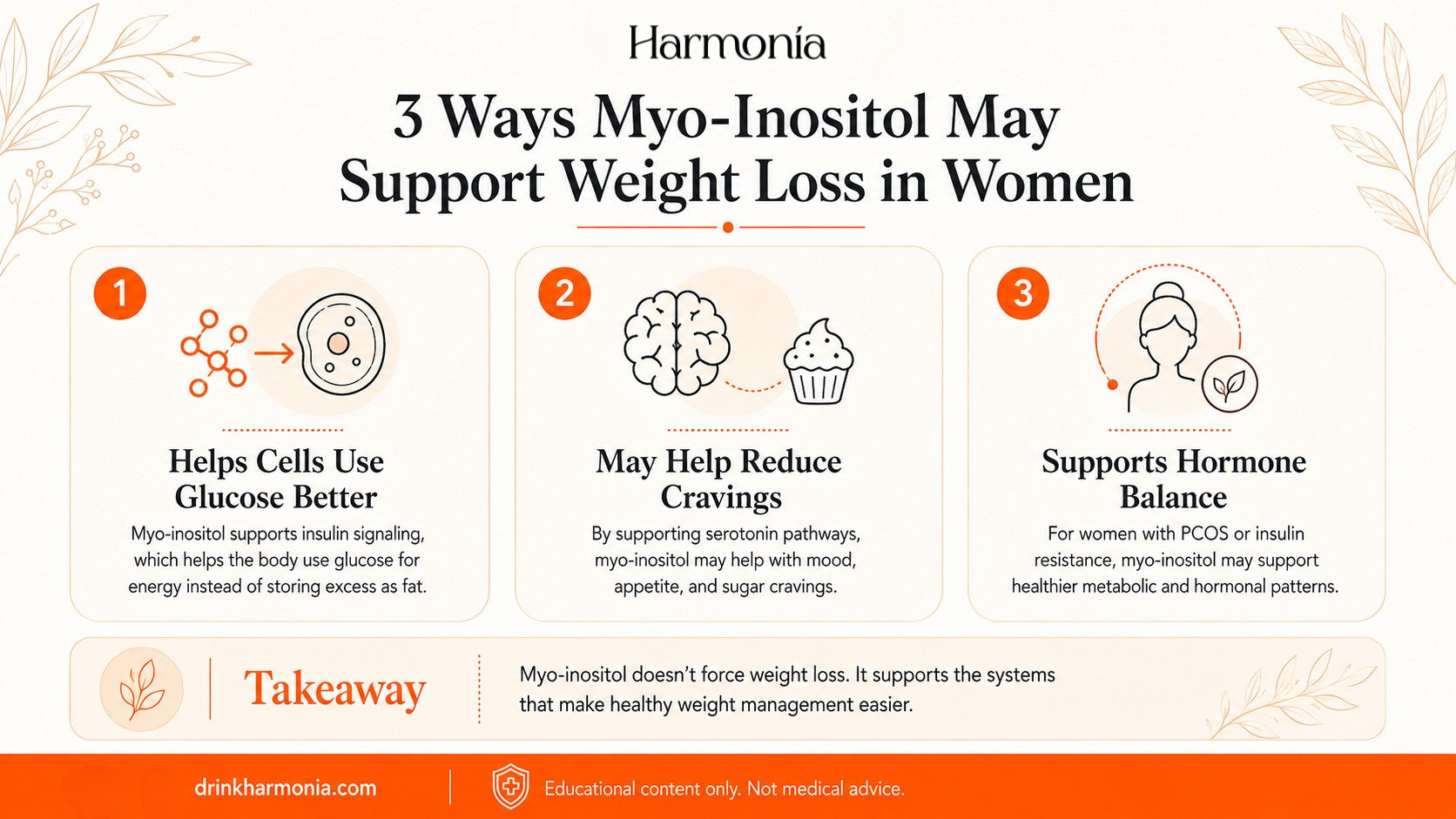
Myo-Inositol and Weight Loss at a Glance
What Is Myo-Inositol?
Myo-inositol is a naturally occurring compound your body produces on its own, primarily in the kidneys from glucose. It's also found in foods like citrus fruit, whole grains, legumes, and nuts, though not in the amounts needed for therapeutic effects.
It's sometimes called vitamin B8, but that's a misnomer. It isn't technically a vitamin. It's a carbohydrate molecule that acts as a second messenger in your cells, meaning it helps carry signals from hormones like insulin from the outside of a cell to the inside.
There are nine forms of inositol. The two most relevant to health are myo-inositol (MI) and D-chiro-inositol (DCI), which are often discussed together but do different things in the body.
Understanding the difference between myo-inositol and inositol can make it easier to choose the right type and dosage for metabolic and hormonal support. Myo-inositol is by far the most abundant form in the human body and the most well-studied for metabolic and hormonal health.
Does Myo-Inositol Cause Weight Gain?
No. Myo-inositol does not cause weight gain. There is no clinical evidence to support this. The confusion usually comes from one of three places.
First, the scale isn't the only thing that changes early on. In the first few weeks, some people notice mild bloating or digestive changes as the body adjusts. This isn't fat gain. It's a temporary response that usually settles within a week or two.
Second, myo-inositol doesn't work the same way for everyone. If your weight isn't moving, it doesn't mean the supplement is making things worse. It may simply mean the underlying driver of your weight gain isn't insulin resistance, so myo-inositol isn't the right lever to pull.
Third, people often start myo-inositol alongside other changes, making it hard to isolate what's doing what. Weight fluctuations during this period get blamed on the newest addition to the routine.
What this large inositol and BMI review actually found: inositol supplementation decreased BMI in people with obesity, with the most pronounced results in women who were overweight or had PCOS. The evidence points clearly toward modest weight support, not weight gain.
_11zon.jpg)
How Myo-Inositol Supports Weight Loss
Myo-inositol doesn't work like a stimulant or appetite suppressant. Its effect on weight is indirect. It works by addressing some of the hormonal and metabolic root causes that make weight management harder in the first place.
It Improves Insulin Sensitivity
This is the primary mechanism. Insulin resistance happens when your cells stop responding properly to insulin, the hormone that escorts glucose out of your blood and into your cells for energy.
When cells resist insulin, your pancreas produces more of it. Higher insulin levels promote fat storage, particularly around the abdomen.
Myo-inositol acts as a second messenger in the insulin signaling pathway. When your body doesn't have enough of it, insulin signals don't get delivered efficiently.
Supplementing helps restore that signaling, which allows your cells to respond to insulin the way they should, reducing the insulin excess that drives fat accumulation.
Across published trials on metabolic health, 4 grams of myo-inositol daily (typically 2g taken twice, with meals) consistently improves fasting insulin levels, reduces the HOMA-IR index (a standard measure of insulin resistance), and in some studies performed comparably to metformin, the most commonly prescribed medication for insulin resistance.
It Supports Fat Metabolism
Myo-inositol also encourages the breakdown of fats and helps prevent fat accumulation in the liver. One mechanism involves adiponectin, a hormone that promotes fat burning and improves insulin sensitivity.
Studies in women with gestational diabetes found that myo-inositol supplementation raised adiponectin levels alongside reductions in insulin resistance.
It Helps Regulate Appetite and Cravings
Myo-inositol plays a role in serotonin production, the neurotransmitter associated with mood stability, calm, and satiety. When serotonin levels are adequate, cravings (especially for sugar) tend to be easier to manage, and emotional eating becomes less of a pull.
This matters practically. A lot of the struggle with weight isn't just metabolic. It's the late-night sugar craving that shows up when stress is high and willpower is depleted. Inositol doesn't eliminate that, but it can take the edge off by supporting the brain chemistry underneath it.
Who Is Most Likely to See Results
The evidence for inositol weight loss is strongest in specific populations. Being honest about this matters more than overselling it.
You're most likely to see meaningful results if you have:
- PCOS (polycystic ovary syndrome). Insulin resistance affects up to 70–80% of women with PCOS and is a central driver of hormonal weight gain, especially the kind that shows up around the abdomen. This is one reason PCOS belly fat can feel especially stubborn, even when diet and exercise are consistent.
Across multiple PCOS randomized controlled trials, myo-inositol reduces testosterone, LH/FSH ratio, and fasting insulin, while supporting modest but clinically significant reductions in BMI.
- Insulin resistance without a PCOS diagnosis. If your fasting insulin is elevated, or you've been told you have metabolic syndrome or prediabetes, myo-inositol is addressing a real biological dysfunction.
- Perimenopause-related metabolic changes. Declining estrogen during perimenopause increases insulin resistance and contributes to belly fat accumulation. Women who find weight loss after 40 surprisingly difficult are often dealing with shifting insulin dynamics as much as calorie balance.
- Stress-driven hormonal imbalance. Chronically high cortisol can drive insulin resistance by keeping blood sugar elevated, which increases insulin and promotes fat storage. If stress, poor sleep, or burnout are behind your weight struggles, myo-inositol may help support insulin sensitivity, especially when the underlying stress response is addressed too.
If your metabolism is functioning well and you don't have insulin resistance or significant hormonal imbalance, the evidence for myo-inositol as a weight loss supplement is weaker. It's not that it's harmful.
It’s worth comparing myo-inositol with other supplements that help balance hormones and support weight loss, especially if cortisol, cravings, poor sleep, or cycle changes are also part of the picture.
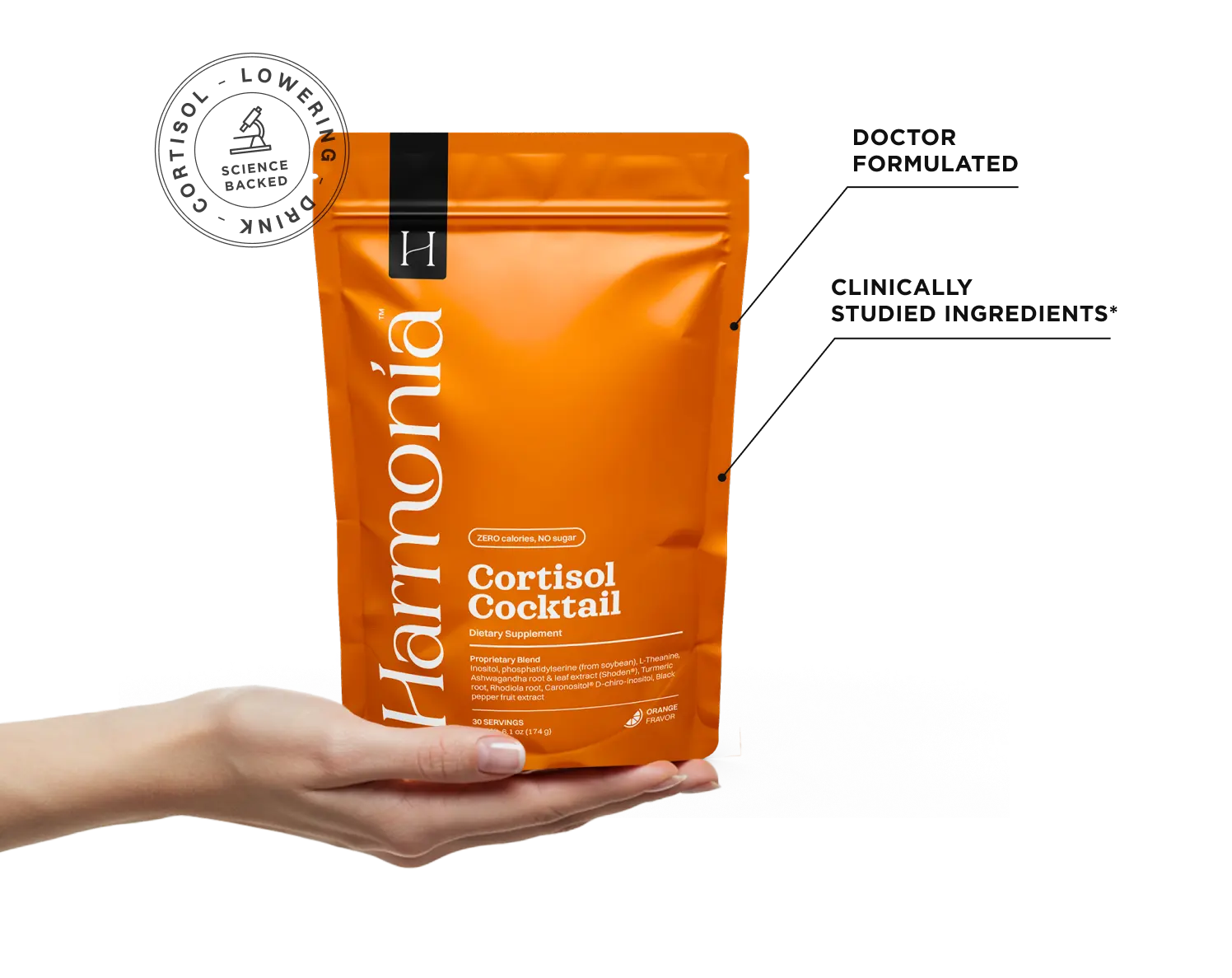
For women who do fall into the higher-benefit groups, getting both the inositol dose and the hormonal support right matters. Harmonia Cortisol Cocktail is formulated to address insulin sensitivity and cortisol regulation together, because in most women with these challenges, neither works well without the other.
The Cortisol Connection: Why Stress Can Block Your Results
This is the piece most articles on myo-inositol completely miss, and it's directly relevant to why some women do everything right and still don't see results.
Chronic stress raises cortisol. And chronically elevated cortisol does two things that work directly against what myo-inositol is trying to do.
First, high cortisol promotes insulin resistance. When your stress response is chronically activated, your body keeps blood glucose elevated as part of its preparation to respond to threat. That requires more insulin. Over time, cells become resistant to the constant insulin signal.
Second, chronic stress appears to deplete inositol from insulin-sensitive tissues, including muscle, fat, and liver. The conversion of myo-inositol to D-chiro-inositol, a step required for proper insulin signaling, is impaired in insulin-resistant tissue.
The higher your cortisol stays, the harder it is for myo-inositol to do its job.
This creates a loop: stress raises cortisol, cortisol worsens insulin resistance, insulin resistance disrupts inositol metabolism, and the supplement that should help doesn't get a fair shot.
Addressing cortisol alongside inositol supplementation isn't optional. It's what makes the difference between modest results and real progress.
For women navigating both elevated cortisol and insulin resistance, Harmonia Cortisol Cocktail combines Myo-Inositol with cortisol-regulating adaptogens including Ashwagandha and Rhodiola Rosea, targeting both sides of that loop in a single formula.
What to Realistically Expect: Dosage and Timeline
Dosage
The most well-studied dose for inositol weight loss support is 2 grams of myo-inositol taken twice daily (4 grams total), ideally with breakfast and dinner.
This aligns with the dosing cited in the 2023 evidence-based PCOS treatment guidelines, which recognize myo-inositol as a clinically meaningful option for managing insulin-related symptoms in women.
One important note: if you're considering a supplement that combines myo-inositol with D-chiro-inositol (DCI), the ratio matters. Your body naturally maintains roughly a 40:1 ratio of myo-inositol to DCI.
Supplements that deviate significantly from this, especially those with high DCI concentrations, may not perform as well. Emerging research from 2025 raises caution around high-dose DCI specifically. Stick to formulas that respect that natural ratio.
Timeline
Don't judge by the scale at week two. Here's a more realistic picture:
Weeks 1–4: Your body is adjusting. Some women notice improved energy or slightly more regular cycles early on. The metabolic changes happening at a cellular level aren't yet visible on the scale.
Weeks 4–8: Insulin markers begin to improve. Fasting insulin and blood sugar regulation become more stable. Cravings may ease. This is where many women notice they're simply less hungry, less reactive to sugar, and sleeping better.
Weeks 8–12: This is when body composition changes tend to become measurable, particularly for women with PCOS or significant insulin resistance. The weight loss is modest. Studies report average reductions in the range of 1–3 kg over this period when combined with lifestyle changes. That's not dramatic, but it's meaningful and sustainable.
Myo-inositol is not a quick fix. It's a tool that restores a biological function that was impaired, and that kind of work takes time.
How you exercise during this period also matters, and the relationship between high-intensity exercise and cortisol is more complicated than most people expect, and the wrong training approach can work against inositol's effects.

Frequently Asked Questions
Does myo-inositol cause weight gain?
No. There is no clinical evidence that myo-inositol causes weight gain. Studies consistently show it either has a neutral effect on weight or supports modest reductions in BMI, particularly in women with insulin resistance or PCOS.
How long does it take for myo-inositol to work for weight loss?
Most women need 8–12 weeks before seeing measurable changes in body composition. Insulin markers and hormonal regulation tend to improve first, followed by gradual changes in weight and fat distribution.
Who benefits most from myo-inositol for weight loss?
Women with PCOS, insulin resistance, metabolic syndrome, or perimenopause-related hormonal shifts see the strongest results. The evidence for weight loss in women without these underlying conditions is less robust.
What is the best dose of myo-inositol for weight loss?
The most well-studied dose is 2 grams taken twice daily (4 grams total), based on a systematic review of randomized controlled trials.
Can I take myo-inositol if I don't have PCOS?
Yes. The mechanisms (insulin sensitization, serotonin support, fat metabolism) are relevant beyond PCOS. Women dealing with stress-driven insulin resistance, perimenopause, or metabolic syndrome may also benefit. Results will depend on whether insulin resistance is an underlying factor for you.
The Bottom Line
Myo-inositol does not cause weight gain, and for women dealing with the right underlying issues, it can be a genuinely useful tool for supporting metabolic health and modest weight loss.
The key word is underlying. It works by restoring insulin signaling, not by forcing weight loss on a body that doesn't have a signaling problem. If you're not seeing results, the question worth asking isn't "is this supplement hurting me?" It's "is insulin resistance actually driving my weight challenges, and is cortisol working against my progress?"
Both of those questions matter. Addressing them together is what moves the needle. Harmonia Cortisol Cocktail pairs Myo-Inositol with Ashwagandha, Rhodiola Rosea, and other cortisol-regulating ingredients so neither side of that equation gets left out.
If belly fat that won't shift, persistent fatigue, unusual hunger after meals, brain fog, or mood changes sound familiar,Take the quiz to see how the cortisol support drink can help with what you're experiencing.
References
- Unfer, V., et al. (2022). Inositol supplementation and body mass index: A systematic review and meta-analysis of randomized controlled trials. Nutrients. Link
- Croze, M. L., & Soulage, C. O. (2022). Myo-inositol for insulin resistance, metabolic syndrome, polycystic ovary syndrome and gestational diabetes. Obesity Reviews. Link
- Pundir, J., et al. (2018). Myo-inositol effects in women with PCOS: A meta-analysis of randomized controlled trials. European Journal of Obstetrics and Gynecology. Link
- Mashayekh-Amiri, S., et al. (2022). Myo-inositol supplementation for prevention of gestational diabetes mellitus in overweight and obese pregnant women: a systematic review and meta-analysis. Link
- Teede, H. J., et al. (2023). Inositol for Polycystic Ovary Syndrome: A systematic review and meta-analysis to inform the 2023 update of the International Evidence-based PCOS Guidelines. Journal of Clinical Endocrinology and Metabolism.Link